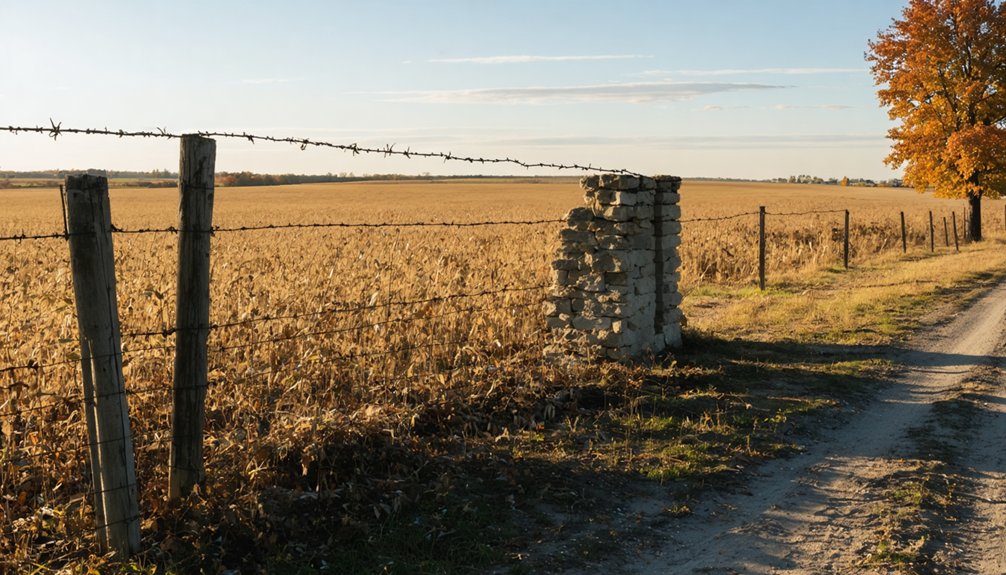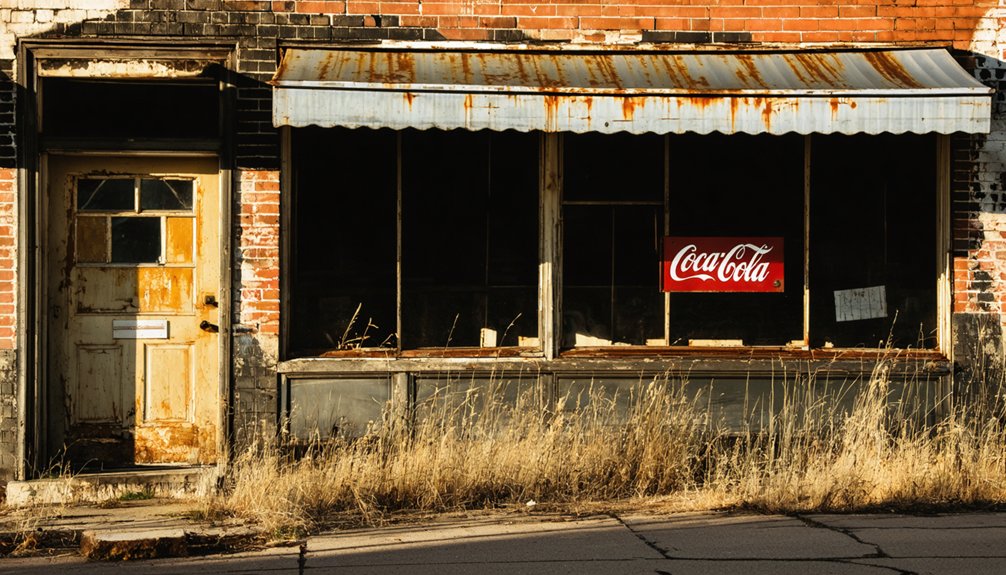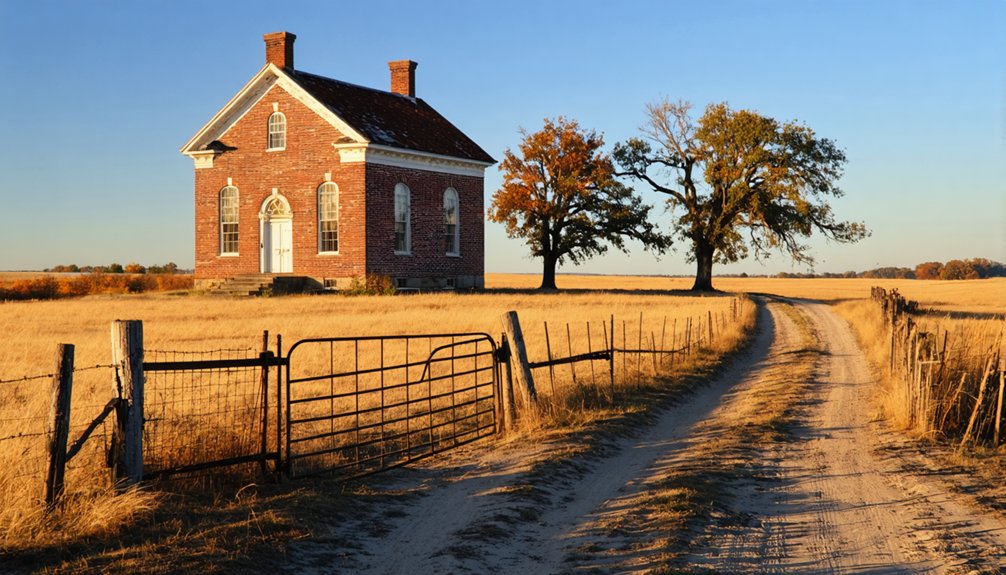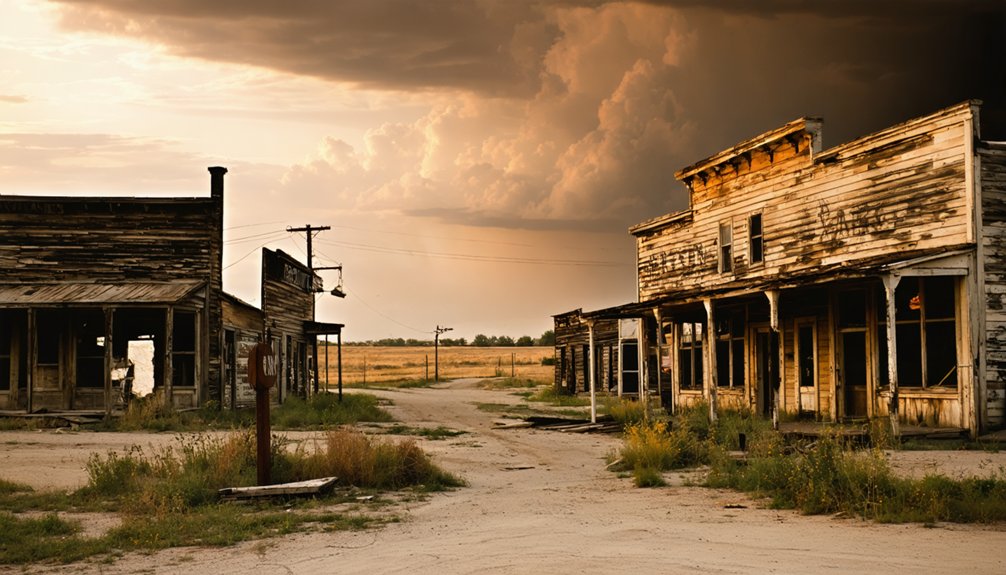
Planning a ghost town road trip to Old Westville, Illinois means stepping into a quiet corner of Vermilion County where coal mines once powered an entire immigrant community. You won’t find guided tours or tourist signs here, so come prepared with a map and a sense of adventure. Lithuanian cemeteries, abandoned mining sites, and a historic train depot tell the story of a town that thrived and faded. There’s far more to uncover than you’d expect.
Key Takeaways
- Westville is not an official ghost town but retains eerie industrial remnants, including abandoned mines, Lithuanian cemeteries, and a historic train depot.
- Coal mining launched in 1885 by Mike Kelly shaped Westville’s rise and eventual decline, leaving raw industrial landmarks worth exploring.
- Key sites include Kelly No. 3 mine shafts, the 1968 Miner’s Memorial, Lithuanian cemeteries, and the original railroad train depot museum.
- No guided tours or tourist signage exist, so prepare maps in advance and expect a fully self-guided, independent exploration experience.
- Lodging at nearby Forest Glen allows overnight stays, complementing industrial history exploration with scenic trails, lakes, and panoramic observation tower views.
Is Old Westville, Illinois Really a Ghost Town?
While Westville, Illinois carries the eerie mystique of a ghost town, it’s not technically one — it’s a living community with real residents and an active pulse. Illinois actually has 84 officially recognized ghost towns, and Westville doesn’t make that list.
What you’ll find instead is something perhaps more compelling — a place where cultural preservation breathes life into abandoned mining infrastructure, Lithuanian cemeteries, and historic landmarks.
The town’s community identity remains rooted in its industrial past, shaped by immigrant workers who built churches, social clubs, and neighborhoods from the ground up.
How Coal Mining Built and Then Abandoned Old Westville
When you trace Old Westville’s roots, you’ll find that Mike Kelly launched everything in 1885 by sinking coal mines alongside the Chicago and Eastern Illinois Railroad.
This instantly transformed raw land into a roaring industrial hub. The mines pulled in waves of Lithuanian immigrants who built churches, cemeteries, and social clubs that gave the town its distinct cultural backbone.
But once the coal ran out, the economic engine that built Old Westville simply switched off, leaving behind abandoned shafts like Kelly No. 3 and a community forever shaped by an industry that no longer exists.
Coal Mining Origins
Back in 1885, Mike Kelly struck coal near the Chicago and Eastern Illinois Railroad and fundamentally built Westville from the ground up. That single discovery transformed raw Illinois land into a thriving industrial heritage site powered by immigrant influence and relentless labor.
Lithuanian workers arrived and built something real:
- They established churches, cemeteries, and social clubs that defined community identity.
- Coal extraction rapidly drove population growth and economic development.
- The Chicago and Eastern Illinois Railroad connected Westville to broader markets.
- Immigrant labor sustained operations that kept the entire region moving.
You’re looking at a place where working people carved out genuine freedom through hard work. When the coal ran out, the infrastructure remained, frozen in time, waiting for curious travelers like you to discover it.
Mining’s Economic Decline
Once the coal ran out, Westville’s economic engine simply stopped. The Kelly No. 3 and Kellyville shafts, once thundering with industrial activity, fell silent. Mining communities like this one rarely survive economic decline gracefully — they either adapt or fade. Westville faded.
You’ll notice this shift when you walk the grounds today. The abandoned infrastructure tells a brutally honest story about what happens when a single industry collapses. Workers left. Businesses closed. The population thinned dramatically.
What’s remarkable, though, is what remained. The Lithuanian immigrants who built this town left behind churches, cemeteries, and social clubs that outlasted the coal itself. So while the economic engine died, Westville’s cultural skeleton survived — and that’s exactly what makes it worth your visit.
How to Get to Old Westville, Illinois
You’ll find Old Westville, Illinois tucked along the historic Chicago and Eastern Illinois Railroad corridor, making the railroad line itself a useful navigational anchor as you plan your route. No formal tourist signage marks the way, so you’ll want to rely on maps and landmarks to guide your approach.
Once you’re close, use Forest Glen — sitting just east of Westville with its lakes, trails, and observation tower — as a reliable reference point to orient yourself before exploring the town’s remaining historical sites.
Driving Routes And Access
Nestled in Vermilion County, Westville sits along the historic Chicago and Eastern Illinois Railroad corridor, making it relatively straightforward to reach from major Illinois highways.
You’ll find the journey rewarding, with opportunities to sample local cuisine and catch community events along the way.
Key access points to keep in mind:
- Route 1 runs directly through Vermilion County, connecting Westville to surrounding towns
- I-74 serves as your primary east-west corridor, with exits leading toward Westville
- Forest Glen Preserve sits just east, offering scenic back-road approaches
- No formal tourist signage exists, so downloading offline maps before arriving is strongly recommended
You’re essentially charting your own course here, which suits the independent traveler perfectly.
Finding your way to Old Westville becomes much easier when you lean on the area’s most recognizable landmarks rather than relying solely on GPS. The Chicago and Eastern Illinois Railroad line runs directly through town, giving you a reliable geographic anchor as you approach.
Spot the original train depot, now preserved as a museum, and you’ll know you’ve arrived at the heart of historic architecture worth exploring.
The 1968 Miner’s Memorial serves as another strong visual marker near the town’s center, while Lithuanian cemeteries signal the cultural preservation efforts that define this community’s identity.
Just east of Westville, Forest Glen’s observation tower rises above the tree line, offering a visible reference point from a distance.
Use these landmarks confidently, and navigation becomes part of the experience itself.
The Ghost Town Landmarks Still Standing in Westville
Though Westville isn’t a traditional ghost town frozen in time, it’s packed with landmarks that tell the story of its coal-mining heyday. These sites serve as powerful anchors of cultural preservation and community memory, letting you experience history on your own terms.
Here’s what you won’t want to miss:
- Original Train Depot Museum – Preserves railroad memorabilia from Westville’s industrial peak
- 1968 Miner’s Memorial – Honors the workers who built this coal-driven community
- Lithuanian Cemeteries – Silent testaments to the immigrant laborers who shaped the town’s identity
- Abandoned Mining Shafts – Kelly No. 3 and Kellyville shafts stand as raw, unfiltered remnants of a vanished industry
Walk these grounds freely, and you’ll feel the weight of what once was.
What’s Near Old Westville at Forest Glen
Just east of Westville, Forest Glen opens up a whole new dimension to your road trip. After exploring the remnants of a coal-mining past, you can stretch your legs across trails that wind through landscapes rich with native plants and local wildlife.
Climb the observation tower for sweeping views that remind you why wide-open spaces matter. If you’re traveling with a group, Forest Glen’s lodges offer rentable spaces perfect for gatherings, turning your ghost town adventure into a full weekend escape.
The lakes scattered throughout the property invite quiet reflection or active exploration, whatever pace suits you. Forest Glen doesn’t just complement your Westville visit — it transforms a history-focused detour into a layered experience balancing industrial heritage with genuine natural freedom.
What to Know Before Road Tripping to Old Westville
Before you load up the car, know that Old Westville doesn’t roll out the welcome mat the way most tourist destinations do. There’s no visitor center, no guided tours, and no curated local cuisine scene waiting for you. What you’ll find instead is raw, unfiltered history you can explore on your own terms.
Old Westville skips the welcome mat — no visitor center, no guided tours, just raw, unfiltered history on your own terms.
Keep these essentials in mind:
- No formal signage marks ghost town boundaries or historical sites
- Self-guided exploration is your only option, so research landmarks beforehand
- Community events are limited, so don’t expect a packed local calendar
- Forest Glen nearby offers lodging if you’re making it an overnight trip
Come with curiosity, a full tank, and realistic expectations — Old Westville rewards the independently minded traveler.
Frequently Asked Questions
Who Were the Lithuanian Immigrants That First Settled in Westville?
The records don’t name specific Lithuanian immigrants, but their Lithuanian heritage lives on in cemeteries and churches they built. You’ll find their immigrant stories etched in stone, like roots anchoring a forgotten forest still standing tall.
Was Westville Ever Officially Designated as a Sundown Town?
Westville never received an official sundown town designation, but you’ll find its racial segregation past ran deep. Unwritten rules and social mechanisms shaped its sundown town history, effectively excluding Black residents throughout much of the 20th century.
Are There Any Guided Tours Available for Visiting Old Westville?
Funny enough, you’ll discover guided tour options don’t exist here — yet that’s the magic! You’re free to explore Old Westville’s raw tourist attractions solo, uncovering abandoned mining shafts and Lithuanian cemeteries on your own terms.
What Year Did Coal Mining Operations Completely Cease in Westville?
The exact year coal mining completely ceased isn’t documented, but you’ll uncover rich coal history and powerful immigrant stories as you explore Westville’s abandoned shafts and preserved landmarks that echo a bygone industrial era.
Are the Lithuanian Cemeteries in Westville Open to Public Visitors?
Like medieval pilgrims seeking sacred grounds, you can freely explore Westville’s Lithuanian cemeteries! Historical preservation efforts keep cemetery accessibility open, letting you walk among the headstones honoring immigrant miners who built this remarkable community.
References
- https://www.youtube.com/watch?v=pLnLSAREPA0
- https://www.youtube.com/watch?v=SK0284ZVaRQ
- https://www.ghosttowns.com/states/il/ilttd.html
- https://kids.kiddle.co/List_of_ghost_towns_in_Illinois