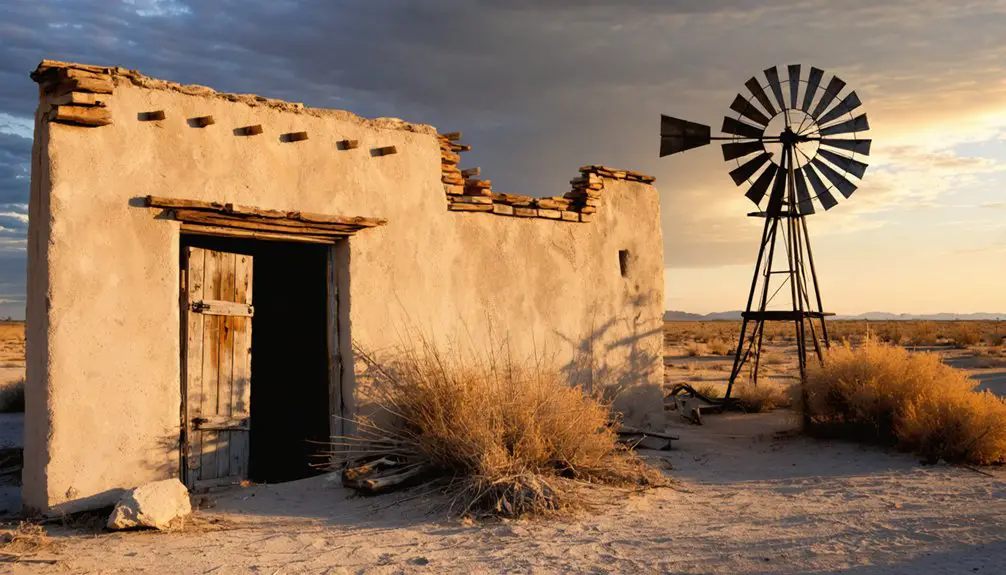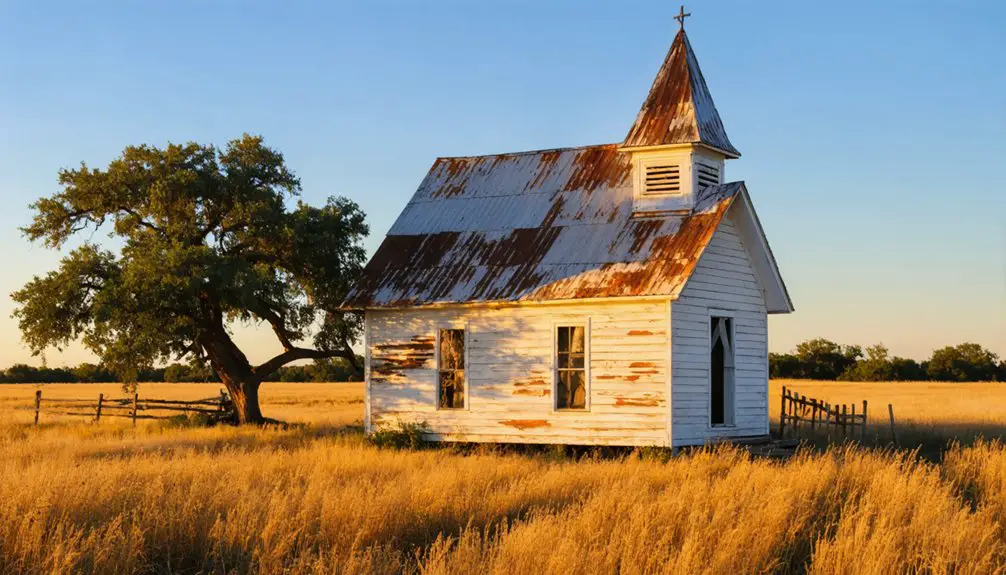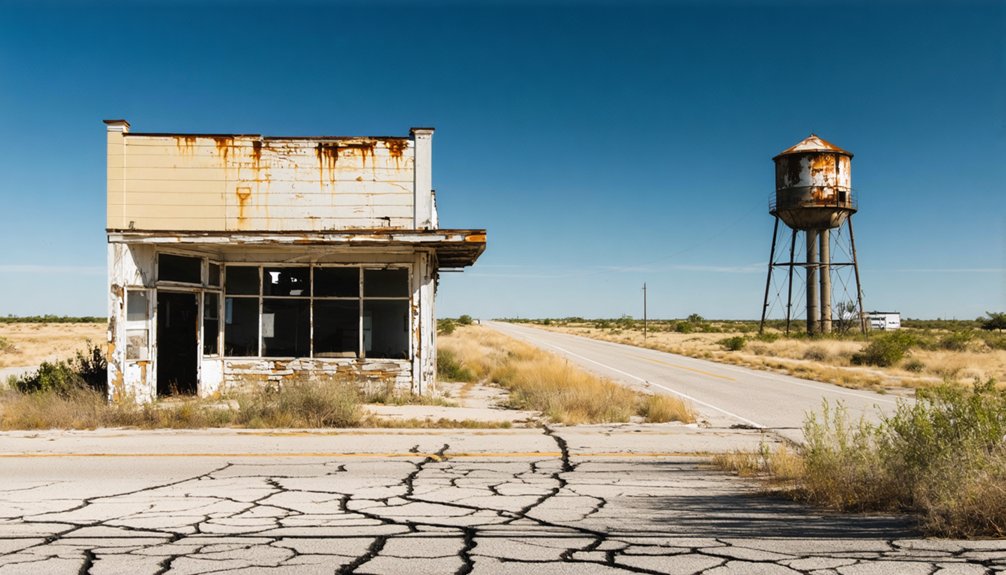
Olmos, Texas sits six miles northeast of Eagle Pass, where coal seams once drove a thriving railroad community deep into Maverick County’s brushland. By the mid-1920s, the mines closed, and the town quietly disappeared. Today, you’ll find railroad remnants, abandoned settlement outlines, and a haunting silence where small red laborer houses once stood. Plan your visit between October and March, bring water, and come ready for unpaved caliche roads — there’s far more to this story worth uncovering.
Key Takeaways
- Olmos is located six miles northeast of Eagle Pass, accessible via dirt roads and caliche terrain requiring a high-clearance vehicle.
- Visit between October and March to avoid extreme South Texas heat; bring water, fuel, and a map as no services exist.
- The site features railroad remnants and abandoned settlement outlines from a once-thriving coal mining community that collapsed by the mid-1920s.
- No signage or guided tours are available, making self-guided exploration essential for uncovering the town’s industrial and labor history.
- Nearby ghost towns like Seco Mines, El Indio, and Quemado offer additional exploration opportunities along old railroad corridors in Maverick County.
What Was Olmos, Texas?
Once a modest coal mining settlement in west central Maverick County, Olmos grew up alongside the Texas and New Orleans Railroad. Its identity was tied entirely to the dark seams of the Olmos Formation Belt — a coal outcropping stretching roughly four miles wide beneath the South Texas brush.
The town’s mining history shaped everything: the small red laborer houses, the company-style layout, the pulse of daily life. You can trace its cultural significance in what it represents — a community that existed purely because the earth beneath it had value.
When the mines closed by the mid-1920s, that value disappeared, and Olmos followed. By 1974, it was abandoned. What remains today is a ghost town that tells an honest story about resource-driven ambition and inevitable silence.
How Coal Mining Built and Abandoned This Ghost Town
Coal pulled Olmos out of the South Texas brush and gave it a reason to exist. The Olmos Formation Belt, a coal outcropping roughly four miles wide, attracted miners, laborers, and railroad infrastructure to this remote stretch of Maverick County. Small red houses went up, a community took root, and the Texas and New Orleans Railroad connected it all to the wider world.
Then the mines closed by the mid-1920s, and everything unraveled. Mining history rarely promises permanence, and Olmos proved no exception. By 1946, only a railroad siding and a handful of structures survived. By 1974, even those had surrendered to silence.
When you visit today, you’re not just passing through abandoned land — you’re standing inside a story that historical preservation efforts keep barely alive.
Where Is the Olmos Site Located in Maverick County?
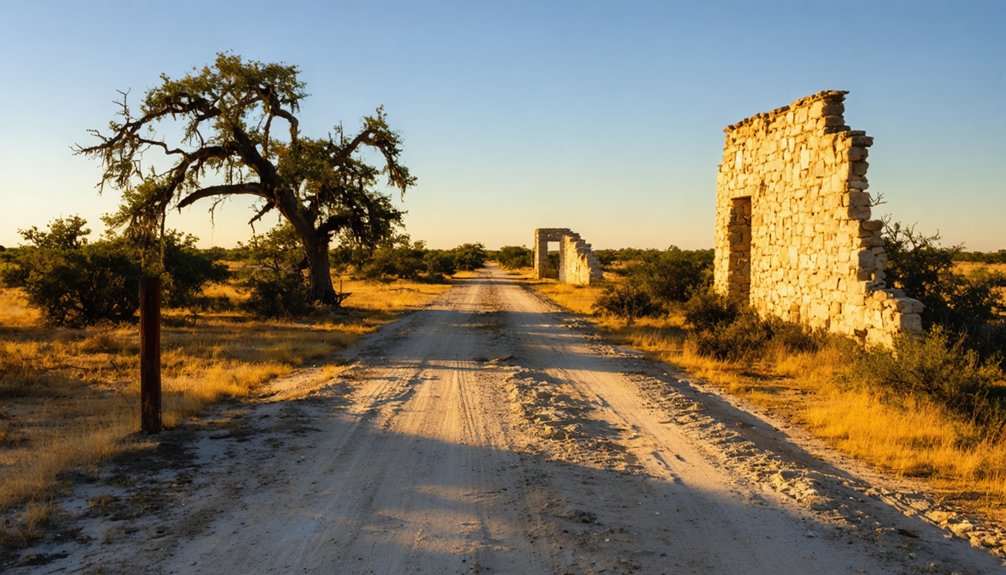
Tucked about two miles east of U.S. Highway 277, the Olmos site sits six miles northeast of Eagle Pass in west central Maverick County. You’ll find it along the old Texas and New Orleans Railroad corridor, where railroad remnants still echo a busier era.
The land itself tells the story — the town took its name from the Olmos Formation Belt, a coal outcropping roughly four miles wide that pulled workers, families, and ambition into this remote stretch of South Texas. Mining history shaped everything here, from the red laborers’ houses to the company-style settlement that rose around the operation.
Today, the site is abandoned, but the landscape remains. If you crave freedom and forgotten places, this quiet corner of Maverick County delivers both.
What’s Left at the Olmos Site Today?
Standing at the Olmos site today, you’ll find almost nothing left — and that absence is the point. By 1946, only a railroad siding, a group dwelling, and a couple of scattered residences survived the mines’ closure.
By 1974, even those had surrendered to silence.
No historical preservation efforts memorialize the laborers who lived in those small red houses. No markers carry their community stories forward.
What remains is open land, faint traces of a railroad corridor, and the weight of a town that existed purely because coal did.
For the freedom-seeking traveler, that rawness holds real power. You’re not visiting a curated exhibit — you’re standing inside an honest moment of Texas history, where boom collapsed into dust and the land reclaimed everything.
How Do You Get to Olmos From Eagle Pass?
Getting to Olmos is straightforward, though the landscape will make it feel like a journey into another era. From Eagle Pass, head northeast about 6 miles, keeping U.S. Highway 277 as your anchor. The old Texas and New Orleans Railroad corridor runs nearby, a ghost of the cultural significance this place once carried.
- You’re retracing the path laborers once walked to those small red houses, lunch pails in hand.
- The flat South Texas terrain opens wide, giving you room to think about what’s been lost.
- Every mile reminds you that preservation efforts here exist only in memory and historical record.
There’s no visitor center waiting for you. Just land, silence, and the weight of a boom-and-bust story that played out long before anyone thought to save it.
What Are the Road and Access Conditions at Olmos?
Once you leave the paved comfort of U.S. Highway 277, the road to Olmos gets raw and unfiltered. You’re heading roughly two miles east into Maverick County scrubland, where caliche and dirt replace asphalt.
A high-clearance vehicle gives you a real advantage here, especially after rain turns the ground soft. There are no maintained roads leading directly to the site, no signage marking the mining history that once defined this place, and no services waiting when you arrive.
What you’ll find are railroad remnants from the Texas and New Orleans line and the quiet outline of a forgotten settlement. Come prepared with water, a paper map, and a full tank.
This land doesn’t accommodate the unprepared — but it rewards the genuinely curious.
When Is the Best Time to Visit Olmos, Texas?
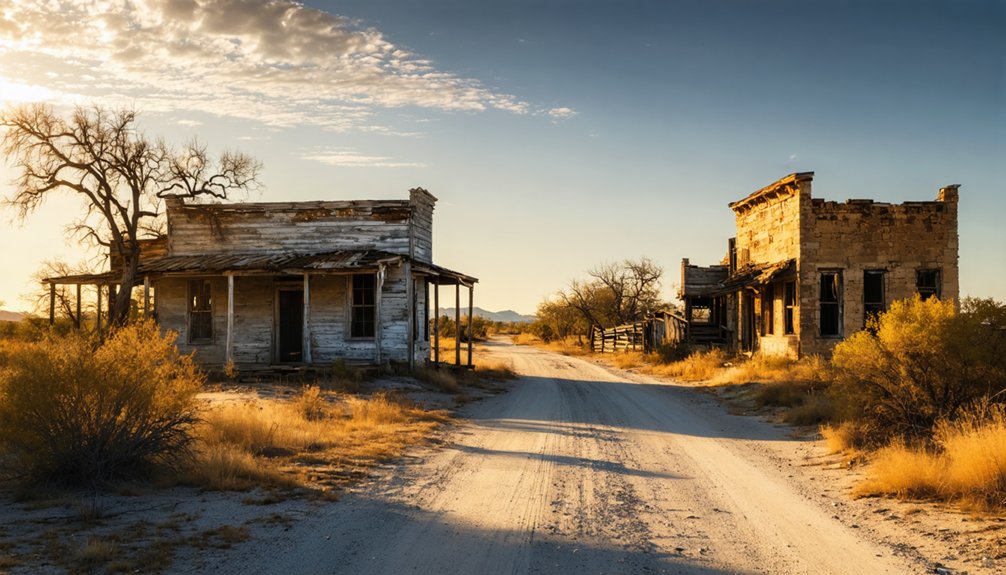
Timing your visit to Olmos can make the difference between a rewarding detour and a miserable slog through South Texas heat. Fall through early spring gives you cooler temperatures, making it easier to explore the railroad remnants and imagine the mining history that once drove this community.
- October through March offers mild days perfect for walking the site without brutal heat draining your energy.
- Golden hour light in winter transforms the abandoned landscape into something hauntingly beautiful and worth photographing.
- Avoid summer completely — triple-digit temperatures turn a meaningful historical stop into a survival situation.
You’re chasing freedom on this road trip, not punishment. Plan smart, arrive early in the day, and let the silence of this forgotten coal town speak for itself.
Which Other Ghost Towns Near Eagle Pass Are Worth the Drive?
Once you’ve walked the quiet remains of Olmos, Maverick County’s back roads will pull you further into South Texas’s forgotten past.
Eagle Pass sits within striking distance of several abandoned settlements that share Olmos’s boom-and-bust story, each one shaped by a single industry that eventually vanished.
Pack a detailed map, fuel up before you leave the highway, and let the old railroad corridors guide you toward the next ghost town worth finding.
Nearby Ghost Town Stops
While Olmos makes a compelling first stop, the ghost town landscape around Eagle Pass rewards those willing to keep driving. Maverick County holds layers of forgotten history, and each abandoned site carries its own local legends and crumbling historical architecture worth discovering.
Consider adding these stops to your route:
- Seco Mines – Another coal-era settlement where silence now fills the spaces workers once occupied.
- El Indio – A river-edge community where the Rio Grande shaped daily life before the economy shifted.
- Quemado – A quiet remnant town where old structures still whisper stories of border resilience.
Each location gives you a raw, unfiltered look at South Texas history. You’re not following a tour guide here — you’re following your own curiosity.
Eagle Pass Day Trips
Eagle Pass sits at the center of a ghost town constellation, and if you’ve already made the drive out to Olmos, you’d be doing yourself a disservice by turning around too soon. Maverick County holds layers of cultural significance worth chasing down forgotten roads.
Push south along U.S. Highway 277 and you’ll find communities that rose and collapsed on the same boom-and-bust logic that buried Olmos under silence. Each stop adds texture to your understanding of how coal, rail, and ambition once shaped this landscape.
Historical preservation isn’t happening through museums here — it’s happening through travelers who show up, look closely, and remember. Eagle Pass gives you a practical base, a full tank of curiosity, and a region that rewards the willing.
Maverick County Abandoned Sites
Maverick County doesn’t hide its ghost towns — it just doesn’t advertise them either. Its landscape carries layers of urban decay and industrial history that reward curious travelers willing to look.
While Olmos anchors your trip, the region holds more forgotten ground worth claiming:
- Eagle Pass’s old railroad corridors — crumbling infrastructure that once moved coal, cattle, and ambition across South Texas
- Abandoned ranch settlements scattered along Highway 277, where silence now replaces generations of hard labor
- Former mining outpost remnants along the Olmos Formation Belt, where the earth gave everything and then gave out
You don’t need a guided tour. You need a full tank, a good map, and the willingness to let forgotten places tell you what history books leave out.
How Does Olmos Fit Into a South Texas Ghost Town Road Trip?
Tucked along an old railroad corridor in Maverick County, Olmos fits naturally into a South Texas ghost town road trip as a short but rewarding historical detour. You’re already close if you’re traveling U.S. Highway 277 near Eagle Pass, making it an easy addition to your route.
Olmos carries real cultural significance as a coal mining settlement that once sustained laborers, families, and a railroad economy before disappearing by 1974. Its preservation challenges are obvious the moment you arrive — there’s little left to protect, and the landscape has quietly reclaimed what industry once built.
Pair it with other Maverick County abandoned sites, and you’ve got a compelling stretch of forgotten Texas history. Freedom-seekers who crave raw, unpolished destinations will find Olmos honest, haunting, and worth the detour.
Why Does Olmos Matter as a Texas Ghost Town?
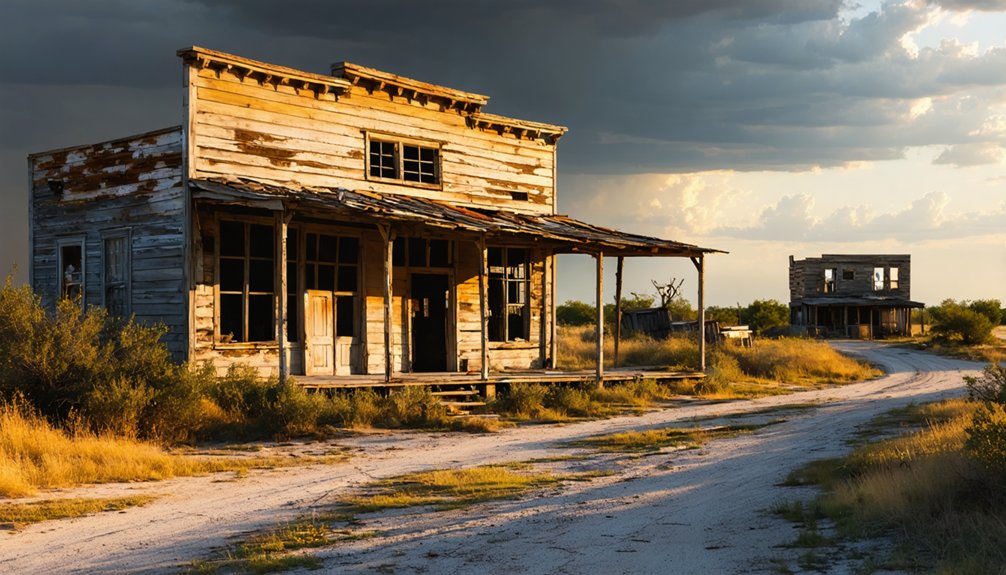
Olmos matters because it tells an honest story about how the American West was actually built — not by grand ambitions alone, but by coal seams, railroad spurs, and laborers living in small red houses at the edge of nowhere. Urban decay claimed it quietly, and historic preservation never arrived. What’s left is raw truth.
When you stand near that abandoned railroad siding, you’re standing where a community once breathed:
- Workers who built their lives around a single industry, then watched it vanish
- Families who called those small company houses home until the mines went silent
- A town that didn’t fade slowly — it simply stopped
Olmos reminds you that freedom was never free. Someone always dug it out of the ground first.
Frequently Asked Questions
Was Olmos Ever Officially Incorporated as a Texas Town?
Olmos never gained official incorporation — it existed purely as a company mining settlement. You’ll find its historical significance tied to raw town development, coal, and railroad grit, not government papers. It lived free and faded free.
Are There Any Photographs of Olmos During Its Mining-Era Peak?
No confirmed historical photos of Olmos during its mining era survive in known records. You’re chasing ghost shadows now — imagine those red laborers’ houses standing fierce against the Texas brush, alive with coal dust and railroad dreams.
Did Any Former Olmos Residents Document Their Experiences Living There?
No documented resident stories survive — but that silence *deepens* the mystery. You’re left chasing ghost town legends through scattered railroad records and faded histories, wondering what voices once filled those small red houses near Eagle Pass.
Is the Olmos Site on Private Land or Public Property?
The knowledge doesn’t confirm whether Olmos sits on private ownership or allows public access. Before you chase this ghost town’s haunted silence, you’ll want to verify land status locally — freedom-seekers always scout before they roam.
Has Any Archaeological Survey Been Conducted at the Olmos Site?
No documented archaeological findings or survey history exist for Olmos in available records. You’re stepping into unmapped territory, where forgotten lives and lost labor wait beneath the Texas soil, quietly calling your free spirit forward.
References
- https://www.texasalmanac.com/places/olmos-1
- https://www.tshaonline.org/handbook/entries/olmos-tx-maverick-county
- https://www.tshaonline.org/handbook/entries/los-olmos-tx