Planning a ghost town road trip to Masonic, California means committing to 8 miles of rough 4WD terrain northeast of Bridgeport, where weathered stone cabins and a skeletal aerial tram wait in Mono County’s high desert silence. You’ll want offline maps, recovery gear, and extra fuel before you even turn onto Sweetwater Road. Pair it with Bodie and Chemung Mine for a full day of haunted history — and there’s far more to this story than the dusty road suggests.
Key Takeaways
- Masonic Ghost Town is located 10 miles northeast of Bridgeport in Mono County, accessible via Sweetwater Road or the longer Bodie-Masonic Road.
- A high-clearance 4WD vehicle is essential, as roads are rough graded dirt with no nearby services or cell signal.
- Pack recovery gear, extra fuel, offline maps, and sun protection, as the area demands complete self-sufficiency.
- Key ruins include weathered stone cabins, a skeletal aerial tram, and the timbered Pittsburg-Liberty Mill across multiple town sections.
- Combine your visit with nearby Bodie and Chemung Mine for a comprehensive ghost town road trip experience.
Where Is Masonic, California and How Do You Get There?
Tucked into the high desert of Mono County near the Nevada border, Masonic sits about 10 miles northeast of Bridgeport — close enough to plan as a day trip, remote enough to feel like you’ve crossed into another era.
Two main routes get you there. From Bridgeport, you can take Sweetwater Road to Masonic Road — shorter at around 8 miles, but rougher, demanding 4WD and high clearance.
The Bodie-Masonic Road offers a longer, more forgiving approach, especially if you’re already chasing local legends and historical artifacts along the Bodie corridor.
Either way, expect graded dirt roads, limited services, and no cell signal. Pack water, check your tires, and give yourself enough daylight.
This is backcountry California — freedom comes with responsibility.
What’s Left to See at Masonic Ghost Town?
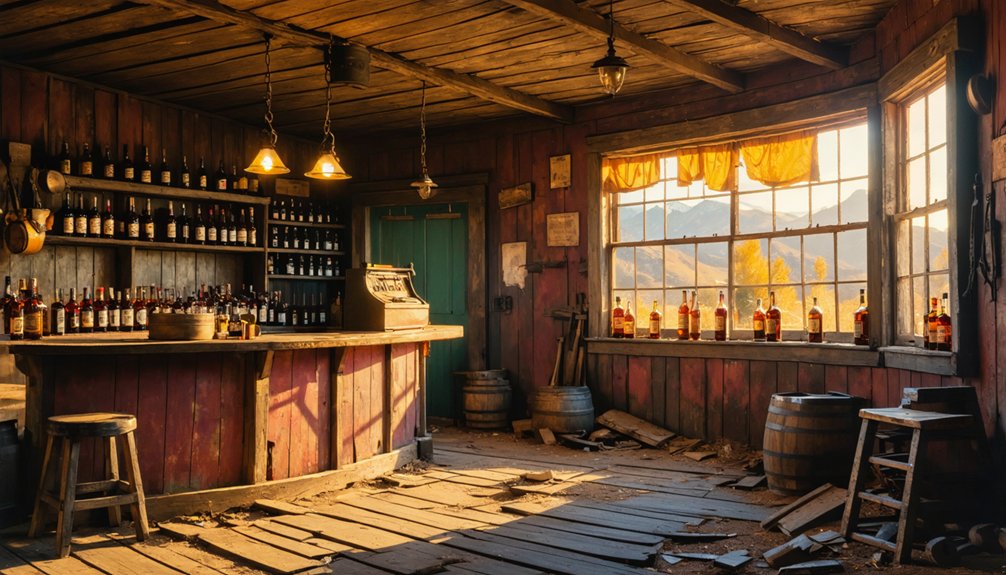
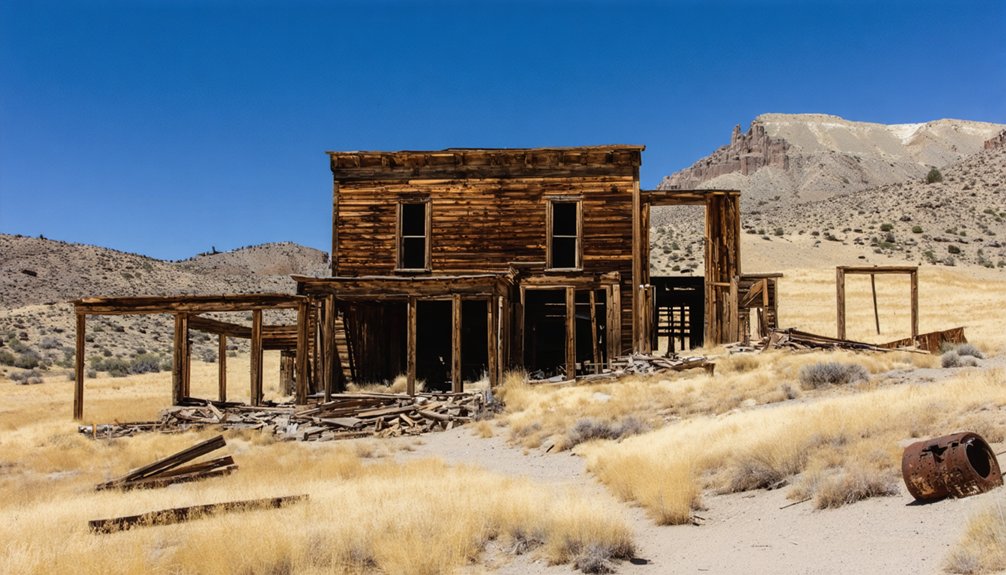
What remains at Masonic won’t overwhelm you with grandeur — but that’s exactly the point. You’re stepping into a place where historical preservation exists in its rawest form: weathered stone cabins, a skeletal aerial tram, and the timbered frame of the Pittsburg-Liberty Mill anchoring Lower Town like a quiet monument.
Most ruins concentrate in Middle Town, so plan your walk accordingly. Aspen groves soften the landscape between structures, giving the site an almost theatrical beauty against the high desert backdrop.
Local legends cling to every collapsed wall here — especially stories surrounding J.S. Phillips, whose mysterious death at the bottom of a mine shaft still fuels speculation. Nothing’s confirmed, but you’ll feel the weight of those unanswered questions as you explore.
The Gold Rush History That Built and Buried Masonic, California
Those ruins didn’t collapse on their own — gold built Masonic, and gold’s fickleness tore it apart. Discovery came in the early 1860s, but the real surge hit after J.S. Phillips staked the Pittsburg-Liberty Mine on July 4, 1902.
Gold built Masonic, and gold’s fickleness tore it apart.
By 1908, Masonic was pushing toward 1,000 residents and promising to rival the West’s great mining camps.
It never got there. The ore ran rich but irregular — brilliant pockets that exhausted fast. When the gold stopped paying, people stopped staying.
By the 1930s, Masonic was finished.
What you’re walking through today are historical artifacts of that brutal boom-bust cycle. Preservation efforts remain minimal, meaning every season strips something away.
That urgency makes visiting now feel less like tourism and more like bearing witness.
The J.S. Phillips Legend: Did Someone Murder Masonic’s Founder?
Every ghost town needs a ghost, and Masonic delivers one with genuine historical teeth. Local legends center on J.S. Phillips, the man who staked the Pittsburg-Liberty Mine on July 4, 1902. He didn’t retire wealthy.
According to haunted legends that have circulated for decades, Phillips was found dead at the bottom of a mine shaft. Nobody confirmed how he got there.
Murder, accident, foul play — the story stays deliberately unresolved, which makes it hit harder. You’ll walk the same ground where Phillips once worked, where fortunes shifted fast and men disappeared faster.
Whether you believe the legend or not, it sharpens your attention. Suddenly every dark shaft opening and crumbling cabin carries a little more weight beneath your boots.
Should You Visit Masonic, Bodie, and Chemung Mine Together?
If you’re already making the drive out to Masonic, combining it with Bodie and the Chemung Mine turns a single stop into one of the most rewarding backcountry ghost town circuits in the Eastern Sierra.
Bodie sits within easy reach along the same Bridgeport corridor, offering a far more intact townsite, while Chemung adds another layer of industrial mining history to round out the experience.
You’ll want to plan your route carefully, since road conditions vary, services are scarce, and squeezing all three sites into one day demands an early start and a high-clearance vehicle.
The Perfect Road Trip Combo
Planning a ghost town road trip through this corner of Mono County, you’d be leaving serious history on the table if you skipped Bodie and the Chemung Mine while you’re already out here.
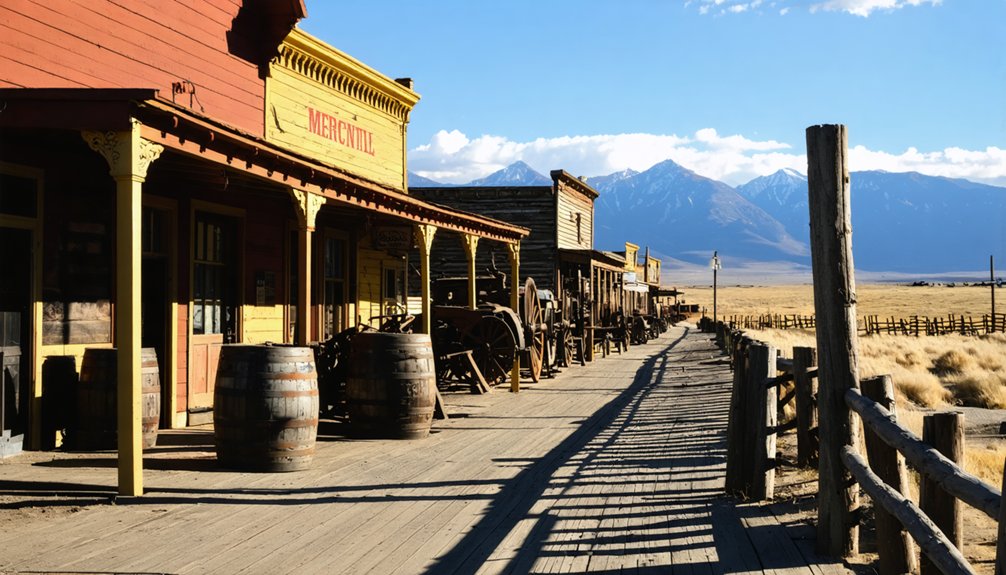
Bodie delivers unmatched historic architecture — a genuine frozen-in-time mining town with intact structures and local legends baked into every weathered plank.
The Chemung Mine adds industrial-era grit, with mill remnants that round out the region’s gold rush narrative.
Masonic connects naturally to both sites along the Bridgeport backcountry corridor, so stringing all three together isn’t just convenient — it’s the smartest way to experience the full arc of eastern Sierra mining history.
Pack water, run high clearance, and give yourself a full day.
This combo rewards the bold.
Route Planning And Logistics
Pulling off this three-site road trip takes more than ambition — it takes a solid route plan. Local folklore rewards those who arrive prepared, not stranded on a rutted backroad at dusk.
- Start in Bridgeport — it’s your fuel, food, and lodging hub.
- Take Sweetwater Road to Masonic (~8 miles, high clearance recommended).
- Head south to Bodie via the Bodie-Masonic Road connection.
- Swing by Chemung Mine as a natural corridor stop.
- Road safety demands 4WD on the Sweetwater approach — don’t gamble it.
Each leg runs roughly 10–15 miles through remote basin and mountain terrain. Services vanish once you leave Bridgeport, so pack water, a spare tire, and a paper map.
The freedom out here is real — but so are the consequences of poor planning.
What Each Site Offers
Each site pulls its weight differently, and understanding what you’re actually walking into helps you sequence the day with intention rather than guesswork. Masonic delivers raw, unpolished solitude — stone cabins, a timbered mill frame, and local folklore thick with unsolved deaths and whispered legends. It rewards the curious, not the casual.
Bodie hits harder on preservation efforts, with California State Parks maintaining a deliberate state of “arrested decay” across hundreds of structures. You’ll feel the scale immediately.
The Chemung Mine adds industrial texture — machinery remnants and a mill site that contextualizes the region’s broader mining ambition.
Together, these three sites build a layered picture of boom, bust, and abandonment that no single stop can deliver alone. Sequence them well, and the landscape tells a complete story.
What to Bring for the Drive to Masonic, Bodie, and the Chemung Mine
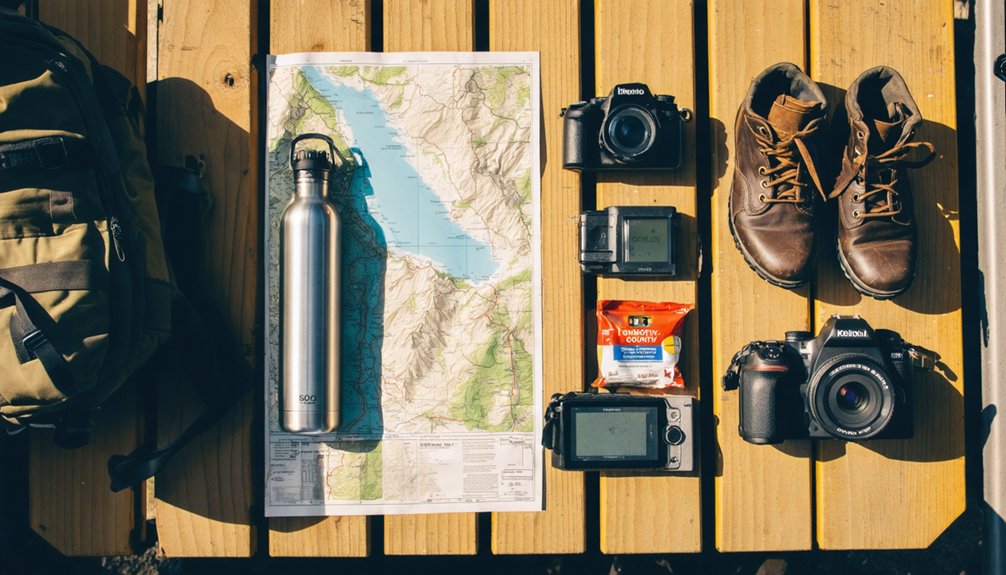
Before you turn a wheel toward Masonic or Bodie, you’ll want to run through a hard checklist covering both your gear and your vehicle’s readiness for remote, high-desert backcountry.
Pack water, food, a paper map, a first-aid kit, and a portable jump starter, since cell service is unreliable and services are nonexistent along these routes.
Your vehicle should have high clearance, a full spare, and ideally 4WD, especially if you’re taking the Sweetwater approach into Masonic.
Essential Gear and Supplies
Packing smart makes the difference between a rewarding backcountry run and a trip that ends on the side of Masonic Road. These roads are remote, services are nonexistent, and the terrain doesn’t forgive unpreparedness.
You’re heading into country where local legends echo through collapsed stone cabins and historical artifacts surface from the dust without warning.
Bring everything you need before you leave Bridgeport:
- Extra water — at least one gallon per person
- High-clearance spare tire with a working jack
- Paper maps or downloaded offline GPS — cell service drops fast
- Sun protection — hat, sunscreen, and UV-blocking layers
- Basic recovery gear — tow strap, shovel, and traction boards for soft shoulders
Don’t assume someone else is coming. Out here, you’re on your own.
Vehicle Readiness Checklist
Getting your rig road-ready before you roll out toward Masonic, Bodie, or the Chemung Mine isn’t just smart—it’s the difference between reaching those stone cabin ruins and waiting hours for a tow on a graded dirt road with no cell signal.
The Sweetwater approach demands 4WD and high clearance—no exceptions. Before you leave, confirm your spare tire is mounted and inflated, your jack works, and you’re carrying extra fuel. Cell coverage disappears fast out here. Download offline maps.
Pack recovery gear—traction boards earn their weight in remote terrain. The legends and lore surrounding these mining relics are worth chasing, but only if your rig can handle the backcountry miles separating you from them. Prepare the vehicle first. Chase the history second.
Frequently Asked Questions
What Was Masonic’s Population at Its Peak During the Mining Boom?
At its peak, Masonic held just over 1,000 souls chasing gold through bold mining techniques. You’d have witnessed a wild boomtown before population decline swept it into eerie, windswept silence.
When Did Masonic, California Finally Become a Ghost Town?
Masonic finally became a ghost town in the 1930s, leaving behind abandoned structures steeped in haunting legends. You’ll walk where over 1,000 souls once thrived, now surrendered to silence, aspen groves, and the untamed Eastern Sierra wilderness.
Did Masonic Have a School, Post Office, or Hotel During Its Peak?
Yes, during Masonic’s founding history, you’d have found a school, post office, hotel, and general store thriving there. Local legends echo through those vanished walls, reminding you that real community once pulse beneath these rugged, freedom-calling Sierra skies.
Which Section of Masonic Contains the Most Surviving Ruins Today?
You’ll find the most surviving ruins in Middle Town, where historic architecture whispers local legends at every turn. Explore stone cabins and mill remnants, and you’ll uncover Masonic’s rugged, gold-rush soul waiting boldly for adventurous spirits like yours.
Were the Gold Ore Bodies at Masonic Considered Rich or Low-Grade?
Like a gambler’s dream, the gold vein at Masonic ran rich but unpredictable—mining techniques couldn’t outsmart nature’s irregular pockets. You’d strike it big, then watch the wealth vanish, leaving behind breathtaking ruins and broken promises.
References
- https://en.wikipedia.org/wiki/Masonic
- https://nvtami.com/2020/06/26/masonic-california/
- https://historynet.com/ghost-towns-masonic-california/
- https://sierrarecmagazine.com/discover-masonic-ghost-town-and-so-much-more-4×4-near-bridgeport/
- https://www.youtube.com/watch?v=DWdqtr-SgMY
- https://www.youtube.com/watch?v=-Rtr16fuipM
- https://www.youtube.com/watch?v=AIiAIjZsIXg
- https://goldexplorers.com/masonic/
- https://pt.abcdef.wiki/wiki/Masonic