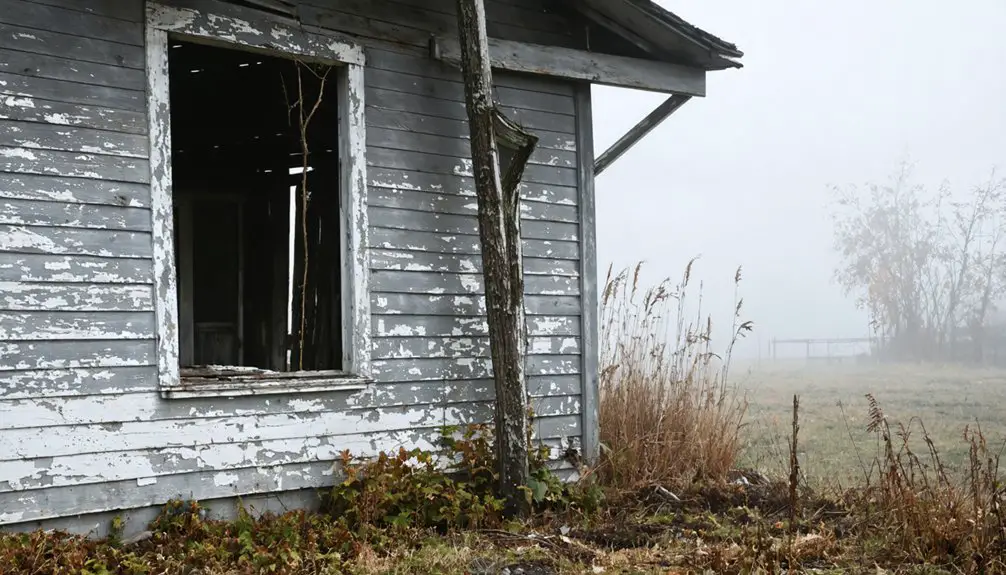
Planning a ghost town road trip to Pinnepog, Michigan means chasing a town that technically no longer exists by name. A 19th-century naming dispute split the settlement in two, and federal postal rules finished the job. Today, you’ll explore the quiet rural crossroads of Pinnebog and the vanished lumber town of Port Crescent, now preserved as a state park. Stick around to uncover the full story behind one of Michigan’s most fascinating disappearing acts.
Key Takeaways
- Pinnebog, established around 1841, sits at the rural junction of W. Kinde Rd. and N. Pinnebog Rd. in Hume Township, Huron County.
- Bring county road maps, as GPS coverage is inconsistent; Kinde offers basic services before you explore the area.
- Pinnebog retains a quiet rural crossroads feel, with Heck’s being the only surviving 19th-century structure nearby.
- Port Crescent, the renamed sister settlement, became a ghost town by 1936 and is now preserved as a 500-acre state park.
- Visit in late spring, summer, or fall for the best trail access, photography conditions, and atmospheric ghost town exploration.
What Was Pinnepog, Michigan?
Before it disappeared from the map, Pinnepog was a small but active settlement tucked into Michigan’s Thumb region, near the river that shares its name. The name itself traces back to a Chippewa term meaning “partridge drum,” giving the place an identity rooted in the land long before settlers arrived.
Walter Hume established the community around 1841, building a log cabin, trading post, and inn that drew early traffic through Huron County. The settlement grew around lumbering and trade, leaving behind local legends tied to its frontier origins.
Its historical architecture reflected that rugged era, though little of it survived the years that followed. A naming conflict with a nearby settlement eventually split the community’s identity, giving rise to both Pinnebog and the doomed Port Crescent.
The Naming Feud That Split One Town Into Two
What happens when two towns share the same name and both want a post office? That’s exactly the conflict that reshaped this corner of Huron County’s cultural heritage. Two neighboring settlements both called themselves Pinnepog, and federal postal rules forced a split.
Here’s how the feud unfolded:
- Walter Hume established the original Pinnepog settlement around 1841–1844.
- A second nearby community adopted the identical name, creating an administrative collision.
- One town surrendered the name, rebranding as Pinnebog to secure its post office.
- The original settlement eventually became Port Crescent, later fading into a ghost town by 1936.
That name swap is now a rural preservation footnote worth chasing. You’re fundamentally road-tripping through the aftermath of a 19th-century identity crisis.
Why Pinnepog Vanished While Pinnebog Survived
Winning the naming feud gave Pinnebog something more valuable than a post office — it gave the town a reason to keep existing. The original Pinnepog, stripped of its identity, rebranded as Port Crescent and leaned hard into lumbering and lake commerce. That gamble failed. By 1936, Port Crescent was a complete ghost town, its cultural significance reduced to faint traces beneath what’s now a state park.
Pinnebog took a quieter path. It never boomed, but it never fully collapsed either. A handful of residents remained, and architectural remnants — most notably Heck’s — held on where other structures disappeared.
You won’t find a preserved village waiting for you, but you’ll find something rarer: a place that simply refused to vanish entirely.
What Does Pinnebog Actually Look Like Today?
Driving into Pinnebog today, you’ll notice the absence before you notice anything else. The 1800s buildings are mostly gone, leaving rural scenery and quiet roads as your primary companions. Cultural preservation here isn’t a museum — it’s a place name and a handful of surviving structures.
Pinnebog doesn’t greet you with grandeur — it greets you with absence, where silence has replaced the sawdust and timber.
Here’s what you’ll actually find:
- The W. Kinde Rd. and N. Pinnebog Rd. junction — your clearest landmark
- Heck’s — reportedly the sole surviving business remnant
- Open farmland — replacing what was once an active lumber community
- A few scattered structures — more historic remnant than preserved village
Don’t expect dramatic ruins. Pinnebog rewards visitors who appreciate landscape as history — where absence itself tells the story.
Is Port Crescent the Real Ghost Town Here?
If you’re chasing a true ghost town experience, Port Crescent delivers what Pinnebog can’t — a completely vanished townsite with no residents, no surviving storefronts, and nothing left but landscape.
The original Pinnepog settlement evolved into Port Crescent, declined sharply, and by 1936 had disappeared entirely, while its rival kept the name Pinnebog and held on just enough to survive.
You’ll find Port Crescent State Park occupying that former townsite now, making it the stronger ghost town stop and the more dramatic half of this two-spot Thumb-region road trip.
Port Crescent’s Ghost Town Status
While Pinnebog holds onto a whisper of its past, Port Crescent is the ghost town that’ll really stop you in your tracks. By 1936, the town had completely vanished, leaving only rural landscapes where a bustling lumber community once thrived.
Today, Port Crescent State Park preserves the memory through historical preservation efforts on land the state first purchased in 1956.
Here’s what you’ll find at Port Crescent:
- A former townsite with no surviving structures
- Shoreline features shaped by decades of natural reclamation
- Over 500 acres of protected land open for exploration
- Faint traces where streets and buildings once stood
You won’t find ruins here — you’ll find absence, and that emptiness tells the story more powerfully than any standing wall could.
Pinnebog Versus Port Crescent
Both Pinnebog and Port Crescent carry the ghost-town label, but they don’t wear it the same way. Pinnebog still has a handful of residents and scattered architectural remnants, making it a living fragment of its 19th-century past. It’s faded, not finished.
Port Crescent is the real ghost town. Historical land use there shifted from a bustling lumber-era settlement to complete abandonment by 1936. Nothing meaningful survived. Today, a state park covers the former townsite, offering trails and shoreline access where buildings once stood.
When you visit both, you’re comparing two different endings to the same origin story. Pinnebog kept breathing; Port Crescent didn’t. If you want the heavier ghost-town atmosphere, Port Crescent delivers it. Pinnebog gives you the name and a quieter kind of disappearance.
The Stronger Ghost Town
Port Crescent earns the ghost-town title more completely than Pinnebog ever could. By 1936, it had vanished entirely, leaving local folklore and faint landscape traces as its only legacy.
Historical land use shifted from lumber boomtown to silence, and now Port Crescent State Park covers the former townsite.
When you visit, you’ll find:
- No surviving buildings — the town fabric is completely gone
- State park access — 579+ acres opened for public exploration
- Shoreline remnants — natural features outlasted every structure
- Local folklore — stories connecting the original Pinnepog name to this lost place
Pair this stop with Pinnebog and you’ve built the definitive Thumb-region ghost-town loop.
Port Crescent delivers the dramatic finish your road trip deserves.
How to Road Trip Pinnebog and Port Crescent Together
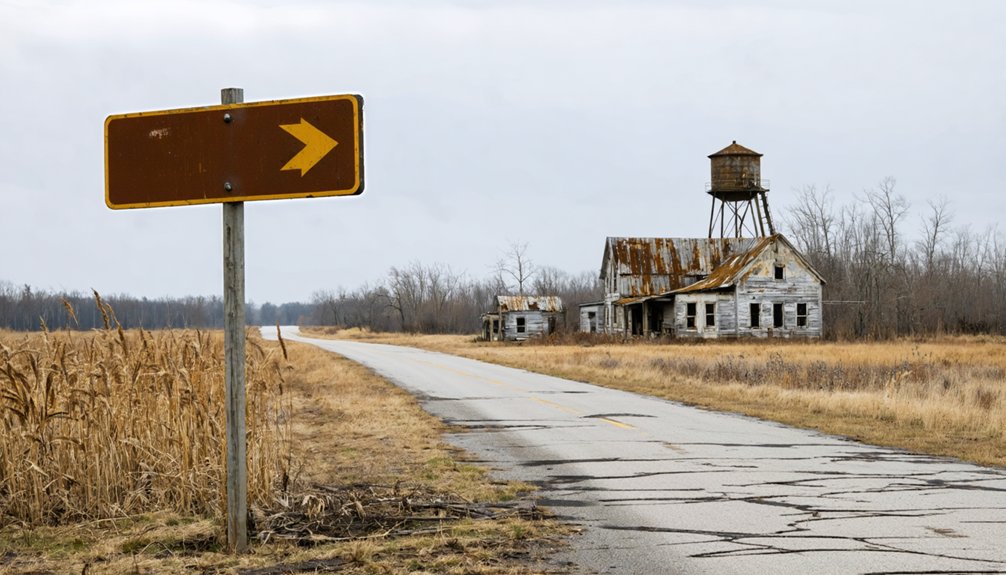
Combining these 2 stops into a single Thumb-region loop takes minimal planning but delivers a surprisingly rich slice of Michigan’s ghost-town history.
Start at the junction of W. Kinde Rd. and N. Pinnebog Rd., where Pinnebog’s rural remnants anchor the trip’s opening chapter. You won’t find many historical artifacts here, but the landscape itself tells the story.
Then drive toward Port Crescent State Park, where scenic viewpoints along Lake Huron’s shoreline reward the effort. The park replaced a ghost town that vanished completely by 1936, so expect atmosphere over architecture.
Together, both stops form a compact loop through Huron County that balances living history with a fully vanished townsite. Bring a map, keep expectations realistic, and let the open Thumb countryside do the heavy lifting.
Where Exactly Is Pinnebog and How Do You Get There?
Tucked into Hume Township in Michigan’s Thumb region, Pinnebog sits near the junction of W. Kinde Rd. and N. Pinnebog Rd. in Huron County. Don’t expect modern amenities here — this is raw, open countryside carrying local legends from the 1800s.
Here’s how to orient your visit:
- Start point: Target the W. Kinde Rd. and N. Pinnebog Rd. intersection as your arrival anchor.
- Nearest reference town: Kinde offers basic services before you head out.
- River marker: The Pinnebog River runs nearby, confirming you’re in the right area.
- Navigation tip: Use county road maps — GPS coverage can be inconsistent in rural Huron County.
You’re driving toward a place that exists more as history than destination.
What Will You Actually Find at Each Stop?

When you pull up to Pinnebog, don’t expect a preserved village frozen in time — you’ll find a quiet rural crossroads where most of the 1800s buildings have long since disappeared. Heck’s stands as the sole surviving structure, and local legends fill the gaps where historic markers don’t. The landscape itself tells the story through open fields and scattered remnants of an old settlement pattern.
Your second stop, Port Crescent State Park, delivers a different experience. The former townsite is fundamentally gone, swallowed by shoreline and parkland since the state began purchasing acreage in 1956. You’ll walk terrain where a lumber town once thrived, spotting faint traces rather than intact ruins.
Together, both stops reward curiosity more than sightseeing — bring your imagination along.
When Is the Best Time to Visit Pinnebog and Port Crescent?
Timing your visit shapes everything about this road trip. Both Pinnebog and Port Crescent reward visitors who plan around the seasons and local conditions.
- Late spring opens Port Crescent State Park fully, giving you dry trails and clear views of the shoreline where the ghost town once stood.
- Summer brings long daylight hours, perfect for exploring historic landmarks and photographing the rural landscape around Pinnebog’s crossroads.
- Fall offers fewer crowds and vivid color along the Thumb’s back roads, making local folklore feel more alive against the quiet scenery.
- Winter closes parts of the park but leaves Pinnebog accessible for a stark, atmospheric drive through frozen farmland.
Avoid peak holiday weekends if you want the roads and remnants mostly to yourself.
Frequently Asked Questions
Is There an Entrance Fee to Visit Port Crescent State Park?
You’ll likely pay a standard Michigan DNR day-use fee to enter Port Crescent State Park. Your fee supports historical preservation and visitor amenities, giving you free access to explore the ghost town’s fascinating, fading landscape on your own terms.
Are There Camping Facilities Available at Port Crescent State Park?
Yes, you’ll find camping facilities at Port Crescent State Park! Enjoy available camping amenities like modern sites near scenic shorelines. Always check current park regulations before you go, ensuring your stay remains a truly free, adventurous escape.
What Other Ghost Towns Are Located Nearby in Huron County?
Pioneering past places await you! Beyond Pinnebog, you’ll find Port Crescent’s historical ghost town legends dominating Huron County’s abandoned landscape. Unlike abandoned mining towns, these vanished lumber communities leave you exploring faint traces of Michigan’s fascinating, freedom-filled frontier heritage.
What Does the Chippewa Term “Partridge Drum” Actually Refer To?
You’ll find “partridge drum” references the drumming sound a ruffed grouse makes during courtship. Through traditional storytelling, the Chippewa recognized this bird’s cultural significance, naming the river after that distinctive, rhythmic thumping echoing through Michigan’s wilderness.
Who Was Walter Hume, and Where Did He Come From?
You’ll find Walter Hume’s historical origins frustratingly vague — records credit him with building Pinnebog’s first log cabin and trading post around 1841-1844, but Walter Hume’s background and birthplace remain largely undocumented, leaving his true origins a compelling mystery.
References
- https://thumbwind.com/2022/11/14/pinnebog/
- https://www.nailhed.com/2014/12/thumbs-up.html
- https://99wfmk.com/pinnebogmichigan/
- https://enjoyer.com/port-crescent-michigan-ghost-town-burned/
- https://vi.wikipedia.org/wiki/Danh_sách_phố_ma_tại_Michigan
- https://975now.com/portcrescentmichigan/
- https://www.huroncounty.com/edc-news-information/ghost-towns
- https://medium.com/life-fun-in-michigans-thumb/pinnebog-michigan-glimpses-of-a-bygone-era-video-ac9489c55bb6
- https://www.mapquest.com/us/michigan/pinnebog-mi-282913428
- https://lostinmichigan.net/lost-in-pinnebog-2/