Planning a ghost town road trip to La Grange, California, means driving just 30 miles east of Modesto on State Route 132 to one of the Gold Rush era’s most overlooked boomtowns. You’ll find stone buildings from the 1850s still standing quietly along the Tuolumne River, remnants of a town that once housed nearly 5,000 residents. It’s an easy half-day adventure, and there’s far more to this forgotten California landmark than first meets the eye.
Key Takeaways
- La Grange is located 30 miles east of Modesto on State Route 132, requiring about 45 minutes to drive each way.
- Visit during spring or fall for mild temperatures and the best overall outdoor experience.
- Key historic stops include two stone buildings, a wooden IOOF hall, and an old adobe post office.
- Fill your gas tank beforehand and pack snacks, as La Grange has no modern amenities or services.
- Nearby attractions include La Grange Dam, the Tuolumne River, and active gold dredging operations worth exploring.
What Is the La Grange Ghost Town Story?
Before it became a quiet footnote along State Route 132, La Grange was a booming Gold Rush settlement with thousands of residents, three stage lines, and even a stint as the Stanislaus County seat.
French miners founded it in 1852 after floods forced their original camp upstream along the Tuolumne River.
Is La Grange Worth the Drive From Modesto?
That Gold Rush history becomes a lot more tangible when you’re only 30 miles from it. La Grange makes an easy half-day detour from Modesto via State Route 132, and the drive itself rewards you with open country and river scenery.
Thirty miles from Modesto, Gold Rush history stops being a textbook story and starts feeling real.
Here’s what makes it worth your time:
- Historic architecture – Two stone buildings, an IOOF hall, and an adobe post office tell the story without a museum
- Tuolumne River corridor – Strong spot for wildlife viewing along the water
- La Grange Dam – A scenic add-on requiring zero extra effort
- Gold Rush context – A former county seat of 4,000 people, now nearly silent
- Local cuisine – Combine the stop with a meal in Modesto before or after
How Did La Grange Go From Gold Rush Boomtown to Ghost Town?
What made La Grange so powerful during the Gold Rush is exactly what made its decline inevitable. The gold ran out. When French miners first struck it rich along the Tuolumne River in 1852, thousands followed, pushing the population to nearly 5,000.
Stage lines connected the town, and La Grange even served as the Stanislaus County seat from 1856 to 1862. Then the ore thinned, the county seat moved to Knights Ferry by just 29 votes, and people left fast.
Today, you’ll find wildlife viewing along the river corridor replacing the mining rush, and local cuisine options are scarce compared to that boomtown era. What remains are stone buildings and silence — a sharp contrast to the chaotic prosperity that once defined this stretch of California road.
What Remains of La Grange’s Gold Rush Buildings?
When you pull into La Grange today, you’ll find two large stone buildings still standing from the mid-1800s, their walls quietly testifying to the town’s boomtown past.
You can also spot a wooden IOOF hall at the town center, one of the few surviving wooden structures from that era.
These remnants, along with an old adobe post office, give you a compact but vivid look at what was once a county seat serving thousands of Gold Rush settlers.
Standing Stone Buildings
Although most Gold Rush boomtowns left little more than faint foundations and scattered debris, La Grange still holds a small collection of standing structures that you can see firsthand. These buildings connect you directly to an era when thousands lived and worked here.
Look for these standout remnants as you explore:
- Two large stone buildings anchoring the town’s historic core
- A wooden IOOF hall still rising from the town center
- An old adobe post office frozen in time
- Local artisan crafts displayed near restored structures
- Stops offering local cuisine reflecting the region’s rural character
Each structure tells a story that no museum exhibit can replicate. You’re walking through living history, where Gold Rush ambition literally shaped the stone walls still standing before you.
Surviving Wooden Structures
Among La Grange’s surviving structures, the wooden IOOF hall stands as one of the most striking holdovers from the Gold Rush era. You’ll find it anchoring the town center, its weathered frame holding decades of boomtown memory.
Unlike the stone buildings nearby, this structure reminds you how much of early California was built fast and built from timber.
As you explore, imagine the community that once gathered here before chasing scenic overlooks along the Tuolumne River or sampling local cuisine in surrounding Stanislaus County towns.
The hall’s survival is remarkable given the floods, fires, and decades of neglect that erased so much else. Standing in front of it, you get a raw, unfiltered connection to the California that existed long before the crowds arrived.
How Do You Get to La Grange From Modesto?
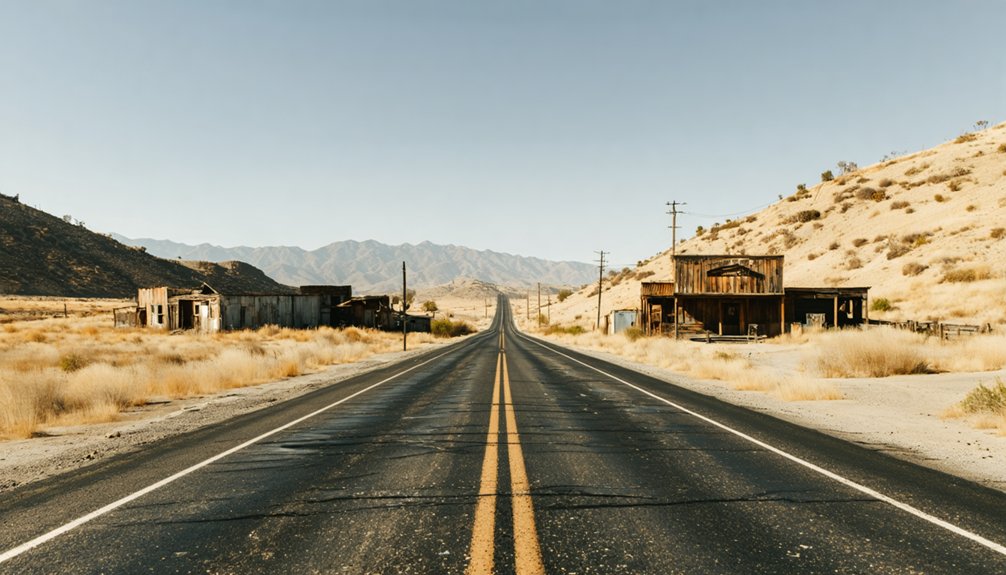
Getting to La Grange from Modesto is a straightforward 30-mile drive east on State Route 132, and you won’t need anything more than a standard 2WD vehicle to make the trip.
The route opens up the Central Valley landscape and delivers you to gold rush history at a relaxed pace.
Before you go, keep these travel tips in mind:
- Fill your tank in Modesto before heading out
- Pack snacks since local dining options are limited along the route
- Watch for scenic viewpoints along the Tuolumne River corridor
- Plan for roughly 45 minutes of drive time each way
- Visit during spring or fall for the most comfortable weather conditions
The open road and easy access make this half-day detour completely worth your time.
What Does La Grange Actually Look Like on the Ground Today?
Once you arrive in La Grange, the quiet settles in fast. There are no modern amenities crowding the landscape — no strip malls, no traffic lights, no noise.
What you find instead are two large stone buildings standing firm against time, a wooden IOOF hall anchoring the town center, and an old adobe post office slowly surrendering to the elements.
Local flora — dry grasses, scattered oaks, and riverside vegetation along the Tuolumne — frames these remnants with an unhurried, open-country feel.
A handful of full-time residents still call this place home, which keeps it from feeling completely abandoned. You’re walking through a working relic, not a museum.
The contrast between what La Grange once was and what it’s now hits you immediately.
What Gold Rush and River Landmarks Are Near La Grange?
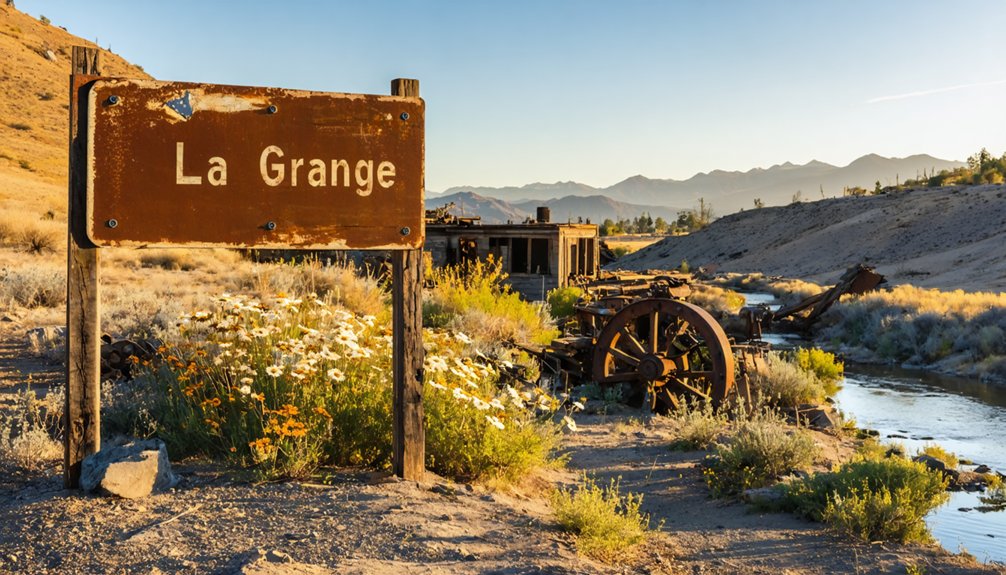
La Grange doesn’t exist in isolation — the surrounding area adds real depth to any visit. You’ll find gold rush landmarks and natural scenery that bring local folklore and mining techniques to life beyond the town’s stone walls.
Explore these nearby highlights:
- La Grange Dam and Reservoir — a scenic river stop along the Tuolumne corridor
- Active gold dredgers — massive machines still working the broader area using large-scale mining techniques
- Tuolumne River banks — where French miners originally staked their claims in 1852
- Rolling gold country hills — open cattle land stretching across the surrounding rural landscape
- Historic mining sites — tied to local folklore about boomtown fortunes won and lost
Together, these landmarks turn La Grange into a full gold rush experience rather than a single roadside stop.
When Is the Best Time of Year to Road Trip to La Grange?
Although La Grange welcomes visitors year-round, you’ll get the most out of your road trip during spring and fall, when mild temperatures make outdoor exploration comfortable without the heat that settles over the Central Valley in summer.
Spring and fall offer the best conditions for exploring La Grange, with mild temperatures perfect for outdoor adventure.
Spring brings green hills along the Tuolumne River corridor, ideal conditions for wildlife sightings near the water, and pleasant weather for walking among the historic stone buildings.
Fall offers cooler air and quieter roads, giving you more freedom to explore at your own pace.
Summer remains doable but arrives hot, so plan early morning visits.
Winter stays cool and calm, though some days turn wet.
Whenever you go, pair your stop with local cuisine from nearby towns to round out the experience.
Frequently Asked Questions
Was La Grange Ever the Official County Seat of Stanislaus County?
Yes, you’ll love knowing La Grange once served as Stanislaus County’s official county seat from 1856 to 1862! Its historic landmarks whisper local legends of a thriving boomtown that lost the seat by just 29 votes.
How Close Is La Grange Dam to the Historic Ghost Town Center?
You’ll find La Grange Dam sitting just a short distance from the ghost town history at the historic center, making dam proximity an easy addition to your free-spirited California road trip exploration.
Can a Standard 2WD Vehicle Safely Reach La Grange Without Issues?
You don’t need off road capabilities to reach La Grange — standard 2WD handles it fine. Just make sure your vehicle maintenance is current, and you’ll cruise confidently through California’s open country toward this mesmerizing Gold Rush remnant.
How Many Full-Time Residents Still Live in La Grange Today?
Don’t expect a crowd — a few hundred hearty souls call La Grange home, guarding its historic landmarks and local legends. It’s barely a boomtown echo, but you’ll find its quiet pulse invigoratingly genuine.
By How Many Votes Did La Grange Lose Its County Seat Status?
You’ll love knowing that La Grange lost its county seat status by just 29 votes in 1862! As you explore its historical landmarks and scenic drives, that razor-thin margin makes this freedom-filled detour even more fascinating.
References
- https://www.ghosttowns.com/states/ca/lagrange.html
- https://westernmininghistory.com/towns/california/la-grange/
- https://en.wikipedia.org/wiki/List_of_ghost_towns_in_California
- https://ohp.parks.ca.gov/ListedResources/Detail/414
- https://en.wikipedia.org/wiki/Lists_of_ghost_towns_in_the_United_States
- https://en.wikipedia.org/wiki/List_of_ghost_towns_in_Louisiana
- https://halfwaypointusa.com/
- https://en.wikipedia.org/wiki/La_Grange
- https://repository.lsu.edu/gradschool_disstheses/6964/
- https://www.travelmath.com/driving-time/from/Louisiana/to/California