Planning a ghost town road trip to Pioneer, Nevada means gearing up for rugged 4WD terrain, scorching desert conditions, and a hauntingly empty landscape where a booming 1908 gold rush town once housed 2,500 people overnight. You’ll want to visit in spring or fall, pack extra water, and use Beatty as your base camp. Nearby Rhyolite adds incredible stops to your route, and there’s far more to know before you head out.
Key Takeaways
- Pioneer, Nevada, once home to 2,500 residents during the 1908 gold rush, is now a barren ghost town with scattered foundations and debris.
- A 4WD vehicle is essential for accessing Pioneer’s rough terrain; use Beatty or Springdale as convenient starting points.
- Visit during spring (March–May) or fall (September–October) for mild temperatures and safer road conditions.
- Pair Pioneer with nearby Rhyolite, featuring the Cook Bank Building and Bottle House, for a complete Bullfrog District route.
- Pack water, food, a first-aid kit, recovery gear, and offline maps, as cell service and resources are extremely limited.
What Drew Thousands to Pioneer, Nevada in 1908?
Like so many Nevada boomtowns, Pioneer didn’t grow slowly—it exploded. Gold discoveries near the Pioneer and Mayflower mines in the Bullfrog Hills triggered an immediate rush, drawing fortune-seekers hungry for opportunity.
Gold didn’t trickle into Pioneer—it detonated, pulling fortune-seekers into the Bullfrog Hills almost overnight.
By 1908, roughly 2,500 residents had flooded the area, transforming raw desert into a functioning boomtown economy almost overnight.
You can imagine the energy—hotels, saloons, restaurants, a theater, and even a Western Union office all operating simultaneously. A daily stagecoach connected Pioneer to nearby Springdale, keeping commerce moving.
Mining history here reflects a familiar Nevada pattern: rich surface deposits sparked wild optimism, speculation ran hot, and people bet everything on the district’s promise.
The gold was real enough to build a town. Whether it would last was another question entirely.
What’s Actually Left to See at Pioneer Today?
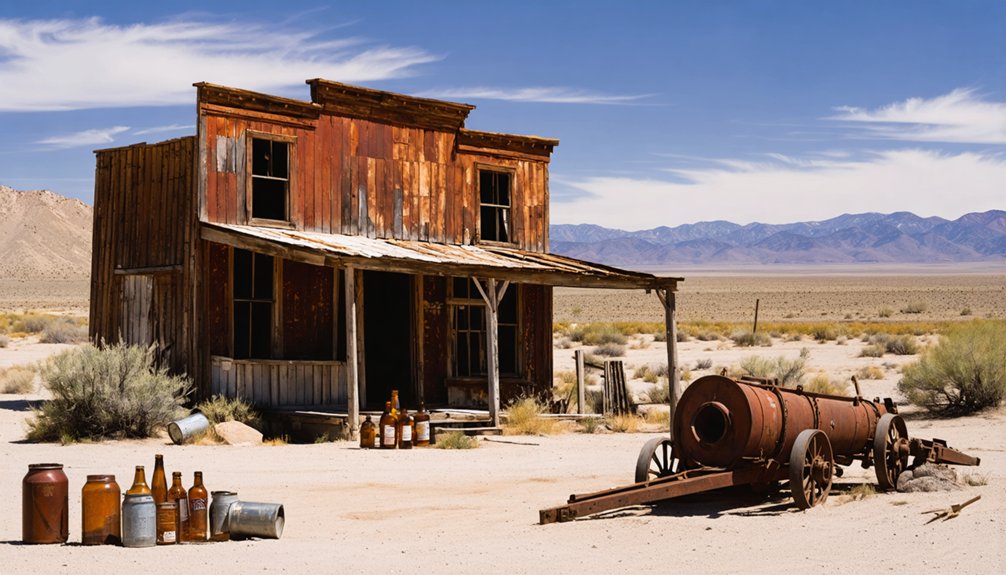
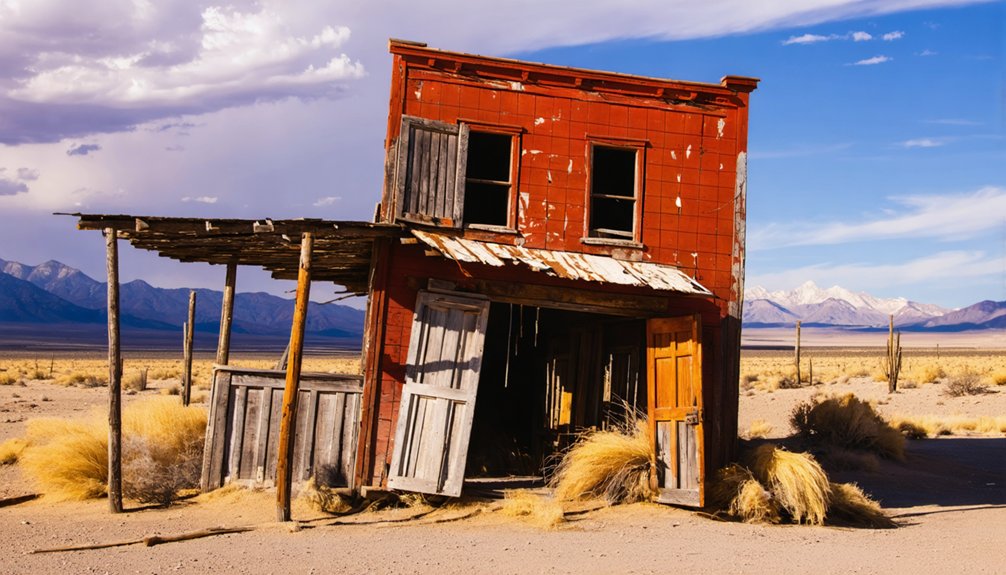
What the boom left behind is almost nothing. When you arrive at Pioneer today, you’ll find a barren, wind-swept site scattered with boards, debris, and concrete foundations where a town of 2,500 once hustled.
The ruined structures that remain are barely recognizable — leveled building sites stripped by time, fire, and salvagers. Still, the landscape rewards a sharp eye. You can spot historical artifacts embedded in the desert floor: fragments of mining equipment, stone foundations, and remnants of what was once a fully functioning business district.
Near the townsite, the Mayflower headframe and ore bin stand as the most substantial surviving features. It’s raw and unpolished, but that’s exactly the appeal — you’re standing inside authentic Nevada history, not a reconstructed version of it.
How Do You Get to Pioneer, Nevada by 4WD?
Getting to Pioneer isn’t a casual Sunday drive — you’ll need a 4WD vehicle and a readiness for rough desert terrain. The Bullfrog Hills deliver a raw, unfiltered desert experience for those willing to earn it.
Before you head out, lock in these three essentials:
- Navigate via Beatty or Springdale — both towns serve as practical jumping-off points toward the Bullfrog Hills corridor.
- Pack recovery gear — loose rock and sandy washes can strand unprepared vehicles miles from help.
- Arrive prepared to explore on foot — mining remnants and historical artifacts scatter across uneven ground beyond where even 4WD vehicles can safely travel.
The reward is direct access to one of Nevada’s most honest ghost towns — rugged, unpolished, and entirely yours to discover.
When Is the Best Time of Year to Visit Pioneer?
Once you’ve mapped out your route, timing your visit becomes the next piece of the puzzle — and in Nevada’s Mojave-adjacent desert, it matters more than you might expect. Seasonal weather here swings hard in both directions.
Summers push temperatures well above 100°F, turning your desert drive into a genuine visitor safety risk — heat exhaustion, vehicle overheating, and scarce shade make July and August dangerous for unprepared travelers.
Winter brings cooler, more comfortable conditions, but cold snaps and occasional road washouts can complicate rough-terrain access.
Your best windows are spring (March through May) and fall (September through October), when mild temperatures make the trek manageable and the desert landscape feels alive.
Pack water, check road conditions beforehand, and always tell someone your plans before heading out.
Which Ghost Towns Near Pioneer Are Worth Adding to Your Route?
If you’re already making the trek to Pioneer, you’ll want to add Rhyolite to your route — its preserved ruins, including a bottle house and bank walls, make it one of Nevada’s most photogenic ghost towns.
Beatty works perfectly as your base camp, offering food, fuel, and lodging while placing you within easy striking distance of multiple Bullfrog District sites.
The broader Bullfrog Mining District ties these destinations together historically, giving your road trip a cohesive narrative beyond just Pioneer’s story.
Rhyolite’s Preserved Ruins
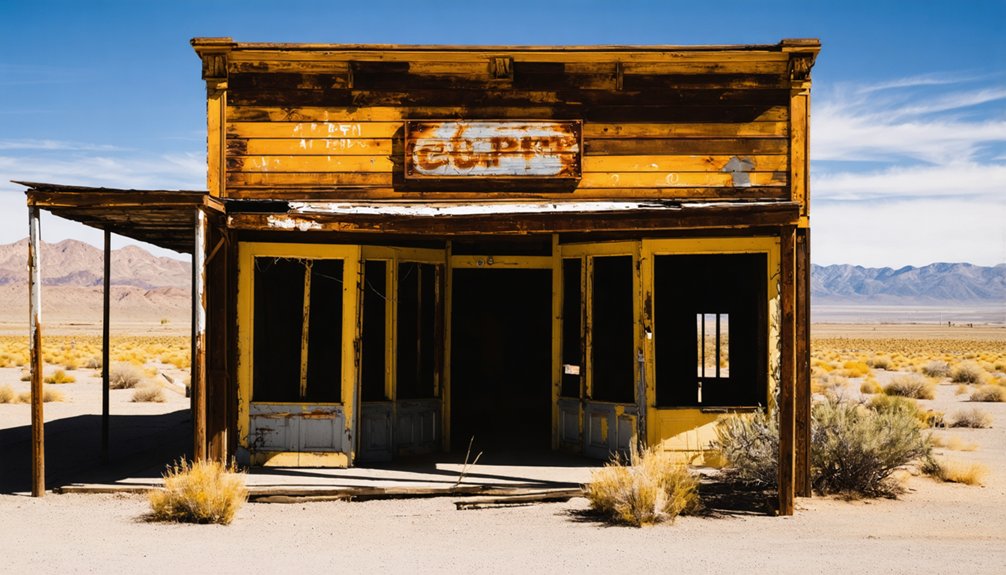
Just a short drive from Pioneer, Rhyolite stands as one of Nevada’s most dramatically preserved ghost towns and deserves a spot on your itinerary. Unlike Pioneer’s barren foundations, Rhyolite offers striking structural ruins that tell a vivid story of Nevada’s gold-rush era.
Three highlights you shouldn’t miss:
- The Cook Bank Building – Its crumbling three-story facade remains one of the desert’s most photographed historical artifacts.
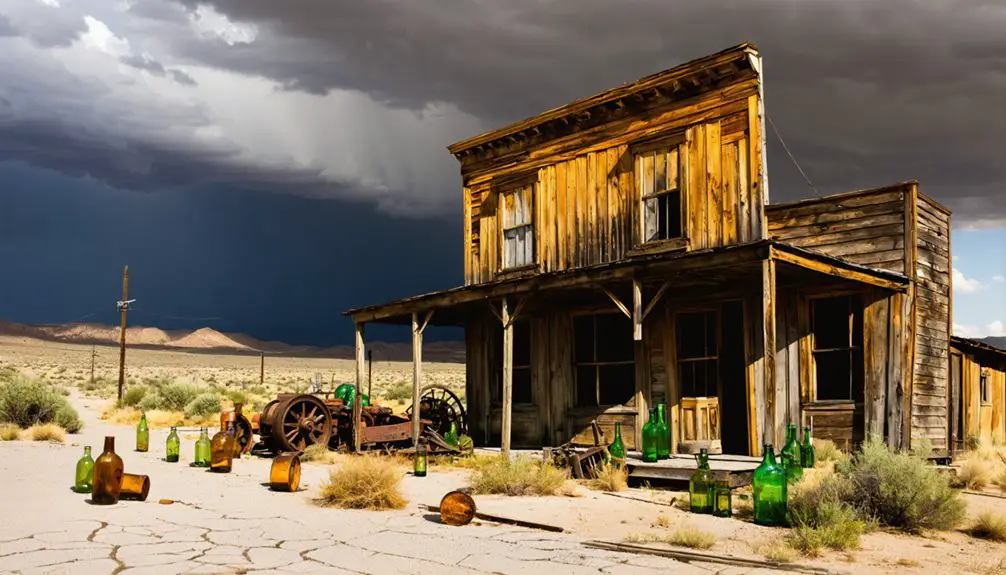
- The Bottle House – Built from 50,000 beer and liquor bottles, it showcases frontier ingenuity.
- The Train Depot – A haunting reminder of the railroad era that once fueled regional commerce.
Preservation challenges mean conditions change over time, so explore respectfully. Rhyolite rewards curious travelers who want tangible history rather than imagination alone.
Beatty As Base Camp
Beatty makes an ideal base camp for exploring Pioneer and the surrounding ghost towns of the Bullfrog Hills. Sitting close enough to Rhyolite, Pioneer, and the broader Bullfrog Mining District, it allows you to cover serious ground each day without breaking camp.
The town offers motels, fuel, and food — practical necessities before you head into rough desert terrain requiring 4WD. Local legends tied to Nevada’s gold-rush era come alive when you talk to long-time residents who’ll point you toward overlooked sites the travel guides miss.
Beatty also connects you directly to the region’s mining history, giving context to everything you’ll see scattered across Pioneer’s barren foundations. Use it as your anchor, plan your routes the night before, and push out early before the desert heat builds.
Bullfrog District Highlights
Once you’ve got Beatty locked in as your base, the surrounding Bullfrog District opens up a string of ghost towns worth looping into your route. Each stop adds depth to the region’s mining history and rewards explorers who crave open roads and forgotten places.
- Rhyolite – Nevada’s most dramatic ghost town, with standing ruins, a train depot, and a town layout still readable from the streets.
- Pioneer – Your primary destination, featuring scant foundations and Mayflower headframe remnants tucked into the Bullfrog Hills.
- Springdale – A quiet, lesser-known stop just two miles northeast of Pioneer, connected historically by daily stagecoach runs.
String these together and you’ve built a route that covers real ground without backtracking unnecessarily.
How Do You Plan a Full Bullfrog Hills Ghost Town Day Trip?
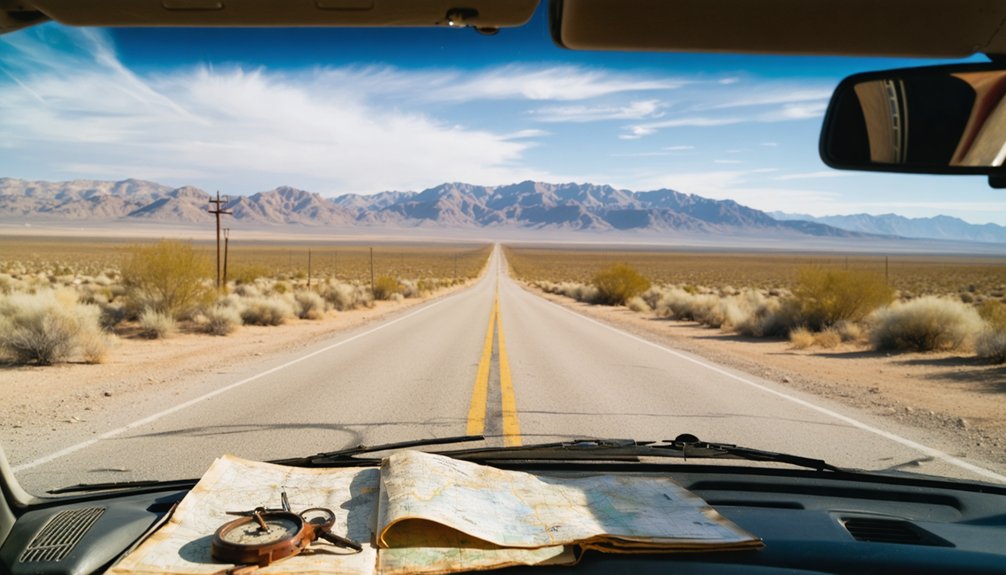
Planning a full Bullfrog Hills ghost town day trip means anchoring your route around Beatty, Nevada, which puts you within striking distance of Pioneer, Rhyolite, and the broader Bullfrog Mining District.
Start early, since desert heat builds fast and rough roads slow your pace. Hit Rhyolite first for its striking ruins and preserved structures, then push toward Pioneer via 4WD trails.
At Pioneer, you’ll scan scattered foundations, mining remnants, and historical artifacts left from the 1908 boom. The nearby Mayflower headframe is worth the detour.
Pack water, fuel, and a paper map since cell service drops out. By afternoon, loop back through Beatty to resupply.
This sequence keeps your drive logical, your exploration deep, and your freedom intact across some of Nevada’s most rewarding high-desert terrain.
What Should You Pack for the Drive Out to Pioneer?
Packing smart makes the difference between a memorable desert adventure and a dangerous one. Pioneer’s rough 4WD access and remote desert location demand serious preparation before you leave pavement behind.
Prioritize these three camping essentials and extras:
- Water and food – Carry more than you think you’ll need; desert heat drains you fast, and there’s nothing nearby.
- Navigation tools – Download offline maps since cell service is unreliable across the Bullfrog Hills.
- Photography gear – Bring a wide-angle lens for expansive desert landscapes and a macro lens for capturing weathered foundations and debris up close.
You’ll also want a first-aid kit, a spare tire, and recovery gear. Pioneer rewards the prepared traveler with raw, unfiltered Nevada history.
Frequently Asked Questions
Did Pioneer, Nevada Ever Have a School During Its Boomtown Years?
Yes, Pioneer’s boomtown years included a school that served local families — you’ll find it woven into pioneer community stories and ghost town architecture history, with records noting it once educated around 44 children during the town’s peak.
How Much Gold Ore Did the Pioneer Mining District Produce Overall?
You won’t strike it rich retracing their steps — the Pioneer Mining District’s gold extraction and ore processing efforts yielded a modest $1.6 million total. Not exactly a fortune, but it’s your kind of rebellious, freedom-chasing history!
Was Pioneer Divided Into Different Sections During Its Peak Population?
Yes, you’ll find Pioneer was divided into upper and lower towns at its peak! These historic landmarks showcase the ghost town preservation of a once-thriving community where you’d have explored distinct neighborhoods buzzing with frontier life.
When Did Pioneer’s Post Office Officially Open and Permanently Close?
You’ll find Pioneer’s post office opened in 1909 and permanently closed in 1931, giving you a fascinating Nevada history bookmark for ghost town tourism that spans over two decades of this remote desert community’s remarkable story.
Did Mining Activity at Pioneer Completely Stop After World War II?
After yielding $1.6 million in ore, mining didn’t completely stop post-WWII — it just never resumed large-scale. You’ll find ghost town preservation efforts minimal here, but mining relics preservation gives you raw, authentic remnants to explore freely.
References
- https://travelnevada.com/ghost-town/
- https://en.wikipedia.org/wiki/Pioneer
- https://savingplaces.org/stories/explore-wild-west-mining-history-in-nevada-ghost-towns
- https://www.smithsonianmag.com/sponsored/nevadas-living-and-abandoned-ghost-towns-180983342/
- https://en.wikipedia.org/wiki/List_of_ghost_towns_in_Nevada
- https://www.ghosttowns.com/states/nv/pioneer.htm
- https://www.destination4x4.com/pioneer-nevada-ghost-town-nye-county/
- https://theculturetrip.com/north-america/usa/nevada/articles/a-brief-history-of-the-pioneer-saloon