Plan your Arizona Strip road trip around Pipe Spring National Monument, where a remote desert spring sustained Kaibab Paiute civilization for thousands of years before Mormon pioneers arrived in 1870. You’ll explore Winsor Castle, walk trails lined with ancient petroglyphs, and drive landscapes unchanged since early settlement days. Ghost towns, canyon vistas, and rock art scatter across the surrounding region. Everything you need to make this journey unforgettable is waiting just ahead.
Key Takeaways
- Pipe Spring National Monument sits on the remote Arizona Strip, reachable via AZ-389 from Fredonia (14 miles west) or Hurricane, Utah (22 miles south).
- The region features ghost towns and ancient rock art scattered across the Arizona Strip, perfect for an exploratory road trip itinerary.
- From Las Vegas, the drive is approximately 150 miles and 2.5 hours east via Interstate 15, passing striking red canyon landscapes.
- The Ridge Trail offers a half-mile loop showcasing petroglyphs, dinosaur tracks, and panoramic views of historically rich surroundings.
- Nearby stops include the Grand Canyon North Rim (80 miles southeast), Zion National Park, and Kaibab Paiute cultural sites.
What Is Pipe Spring National Monument?
Tucked into the remote Arizona Strip, Pipe Spring National Monument is a sun-baked oasis where a natural spring has sustained life for thousands of years — first for the Kaibab Paiute Indians, then for Mormon pioneers who built Winsor Castle, a fortified ranch house that doubled as a cattle operation headquarters in 1870.
The Grand Canyon cuts this isolated stretch of northern Arizona off from the rest of the state, giving it a raw, frontier quality you won’t find anywhere else.
Inside the museum, historical artifacts tell stories of survival, adaptation, and cultural resilience. Native traditions are woven throughout the site’s identity, reminding you that this land held deep meaning long before settlers arrived.
It’s history you can walk through, touch, and genuinely feel.
Why Pipe Spring National Monument Belongs on Your Arizona Road Trip
Few stops on an Arizona road trip reward curiosity the way Pipe Spring does — you’re not just passing through a historic site, you’re standing inside a living crossroads where Kaibab Paiute heritage, Mormon pioneer grit, and the raw isolation of the Arizona Strip converge in one surprisingly compact, deeply layered place.
The natural spring that sustained local wildlife and ancient cultural traditions for thousands of years still anchors everything here. You’ll walk through fortified walls that once protected a cattle empire, explore a museum preserving Paiute survival stories, and hike a ridge trail revealing petroglyphs etched by people who understood this desert long before any road existed.
If you value genuine freedom and unfiltered history, Pipe Spring delivers both without the crowds that bury bigger monuments.
How Do You Get to Pipe Spring National Monument?
Getting to Pipe Spring means traversing the Arizona Strip, a region the Grand Canyon and Colorado River sever so completely from the rest of the state that you’ll likely approach from Utah.
Three routes bring you into this isolated corridor:
- From Hurricane, Utah, head south on UT-59 for 22 miles, then continue onto AZ-389 into Arizona.
- From Fredonia, Arizona, turn west onto AZ-389 and drive 14 miles directly to the monument.
- From Las Vegas, drive roughly 2.5 hours east via Interstate 15 into this open, untamed landscape.
Along these roads, local wildlife dots the high desert — pronghorn, ravens, lizards — setting the tone before you even arrive.
The journey itself feels like a prologue to the historical artifacts waiting inside Winsor Castle‘s fortified walls.
How Far Is Pipe Spring From Las Vegas and Salt Lake City?
If you’re coming from Las Vegas, you’ll cover roughly 150 miles via Interstate 15, putting Pipe Spring about 2.5 hours from the Nevada desert.
Salt Lake City sits approximately 6 hours north along the same interstate corridor, making the monument a worthwhile detour through Utah and into Arizona’s remote Strip country.
Both routes funnel you toward a landscape that hasn’t changed much since Mormon settlers and Kaibab Paiute people shared this rare desert spring.
Las Vegas Driving Distance
Sitting roughly 2.5 hours east of Las Vegas via Interstate 15, Pipe Spring National Monument is surprisingly within reach for a weekend escape from the Nevada desert. Trade neon lights for red canyon walls and centuries of living history. Here’s what makes this drive worth it:
- You’ll cross into Utah on I-15, then cut through open Arizona Strip country on AZ-389.
- Cultural traditions of the Kaibab Paiute unfold through museum artifacts and ancient petroglyphs along the Ridge Trail.
- Local cuisine options and a monument bookstore let you pause, refuel, and reflect before heading back.
That stretch of highway feels like genuine freedom — wide skies, sparse traffic, and a destination that rewards curiosity over comfort.
Salt Lake City Drive Time
Pipe Spring pulls travelers from opposite directions on Interstate 15, and Salt Lake City anchors the northern end of that corridor just as naturally as Las Vegas anchors the south.
You’re looking at roughly six hours of driving from Salt Lake City, a longer haul that rewards patience with changing terrain and open highway. Leave early enough to catch wildflower blooms along the roadside as elevation drops toward the Arizona Strip.
What Is Winsor Castle and Why Does Kaibab Paiute History Matter Here?
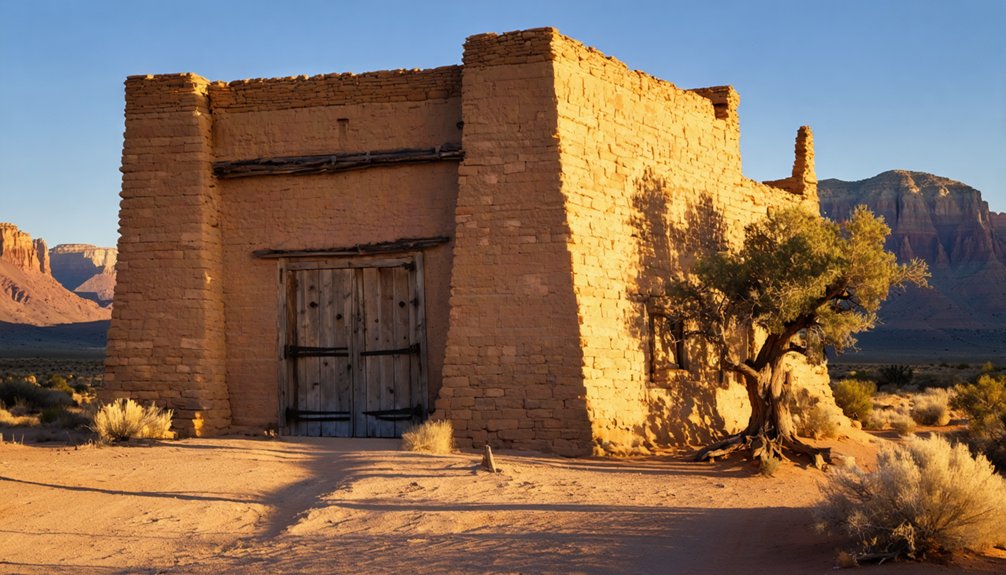
When you step inside Winsor Castle, you’re walking into one of the American West’s most fascinating intersections of Indigenous heritage and Mormon pioneer history. This fortified ranch house, built in 1870, stands on land where Kaibab Paiute people sustained life for thousands of years. Cultural preservation isn’t abstract here — it’s embedded in every wall and artifact.
Three reasons this heritage site demands your attention:
Three reasons Pipe Spring demands your attention: history, heritage, and the stories most textbooks never tell.
- The natural spring sustained Kaibab Paiute communities centuries before settlers arrived
- Museum artifacts chronicle Indigenous survival, resilience, and cultural continuity
- Pioneer cabins, orchards, and corrals reveal competing visions of the same land
You’ll leave understanding that Pipe Spring isn’t simply a ghost town — it’s a layered story about belonging, survival, and who gets to shape the West’s memory.
When Is Pipe Spring Open and How Do the Guided Tours Work?
Once you’ve absorbed the layered histories inside Winsor Castle, you’ll want to plan your visit around Pipe Spring’s seasonal hours to make the most of what’s here.
Summer runs 7:00 AM to 5:00 PM, while winter shifts to 8:00 AM. Guided castle tours run hourly until 4:30 PM in summer, so arrive early.
Morning hours reward you with cooler temperatures, better wildlife encounters near the spring, and softer light for photography tips worth remembering — east-facing walls glow warmly at dawn.
Rangers offer talks and trail walks during morning hours in both seasons.
The monument closes Thanksgiving, Christmas, and New Year’s Day, so check before you roll out.
Time your Ridge Trail hike early, camera ready, before afternoon heat shuts down your ambitions.
What Does the Pipe Spring Entrance Fee Cover?
At $10.00 per person for visitors 16 and older, your entrance fee buys seven days of access and folds in a $3.00 tribal use fee that goes directly to the Kaibab Band of Paiute Indians — a meaningful detail given that their ancestors worked this spring for thousands of years before Winsor Castle ever rose from the desert floor.
Your admission funds three distinct layers of experience:
- Historical artifacts displayed inside the museum, tracing pioneer ranching and Paiute survival across centuries.
- Cultural preservation efforts protecting indigenous heritage and the living memory of this desert oasis.
- Hourly guided tours of Winsor Castle, revealing fortified frontier architecture firsthand.
Children 15 and under enter free, and all Interagency Passes — Senior, Military, and beyond — are accepted without restriction.
What Can You See on the Ridge Trail?
The half-mile Ridge Trail loop packs a surprising amount of history into a short climb — petroglyphs etched by Kaibab Paiute hands, dinosaur tracks pressed into ancient stone, and sweeping views over the settlement and outbuildings below.
You’ll move through striking geological features, where layered cliffs reveal millions of years of earth’s story beneath your boots. Keep your eyes open for local wildlife threading through the scrub — lizards, hawks, and the occasional mule deer claim this terrain as their own.
The trail rewards your effort quickly, delivering panoramic perspectives that no museum exhibit can replicate. You’re standing where ancient peoples read the land, tracked seasons, and survived.
It’s a short hike, but every step carries real weight.
What Should You Pack for the Arizona Strip Climate?
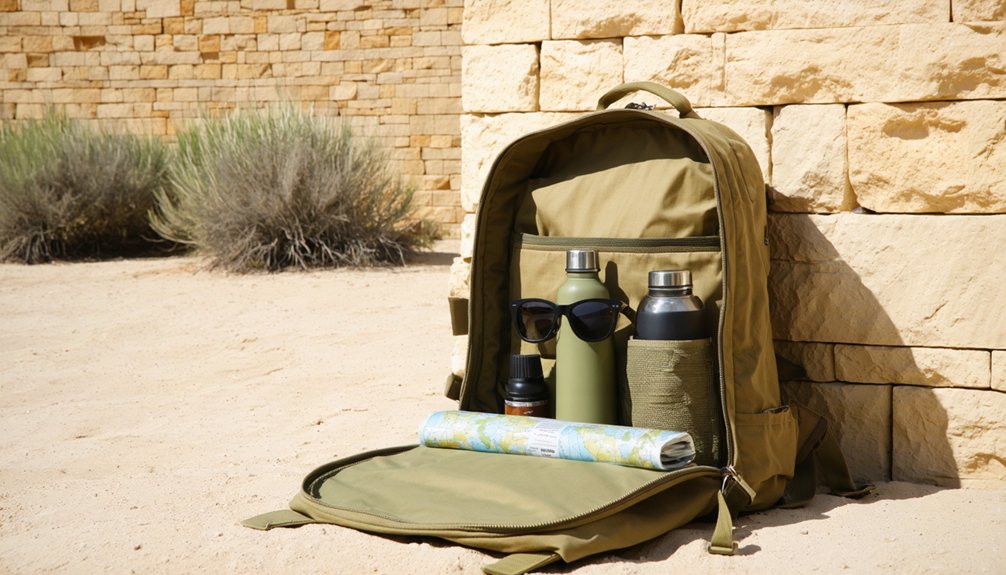
Arizona’s climate doesn’t bluff — summers swing between 80°F and 100°F, while winters drop to a sharp 30°F, so your pack needs to match the season you’re stepping into. Weather preparedness isn’t optional on the Arizona Strip; the dry air strips moisture fast, and the canyon winds cut deep in winter.
The Arizona Strip doesn’t negotiate — pack for the season or pay the price.
Your packing essentials should cover every condition this untamed landscape throws at you:
- Water — Carry at least 1 liter per person; the desert reclaims the unprepared quickly.
- Layered clothing — Lightweight fabrics for summer heat, insulated layers for winter’s bite.
- Sun protection — Hat, sunscreen, and sunglasses defend against relentless high-desert UV exposure.
Pack smart, move freely, and let the land reveal itself on its own terms.
What Else Can You Visit Near Pipe Spring National Monument?
Once you’ve soaked in the frontier atmosphere of Pipe Spring, the surrounding Arizona Strip rewards curious travelers with ghost towns, ancient rock art, and sweeping canyon vistas.
The North Rim of the Grand Canyon sits roughly 80 miles southeast, offering a less-crowded alternative to its famous counterpart and views that’ll stop you cold.
You can also follow AZ 389 east toward Fredonia and connect to routes leading into Zion National Park or Kanab, Utah, both rich with red-rock scenery and layered Western history.
Nearby Attractions Worth Exploring
Nestled within striking distance of Pipe Spring, several world-class destinations make this corner of the Colorado Plateau worth exploring well beyond a single stop. Each site rewards curious travelers with raw landscapes and living history rooted in cultural preservation.
- Grand Canyon North Rim – Just south, this quieter canyon edge delivers breathtaking solitude away from tourist crowds.
- Zion National Park – Drive northwest toward Utah’s red sandstone corridors, where ancient geology commands absolute awe.
- Kaibab Paiute Tribal Lands – Walk these grounds respectfully; historical artifacts embedded throughout the reservation tell survival stories spanning thousands of years.
You’re traveling terrain where Indigenous nations, Mormon pioneers, and geological time collide. Don’t rush through it — let each stop deepen your understanding of this untamed, fiercely independent American landscape.
Grand Canyon Day Trips
How close are you to one of the world’s most staggering geological wonders? Pipe Spring sits roughly 75 miles from the North Rim of the Grand Canyon, making a day trip entirely achievable. You’ll drive through open plateau country where local wildlife — mule deer, condors, and pronghorn — roams freely across the Arizona Strip.
The North Rim offers dramatic overlooks, ancient geology, and a quieter, less-crowded alternative to the South Rim. Indigenous communities surrounding the canyon host cultural festivals celebrating Paiute and Navajo heritage, connecting directly to the living history you’ve already explored at Pipe Spring.
You’re not just sightseeing here — you’re tracing the deep roots of a landscape shaped by millions of years of natural force and thousands of years of human endurance.
Frequently Asked Questions
Is Photography Allowed Inside Winsor Castle During Guided Tours?
The knowledge base doesn’t confirm photography rules for the Castle interior. Check with rangers about Guided tour restrictions before you snap away — you’ll want your visit documented, capturing history’s whispers freely during your unforgettable Winsor Castle experience.
Are Pets Permitted on the Ridge Trail or Monument Grounds?
The knowledge base doesn’t specify pet policies for trail accessibility at Pipe Spring. You’ll want to contact the monument directly before bringing your furry companion along the Ridge Trail or historic grounds.
Does the Coffee Shop Accept Credit Cards or Only Cash?
The knowledge doesn’t confirm coffee payment options or credit card acceptance at Pipe Spring’s coffee shop. You’d want to call ahead — frontier outposts like this sometimes prefer cash, honoring that rugged, self-reliant spirit of the Arizona Strip.
Is the Ridge Trail Accessible for Visitors With Mobility Limitations?
The Ridge Trail isn’t fully optimized for mobility accommodations, as it climbs rugged cliffs. If you’re seeking accessible trail features, you’ll find the monument’s flat grounds and historic Winsor Castle area far more welcoming to your adventurous spirit.
Can Visitors Attend Kaibab Paiute Cultural Events at the Monument?
Like windows into the past, Kaibab traditions breathe life at the monument. You can experience Cultural celebrations through ranger talks and demonstrations that honor the Kaibab Paiute’s enduring heritage, connecting you deeply to their ancient, free-spirited story.
References
- https://www.nps.gov/pisp/planyourvisit/directions.htm
- https://www.lensofjen.org/how-to-visit-pipe-spring-national-monument/
- https://nationalparksurvival.com/parks/pipe-spring-national-monument
- https://en.wikivoyage.org/wiki/Pipe_Spring_National_Monument
- https://musthikemusteat.com/beyond-the-pnw/pipe-spring-national-monument/
- https://www.grandcanyontrust.org/hikes/info-cpe-pipe-spring-national-monument/
- https://www.arizonahighways.com/archive/issues/chapter/Doc.849.Chapter.8
- https://www.visitarizona.com/places/parks-monuments/pipe-spring-national-monument/
- https://www.nps.gov/pisp/planyourvisit/index.htm
- https://www.arizonahighways.com/archive/issues/chapter/Doc.398.Chapter.2