Planning a ghost town road trip to Deerfield, South Dakota, means heading into Pennington County’s Black Hills, where crumbling foundations and open landscapes tell stories of early settler life. You’ll want a reliable vehicle, sturdy shoes, plenty of water, and a camera ready for wildlife and remnants alike. The post office once ran here from 1892 to 1954, making it a true relic worth exploring. Keep going to uncover everything you need for the perfect Deerfield adventure.
Key Takeaways
- Deerfield, located in Pennington County, South Dakota, is a ghost town accessible via scenic routes through the Black Hills from Rapid City.
- Travel with a reliable vehicle suited for rugged terrain, depart during daylight, carry a paper map, and allow extra travel time.
- Pack sturdy shoes, plenty of water, sun protection, a flashlight, first aid kit, notebook, and camera for the trip.
- Remnants like foundations and earth depressions remain at the site, with wildlife, including deer, still roaming the area.
- Removing artifacts is strictly illegal; leave everything as found to preserve Deerfield’s historical and natural significance for future visitors.
What Is Deerfield, South Dakota?
Tucked away in Pennington County, South Dakota, Deerfield is a ghost town that once thrived as a regional hub for early settlers before fading into abandonment. Its name reflects the area’s rich local wildlife, particularly the deer that made these lands a prime hunting ground.
Established as a community with a post office that operated from 1892 to 1954, Deerfield served as a center for trade and communication before economic shifts caused its decline.
Today, it’s an unincorporated, abandoned settlement with no census tracking or municipal governance. You won’t find operational services here, but you’ll discover historical landmarks and wide-open landscapes that speak to South Dakota’s rugged past.
It’s a place where freedom and frontier history collide.
How to Get to Deerfield Ghost Town
Now that you know what Deerfield is, getting there’s your next step. You’ll find this ghost town in Pennington County, South Dakota, at coordinates 44°01′02″N 103°50′03″W. It carries the ZIP Code 57767 if you’re plugging it into your GPS.
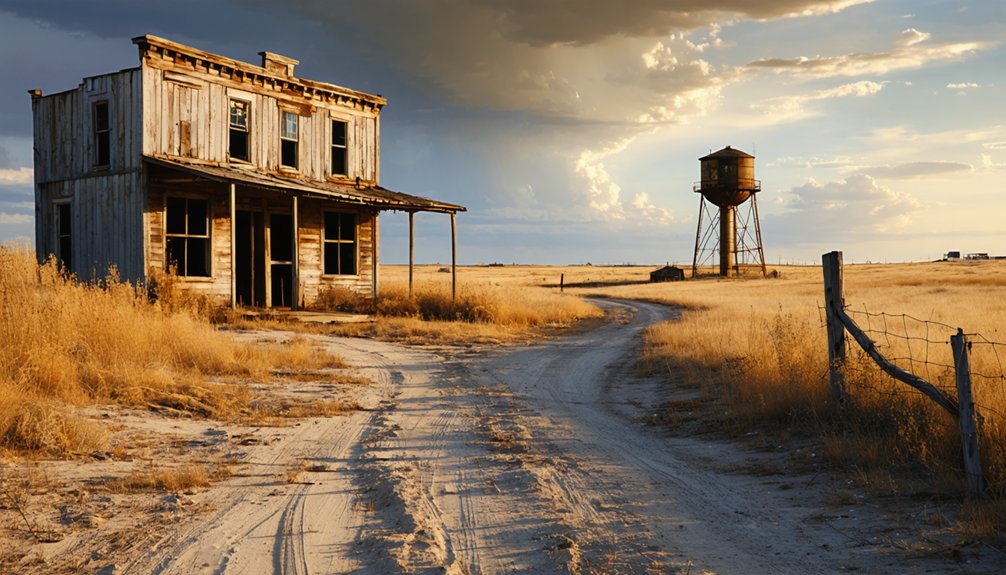
For local travel, your best approach is heading out from Rapid City, where several scenic routes wind through the Black Hills toward the site. You’ll navigate rugged terrain typical of Pennington County, so a reliable vehicle handles the journey better than a standard sedan.
The surrounding landscape rewards patient drivers with stunning open vistas and wildlife sightings along the way. Plan your departure during daylight hours, bring a paper map as backup, and give yourself extra time to enjoy the ride.
What to Pack for Your Deerfield Road Trip
Packing smart makes the difference between a rewarding visit and a miserable one. Deerfield’s rugged Pennington County terrain demands sturdy shoes, plenty of water, and sun protection. You’ll want a flashlight to navigate shadowy remnants and a first aid kit for unexpected scrapes along uneven ground.
Bring a notebook to capture historical anecdotes you’ll uncover while exploring the abandoned site — details about early settlers, the long-running post office, and the community’s gradual decline deserve documenting. A camera lets you preserve what you discover without disturbing anything.
Don’t pocket artifacts or debris; removing them is illegal and strips the site of its authenticity. Stay curious about local legends surrounding Deerfield’s deer-rich hunting grounds, and you’ll leave with stories worth telling.
What’s Left to See at the Deerfield Site
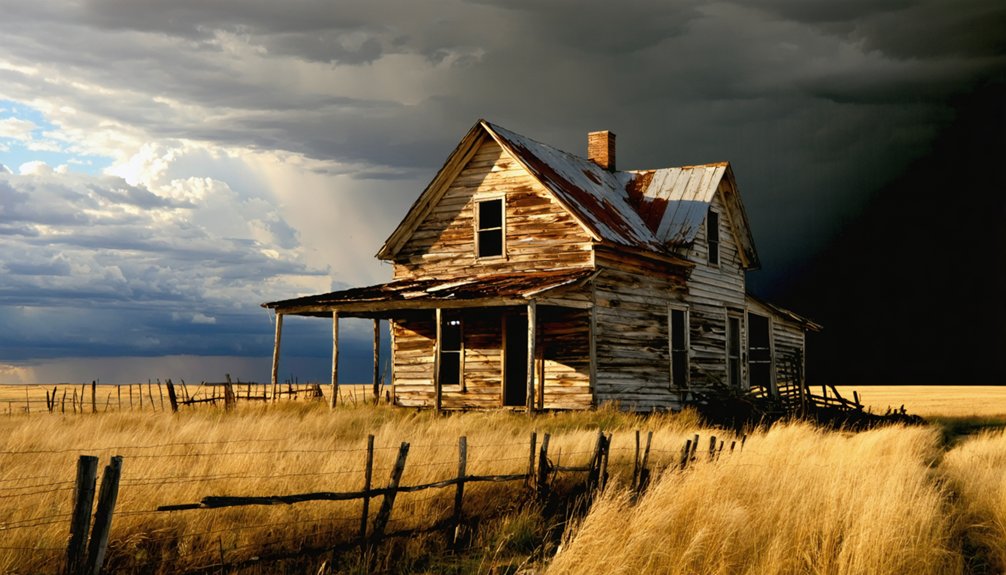
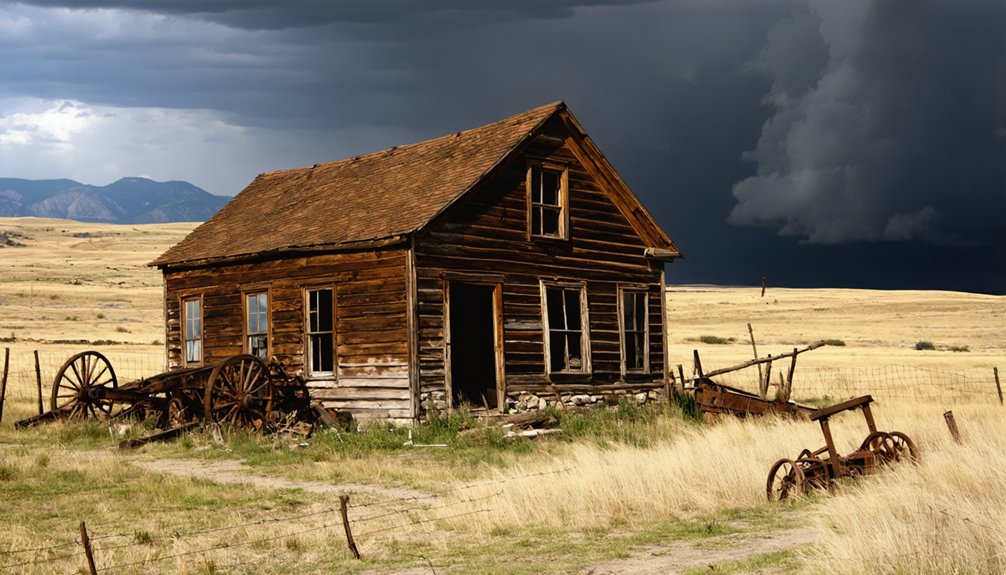
What remains at Deerfield speaks quietly but powerfully to the community’s former life. You’ll find historical remnants scattered across the landscape — foundations, depressions in the earth, and subtle traces of structures that once defined daily life here.
These fragments don’t shout at you; they invite you to read between the lines of history.
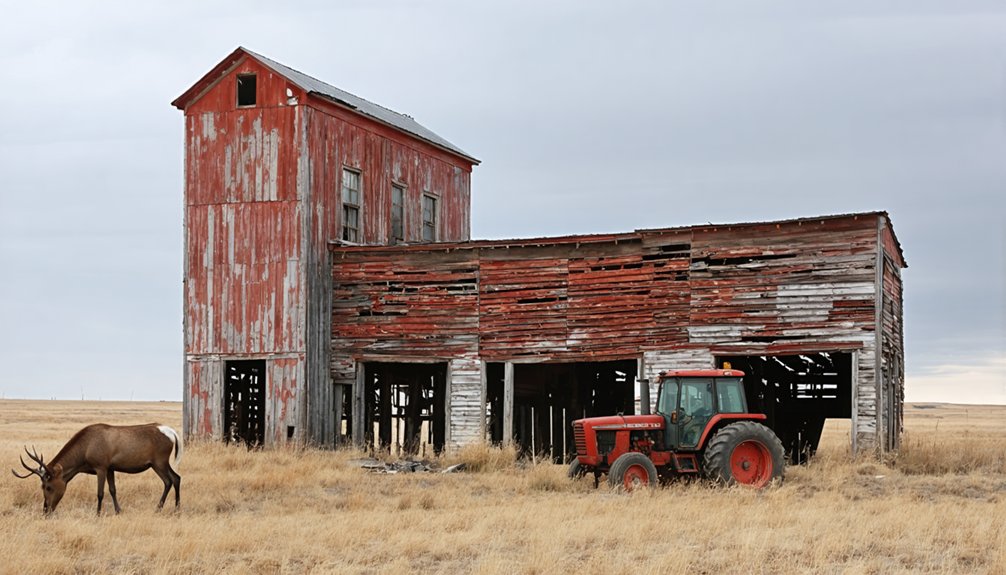
Beyond the physical remnants, wildlife encounters make exploring Deerfield genuinely rewarding. Deer still roam these grounds, honoring the site’s very name, while birds and other native creatures thrive in the undisturbed terrain.
You’re stepping into a place where nature has quietly reclaimed what people left behind.
Bring your camera and your curiosity. Deerfield rewards attentive visitors who take time to observe carefully, moving slowly through a landscape that carries decades of forgotten stories.
What’s the Best Time of Year to Visit Deerfield?
Timing your visit to Deerfield can make the difference between a memorable road trip and a frustrating one. Seasonal weather plays a major role in your experience. Late spring through early fall offers the most accessible conditions, with mild temperatures and manageable roads through Pennington County’s rugged terrain.
Summer brings longer daylight hours, giving you maximum exploration time across the abandoned site. You’ll also catch prime wildlife sightings during this period, as deer and other animals move freely through the area’s natural habitats.
Avoid winter visits — harsh South Dakota winters make roads treacherous and limit visibility. Early fall strikes the perfect balance, delivering cooler temperatures, stunning foliage, and active wildlife without summer‘s peak crowds.
Plan accordingly, and Deerfield rewards you with an unforgettable open-road adventure.
Which Ghost Towns Near Deerfield Are Worth the Detour?
While Deerfield deserves the spotlight, the surrounding Pennington County region packs in enough ghost towns to fuel a multi-day road trip. Keystone sits close by, offering rich historical artifacts from its gold-mining past that you can actually see and photograph.
Keystone’s gold-mining past isn’t buried — it’s right there, waiting to be seen and photographed.
Venture further and you’ll discover vanished South Dakota settlements where local legends still echo through crumbling foundations and overgrown trails. Each stop tells a distinct story about boom-and-bust cycles that shaped the entire Black Hills region.
You’re not just driving between coordinates — you’re tracing a raw, unfiltered timeline of frontier ambition and collapse. Pack light, keep your tank full, and build in flexibility.
The best discoveries on this stretch of South Dakota often happen at unmarked turnoffs between the destinations you originally planned.
What Are the Rules for Visiting Deerfield?
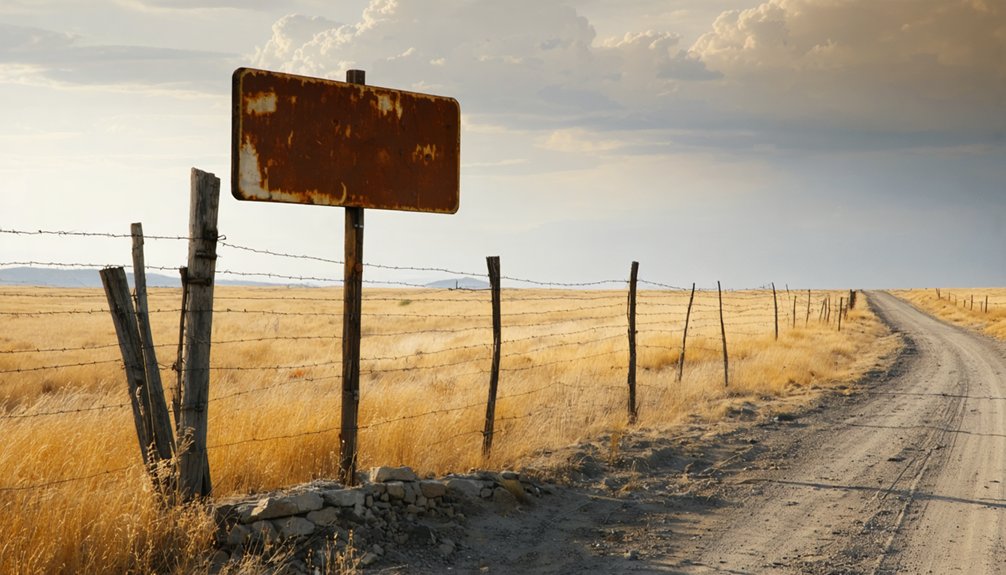
Before you set foot on Deerfield’s grounds, know that removing artifacts, bottles, or any debris is strictly illegal and can result in serious fines.
You’ll want to pack essentials like water, sturdy shoes, a flashlight, and a first aid kit to safely navigate the rugged terrain.
Bring a camera to document the experience, but leave everything exactly as you find it.
Artifact Removal Is Illegal
Although exploring Deerfield feels like stepping back in time, you’ll need to follow strict rules to protect the site’s historical integrity.
Removing historical artifacts, bottles, or debris is strictly illegal and carries serious legal consequences. These laws exist because preservation efforts depend on keeping the site intact for future generations of explorers and historians.
You’re free to roam the terrain and soak in the atmosphere, but everything you find must stay exactly where you discovered it. Think of yourself as a witness rather than a collector.
Document your experience through photography instead, capturing Deerfield’s haunting beauty without disturbing a single stone.
Respecting these boundaries guarantees that other visitors can enjoy the same authentic, untouched experience that makes ghost town exploration genuinely rewarding.
Essential Gear To Bring
Preparing for a visit to Deerfield means packing smart, since the site offers no operational services whatsoever. You’re venturing into rugged Pennington County terrain, so visitor safety depends entirely on your preparation.
Historical preservation also starts with you — responsible explorers come equipped and leave nothing behind.
Pack these three essentials before hitting the road:
- Water and snacks — No stores exist nearby, so carry enough supplies for your entire visit.
- Sturdy shoes and a flashlight — Uneven terrain and dim conditions demand proper footwear and reliable lighting.
- First aid kit — Minor injuries happen in remote locations, and emergency services aren’t immediately accessible.
Bring a camera to document Deerfield’s haunting beauty, and you’ll leave with memories rather than souvenirs.
Frequently Asked Questions
How Long Did Deerfield’s Post Office Operate Before Closing Permanently?
Deerfield’s post office operated for 62 years, from 1892 to 1954. When you’re exploring this historic preservation gem among South Dakota’s tourist attractions, you’ll appreciate how that closure marked the town’s fascinating, freedom-filled abandonment.
Why Was Deerfield, South Dakota Named After Deer Specifically?
Like a magnet drawn to nature, you’ll find Deerfield’s historical settlement origins tied directly to wildlife influences on naming — deer roamed abundantly here, making it a favorite hunting ground for early settlers who named it accordingly.
Is Deerfield, South Dakota Tracked by the United States Census Bureau?
No, the Census Bureau doesn’t track Deerfield! You’re exploring a place where historical landmarks stand silent and local legends whisper through abandoned streets — it’s a free, unincorporated ghost town lost beautifully beyond official records.
What ZIP Code Is Assigned to the Deerfield Ghost Town Location?
You’ll find that ZIP code 57767 is assigned to Deerfield’s ghost town location. As you explore its historic architecture and uncover local legends, you’re connecting with a hauntingly free, untamed piece of South Dakota’s abandoned past.
What Caused Deerfield’s Decline and Eventual Abandonment Over Time?
You’ll find that economic shifts and resource depletion drove Deerfield’s decline, silencing its once-thriving historic architecture. As you explore, local legends whisper of a community that couldn’t survive changing times, ultimately sealing its abandonment.
References
- https://en.wikipedia.org/wiki/List_of_ghost_towns_in_South_Dakota
- https://www.sdpb.org/rural-life-and-history/2023-08-21/some-black-hills-ghost-towns-and-their-origins
- https://www.sdpb.org/shows/south-dakota-documentaries/special/vanished-south-dakota-towns-yesterday-rk0fiz
- https://www.ghosttowns.com/states/sd/sd.html
- https://en.wikipedia.org/wiki/Category:Ghost_towns_in_South_Dakota
- https://en.wikipedia.org/wiki/Owanka
- https://www.tripadvisor.ca/Attraction_Review-g54538-d1111483-Reviews-Cowboy_Ghost_Town-Buffalo_Ridge_South_Dakota.html
- https://www.youtube.com/watch?v=POtU2hFPQsU
- https://www.legendsofamerica.com/south-dakota-ghost-towns/
- https://en.wikipedia.org/wiki/Deerfield