Planning a ghost town road trip to Pithole, Pennsylvania means exploring a once-thriving city of 20,000 people that vanished in under two years. Today, you’ll find open fields, forest paths, and interpretive signs where hotels, churches, and the world’s first pipeline once stood. Visit between May and October for the best experience, wear sturdy shoes, and bring water and maps since cell service is unreliable. There’s far more to this remarkable story than you’d expect.
Key Takeaways
- Pithole, located in Venango County, Pennsylvania, was a 20,000-person oil boomtown that collapsed within two years, leaving only open fields and forest paths.
- Visit between May and October for the best weather, with early fall offering quieter exploration and scenic foliage.
- Plan 1–2 hours at Pithole, using the Visitors Center for maps and exhibits before exploring interpretive signs marking historic structures.
- Extend your trip by visiting Drake Well Museum, Oil Creek State Park, Oil City, and Titusville for full regional oil history context.
- Wear sturdy closed-toe shoes, bring water, and carry printed maps, as cell service at the site may be unreliable.
What Is Pithole and Why Does It Matter?
If you’ve ever wanted to stand where a city of 20,000 people once thrived and then vanished in under two years, Pithole, Pennsylvania is your destination. Tucked inside Cornplanter Township in Venango County, this ghost town carries extraordinary historical significance as ground zero for America’s early petroleum industry.
Oil strikes in January 1865 triggered an explosive boom. By December of that same year, the town was incorporated with a booming population, dozens of hotels, churches, a theater, and even the world’s first pipeline.
In just twelve months, Pithole exploded from an oil strike into a full-fledged city with hotels, churches, and the world’s first pipeline.
The economic impact reached far beyond Pennsylvania, shaping how the nation understood oil as a commercial resource.
Today, the Pennsylvania Historical and Museum Commission preserves the site, giving you a rare chance to walk through land where an entire civilization briefly burned bright.
How Pithole Went From 20,000 People to a Ghost Town
The same forces that built Pithole so fast also tore it down faster than almost anyone expected. Oil production dropped sharply by 1866, and bank failures wiped out speculators who’d bet everything on the boom continuing. Fires made things worse — a major blaze on August 2, 1866 destroyed several city blocks and 27 oil wells in a single day.
Population collapsed from 20,000 to roughly 2,000 within a year. By 1877, the town was unincorporated and practically abandoned.
Today, Pithole’s historical preservation keeps that story alive for you to walk through firsthand. The town symbolism runs deep here — it represents both the intoxicating promise of sudden wealth and the brutal speed at which that promise can vanish. That tension is exactly what makes visiting worth your time.
How to Get to Pithole, Pennsylvania
Getting to Pithole takes a little planning, but the drive itself sets the mood well. You’ll navigate rural Venango County roads that give you a real sense of how isolated this once-roaring town actually was.
Use Oil City or Titusville as your base, then head toward Cornplanter Township. The historical reconstruction panels at the site help you visualize the town layout once you arrive.
Use these navigation tips before you go:
- Search Pithole Road, Cornplanter Township, Venango County
- GPS can be unreliable; download offline maps
- Oil City sits roughly 15 miles away as a fuel and food stop
- Drake Well Museum is nearby and worth combining into one trip
- Roads narrow considerably closer to the site
What You’ll Actually See When You Visit Pithole Today
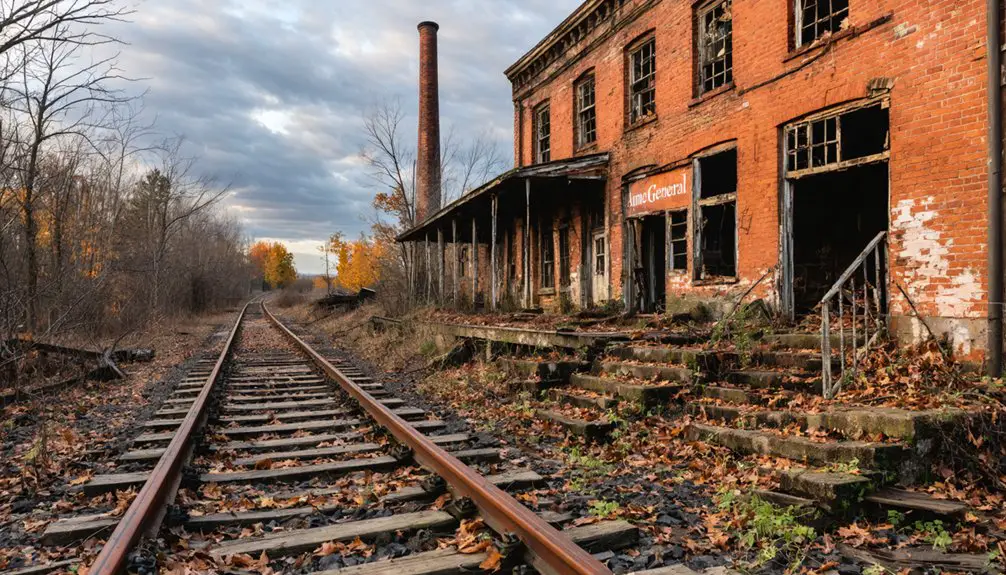
Arriving at Pithole today, you’ll find something that looks nothing like the chaotic oil boomtown it once was. The Pennsylvania Historical and Museum Commission has dedicated itself to historical preservation here, maintaining open fields and forest paths where 20,000 people once crowded wooden streets. No buildings remain standing.
Instead, interpretive signs mark where hotels, churches, and the third-largest post office in Pennsylvania once operated.
The Pithole Visitors Center, managed by the Drake Well Museum, provides your best starting point for visitor amenities, including maps and exhibits that contextualize what you’re walking through. You’ll explore the landscape on foot, imagining the 54 hotels and world’s first pipeline that defined this place.
It’s a quiet, thought-provoking stop that rewards curiosity more than spectacle.
Is Drake Well Museum Worth Combining With Pithole?
Since Pithole sits about six miles from the Drake Well Museum, combining both stops makes obvious sense for any road trip through Pennsylvania’s Oil Region. The museum anchors Pithole’s story with deep historical preservation and gives you essential context about America’s first commercial oil well.
Together, they cover the full arc of the 1860s oil rush with serious cultural significance.
Drake Well Museum delivers what Pithole can’t:
- Working replica of the original 1859 Drake Well
- Indoor exhibits on early petroleum technology
- Artifacts connecting the oil boom to national industry
- Preserved equipment from the earliest drilling operations
- Managed grounds with clear interpretive signage
You’ll leave understanding exactly why Pithole exploded overnight and collapsed just as fast.
That’s a story worth the short drive between both sites.
Best Time of Year to Visit Pithole
Late spring through early fall gives you the best window to visit Pithole, when the walking paths are clear and the landscape is easy to navigate on foot. Seasonal weather stays cooperative between May and October, giving you comfortable temperatures for exploring the open fields and forested stretches where the town once stood.
Summer draws the heaviest visitor crowds, so if you prefer a quieter experience, aim for a weekday in late September or early October. Fall foliage adds a striking backdrop to the already atmospheric site, making it arguably the most rewarding time to visit.
Winter and early spring bring muddy, uneven terrain that makes the interpretive trail far less enjoyable, so plan accordingly if you’re scheduling a broader Oil Region road trip.
How Long Should You Spend at Pithole?

Most visitors find that an hour or two covers Pithole comfortably, since the site is largely interpretive with walking paths replacing what was once a bustling city of 20,000.
You’ll want to budget extra time if you’re pairing the stop with the Drake Well Museum or Oil Creek State Park, both just six miles away.
Treating Pithole as one anchor in a broader Oil Region road trip lets you build a full day of Pennsylvania petroleum history without stretching a single site beyond what it offers.
Typical Visit Duration
Although Pithole doesn’t have standing buildings or sprawling exhibits to slow you down, you’ll still want to budget about one to two hours for a satisfying visit. The historical preservation here rewards curiosity, and the visitor facilities give you solid context before you explore the grounds.
Make the most of your time by:
- Watching the orientation video at the Pithole Visitors Center
- Walking the marked paths where streets and hotels once stood
- Reading interpretive signs that map the town’s dramatic rise and fall
- Photographing the open fields that replaced a city of 20,000 people
- Picking up a site map to guide your self-paced exploration
You’re free to move at your own pace, making Pithole an easy, flexible addition to your oil region road trip.
Pairing Nearby Stops
Because Pithole sits just six miles from both Oil Creek State Park and the Drake Well Museum, you’d be shortchanging yourself if you treated it as an isolated stop. Build your day around all three, and you’ll experience ghost town history alongside the living context that makes it meaningful.
Start at Drake Well to anchor the oil industry significance of the region, then drive to Pithole for its eerie, open-field atmosphere.
Finish at Oil Creek State Park, where trails follow the same valley that once ran black with petroleum wealth.
Oil City and Titusville round out the corridor perfectly if you’re spending a full weekend. Each stop deepens the others, turning scattered historical markers into one coherent story about America’s first great oil rush.
Oil Boom Sites Near Pithole Worth Adding to Your Route
Pithole sits within one of the richest concentrations of oil history in the country, so you’d be shortchanging yourself by stopping there alone.
The surrounding region shaped the entire oil industry, and the ghost town makes far more sense when you explore the broader 1860s corridor around it.
The ghost town makes far more sense when you explore the broader 1860s corridor around it.
Add these stops to your route:
- Drake Well Museum – where America’s first commercial oil well launched everything
- Oil Creek State Park – trails running through the original boom valley
- Oil City – a working town built entirely on petroleum wealth
- Titusville – the supply hub that fed the early oil rush
- Petroleum Centre – another vanished boomtown site within the park
Together, these stops transform a single ghost town visit into a full regional story.
What to Bring for a Day Trip to Pithole
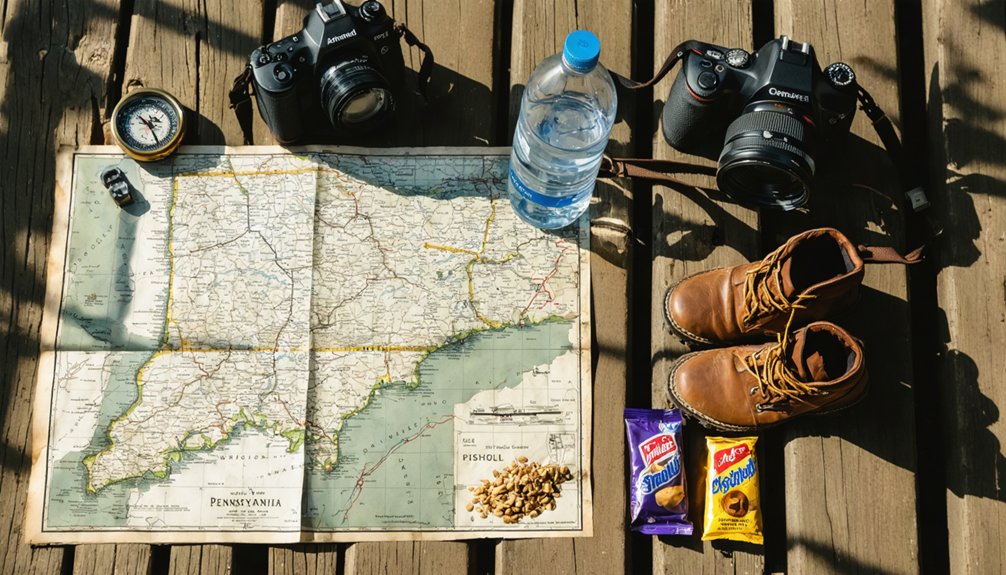
Since Pithole’s site is mostly open fields and forest paths with limited shelter, you’ll want to pack water, snacks, sunscreen, and a basic first-aid kit before you leave the car.
Wear sturdy, comfortable walking shoes and layer your clothing, since temperatures near Oil Creek can shift noticeably throughout the day.
A light rain jacket earns its place in your bag here, because the region’s weather can turn quickly and there’s no indoor retreat waiting for you on-site.
Essential Gear And Supplies
Whether you’re trekking across open fields or steering through wooded paths where Pithole’s streets once stood, packing the right gear makes a real difference. The terrain connects you to historical artifacts and local legends hiding beneath every overgrown lot.
Pack smart so nothing slows your exploration:
- Sturdy walking shoes for uneven, trail-heavy ground
- Water bottle and snacks since no food services exist on-site
- Camera or binoculars to capture the landscape and distant markers
- Layered clothing because Pennsylvania weather shifts fast
- Printed or downloaded maps since cell service can be unreliable
Traveling light but prepared keeps your focus where it belongs — on the story this land still tells. You came for freedom and discovery, so don’t let a missing essential cut your visit short.
Comfortable Clothing Choices
Dressing for a day at Pithole means balancing comfort with practicality across terrain that shifts from open fields to shaded woodland paths. Wear sturdy, closed-toe shoes since uneven ground marks nearly every corner of this site preserved through serious preservation efforts.
Layering works well because temperatures shift between sun-exposed areas and tree-covered trails. Lightweight, breathable fabrics let you move freely as you explore a landscape where historical significance hides beneath grass and forest.
Bring a hat and sunscreen for open sections where shade disappears completely. Long pants offer protection against brush along narrower paths. Avoid sandals or anything with poor ankle support.
The site rewards those who dress to move, not just observe, so prioritize function over appearance and you’ll stay comfortable throughout your visit.
Frequently Asked Questions
Is There an Admission Fee to Visit the Pithole Historic Site?
The knowledge doesn’t confirm an admission fee, but you’ll find Pithole’s historic architecture and fossil discovery of petroleum’s past freely awaiting you, managed by the Drake Well Museum — so check their site for current entry details.
Are Pets Allowed on the Walking Paths at Pithole?
The available knowledge doesn’t confirm Pithole’s pet policies for the walking paths. You’ll want to contact the Drake Well Museum directly before your visit to make sure you’re free to bring your furry companion along.
Is the Pithole Visitors Center Open Year-Round or Seasonally?
Like a flickering flame, the Pithole Visitors Center’s hours aren’t year-round—it operates seasonally. You’ll want to confirm dates before chasing historical reenactments and photography opportunities across its hauntingly beautiful, freedom-calling grounds.
Is There Cell Service or Wifi Available at the Pithole Site?
Don’t count on cell coverage or internet access at Pithole’s remote, rural site. You’ll want to download maps and information beforehand, freeing yourself to fully explore this fascinating ghost town without digital distractions slowing your adventure.
Are Guided Tours Available at Pithole or Is It Self-Guided?
You’ll explore Pithole self-guided, wandering freely through historical artifacts and wide-open fields. The visitors center highlights preservation efforts, giving you rich context before you roam this hauntingly quiet ghost town entirely on your own terms.
References
- https://en.wikipedia.org/wiki/Pithole
- https://wordpress.lehigh.edu/specialcollections/2016/06/24/pithole-pennsylvania-oil-boom-ghost-town/
- https://www.youtube.com/watch?v=D9wlmuw0HZM
- https://www.aapg.org/news-and-media/details/explorer/articleid/63602/pithole-the-rapid-rise-and-sudden-fall-of-an-oil-boomtown
- https://pabucketlist.com/exploring-the-ghost-town-of-pithole-in-venango-county-pa/
- https://www.youtube.com/watch?v=_a6RrsBQHUo
- https://www.facebook.com/PATrailsofHistory/posts/trails-of-mystery-did-you-know-that-phmc-owns-a-ghost-town-pithole-in-venango-co/10152773450237669/
- https://theclio.com/entry/110479
- http://uncredentialedprofessor.blogspot.com/2009/11/pithole-pennsylvania.html