Planning a ghost town road trip to Silver City, Idaho means committing to 23 miles of rough dirt road through the Owyhee Mountains to reach a town frozen in the 1880s. At its peak, Silver City had 2,500 residents and 75 businesses fueled by silver ore from War Eagle Mountain. You’ll need a high-clearance vehicle, supplies, and no expectation of cell service. There’s far more to this remote treasure than most travelers expect.
Key Takeaways
- Silver City, Idaho, is a well-preserved ghost town accessible via 23 miles of rough dirt road through the Owyhee Mountains.
- Visit between July and September to avoid snow closures and bring fuel, water, and vehicle recovery gear, as there are no services.
- High-clearance vehicles are required; pack a spare tire, tow strap, offline maps, and a satellite communication device for safety.
- Accommodation options include on-site camping, modest lodging in Murphy, or hotels in Nampa and Caldwell, roughly 60–70 miles away.
- Nearby attractions like Owyhee Reservoir and Jordan Valley, Oregon, complement the trip with wildlife viewing and Basque ranching history.
Is Silver City, Idaho Worth the Drive?
If you’re willing to tackle roughly 23 miles of rough dirt road deep into the Owyhee Mountains, Silver City rewards you with one of the best-preserved ghost towns in the country.
Around 70 original structures still stand, remnants of a mining history that once supported 2,500 residents and 75 businesses at its 1880s peak. Silver ore pulled from War Eagle Mountain built this place, and ghost town preservation kept it intact long after the mines closed in 1942.
You won’t find gas stations or cell service here — just crisp mountain air, weathered storefronts, and a rare sense of stepping outside modern constraints entirely. For travelers who value authenticity over convenience, Silver City absolutely earns the drive.
Silver City’s Mining Boom and Ghost Town Origins
That preserved landscape you’re walking through has roots in a single discovery: silver struck on War Eagle Mountain in 1864. That single strike ignited a rush that built a full-scale town almost overnight.
At its peak, Silver City counted around 2,500 residents, 75 businesses, and over 300 homes packed into a remote mountain canyon.
The mining history here runs deep — War Eagle and the Florida Mountains both fed rich silver and gold lodes that made Silver City a territorial powerhouse. It even held the county seat from 1867 to 1934.
When the veins thinned and markets collapsed, the population drained away. Mines officially closed in 1942. That slow exit, ironically, is what made ghost town preservation here so exceptional — nobody ever had reason to tear anything down.
When to Visit Silver City and What the Road Conditions Are Like
Getting to Silver City is half the adventure — and half the challenge. You’ll navigate roughly 23 miles of rough dirt road through the Owyhee Mountains, so bring a high-clearance vehicle and check conditions before you leave.
Twenty-three miles of rough dirt road through the Owyhee Mountains — bring a high-clearance vehicle and your sense of adventure.
Seasonal weather shapes everything here — snow closes the road from late fall through early summer, making July through September the ideal window for your visit. That timing also rewards you with dramatic mountain light and sweeping photography opportunities among the 70 surviving structures.
Arrive early in the day to capture the historic storefronts before afternoon shadows flatten the scene.
Pack fuel, water, and supplies since Silver City offers no gas stations or cell service. The isolation isn’t a drawback — it’s exactly what keeps this place honest.
How to Get to Silver City, Idaho?
Tucked into the Owyhee Mountains roughly 37 miles southwest of Boise, Silver City demands a deliberate drive rather than a casual detour. From Murphy, you’ll turn onto a rough dirt road stretching nearly 23 miles into the mountains — a route that strips away every trace of urban development and modern amenities long before you arrive.
High-clearance vehicles handle it best; the terrain punishes anything low-slung or unprepared. Plan your fuel stop in Murphy or Jordan Valley, because once you commit to that dirt road, you’re committed. No gas stations, no cell signal, no safety nets.
That deliberate inaccessibility is exactly what protected Silver City from the sprawl that swallowed so many other historic towns. You don’t stumble onto Silver City — you choose it.
What You’ll Actually See Walking Through Silver City
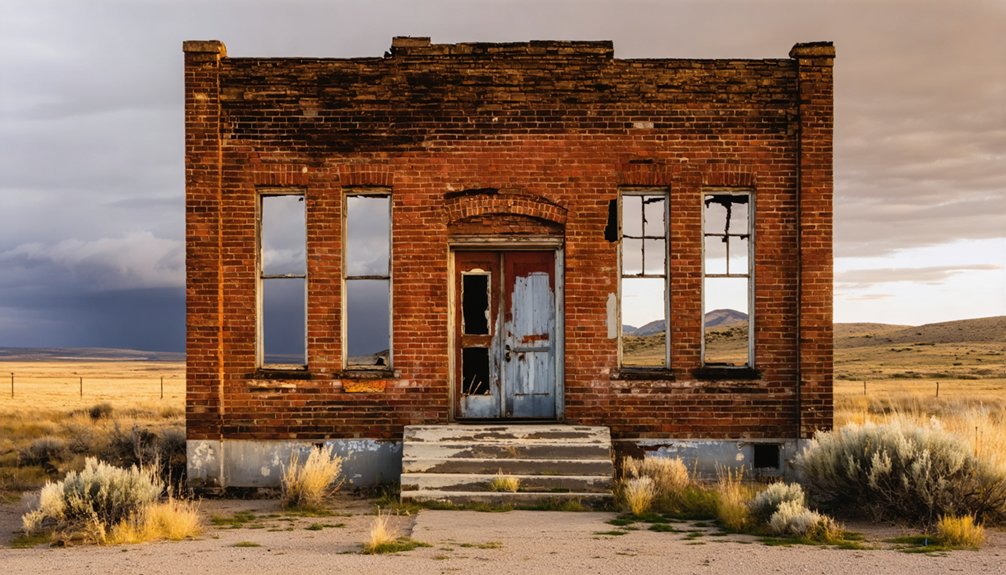
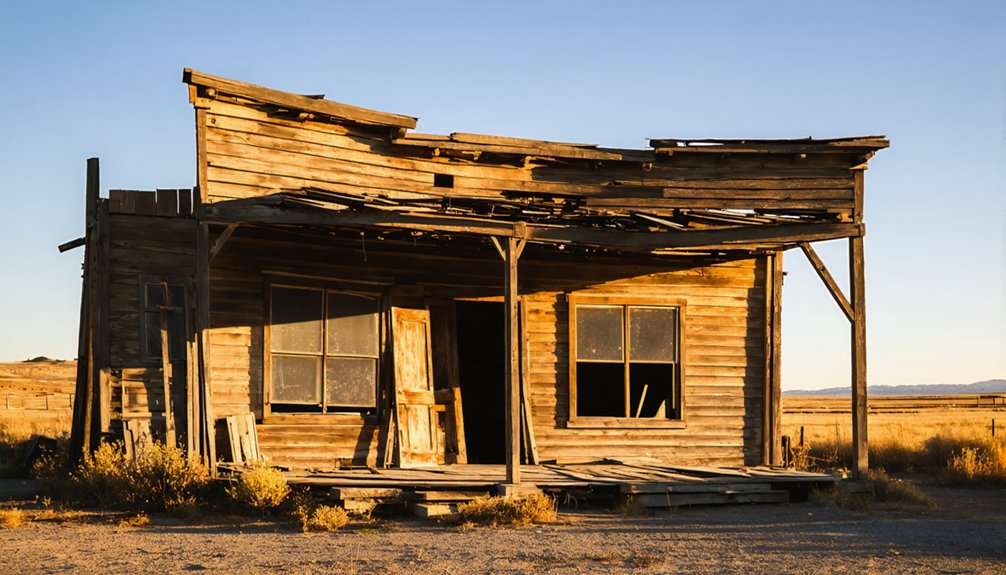
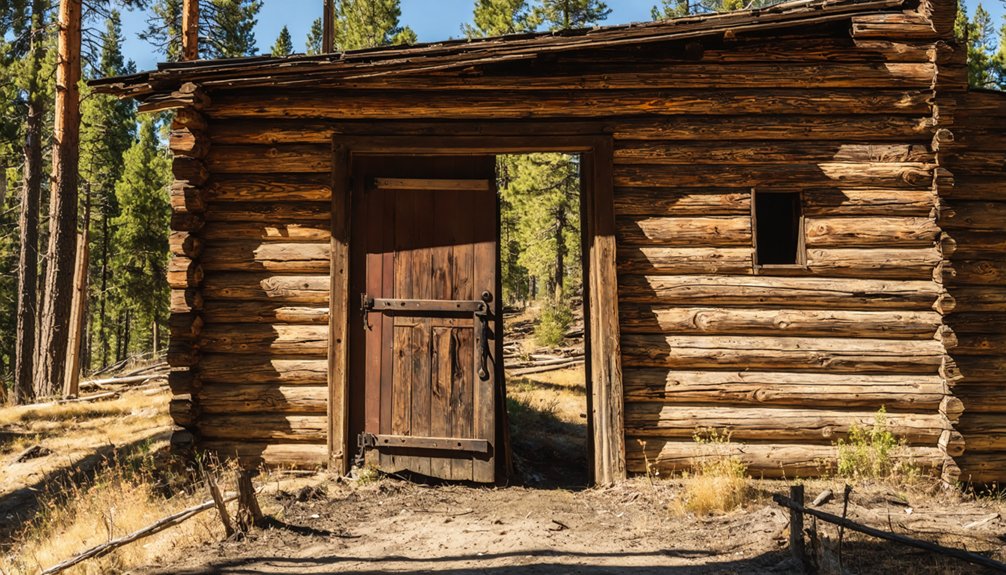
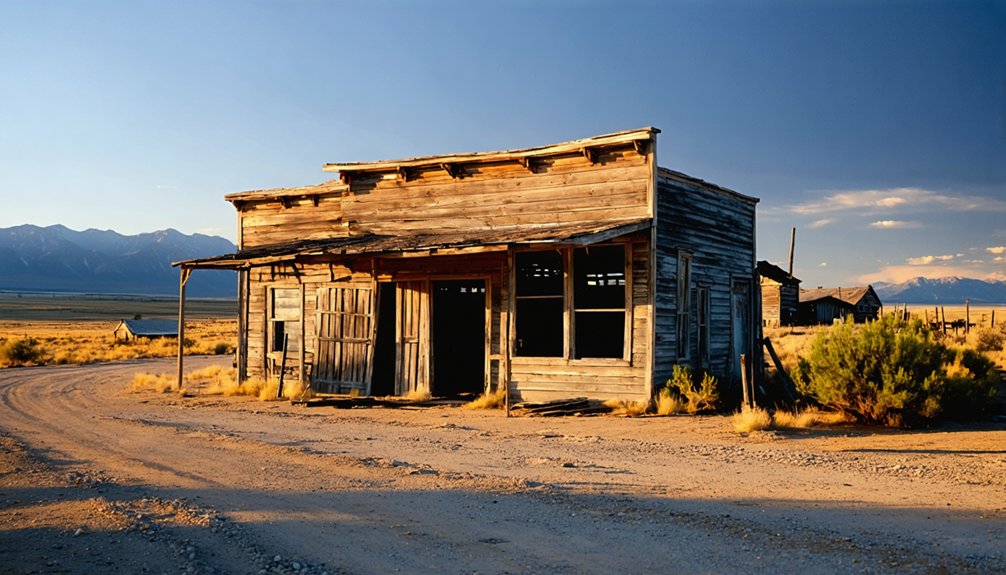
Once you step out of your vehicle, roughly 70 structures greet you — not ruins, but actual standing buildings that survived because the mountain roads kept the outside world at bay. You’ll notice architectural details that most towns bulldozed decades ago: hand-cut timber frames, faded storefronts, and iron hardware still fixed to original doors.
70 structures still standing — not restored, not staged. Just survived.
Historical artifacts surface everywhere you look.
- The Idaho Hotel still stands, its weathered facade holding the memory of 2,500 residents who once crowded these streets.
- Abandoned mine equipment dots the hillsides above War Eagle Mountain, frozen mid-operation.
- Former business blocks retain signage and structural bones from Silver City’s 75-business peak.
Nobody manicured this place for tourism. What you see is what survived — raw, unfiltered, and entirely yours to explore.
How Many Historic Buildings Still Stand in Silver City?
Seventy structures still stand in Silver City — a number that sounds modest until you’re walking among them and realize almost none are replicas or restorations. These are original bones: weathered storefronts, private cabins, and century-old frames that survived through isolation rather than intervention.
Preservation efforts here relied less on organized campaigns and more on sheer remoteness keeping developers away. The National Register of Historic Places listing added formal protection, but the mountains did most of the work.
You’ll hear local legends about families who quietly maintained their claims across generations, refusing to let buildings collapse. Many structures remain privately owned, so you’re moving through lived history, not a managed exhibit.
That distinction gives Silver City a rawness most preserved ghost towns simply can’t offer.
What to Pack for an Off-Grid Ghost Town Road Trip?
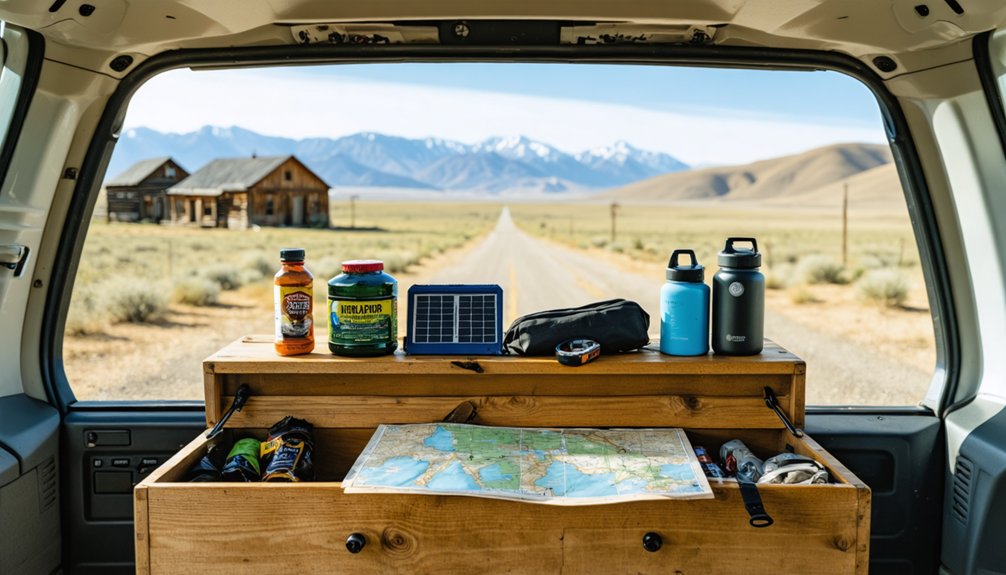
Since Silver City offers no gas stations, cell service, or reliable amenities, you’ll need to pack as though you’re heading into genuine backcountry — extra fuel, food, and water are non-negotiable.
Load your vehicle with traction boards, a quality spare tire, and basic tools suited for 23 miles of rough dirt road that can punish unprepared rigs.
On the safety side, bring a first-aid kit, a paper map or downloaded offline route, and an emergency communication device like a satellite messenger, because help won’t be a quick phone call away.
Essential Gear and Supplies
Because Silver City sits some 23 miles down a rough dirt road with no gas stations, no cell service, and no convenience stores waiting at the end, you’ll want to pack as though you’re heading into true backcountry — because you are.
The reward is access to historical artifacts, local legends, and roughly 70 standing structures frozen in mining-era time.
Pack smart so nothing cuts the adventure short:
- Water and food: Carry more than you think you need — there’s no resupply point once you leave pavement.
- Navigation tools: Download offline maps; cell service vanishes well before town appears.
- Vehicle recovery gear: A spare tire, tow strap, and basic toolkit handle what rough dirt roads quietly demand.
Emergency and Safety Items
When cell service disappears miles before Silver City comes into view, a first-aid kit, emergency blanket, and roadside flares shift from optional extras to genuine lifelines. Those 23 rough dirt miles don’t forgive unpreparedness.
Pack a recovery strap, spare tire, and a quality jack rated for your vehicle’s weight. Carry at least a gallon of water per person and a fire extinguisher — dry mountain terrain ignites quickly.
A physical topographic map replaces any app when you’re off-grid.
Local legends speak of travelers stranded overnight among those 70 still-standing structures, discovering the town’s eerie beauty by lantern light.
Historical preservation depends partly on responsible visitors who arrive self-sufficient and leave nothing behind. Your freedom out here is proportional to how well you’ve prepared.
Where to Stay Near Silver City, Idaho?
Given Silver City‘s remote location in the Owyhee Mountains—23 miles of rough dirt road from the nearest paved highway—you’ll want to sort out lodging before you leave. Local accommodations are scarce, so your options shape the entire trip.
- Camp on-site: Scenic camping near Silver City puts you inside the Owyhee high desert at dusk, with no cell service breaking the silence.
- Murphy, Idaho: The current Owyhee County seat sits closer to pavement and offers modest lodging options roughly an hour out.
- Nampa or Caldwell: These Treasure Valley towns provide full hotel options, about 60–70 miles northeast, if you prefer a comfortable base before tackling the dirt road into town.
Plan early—this isn’t tourist infrastructure country.
Nearby Stops Worth Adding to Your Silver City Drive
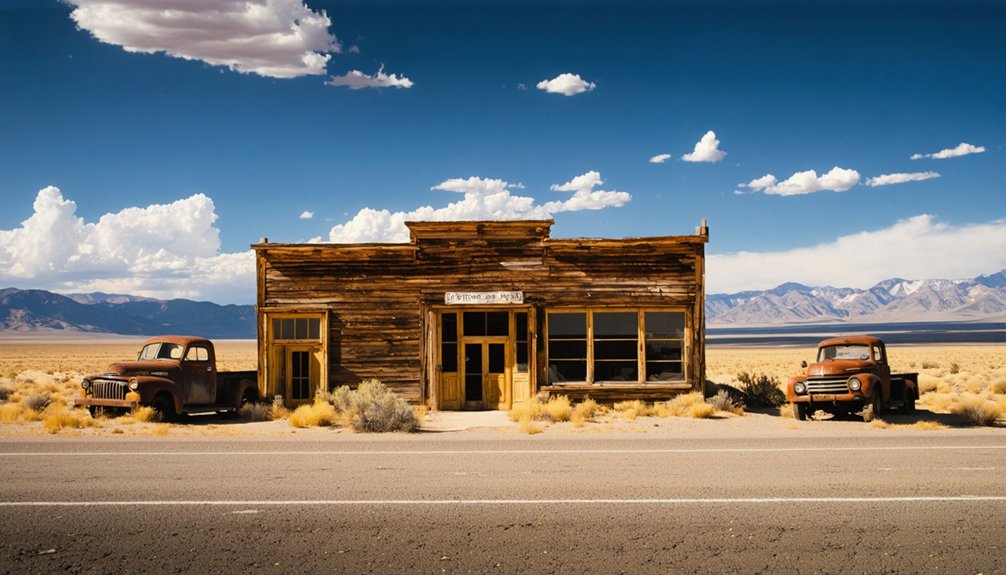
Once you’ve locked in where you’ll sleep, the drive itself becomes the trip—and the Owyhee Country rewards anyone willing to push a little further.
Murphy, Idaho sits near the base of the Owyhee Mountains and serves as the county seat, offering a grounded stop for local cuisine before you hit the dirt road.
The Owyhee Reservoir draws serious wildlife viewing opportunities, with pronghorn, raptors, and mule deer moving through the high desert terrain.
Jordan Valley, just across the Oregon border, carries its own Basque ranching history and keeps that frontier quietness you came for.
These stops aren’t detours—they’re extensions of the same story Silver City started telling in 1864, written across open range and rimrock instead of wooden storefronts.
Frequently Asked Questions
Was Silver City Ever the County Seat of Owyhee County?
Like a crown jewel, Silver City did serve as Owyhee County’s seat from 1867 to 1934. You’ll feel that legacy in its historic architecture and whisper it through its haunting local ghost stories.
What Percentage of Silver City Residents Were Chinese at Its Peak?
Chinese immigrants made up 21% of Silver City’s residents at its peak — a striking demographic shift that reveals how you’d have found a richly diverse, multicultural mining community thriving boldly amid those rugged Owyhee Mountains.
Did Silver City Have Idaho Territory’s First Telegraph Office?
You’ll walk where Idaho Territory’s first telegraph office once hummed with historic communication. Silver City’s telegraph history placed it at the frontier of connectivity — proof that even the remote and free-spirited West craved instant connection.
How Many Residents Did Silver City Have at Its Peak?
At its peak in the 1880s, you’d have found roughly 2,500 residents thriving here. Silver City’s ghost town preservation and historic landmarks stand as proof to that remarkable, freedom-inspiring era of bold frontier ambition.
When Did Silver City’s Mines Officially Close for Good?
Silver City’s mines officially closed in 1942, ending decades of mining history. That wartime shutdown sealed the town’s fate, yet it ironically champions ghost town preservation—you’ll still find 70 standing structures awaiting your exploration today.
References
- https://en.wikipedia.org/wiki/Silver_City
- https://www.youtube.com/watch?v=rTSZSlxTmbs
- https://www.youtube.com/watch?v=W347SjpcWF0
- https://www.youtube.com/watch?v=1ZMdZMai-44
- https://www.britannica.com/place/Silver-City-ghost-Idaho
- https://visitidaho.org/travel-tips/silver-city-and-other-owyhee-treasures/
- https://www.youtube.com/watch?v=iS7mvqHQv-8
- https://www.intermountainhistories.org/items/show/130
- https://www.youtube.com/watch?v=D6t2FZ2n4O0
- https://www.facebook.com/groups/397526214154529/posts/1525909354649537/