Planning a ghost town road trip to Plymouth Five Corners, Vermont, means stepping into a place where a gold rush rose and collapsed within decades. You’ll navigate unmarked, overgrown roads near coordinates 43.53395, -72.68135, discovering cellar holes and stone foundations swallowed by forest. Pack sturdy boots, offline maps, and a compass—there are no signs guiding you here. Combine your visit with the Calvin Coolidge Historic Site nearby, and you’ve got a layered Vermont adventure worth exploring further.
Key Takeaways
- Plymouth Five Corners in Vermont transformed from a farming village to a gold rush mining hub around 1855, then became a ghost town by 1900.
- Navigate using GPS coordinates 43.53395, -72.68135, offline maps, and a compass, as cell service is unreliable and trails are unmarked.
- Pack sturdy footwear, water, navigation tools, and topographic maps while watching for private property boundaries and overgrown terrain.
- Explore stone cellar holes, foundation remnants, overgrown walls, and sluice remnants—the only visible traces of the once-thriving mining village.
- Combine the ghost town visit with Calvin Coolidge State Historic Site, Coolidge State Park, and Woodstock Village for a complete Vermont road trip.
What Was Plymouth Five Corners, Vermont?
Once a thriving farming village tucked into the hills of Plymouth, Windsor County, Vermont, Plymouth Five Corners grew from a quiet rural settlement in the late 1700s into a bustling hub of mining activity by the mid-1800s.
Gold discovered in local brooks around 1855 sparked a short-lived rush that brought hotels, mills, saloons, and a post office to this remote corner of Windsor County. Local folklore paints a vivid picture of a community that seemingly appeared overnight and vanished just as fast.
By 1900, the village was largely abandoned, leaving only cellar holes and stone foundations swallowed by forest. Preservation challenges have kept the site undeveloped, meaning you’ll explore it as raw wilderness rather than a polished historical attraction.
That’s exactly what makes it worth the trip.
The Gold Rush That Built and Abandoned This Village
Gold found in the brooks around Plymouth Five Corners in 1855 transformed a sleepy farming hamlet into a concentrated mining economy almost overnight. Hotels, saloons, a gold mill, a crusher, and a quartz mill rose from what had been quiet farmland. Miners flooded in, drawn by the promise of wealth hidden in Reading Pond Brook, Broad Brook, and Buffalo Brook.
But the rush burned fast. Within a few years, the mining history here collapsed as quickly as it had begun. Residents drifted away, businesses shuttered, and by 1884 the village had shrunk to barely a hamlet.
Forest reclamation did the rest. Today, the woods have swallowed nearly everything, leaving only cellar holes and stone foundations as proof that this place ever thrived.
How to Reach Plymouth Five Corners Today
You’ll find Plymouth Five Corners tucked into Plymouth, Windsor County, Vermont, near the coordinates 43.53395, -72.68135. There is no paved entrance or welcome sign guiding your way.
To reach the ruins, you’ll navigate a network of old abandoned town roads that cut through the Arthur Davis Wildlife Management Area and surrounding private forest parcels.
Bring a reliable map or GPS, respect property boundaries, and treat the approach as a forest hike rather than a straightforward drive to a marked destination.
Getting There By Road
You’re entering terrain shaped by both local wildlife and forest ecology, so expect narrow, unpaved lanes that feel more like hiking corridors than roads.
The Arthur Davis Wildlife Management Area borders much of the site, meaning road access blends directly into protected land.
Drive a capable vehicle, check seasonal conditions beforehand, and download offline maps since cell service here is unreliable.
Freedom comes with preparation on routes like these.
Once you park and step away from the road, the trails into Plymouth Five Corners stop behaving like trails at all. What you’re following are old abandoned town roads, now swallowed by decades of local flora — ferns, moss, and second-growth hardwoods pressing in from every side.
You’ll navigate more by intuition than signage, reading the landscape for flattened ground and stone-lined edges that hint at where wagons once rolled. Watch for wildlife sightings along the way; deer and wild turkey move freely through this reclaimed terrain.
Cellar holes appear without warning beneath the undergrowth, so step carefully. There are no marked paths or posted guides here — just forest, ruins, and the quiet satisfaction of moving through a place that history nearly erased entirely.
What You Can Still Find at Plymouth Five Corners
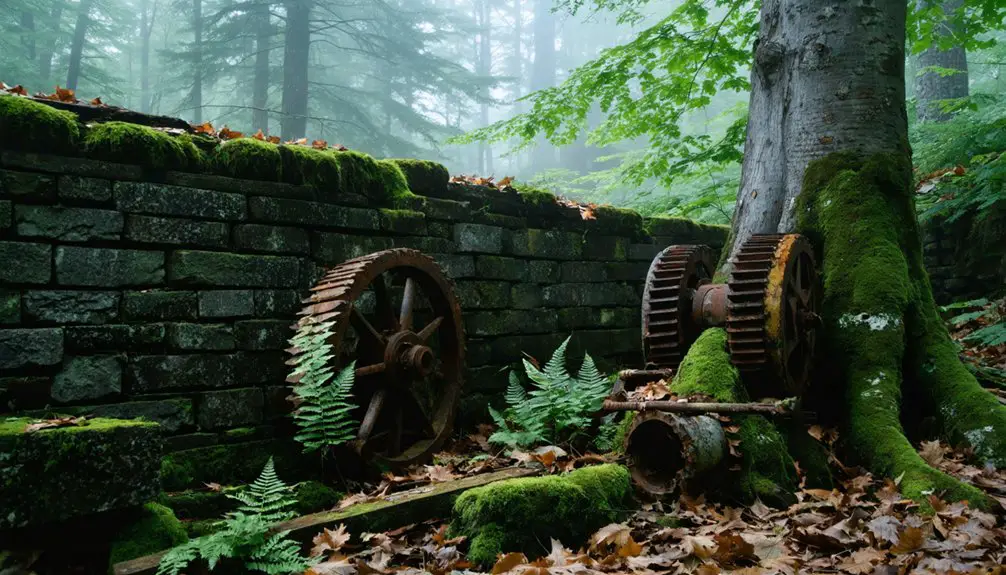
Though no standing buildings survive, Plymouth Five Corners still holds plenty for the sharp-eyed explorer willing to push through the undergrowth. Stone foundations, cellar holes, and sluice walls emerge from the forest floor like historical artifacts frozen mid-collapse.
Forest regeneration has done its quiet work here, wrapping old walls in moss and threading roots through what were once mill floors and general store foundations.
You’ll spot overgrown lanes cutting between the trees — the ghost of a road network that once connected hotels, saloons, and a gold mill. Follow these paths carefully, and the landscape starts telling its story.
Each depression in the earth marks a life once lived, a business once run. Bring good boots, sharp eyes, and a willingness to let the ruins speak.
What to Realistically Expect Before You Go
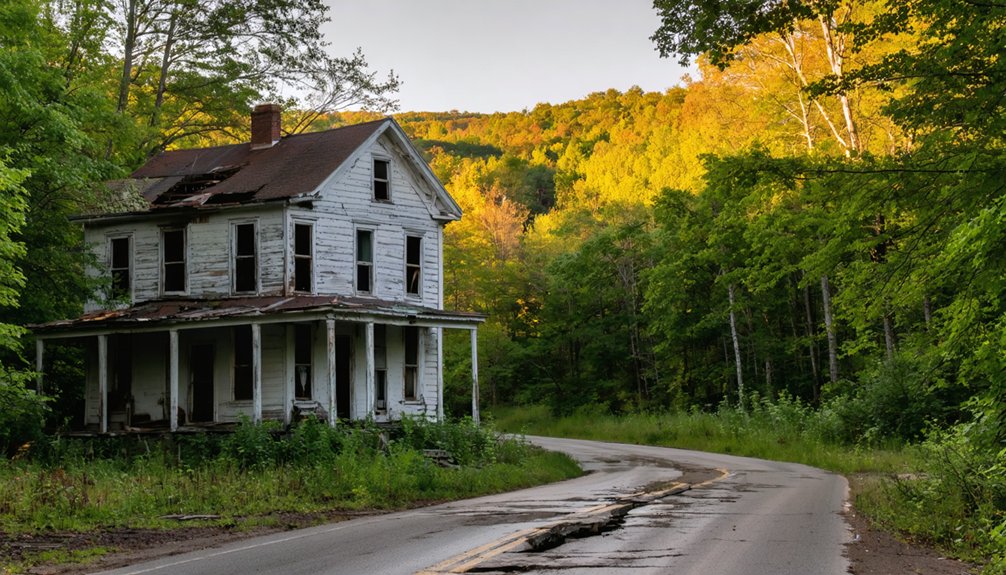
Before you head out, set your expectations straight: you won’t find a single standing building at Plymouth Five Corners. The ruins — cellar holes, stone foundations, and crumbled walls — hide beneath decades of forest growth, so you’ll need a sharp eye and patience to spot them.
The terrain is rough and overgrown, meaning sturdy footwear and a trail-ready mindset aren’t optional.
No Buildings Remain Standing
If you’re expecting a cluster of weathered storefronts and sagging barns, Plymouth Five Corners will quickly reset those expectations. Forest reclamation has swallowed nearly everything. What greets you instead is raw, quiet history embedded in the landscape itself.
Here’s what you’ll actually find:
- Stone cellar holes — rectangular depressions lined with stacked rock, marking where homes and businesses once stood
- Mining artifacts and sluice remnants — partial walls and earthworks left behind from gold rush operations along local brooks
- Overgrown road traces — former town roads now reduced to faint lanes cutting through dense woodland
No interpretive signs guide you. No restored structures anchor your imagination. You’re reading the land directly, which makes Plymouth Five Corners genuinely rewarding for explorers who prefer discovery over presentation.
Ruins Hidden In Forest
What you’ll find at Plymouth Five Corners bears little resemblance to a traditional ghost town. Nature has reclaimed nearly everything, weaving forest ecology tightly around whatever the miners and settlers left behind. Stone foundations hide beneath decades of leaf litter. Cellar holes drop unexpectedly from overgrown footpaths. Sluice walls blend into the hillside like natural outcroppings.
You won’t stumble onto historical artifacts displayed neatly for visitors. Instead, you’ll read the landscape itself — a depression here, a stacked-stone wall there, a faint road trace cutting between hardwoods. That’s the real experience this place offers. It rewards careful, curious exploration rather than passive sightseeing.
Come expecting a forest hike with historical layers embedded in the terrain, and you’ll leave genuinely satisfied.
Plan For Rough Terrain
Getting to Plymouth Five Corners means traversing old abandoned town roads and wildlife management land — not paved paths or marked trailheads. Urban decay here looks like swallowed foundations and collapsed mining relics buried beneath decades of regrowth. You’ll need to prepare seriously before stepping into this landscape.
Pack these essentials before you go:
- Navigation tools — Download offline maps; cell service is unreliable across Windsor County’s backcountry.
- Sturdy footwear — Overgrown lanes hide uneven ground, root systems, and crumbling stone edges around cellar holes.
- Property boundary awareness — Parts of the route cross private parcels, so research land ownership before choosing your path.
Respect seasonal conditions, check trail status through Plymouth’s town office, and treat this as a genuine wilderness exploration rather than a casual roadside stop.
How to Plan the Visit Like a Hiker, Not a Tourist
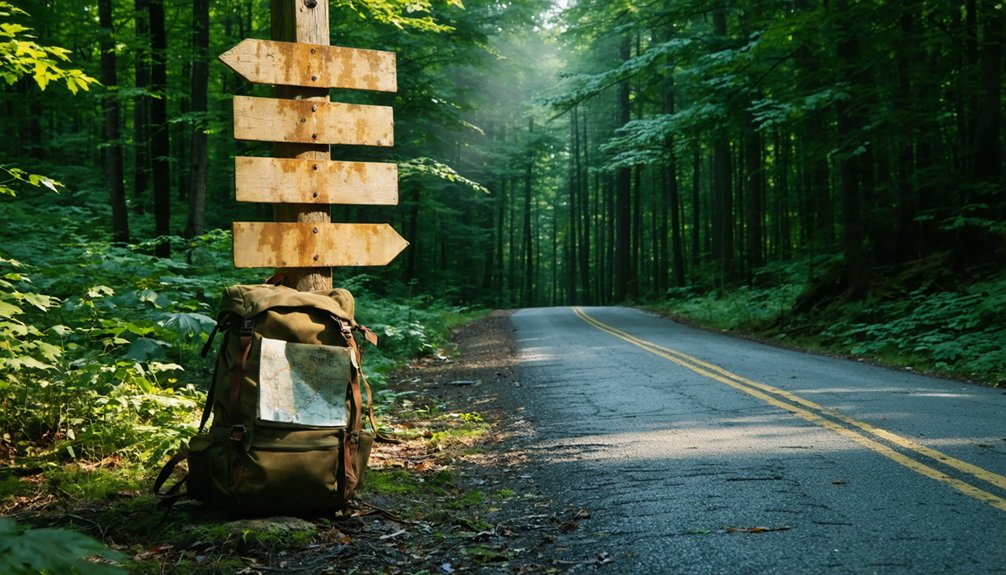
Plymouth Five Corners isn’t a roadside attraction with a parking lot and an interpretive sign—it’s a forest exploration that rewards preparation. Approach it like a hiker chasing forest mysteries, not a tourist checking a box.
Pull up topographic maps before you go, mark the GPS coordinates at 43.53395, -72.68135, and trace the ancient pathways that once connected this gold rush village to the outside world.
Wear sturdy boots, pack water, and carry a compass alongside your phone. Check seasonal trail conditions through the Arthur Davis Wildlife Management Area beforehand, since weather and hunting seasons both affect access.
Stay alert for property boundary markers, since some parcels are privately owned. The ruins won’t announce themselves—you’ll need to move slowly and look carefully.
Calvin Coolidge Historic Site and Other Nearby Anchors
Since Plymouth Five Corners sits in the same township as one of Vermont’s most celebrated presidential birthplaces, you can anchor your ghost town hike to a full day of history by stopping at the Calvin Coolidge State Historic Site just a few miles away.
Both destinations reward curious travelers who appreciate historical anecdotes and local legends embedded in the landscape.
Pair your Plymouth Five Corners exploration with:
- Calvin Coolidge State Historic Site – tour the preserved homestead and visitor center for presidential context
- Coolidge State Park – access wooded trails and campsites that extend your overnight options
- Woodstock Village – browse locally sourced shops and gather regional history before or after your hike
Together, these anchors transform a single ghost town stop into a richly layered Vermont road trip.
Frequently Asked Questions
Is Metal Detecting or Artifact Collecting Allowed Within the Wildlife Management Area?
Those buried artifacts are silent sentinels of history—you’ll face regulatory restrictions that likely prohibit metal detecting in Vermont wildlife management areas. Always verify historical preservation rules with local authorities before you dig, as laws actively protect these forgotten treasures.
Are There Any Guided Tours Available for Plymouth Five Corners?
You won’t find formal guided tour options or established local tour providers at Plymouth Five Corners. It’s a raw, self-directed adventure where you forge your own path through forgotten cellar holes and overgrown ghost town lanes.
What Wildlife Might Visitors Encounter While Exploring the Site?
You’ll encounter diverse wildlife in Plymouth Five Corners’ rich natural habitats, including deer, wild turkey, and black bears. Wildlife viewing here’s rewarding, as you explore forests teeming with foxes, hawks, and woodland songbirds thriving in this reclaimed wilderness.
Is Plymouth Five Corners Accessible During Winter Months?
You can visit Plymouth Five Corners in winter, but you’ll need to prepare for challenging road conditions and prioritize winter safety. Snow-covered trails and icy abandoned roads make exploring this hauntingly beautiful ghost town both thrilling and demanding.
Can Visitors Camp Overnight Within the Arthur Davis Wildlife Management Area?
Like a wild spirit roaming free, you’ll need to check camping regulations before pitching a tent here. Wildlife conservation rules govern the Arthur Davis area, so contact Vermont Fish & Wildlife for overnight permissions.
References
- https://mtbvt.com/archives/21741
- http://freepages.rootsweb.com/~gtusa/history/usa/vt.htm
- https://www.youtube.com/watch?v=gxePk0rsBx4
- https://www.plymouthvt.org/
- https://www.facebook.com/groups/220365061802020/posts/558514484653741/
- https://urbexunderground.com/ghost-towns-in-vermont/
- https://raregoldnuggets.com/?p=4332
- http://wikimapia.org/6768679/Five-Corners