Planning a ghost town road trip to Popash, Florida means heading into Hardee County along State Road 64, where this abandoned 1850s cattle community quietly waits. You’ll find weathered remnants, an active cemetery, and the still-standing New Hope Baptist Church. There’s no signage, no crowds—just raw Florida history at your own pace. Use GPS coordinates 27.5184°N, 81.7382°W to navigate there, and visit in winter or early spring for the best experience. There’s far more to this haunted heartland than meets the eye.
Key Takeaways
- Popash is an unincorporated ghost town in Hardee County, accessible via State Road 64, with GPS coordinates 27.5184°N, 81.7382°W.
- Visit during winter or early spring for cooler, drier weather and a more comfortable exploration experience.
- Key landmarks include New Hope Baptist Church, New Hope Cemetery, a weathered general store shell, and a crumbling old farmhouse.
- There are no guided tours or signage, so bring a camera and prepare for independent, self-paced exploration.
- Expand your road trip by combining Popash with nearby ghost towns like Ellaville, Verbena, and Cassadaga for a richer experience.
What Is Popash, Florida and Why Visit?
Tucked along State Road 64 in rural Hardee County, Popash is an unincorporated ghost town that peaked in the 1870s and never recovered after a railroad bypassed it in 1886. Once a self-sufficient cattle and farming community, it had a post office, general store, church, and school by 1879.
Today, you’ll find quiet rural landscapes dotted with surviving remnants of historical architecture, including New Hope Baptist Church, an active cemetery, and the shell of the old general store. There are no tourist crowds, no admission fees, and no guided tours pulling you in a direction.
You move at your own pace through land that history largely forgot. If you’re drawn to forgotten places and open Florida countryside, Popash rewards the curious traveler willing to seek it out.
The Rise and Fall of Popash, Florida
Popash didn’t always sit in silence. In the 1850s, settlers built a thriving cattle and farming community here. By 1879, you’d have found a post office, general store, church, and school all operating within this tight-knit rural hub.
Before the silence, Popash hummed — cattle, crops, and community bound together by purpose.
Then came the railroad decision of 1886. Planners routed the tracks toward Zolfo Springs instead, bypassing Popash entirely. That single choice drained the town’s future. Businesses closed, residents left, and the community slowly dissolved into the surrounding ranchland.
What remains today are historical artifacts like the weathered general store shell, a surviving church, and an active cemetery. Local legends now fill the gaps where official records don’t exist.
Popash didn’t vanish dramatically — it just quietly ran out of reasons to stay alive.
What’s Left to See in Popash Today?
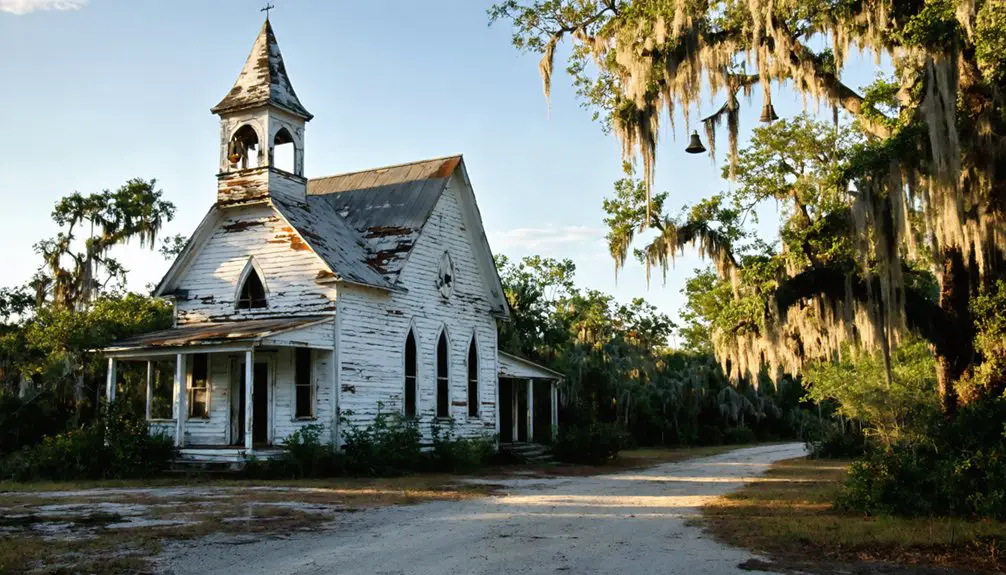
When you pull off State Road 64 onto Popash Road, you’ll find a tight cluster of surviving landmarks worth your time. New Hope Baptist Church and its adjacent cemetery remain the most intact remnants of the community, with the cemetery still actively maintained.
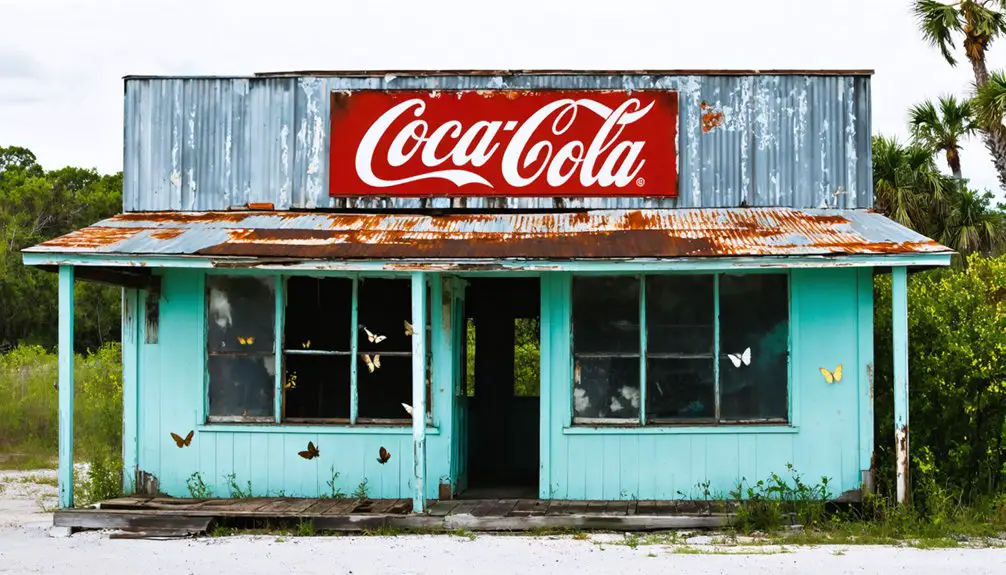
You can also spot the weathered shell of the old general store nearby, giving you a rare glimpse into what daily life once looked like in this forgotten settlement.
New Hope Baptist Church
Although little remains of old Popash, New Hope Baptist Church still stands as one of the settlement’s most enduring landmarks. When you visit, you’ll immediately notice how this structure anchors the otherwise quiet landscape, offering a rare piece of historical architecture still intact from the community’s active years.
The church connects you directly to Popash’s roots, reminding you that real families once built something lasting here. It’s also deeply tied to local legends surrounding the town, since the surrounding area carries whispered stories of children’s laughter and unexplained sounds that draw curious visitors year after year.
You won’t find interpretive signs or guided tours, so bring your own curiosity. The church speaks for itself, quietly holding the memory of a community that railroads and time nearly erased completely.
New Hope Cemetery
Just steps from the church, New Hope Cemetery stands as one of Popash’s most tangible connections to its past. Unlike many abandoned structures scattered across this forgotten settlement, the cemetery remains actively maintained, giving it a lived-in presence that’s rare for a ghost town.
You’ll find weathered headstones marking generations of families who built their lives around cattle ranching and farming here.
Local folklore adds a charged atmosphere to your visit, with stories of haunting and unexplained sounds drifting through the grounds. Whether you’re drawn by history or curiosity about those legends, the cemetery rewards a slow, thoughtful walk.
Bring a camera, read the names, and let the dates tell you what no historical marker ever will — Popash was once very much alive.
General Store Remains
Beyond the cemetery, the shell of Popash’s old general store is one of the few remaining structures that hints at the town’s former commercial life. It’s not a polished attraction, but that’s exactly what makes it worth stopping for. You’re looking at raw, unfiltered history.
When you visit, keep these four things in mind:
- Bring your own water and local cuisine — there are no vendors nearby
- Walk the perimeter carefully; the structure is fragile
- Watch for wildlife observation opportunities in the surrounding brush and tree lines
- Photograph early morning for the best light on weathered wood and aging walls
You won’t find a sign explaining what stood here. You’ll just stand there, read the silence, and piece it together yourself.
When Is the Best Time to Visit Popash?
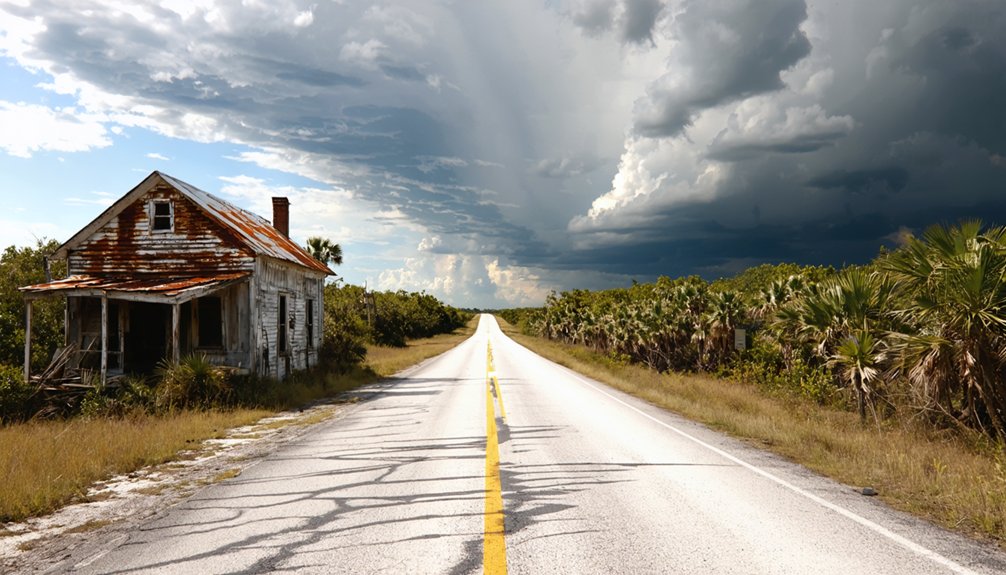
Since Popash is an outdoor, rural stop with no indoor attractions, the season you visit makes a real difference in your experience. Florida’s weather conditions can shift dramatically, so timing matters. Winter and early spring offer the most comfortable exploring, with cooler temperatures and lower humidity keeping the trek through the cemetery and around the general store remains far more pleasant.
Summer brings brutal heat, afternoon storms, and thick mosquitoes that’ll cut your visit short fast. Fall sits somewhere in between, offering tolerable weather but still unpredictable rain.
If you’re combining this stop with a broader Hardee County drive, pair it with nearby local cuisine options in Wauchula before or after. Plan for a morning arrival to beat both the heat and the crowds — though honestly, you’ll likely have Popash entirely to yourself.
How to Get to Popash on Your Road Trip
Here’s how to make the most of your drive:
- Fuel up in Wauchula, where you’ll also find local cuisine worth sampling before heading into rural territory.
- Follow SR 64 west from Wauchula until you spot the church and cemetery cluster.
- Drive slowly — the open ranch land offers genuine wildlife viewing, including birds and deer along the roadside.
- Use coordinates 27.5184°N, 81.7382°W if GPS loses familiar landmarks.
You won’t need a detailed map — just SR 64 and a sharp eye.
The Legends and Ghost Stories of Popash
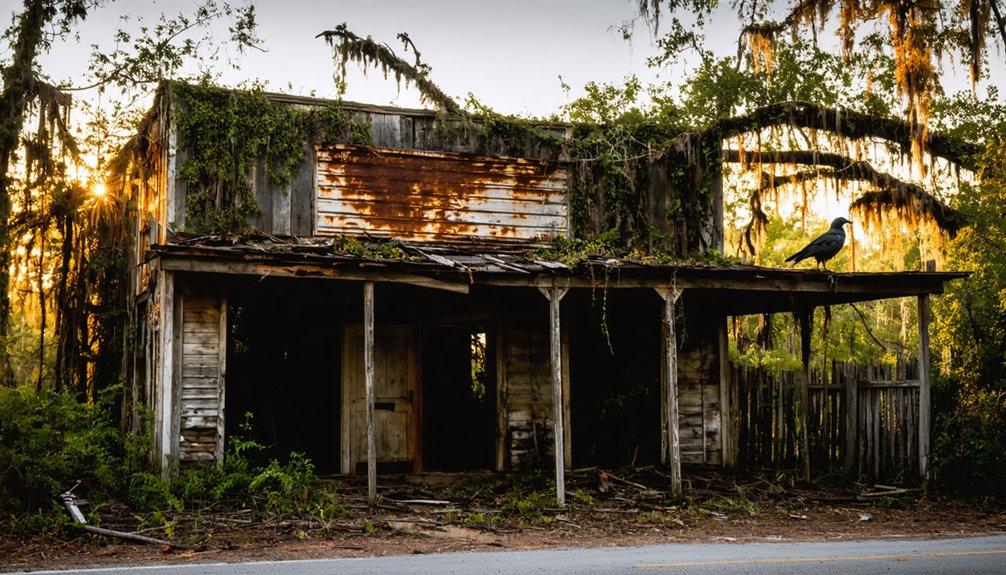
Popash carries a haunted reputation that outweighs its modest footprint. Local legends cluster around the old school site, where visitors have reported hearing children’s laughter with no visible source.
Popash punches above its weight in ghost stories, especially near the old school where laughter echoes from nowhere.
Some stories claim the building once served as a hospital, while others insist a wooden schoolhouse burned there first. Both claims appear to be fiction, but they’ve taken firm root in the town’s identity.
The paranormal activity people describe fits the setting perfectly — a quiet rural stretch with crumbling structures, an old cemetery, and almost no official historical interpretation to anchor the facts.
Without written records or historical markers, folklore fills the gap. When you visit, you’ll find a place where the stories feel louder than the silence, and that tension is exactly what makes Popash worth the detour.
What Really Happened at the Popash School?
Once you separate fact from folklore, the Popash School has a genuinely interesting history on its own terms. A school first appeared here in 1898, replaced by a two-story brick building in 1912, and it operated until 1948 on a schedule built around the local strawberry season.
Some visitors arrive expecting a haunted hospital or the ruins of a building destroyed by fire, but both stories are false — the brick schoolhouse stood until demolition in 2008 or 2009.
School History And Facts
Although Popash’s ghost town reputation leans heavily on folklore, the school’s actual history is grounded in straightforward, documented fact. Don’t let local folklore surrounding these abandoned structures overshadow what really happened here.
The Popash School operated on a timeline worth knowing:
- 1898 – The original school was established in the growing community.
- 1912 – A two-story brick schoolhouse replaced the original building.
- December to mid-March – School sessions ran seasonally, timed around strawberry harvesting.
- 1948 – The school closed permanently, and the building stood until demolition in 2008/2009.
You’re looking at a rural school that served a working agricultural community for fifty years. No hospital, no fire — just a practical institution that outlasted the town itself.
Legends Versus The Truth
When you dig into the legends surrounding the Popash School, you’ll find the stories fall apart quickly. Local legends claim the building once served as a hospital, but that’s simply not true. Others insist the brick schoolhouse replaced an earlier structure destroyed by fire, yet that story doesn’t hold up either.
These historical inaccuracies have taken on a life of their own, fueled by the absence of official records and no historical placemarkers to anchor the facts. Visitors report hearing children’s laughter near the demolished site, feeding the paranormal reputation further.
What actually happened is far simpler. The school opened in 1898, was rebuilt in 1912, served the community until 1948, and was quietly demolished around 2008 or 2009. No mystery, just a forgotten piece of rural Florida history.
What to Look for When You Explore Popash
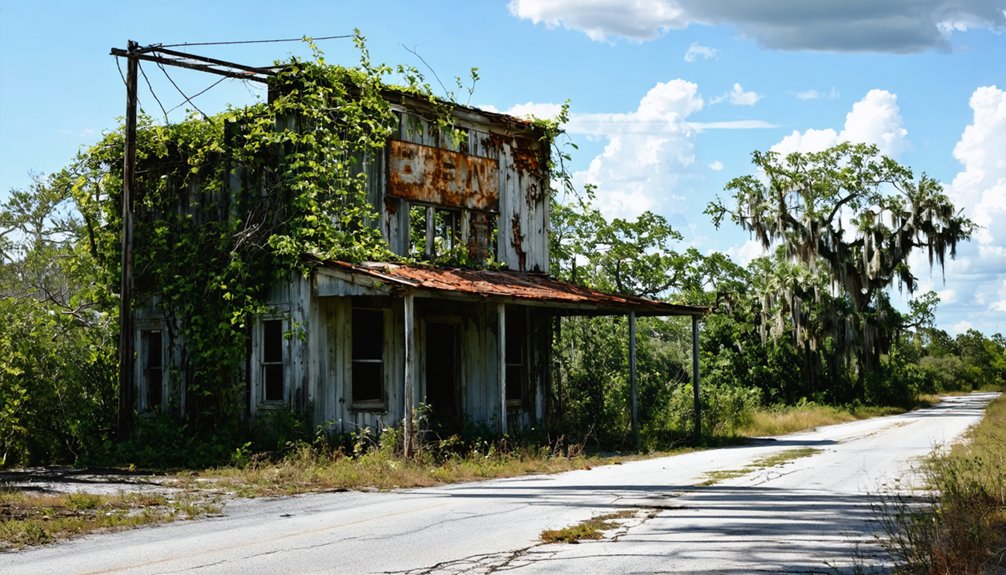
Popash doesn’t offer a packed itinerary, but the handful of surviving landmarks make the stop worthwhile if you know what to look for. Focus your time on these four key sites tied to local folklore and abandoned structures:
- New Hope Baptist Church – Still active and one of the oldest remaining buildings in the settlement.
- New Hope Cemetery – Well-maintained and worth a walk through for historical context.
- General store shell – A quiet, weathered remnant that captures the town’s faded commercial life.
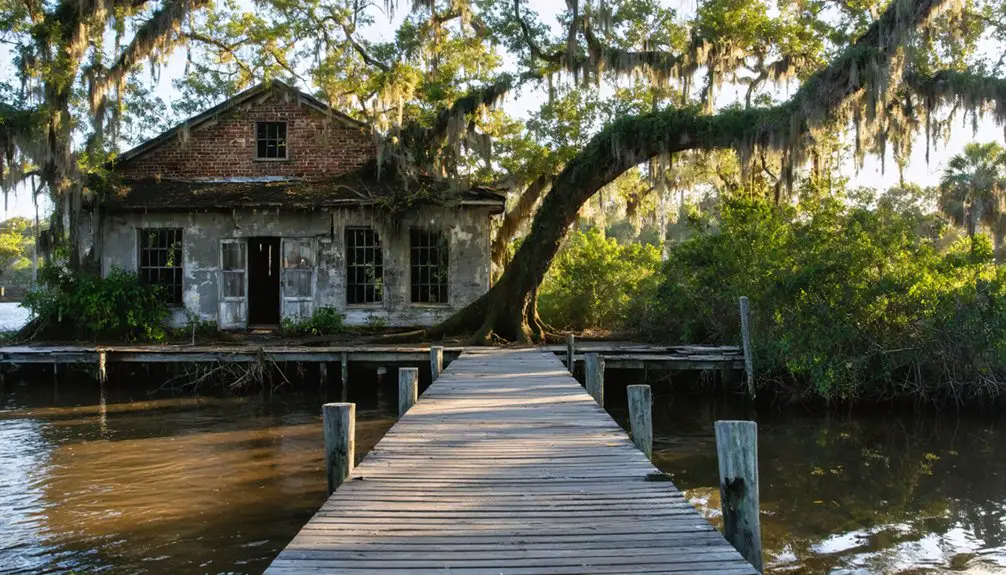
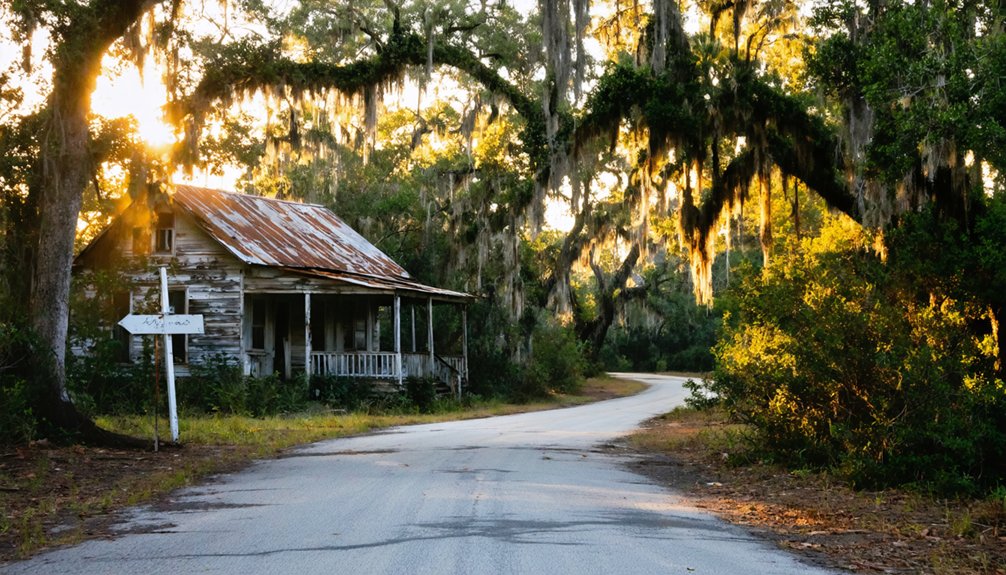
- Old farmhouse – A crumbling structure that reflects the agricultural roots defining Popash from its earliest days.
Bring a camera, wear comfortable shoes, and expect minimal signage. This is raw, unfiltered Florida history you navigate on your own terms.
Other Florida Ghost Towns Worth Adding to Your Route
If Popash leaves you wanting more forgotten Florida history, you’ve got plenty of ghost towns worth stitching into your route. Ellaville, near the Suwannee River, offers a collapsed mill town with strong local folklore surrounding its industrial past.
Verbena sits quietly in Polk County, another cattle-era settlement that faded once transportation routes shifted.
Cassadaga, while technically still inhabited, draws visitors through its preserved spiritualist history and active preservation efforts that keep its Victorian character intact.
Further south, Estero‘s Koreshan Unity settlement gives you a documented utopian community frozen in time.
Each stop rewards curiosity differently — some through maintained sites, others through atmospheric ruins.
Chain these destinations together and you’ll build a genuinely rich portrait of Florida’s layered, often overlooked past.
Frequently Asked Questions
Is There a Fee to Visit New Hope Cemetery in Popash?
You’ll enter freely, yet history’s weight costs something deeper. New Hope Cemetery welcomes visitors without fees, but historical preservation and cemetery regulations remind you to tread respectfully through this sacred, living piece of Popash’s forgotten past.
Are There Any Guided Ghost Town Tours Available in Hardee County?
You won’t find formal guided ghost town tours in Hardee County, but you’re free to explore historical landmarks and local legends independently, wandering Popash’s eerie roads, cemetery, and crumbling structures entirely on your own terms.
Can You Camp Overnight Near the Popash Settlement Area?
You won’t find a campground stretching for miles around Popash! You’ll need to research camping regulations carefully, but nearby Hardee County parks offer overnight safety while you explore this hauntingly remote Florida ghost town freely.
Is Popash Accessible by Public Transportation From Wauchula?
You won’t find public transit or transportation options connecting Wauchula to Popash. You’ll need your own vehicle to reach this remote rural ghost town, giving you the freedom to explore at your own pace.
Are There Restroom Facilities or Amenities Near the Popash Site?
You won’t find restroom facilities or visitor amenities at Popash’s remote site. Plan ahead by stopping in Wauchula before heading out, as this untamed ghost town offers raw, unfiltered freedom without modern conveniences awaiting you.
References
- https://jennmoslekwordpress.wordpress.com/2018/05/02/ghost-towns-of-florida-popash/
- https://en.wikipedia.org/wiki/Popash
- https://abandonedfl.com/popash-school/
- https://www.reddit.com/r/AbandonedPorn/comments/t0q98b/abandoned_general_store_in_the_ghost_town_of/
- https://findingflorida.blog/2018/05/02/ghost-towns-of-florida-popash/
- https://en.wikipedia.org/wiki/List_of_ghost_towns_in_Florida
- https://en.wikipedia.org/wiki/Moffit
- https://www.floridahauntedhouses.com/real-haunt/popash-school.html
- https://en.wikipedia.org/wiki/Template:Hardee_County