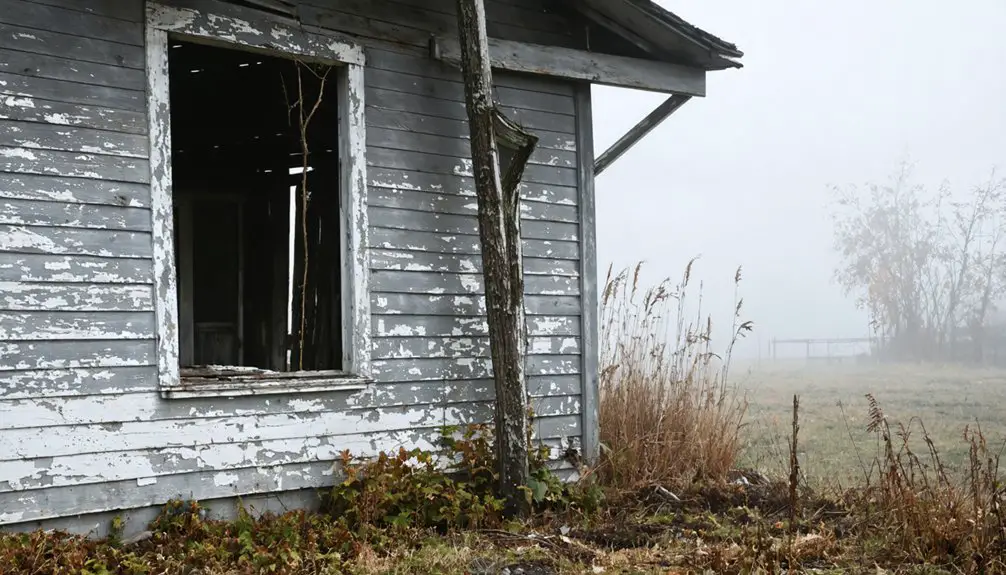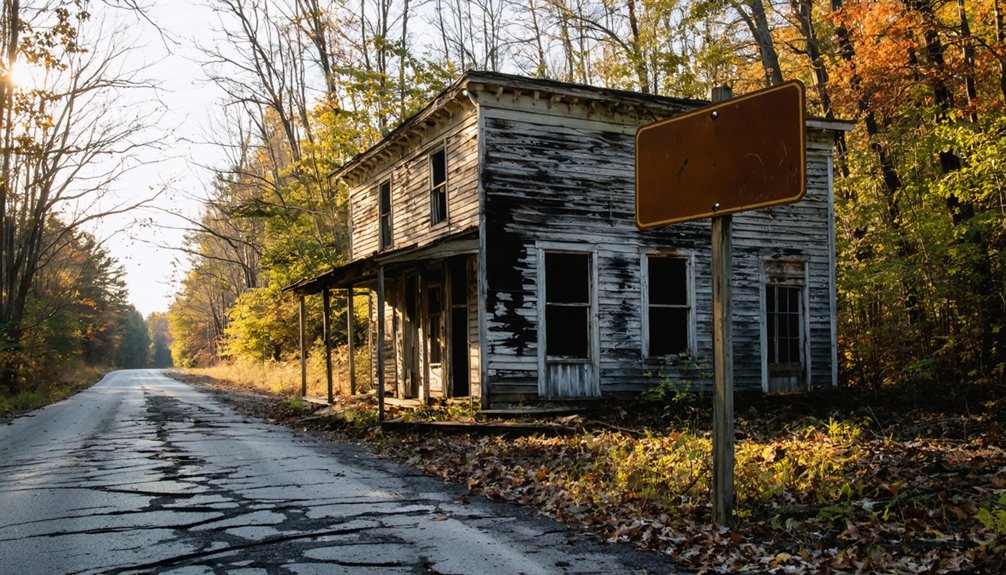
Port Sheldon, Michigan rose and fell in under two years, leaving behind crumbling hotel foundations swallowed by forest along Lake Michigan’s eastern shore. You can walk trails through the Port Sheldon Natural Area, spot historical markers, and touch what remains of a town that once boasted a luxury hotel, lighthouse, and railroad. The Financial Panic of 1837 and vanishing white pine resources sealed its fate. There’s far more to this ghost town story than you’d expect.
Key Takeaways
- Port Sheldon, established in 1835, was abandoned within two years due to the Financial Panic of 1837 and depletion of white pine resources.
- No original structures remain, but visitors can explore crumbling Ottawa House hotel foundations and trails through the Port Sheldon Natural Area.
- Access Port Sheldon via a 15-minute drive from Grand Haven on County Road FF 16, with parking available at the trail entrance.
- Pack sturdy shoes, water, snacks, binoculars, and a camera to fully enjoy the historical and natural features of the site.
- Extend your road trip by visiting Sleeping Bear Dunes, Grand Haven’s waterfront dining, or Saugatuck’s art scene and kayaking opportunities.
What Made Port Sheldon Michigan a Ghost Town?
When Port Sheldon sprang up along Lake Michigan’s eastern shore in 1835, it had every ingredient of a thriving frontier town — 600 acres of cleared land, a luxury hotel worth $40,000, a lighthouse, a pier, and even two miles of railroad.
Port Sheldon had everything — cleared land, a luxury hotel, a lighthouse, a pier, and even a railroad.
Yet within just two years, it was completely abandoned.
The Financial Panic of 1837 devastated the economy, triggering bank failures that forced settlers to walk away from everything they’d built.
White pine resources were already depleting, eliminating the town’s economic foundation.
The Ottawa House hotel crumbled into ruins almost immediately.
Today, Port Sheldon’s cultural significance lies in what it reveals about speculative frontier ambition.
Historical reconstruction efforts confirm no original structures survive, but the story itself gives you a rare, unfiltered look at how quickly dreams could collapse on America’s frontier.
What’s Left to See at Port Sheldon Today?
Although nothing from Port Sheldon‘s original 1835 settlement still stands, you’ll find more than an empty field when you visit. Nature has reclaimed the landscape beautifully, and historical artifacts like crumbling foundations still whisper the town’s ambitious story.
Natural reclamation has transformed what was once a bustling speculative community into a hauntingly peaceful wilderness worth exploring.
Here’s what you can discover on-site:
- Abandoned foundations marking where the Ottawa House hotel once stood
- Forest trails weaving through the Port Sheldon Natural Area
- Lake Michigan shoreline access along the natural western boundary
- Native vegetation slowly reclaiming logged and cleared settlement land
- Historical markers providing context about the town’s rapid rise and collapse
You’re fundamentally walking through a living timeline of boom, bust, and nature’s quiet takeover.
How to Get to Port Sheldon From Grand Haven
Now that you know what’s waiting at Port Sheldon, getting there from Grand Haven is pleasantly straightforward. Head north along the Lake Michigan shoreline, then turn onto County Road FF 16 near West Olive. The drive takes roughly 15 minutes, winding through farmland and second-growth forest that replaced the original logged terrain.
You’ll find parking at the Port Sheldon Natural Area trail entrance, where your exploration begins. As you walk the grounds, you’re tracing paths where settlers once chased ambitious dreams before the Panic of 1837 erased everything.
Local legends surrounding the town’s rapid collapse add atmosphere to every step. While no historical artifacts remain standing, the abandoned foundations speak volumes.
Pack comfortable shoes, bring water, and let Michigan’s open roads guide you there freely.
Parking, Trail Access, and What to Bring
Once you pull into the Port Sheldon Natural Area trail entrance, you’ll find straightforward parking that sets you up for easy exploration. The lot sits right off County Road FF 16, putting you steps from the trailhead.
Pack smart and move freely through this layered landscape of abandoned foundations, wildflower blooms, and birdwatching spots along the Lake Michigan shoreline.
- Sturdy hiking boots for uneven, root-crossed terrain
- Water bottle and trail snacks for extended wandering
- Binoculars to catch birdwatching spots near the wetland edges
- Camera to document wildflower blooms and crumbling remnants
- Light layers since lake breezes shift temperatures quickly
No entrance fees complicate your visit. You simply park, lace up, and explore at your own pace — exactly the kind of freedom this ghost town deserves.
Sleeping Bear Dunes and Other Stops Nearby
Stretching your ghost town road trip beyond Port Sheldon pays off fast, since Sleeping Bear Dunes National Lakeshore sits within easy driving distance and delivers some of Michigan’s most dramatic scenery. Climb the iconic dune overlooks for scenic viewpoints that sweep across Lake Michigan’s brilliant blue horizon.
You’ll also want to explore the Pierce Stocking Scenic Drive, where every curve reveals dense forest and open shoreline. Wildlife sightings are common throughout the park, so watch for white-tailed deer, bald eagles, and migratory shorebirds.
After Sleeping Bear, swing through Grand Haven for waterfront dining and a historic lighthouse walk, or head south to Saugatuck for art galleries and river kayaking. These stops round out a genuinely rewarding West Michigan road trip.
Frequently Asked Questions
When Exactly Was Port Sheldon Michigan Officially Founded as a Settlement?
You’ll find that Port Sheldon was officially founded in 1835, when ambitious settlers established its historical architecture during a regional boom. Local legends echo this exciting era of freedom, growth, and bold frontier dreams.
How Many Acres Did the Original Port Sheldon Development Cover?
You’ll discover that Port Sheldon’s original development covered exactly 600 acres of cleared forest land. Explore its historic architecture remnants and local legends as you roam this expansive, freedom-filled ghost town landscape along Lake Michigan’s shores.
Are There Any Verified Ghost Sightings or Paranormal Reports at Port Sheldon?
Despite its haunted locations vibe, you won’t find any supernatural legends grounded in fact here. Area records confirm there aren’t any verified ghost sightings or paranormal reports at Port Sheldon—it’s a ghost town in name only!
What Was the Name of the Luxury Hotel Built at Port Sheldon?
You’ll love discovering that the Ottawa House was Port Sheldon architecture’s crown jewel! This luxury hotel history shines bright — it’s valued at $40,000 and stood as the settlement’s grandest landmark before abandonment claimed it.
Did Berry Farmers Ever Cultivate the Abandoned Port Sheldon Land?
Yes, berry farmers did cultivate Port Sheldon’s abandoned land starting in the 1930s. Imagine walking those same fields — historical agricultural practices replaced ghostly ruins, weaving modern ghost stories into the soil where settlers once dreamed big.
References
- https://99wfmk.com/one-of-michigans-first-ghost-towns/
- https://visitgrandhaven.com/history/5-interesting-fun-facts-about-the-grand-haven-area/
- https://everafterinthewoods.com/these-forgotten-michigan-ghost-towns-that-still-feel-mysterious-today/
- https://en.wikipedia.org/wiki/List_of_ghost_towns_in_Michigan
- https://99wfmk.com/ghost-town-route-michigan/
- https://migenweb.org/ottawa/twprecords/ptsheldon/portsheldon.html
- https://kids.kiddle.co/List_of_ghost_towns_in_Michigan
- https://99wfmk.com/port-crescent-michigan-2019/