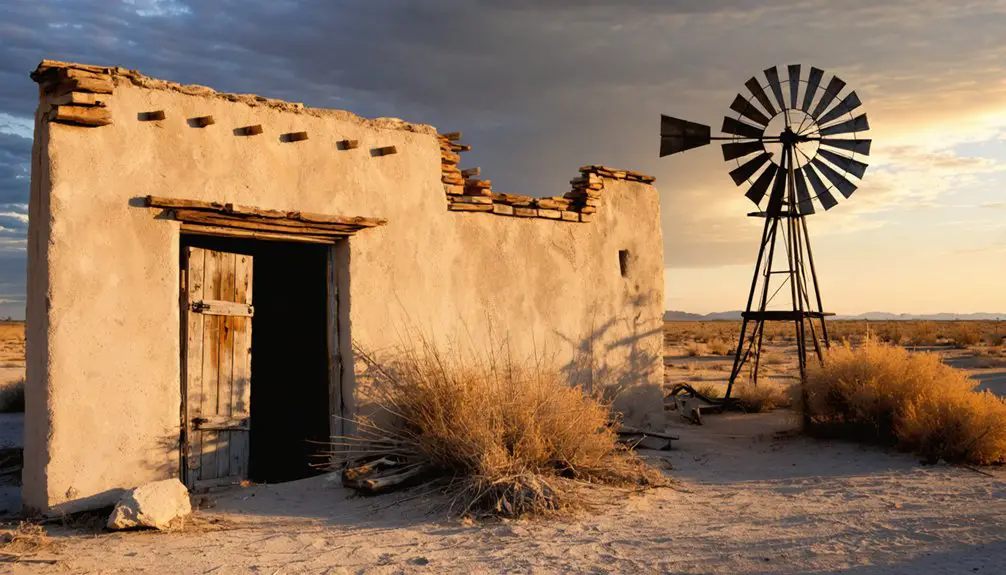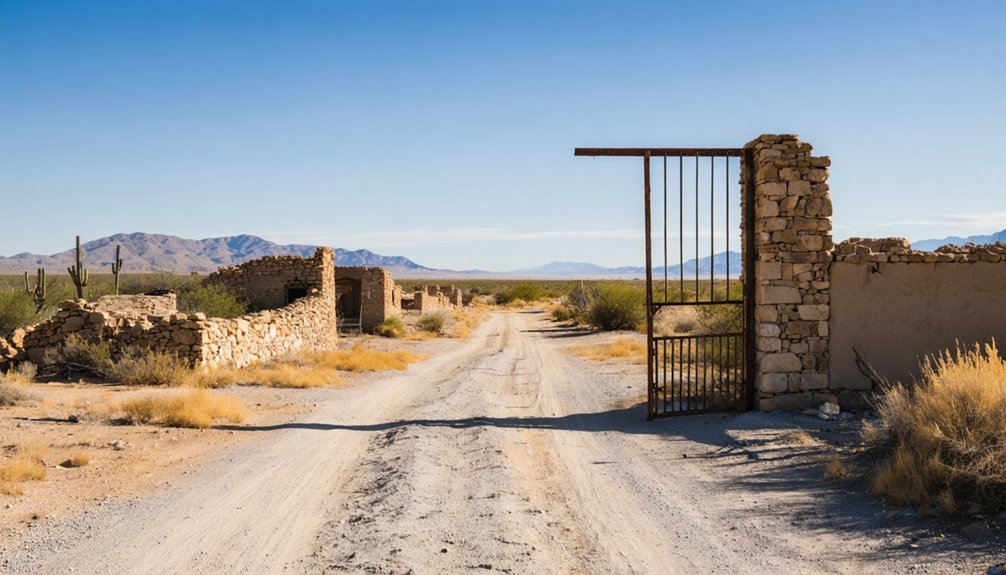
Porvenir, Texas isn’t your typical ghost town — it’s a deliberately erased village where Texas Rangers, U.S. Army cavalry, and local ranchers executed 15 unarmed men and boys at dawn on January 28, 1918, then burned everything to ash. You’ll find no markers, no monuments, just scorched silence 24 miles southwest of Valentine. Bring water, fuel, and a full tank of resolve. Everything you need to plan this journey — and understand what you’re standing on — is ahead.
Key Takeaways
- Porvenir lies 24 miles southwest of Valentine off U.S. Highway 90; stock up on water, fuel, and emergency supplies before departing.
- Roads are rough and cell service is nearly nonexistent, so prepare your vehicle for isolated, unforgiving desert terrain.
- Visit October through November or February through March to avoid deadly summer heat exceeding 100°F.
- No official markers exist at the site; expect scattered foundations, scorched earth, and a bluff overlooking the Rio Grande.
- Nearby ghost towns like Pilares and Candelaria add regional depth, helping complete the borderland story along this forgotten corridor.
What Is Porvenir, Texas?
Once a small border settlement of 140 souls hugging the Rio Grande in northwest Presidio County, Porvenir, Texas, no longer exists — erased in a single violent dawn on January 28, 1918, when Texas Rangers, U.S. Army cavalry, and local ranchers executed fifteen unarmed men and boys, then burned every structure to ash.
The name Porvenir means “future” in Spanish, a bitter irony given what unfolded. Historical myths long shielded the perpetrators, with early news coverage falsely absolving the Army entirely.
Today, preservation efforts by descendants and historians are slowly reclaiming the truth. When you visit this remote stretch near Pilares, Chihuahua, you’re standing where silence replaced community.
Understanding what Porvenir was — and how it ended — is essential before you make this journey.
What Happened at Porvenir in 1918?
Before dawn on January 28, 1918, Texas Rangers, U.S. Army cavalry, and local ranchers descended on Porvenir. They pulled fifteen unarmed men and boys from their homes, marching them to a nearby bluff above the Rio Grande. There, they executed them from three feet away.
Fifteen unarmed men and boys. A bluff above the Rio Grande. Three feet away.
Afterward, they burned the village to ash.
The victims shared three devastating realities:
- Ages ranged from 16 to 72
- Several held American citizenship
- None received any legal process
You’ll find no monuments marking this ground easily.
Historical remembrance here requires intention.
The massacre erased not just lives but an entire community’s future — ironic, given Porvenir means “future” in Spanish.
Cultural preservation efforts by descendants continue fighting to guarantee this atrocity isn’t quietly buried again beneath official silence.
What You’ll Actually See at the Porvenir Site Today
When you arrive at the Porvenir site today, you’ll find only scattered remnants of what was once a village of 140 people — broken foundations and scorched earth that speak louder than any monument.
You can walk to the bluff above the Rio Grande where fifteen men and boys were lined up and shot at close range in the predawn darkness of January 28, 1918.
Standing there, with the river cutting silently below you and Chihuahua visible across the water, the weight of what happened on that ground is impossible to ignore.
Scattered Village Remnants Remain
What remains of Porvenir today is little more than scattered earth and silence. You won’t find markers or monuments easily — just the raw, windswept landscape of Presidio County holding its secrets close. Yet standing here connects you to something urgent: cultural preservation and community stories that refuse to disappear.
Archaeologists have confirmed three significant findings at the site:
- Evidence of deliberate village burning
- The mass grave where surviving residents buried their dead
- Artifact scatters confirming the isolated, self-sufficient life residents once lived
You’re walking ground where 140 people built their futures — *porvenir* means “future” in Spanish — before that future was violently erased. The physical remnants are sparse, but the weight of what happened here presses into every crumbling adobe fragment you’ll encounter.
The Bluff Execution Site
Just beyond the village remnants, a bluff drops toward the Rio Grande — and this is where fifteen men and boys were led at dawn on January 28, 1918, pulled from their homes and shot from three feet away. You’ll feel the weight of that history standing at the edge, looking down toward the water where survivors fled into Mexico.
No formal marker guides you here. You find it through research, local legends, and conversations with descendants who’ve carried this story for over a century. Ghost stories circulate among border communities, but the real haunting is factual — unarmed men, a firing squad, a burning village erased before sunrise.
Standing on that bluff, you’re confronting what official accounts long tried to bury.
Rio Grande River Views
Standing at the edge of that bluff, you’ll see the Rio Grande running below — narrower than most people expect, quiet enough that you can hear the current.
Local folklore says survivors crossed here the night of January 28, 1918, wading into Mexico with nothing. That knowledge changes how you look at the water.
What you’ll notice at the river today:
- River wildlife — herons, egrets, and mule deer moving along the sandy banks
- Chihuahua’s low mountains rising directly across, close enough to feel reachable
- The shallow crossing where families escaped into an uncertain future
There’s no monument here, no guardrail. Just open land, moving water, and the weight of what happened on this ground a century ago.
Is Porvenir Worth the Drive?
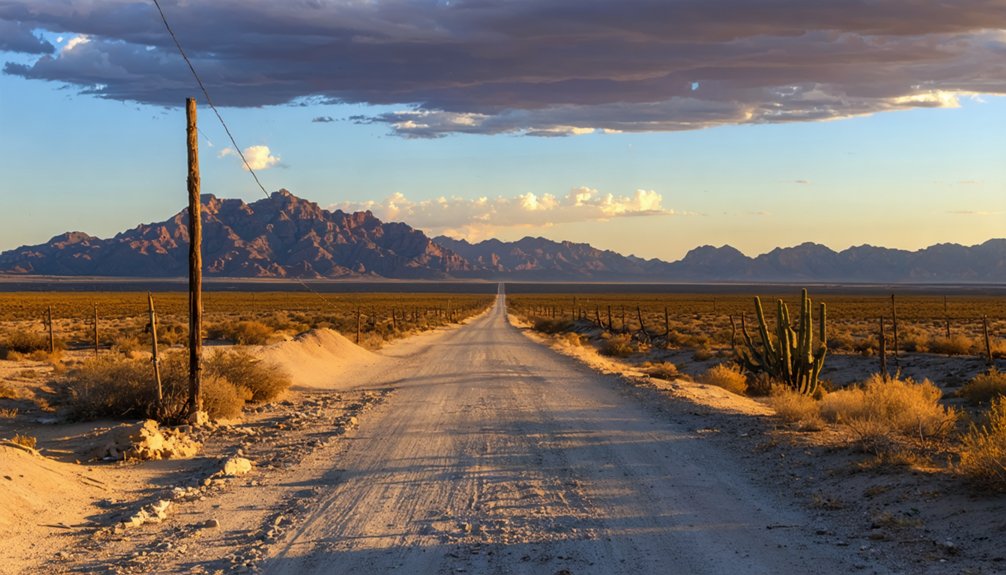
If you’re willing to navigate the remote stretch of northwest Presidio County, Porvenir rewards you with something rare — a place where history hasn’t been polished or packaged for tourists.
You’ll find scattered remnants of a village that once held 140 people, a community erased in a single January dawn in 1918 when Texas Rangers, soldiers, and ranchers executed fifteen unarmed men and boys on a bluff above the Rio Grande.
The drive demands effort, but standing on that ground, you’ll feel the weight of what happened there in ways no museum exhibit can replicate.
Remote but Rewarding
Reaching Porvenir demands commitment — it sits twenty-four miles southwest of Valentine, deep in the rugged terrain of northwest Presidio County, tracing the banks of the Rio Grande. But that remoteness is exactly the point. You’re not visiting a curated attraction; you’re standing where history was silenced.
Three reasons the drive rewards you:
- Unfiltered solitude and wildlife viewing along the Rio Grande corridor
- Access to authentic local cuisine in nearby Presidio before or after your visit
- A rare confrontation with a suppressed American story on your own terms
The landscape hasn’t softened. The same bluffs, the same river, the same vast silence greet you. You won’t leave unchanged — and that’s precisely what makes this road trip worth every rugged mile.
Historical Significance Awaits
Few ghost towns carry the weight that Porvenir does — because this one wasn’t abandoned; it was erased. On January 28, 1918, Texas Rangers, Army cavalry, and local ranchers executed fifteen unarmed men and boys, then burned every structure to ash. What remains today isn’t just silence — it’s evidence.
You’ll find no tourist infrastructure here, no curated walking paths. What you get instead is raw, unfiltered history beneath an open West Texas sky.
Local legends still circulate among border families whose ancestors witnessed the aftermath firsthand. Preservation efforts by descendants and historians have slowly forced this story into public consciousness.
Coming here means confronting history on its own terms. That kind of freedom — to witness, remember, and demand accountability — is exactly why the drive is worth every mile.
What Remains Today
Knowing the weight of what happened here makes the question of what’s left feel almost beside the point — and yet it matters. Porvenir’s scattered remnants speak quietly but honestly. Archaeological discoveries have confirmed what survivors carried across the Rio Grande: this place was real, and its destruction was deliberate.
You’ll find no museums or markers crowding the site. What you’ll find demands your attention:
- Ash-layer evidence beneath the soil confirming the village’s burning
- The mass grave site where survivors buried their dead
- Crumbling structural remnants along the riverbank
Cultural preservation here isn’t polished — it’s raw and necessary. Coming to Porvenir means choosing to witness what official history long ignored. That choice belongs entirely to you.
How to Get to Porvenir, Texas

Getting to Porvenir means committing to the remote, unforgiving terrain of northwest Presidio County, Texas — and that’s fitting, given the weight of what happened there. Head twenty-four miles southwest of Valentine off U.S. Highway 90, toward the Rio Grande’s edge near Pilares, Chihuahua.
The roads are rough, the landscape unforgiving, and cell service nearly nonexistent — so prioritize travel safety before you leave. Carry extra water, fuel, and emergency supplies. Valentine itself offers minimal stops, so stock up on provisions beforehand; don’t count on finding local cuisine along this stretch.
You’re driving toward a place that ceased to exist after 1918, erased by violence and fire. The land remains, though. Let that quiet emptiness speak when you arrive.
Best Time to Visit Porvenir, Texas
Once you’ve mapped your route to Porvenir, timing your visit matters as much as the journey itself. The local climate runs brutal in summer, with desert heat exceeding 100°F across Presidio County.
You’ll breathe easier visiting during these windows:
- October through November — Mild temperatures, clear skies, and open roads define the Chihuahuan Desert at its finest.
- February through March — Cool mornings invite quiet reflection at a site carrying immense historical weight.
- Spring seasonal festivals in nearby Presidio and Valentine offer cultural context before you reach the remnants.
Avoid July and August entirely. The isolation that once defined Porvenir’s 140 residents still defines the landscape today — unforgiving, exposed, and honest.
Come prepared, come respectful, and come during a season that lets you stay longer.
Nearby Ghost Towns That Pair Well With Porvenir
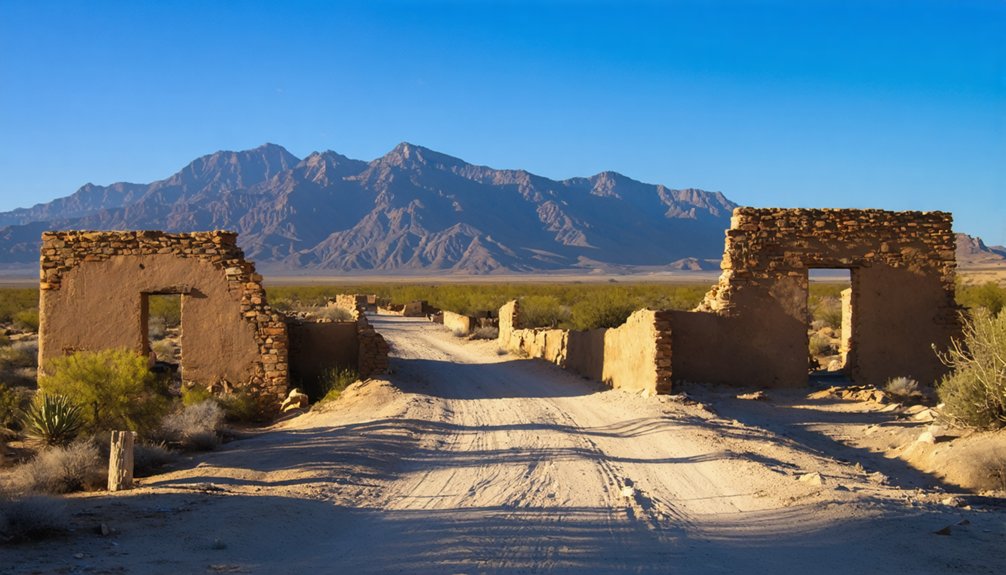
Porvenir doesn’t stand alone in this stretch of the Chihuahuan Desert — the surrounding region of northwest Presidio County holds other forgotten settlements that deepen the story of life and loss along the Rio Grande.
Porvenir is not an isolated wound — the whole corridor bleeds with forgotten settlements and buried histories.
Nearby Pilares, just across the river in Chihuahua, shares borderland history directly tied to the tensions that unraveled Porvenir.
Candelaria, a small settlement further downriver, offers another window into isolated frontera life.
Ghost town preservation efforts in this corridor remain minimal, which means you’re encountering these places largely as time left them.
Pair these stops deliberately — each one adds texture to what you’ve witnessed at Porvenir.
The desert doesn’t explain itself, but moving through these forgotten communities together, you’ll start assembling the larger, harder truth of this region.
Frequently Asked Questions
What Does the Name Porvenir Actually Mean in English?
“Future” — that’s what Porvenir means in Spanish. You’ll feel the historical significance and cultural impact of that word’s cruel irony when you discover how this freedom-seeking community’s promising name couldn’t shield it from devastating tragedy.
How Many People Lived in Porvenir Before the 1918 Massacre Occurred?
Before the 1918 massacre shattered its soul, you’d have found a bustling 140 residents packed into Porvenir’s historical background, a culturally significant border community brimming with life, dreams, and futures along the Rio Grande’s sun-scorched banks.
Were Any American Citizens Among the Fifteen Massacre Victims at Porvenir?
Yes, some victims held American citizenship. You’ll find the historical context chilling—survivor testimonies confirm that Rangers didn’t distinguish citizenship before executing fifteen men and boys at that Rio Grande bluff in freedom’s bitter absence.
Did Any Documentary Films Cover the Porvenir Massacre Story?
Yes, “Porvenir, Texas” brings the massacre’s haunting echoes to life on screen. You’ll discover its historical preservation and cultural significance through Apple TV’s atmospheric storytelling, which illuminates the darkness surrounding the Texas Rangers’ long-buried secrets.
When Did Porvenir’s Post Office Officially Close and Stop Recording Population?
Porvenir’s post office officially closed in 1948, ending all population recording. When you explore this ghost town’s historic landmarks, you’ll feel the silence of a community that once dreamed freely before tragedy erased its future.
References
- https://www.sulross.edu/porvenir-the-quiet-massacre/
- https://en.wikipedia.org/wiki/Porvenir
- https://studentpress.org/wp-content/uploads/2022/09/acp/4B_04.pdf
- https://commons.stmarytx.edu/rscpos26/45/
- https://www.tshaonline.org/handbook/entries/porvenir-tx
- https://thc.texas.gov/blog/remembering-porvenir-massacre
- https://www.youtube.com/watch?v=mRBCaujdeyI
- https://cbbs.sulross.edu/keller-porvenir-massacre/
- https://roonation.org/porvenir-texas-is-roo-tale-approved-yall-the-movie-is-directed-and-produced-by-an-austin-college-family/
- https://tv.apple.com/us/show/porvenir-texas/umc.cmc.380798yvwh1csspiq7q4ftbtt