Planning a ghost town road trip to Quinn, Michigan starts with a drive along Gratiot Avenue past mile marker 16 in Clinton Township, where Quinn Road still crosses the highway. This quiet settlement formed around the Quinn family‘s 1881 homestead and briefly held a post office from 1869 to 1873. No ruins remain, but the area’s history runs deep. Pair Quinn with Central Mine or Nonesuch for a fuller adventure, and there’s much more to uncover ahead.
Key Takeaways
- Quinn, Michigan, sits near Gratiot Avenue and Quinn Road in Clinton Township, Macomb County, identifiable by mile marker 16.
- The settlement formed around the Quinn family’s 1881 home and a post office that operated briefly from 1869 to 1873.
- No physical ruins remain; Quinn’s history is preserved only through street names like Quinn Road.
- Pair Quinn with nearby ghost towns like Central Mine or Nonesuch to build a fuller road trip experience.
- Central Mine offers restored copper-era buildings, while Nonesuch provides trail ruins from its 1867–1912 operational period.
What Was Quinn, Michigan?
Although Quinn, Michigan barely left a mark on the map, its story makes it worth a detour. This former settlement sat in Clinton Township, Macomb County, near what’s now 14 Mile and Quinn Road, right along Gratiot past mile marker 16.
Its historical significance lies in how it reflects Michigan’s early settlement patterns — small communities forming around families, post offices, and main roads rather than mining booms or lumber mills.
The Quinn family built their home on Gratiot in 1881, lending the area its name. A post office operated briefly from 1869 to 1873, and reports even suggest Underground Railroad activity predating the Civil War.
Today, Quinn Road still crosses Gratiot, giving you a rare, tangible connection to a community that otherwise vanished completely.
Where Quinn Sat on Gratiot Avenue
If you’re tracing Quinn’s footprint today, you’ll want to head out on Gratiot Avenue past mile marker 16, where the old settlement once took root.
Look for Quinn Road crossing Gratiot, and you’ll know you’re standing in the heart of what used to be a living, breathing community.
That intersection near 14 Mile Road is your ground zero for piecing together Quinn’s ghost-town story.
Mile Marker 16 Location
Drive out along Gratiot Avenue past mile marker 16, and you’re standing in what was once Quinn, Michigan — a modest settlement that quietly took root in Clinton Township, Macomb County.
The exact footprint sits near 14 Mile and Quinn Road, a crossroads that still carries the settlement’s name today. Pull out historical maps and you’ll notice how deliberately these early communities anchored themselves along major routes like Gratiot.
Local legends hint at Underground Railroad activity in this corridor before the Civil War, adding a charged undercurrent to what looks like an ordinary suburban stretch. Nothing dramatic marks the spot — no ruins, no monuments — but that absence is the story.
You’re charting a place that survived only in street signs and historical records.
Quinn Road Crosses Gratiot
Quinn Road still crosses Gratiot Avenue today, marking the closest thing to a landmark you’ll find where this lost settlement once stood. That intersection near 14 Mile Road is your ground zero for connecting with local legends tied to the Quinn family, who planted roots here in 1881.
No ruins greet you, no historical landmarks tower overhead, but the street name itself carries the story. You’re standing where a functioning post office once served a real community, where Underground Railroad activity reportedly stirred before the Civil War.
The road refuses to let Quinn disappear completely. Pull over, look both ways down Gratiot, and let the geography do the talking. Sometimes a surviving street name is the most honest ghost town marker you’ll ever find.
Near 14 Mile Road
Settle into the stretch of Gratiot Avenue near 14 Mile Road, and you’re fundamentally standing on top of what Quinn once was. This suburban corridor holds historical anecdotes buried beneath pavement and subdivision lots. Local legends suggest the area carried quiet significance long before Clinton Township sprawled outward.
Watch for these landmarks anchoring Quinn’s forgotten footprint:
- Mile marker 16 on Gratiot places you directly within Quinn’s original boundaries.
- 14 Mile Road’s intersection with Gratiot marks the approximate heart of the old settlement.
- Quinn Road crossing Gratiot confirms the family’s lasting imprint on the landscape.
You won’t find ruins here, but that’s exactly what makes this stop raw and honest. Quinn’s ghost exists in geography itself, not crumbling walls.
What Quinn Looked Like Before It Vanished
When you picture Quinn at its peak, you’re imagining a modest rural settlement anchored along Gratiot Avenue near what’s now the 14 Mile Road intersection.
The Quinn family set the tone early, building their home on Gratiot in 1881 and lending the entire community its name.
You won’t find grand storefronts or a bustling town square in the historical record — Quinn was a quiet, family-rooted settlement that grew around a post office and a dirt road cutting through Michigan farmland.
Quinn’s Early Settlement Layout
Though little physical evidence survives today, Quinn once occupied a modest stretch along Gratiot Avenue past mile marker 16, roughly near what’s now the intersection of 14 Mile and Quinn Road in Clinton Township. The settlement layout was simple — a small rural community anchored by family roots rather than industry.
You won’t find abandoned structures dramatically frozen in time, but the bones of this place still whisper through its street names.
Here’s what shaped Quinn’s early footprint:
- The Quinn family built their home along Gratiot in 1881, establishing the settlement’s core identity
- A post office operated briefly from 1869 to 1873, signaling organized community life
- Quinn Road still crosses Gratiot today, preserving the family name long after the settlement vanished
The Quinn Family Home
At the heart of Quinn stood a single family home built by the Quinn family along Gratiot Avenue in 1881 — a modest structure that anchored the entire settlement’s identity. This piece of historical architecture gave the entire community its name, its character, and its sense of place. You’re primarily tracing a family’s footprint when you visit today.
Local legends suggest the area carried even deeper significance before the Civil War, with Underground Railroad activity quietly threading through the region. That history adds a charged, layered meaning to what might otherwise seem like a simple roadside stop.
No grand ruins mark the spot now, but knowing a single family’s home once defined an entire settlement makes standing at 14 Mile and Quinn Road feel genuinely worth the detour.
Why Quinn Disappeared as a Ghost Town After Four Years
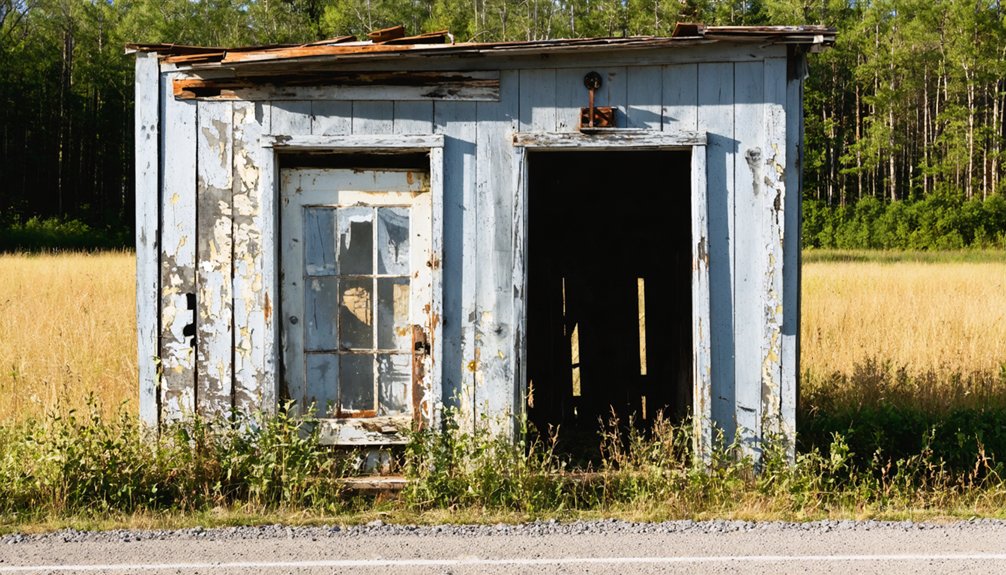
Quinn’s post office opened in December 1869 and shuttered just four years later in September 1873, and that closure likely sealed the settlement’s fate before it ever had a real chance to grow. Without a functioning post office, small communities lost their official identity and economic footing quickly.
A post office opens, closes four years later, and a settlement quietly loses its identity and reason to exist.
- Railroad access never materialized for Quinn, cutting off growth before it started.
- The settlement left behind no abandoned structures with historical significance substantial enough to anchor a lasting community identity.
- Population never reached a critical mass, making Quinn vulnerable to regional shifts.
You’re fundamentally pursuing a community that vanished quietly rather than dramatically. Quinn’s story reflects a pattern seen across Michigan — a post office opens, closes, and the settlement dissolves back into the landscape without a trace.
What Survives at Quinn Today
What little Quinn left behind isn’t ruins or relics — it’s a street name. Quinn Road still cuts across Gratiot Avenue in Clinton Township, marking the approximate footprint of a settlement that vanished before 1874. That’s your historical preservation here — not a restored building or interpretive sign, but a road that quietly refuses to forget.
When you drive through, you’re reading the landscape like a map of local legends. The Quinn family built their home on Gratiot in 1881, and the name stuck long after the post office didn’t. No crumbling foundations greet you, no ghost-town placard points the way. Just suburban traffic moving across old ground.
For adventurous travelers, that invisibility makes Quinn more intriguing, not less — history hiding in plain sight.
Michigan Ghost Towns Worth Pairing With Quinn on a Road Trip
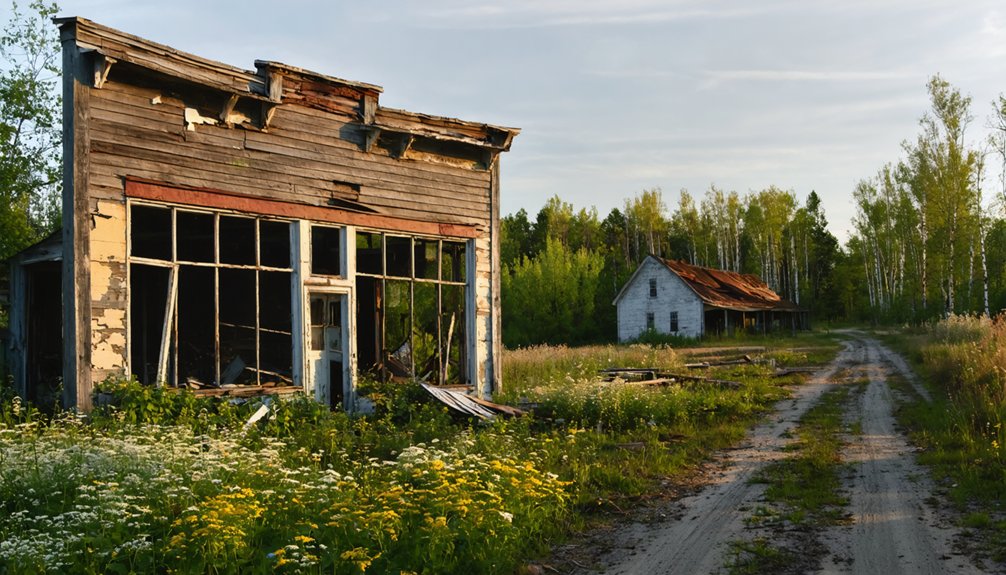
Since Quinn leaves so little to see, pairing it with Michigan’s more visually dramatic ghost towns turns a short historical detour into a full-scale road trip. Head north and you’ll find sites packed with historical artifacts, local legends, and genuine ruins worth exploring.
Quinn’s sparse remains pair best with Michigan’s dramatic ghost towns — together, they transform a quick detour into an unforgettable road trip.
- Central Mine (Keweenaw Peninsula) – Walk a self-guided tour through restored copper-era buildings tied to Michigan’s mining past.
- Nonesuch – Trail ruins near the Little Iron River, where copper extraction ran from 1867 to 1912 and once supported roughly 300 residents.
- Lumber ghost towns – Scattered across northern Michigan, these settlements collapsed after resource depletion stripped their economies bare.
Quinn anchors your trip in suburban history. These stops deliver the dramatic, abandoned landscapes that complete the experience.
Before You Go: Safety at Abandoned Sites
Ghost town structures have stood without maintenance for decades. Floors, stairs and roof timbers fail without warning, and a building that looks solid from outside may not hold your weight. Stay out of standing structures unless the site is actively maintained and open to visitors.
Mine workings are the more serious hazard. Vertical shafts can be hundreds of feet deep, are often unfenced, and may be hidden by brush or capped with rotted boards. Never enter an adit, tunnel or shaft: abandoned workings can hold oxygen-poor or toxic air that gives no warning before you lose consciousness.
Enclosed spaces with rodent droppings carry a risk of hantavirus, which is contracted by breathing contaminated dust. Do not sweep or stir up dust inside old cabins and outbuildings.
Cell coverage at these sites is usually poor or absent. Tell someone your route and expected return time, and carry more water than you think you need.
Frequently Asked Questions
Is There Parking Available Near Quinn Road and Gratiot Avenue?
You’ll find parking options limited but manageable, as Quinn Road and Gratiot Avenue offer solid roadside accessibility. Pull over safely, explore the historic intersection freely, and soak in the suburban ghost settlement’s quiet, adventurous charm!
Was Quinn, Michigan Ever Officially Recognized as an Incorporated Town?
Quinn never earned official incorporation, but don’t let that diminish its ghost town origins — you’ll find its abandoned structures replaced by living street names, proving freedom-seekers left lasting marks without needing a city charter.
Are There Any Historical Markers Near the Quinn Settlement Area?
No official historical markers highlight Quinn’s settlement, but you’ll discover the area’s historical significance through surviving street names like Quinn Road. Seek out preservation efforts in nearby Clinton Township for a richer, freedom-fueled exploration of this forgotten Michigan community.
Did the Quinn Family Have Descendants Still Living in Clinton Township?
The knowledge doesn’t confirm Quinn family descendants, but genealogical research could uncover their family legacy! You’d adventure through dusty records, chasing echoes of 1881, where history hides in plain sight along Clinton Township’s streets.
What Is the Best Time of Year to Visit Quinn, Michigan?
Spring and fall offer you the best seasonal weather for exploring Quinn’s historic Gratiot corridor. You’ll dodge harsh winters, catch comfortable temperatures, and time your visit around local festivals that keep Macomb County’s community spirit alive.
References
- https://www.facebook.com/LostInMichigan.net/posts/the-ghost-town-of-nonesuchthe-porcupine-mountains-in-the-western-upper-peninsula/1500107181472758/
- https://www.visitkeweenaw.com/things-to-do/museums-history/ghost-towns/
- https://michiganhomeandlifestyle.com/the-towns-that-once-were-michigans-ghost-towns/
- https://en.wikipedia.org/wiki/List_of_ghost_towns_in_Michigan
- https://www.youtube.com/watch?v=7-vjuqiGWJU
- https://www.nps.gov/slbe/learn/historyculture/ghosttowns.htm
- https://en.wikipedia.org/wiki/Quinn
- https://www.mlive.com/news/2022/10/12-michigan-ghost-towns-and-the-stories-behind-them.html
- https://privatelandswildlife.com/ghost-towns-michigan/
- https://www.goodreads.com/author/show/7369376.Arlene_Stafford_Wilson/blog