Start your trip in McClusky, then drive eight miles northeast into Sheridan County’s quiet emptiness. You’ll find Lincoln Valley exactly where ambition ran out of road. Founded in 1900 by settlers who bet everything on a railroad that never arrived, this ghost town peaked at fewer than 100 residents before the last soul left in 1972. Abandoned walls, overgrown lots, and open basements are all that remain. Keep exploring, and you’ll uncover everything you need to experience it safely and meaningfully.
Key Takeaways
- Lincoln Valley ghost town is located 8 miles northeast of McClusky, North Dakota, making McClusky the ideal starting point for your road trip.
- Bring reliable GPS or maps, as routes to Lincoln Valley are poorly marked with rough roads and overgrown turnoffs.
- Watch for hidden wells, open basements, and rotted boards concealed by tall grass throughout the abandoned townsite.
- Explore remnants of churches, a former bar, and an ice cream parlor that tell Lincoln Valley’s story of quiet decline.
- Lincoln Valley was abandoned by 1972 after the expected railroad never arrived, leaving fewer than 100 residents with no reason to stay.
What Is Lincoln Valley, and Why Do People Visit This Ghost Town?
Tucked away in Sheridan County, North Dakota, about 8 miles northeast of McClusky, Lincoln Valley is a ghost town that once hummed with the ambitions of German-Russian settlers who believed a railroad would put their community on the map — it never did.
Founded in 1900 and renamed Lincoln Valley in 1912, the town peaked at fewer than 100 residents before quietly unraveling. By 1972, the last resident had left.
People visit today because the place still speaks. You’ll find collapsed structures, open basements, and overgrown lots that carry real community stories about prairie hope and quiet failure.
For those drawn to historical preservation and wide-open landscapes, Lincoln Valley offers something rare — an unfiltered look at what ambition, isolation, and time leave behind.
How Lincoln Valley Went From Boom to Ghost Town
When George and Conrad C. Reiswig founded Lincoln in 1900, they weren’t just building a town — they were betting on a railroad that never arrived. That missing rail line sealed Lincoln Valley’s fate before it ever truly found its footing.
German-Russian settlers built churches, stores, a gas station, and an implement business, yet the population never cracked 100. Local legends paint a picture of a briefly bustling community clinging to hope.
The post office closed July 7, 1961, and the last resident, Joe Leintz, walked away in 1972. What remained became a quiet argument for historical preservation — proof that ambition alone can’t anchor a town.
Today, Lincoln Valley stands as a raw, honest monument to the railroad-and-agricultural dreams that shaped North Dakota’s forgotten landscape.
What Surviving Structures Will You Find at Lincoln Valley Today?
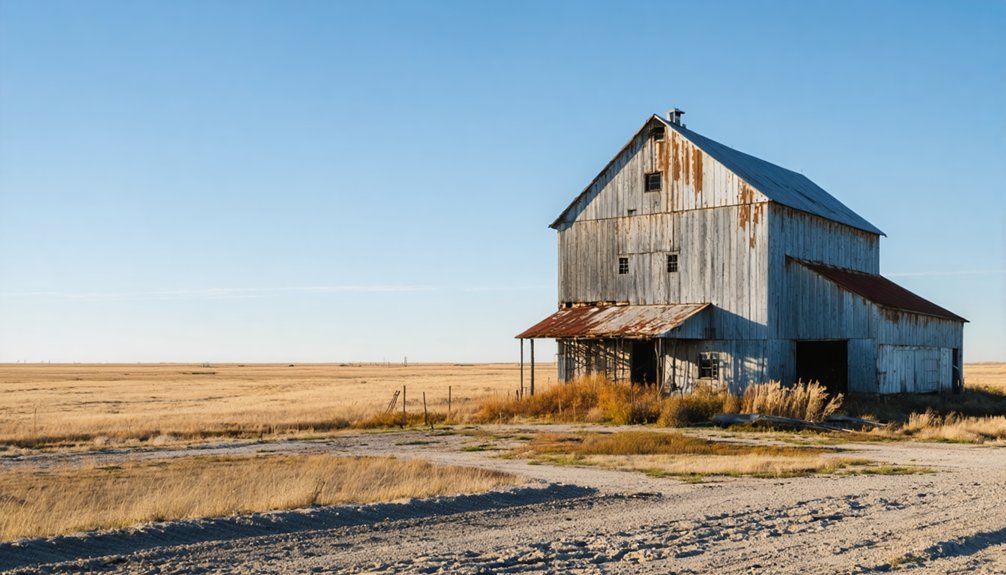
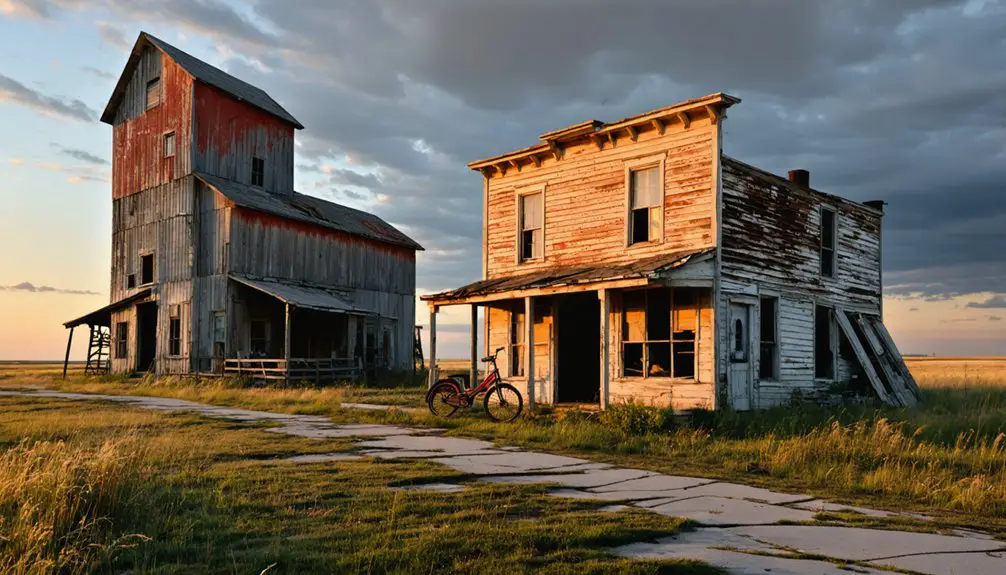
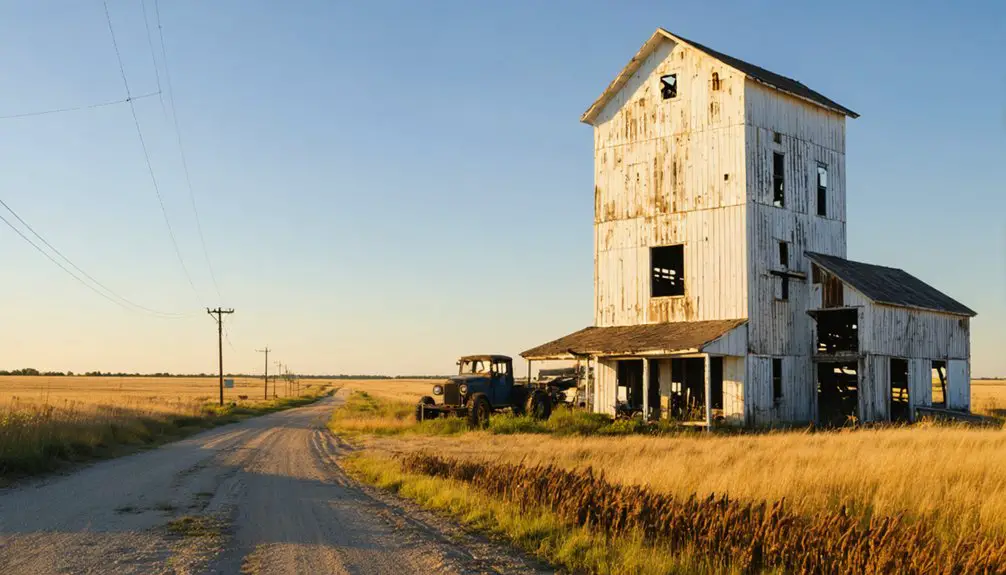
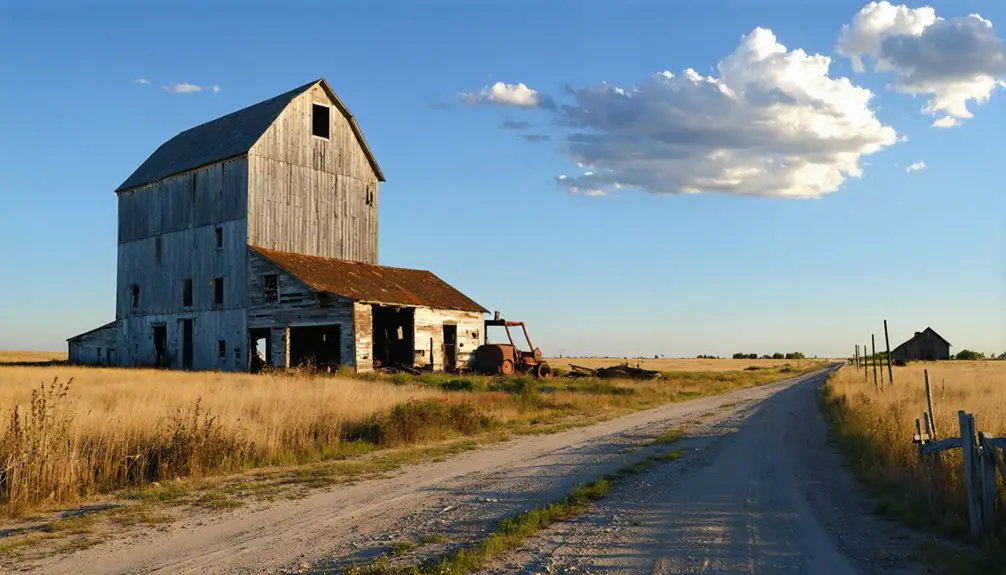
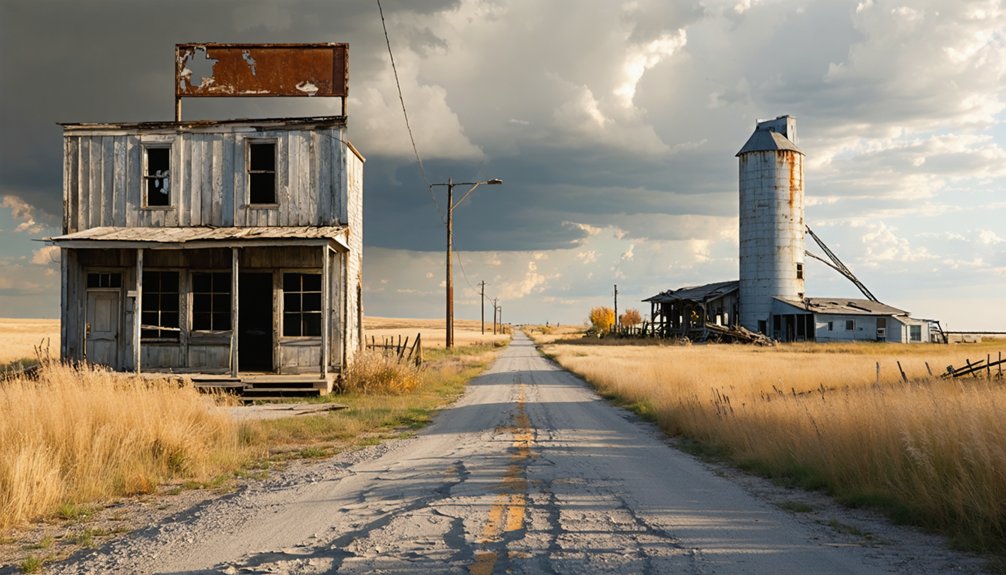
What’s left of Lincoln Valley today tells a story more through absence than presence. You’ll find abandoned buildings in varying states of collapse — partial walls, sagging rooflines, and weathered timber slowly surrendering to the plains.
One church site has been reduced to nothing but an open basement, hidden beneath overgrown landscapes that swallow former foundations whole.
A bar and ice cream parlor once stood here; some structures remain, though several have disappeared entirely, including one razed in 2009.
Walking these grounds means reading the silence between what stands and what’s gone. Every crumbling threshold marks where someone once lived with real ambition.
If you crave landscapes that speak honestly about time and loss, Lincoln Valley delivers that rawness without apology.
What Safety Hazards Should You Expect Before You Explore?
Before you take a single step into Lincoln Valley, understand that the land itself has quietly set traps. Decades of abandonment have buried hazards beneath tall grass and silence. Hazard identification isn’t optional here — it’s survival instinct.
Hidden wells drop without warning. Open basements swallow footsteps. Rotted boards collapse under confident strides.
The freedom to roam ghost towns comes with a real cost if you skip basic safety precautions. Move slowly. Probe uncertain ground before trusting your full weight. Stay out of any structure still standing — walls that survived this long won’t necessarily survive your visit.
Lincoln Valley rewards the careful explorer with raw history and striking desolation. It punishes carelessness swiftly. Respect the ruins, read the terrain, and you’ll leave with stories worth telling.
How Do You Get to Lincoln Valley, North Dakota?
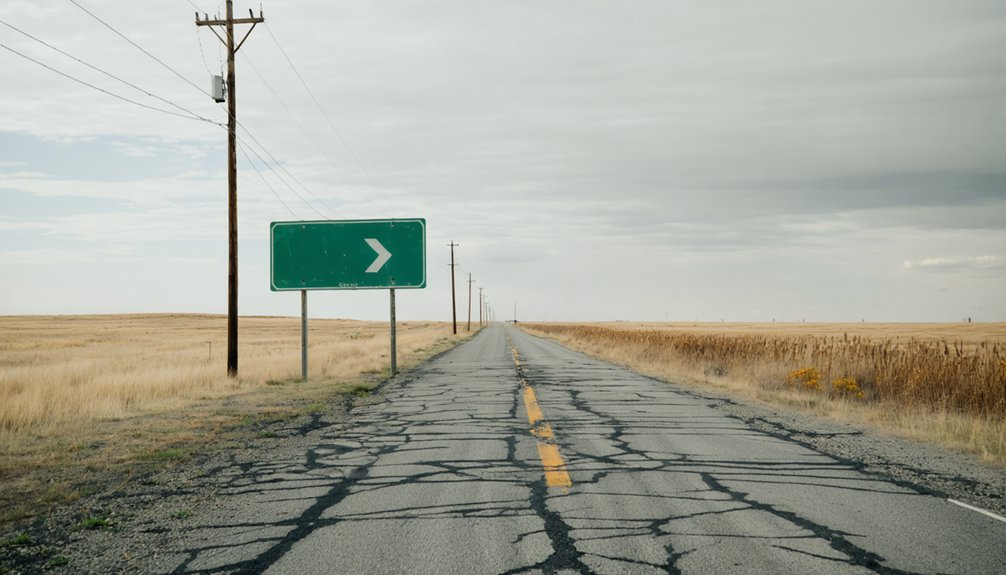
You’ll find Lincoln Valley tucked away in Sheridan County, North Dakota, roughly 8 miles northeast of McClusky in Lincoln Township. Two-wheel drive roads can get you there, but routes are poorly marked and can be hard to follow, so a reliable map or GPS is essential.
Once you’re close, watch for overgrown tracks and faded turnoffs — this is a place that doesn’t advertise itself.
Finding Lincoln Valley’s Location
Tucked about 8 miles northeast of McClusky in Sheridan County, Lincoln Valley isn’t the kind of place that appears on a highway billboard or a tourist map — and that’s precisely what makes finding it feel like a small act of discovery.
You’ll navigate rural 2WD roads through Lincoln Township, where the landscape itself becomes your guide. The routes can be difficult to follow, especially when overgrowth swallows road edges and landmarks disappear into tall grass.
Local legends and historical preservation efforts keep the town’s memory alive, even as the physical site fades. Study your maps carefully before you go, note your mileage, and trust the geography.
McClusky serves as your logical jumping-off point — stock up there, because once you head northeast, you’re on your own.
Roads Leading There
Getting to Lincoln Valley means committing to roads that were never built for convenience — they were built for survival. These routes carry the weight of German-Russian settlers who carved their lives into Sheridan County’s unforgiving plains.
You’ll navigate roughly 8 miles northeast of McClusky, following roads that demand respect and attention.
Before you go, remember these essentials:
- A 2WD vehicle works, but road conditions shift — verify routes locally before departing.
- Overgrowth obscures paths, so bring a detailed map and cross-reference landmarks tied to local legends about the town’s railroad dreams.
- Historical preservation mindset matters — treat every rutted trail as a thread connecting you to 1900s homestead life.
Freedom tastes different on forgotten roads. Drive deliberately.
Navigation Tips For Visitors
Once you’ve committed to finding Lincoln Valley, McClusky becomes your anchor — a real, living town roughly 8 miles southwest of where the ghost town waits. Top off your tank and download offline maps before you leave, because reliable cell service disappears fast out here.
County roads will carry you northeast, but don’t expect clear signage pointing toward a place most maps have forgotten. Follow road numbers carefully, watch for unmarked turns, and slow down when the landscape starts feeling deliberately quiet — you’re close.
Historical preservation isn’t managed here by any official body, so visitor guidelines are self-imposed: respect what remains, photograph freely, but touch nothing fragile. The land remembers what the railroad erased. Your job is simply to witness it.
What to Photograph and Which Nearby Sites Are Worth the Detour
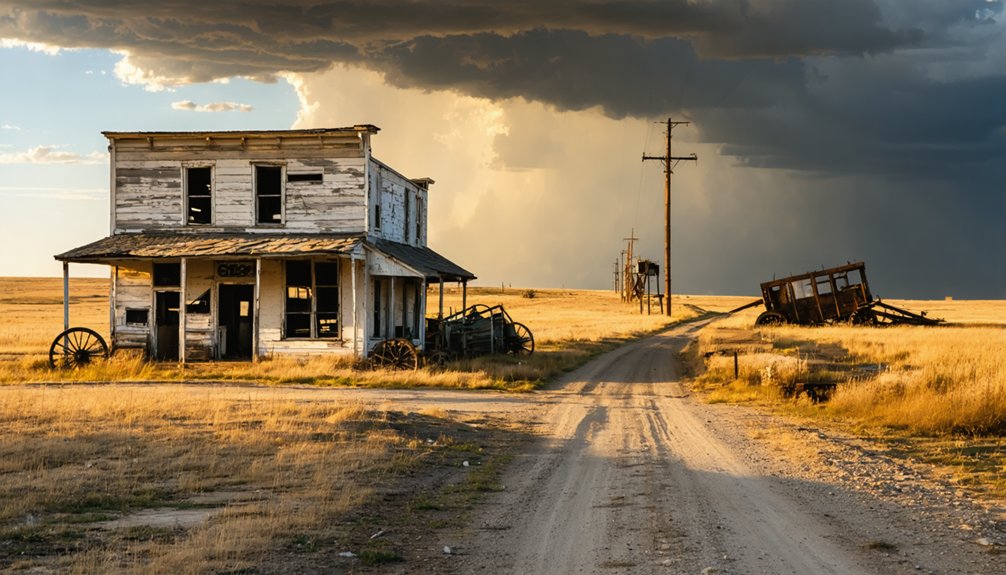
- Decaying structures — Shoot the remaining homes and outbuildings at golden hour; long shadows deepen the sense of abandonment.
- The open church basement — Frame it wide to show how completely nature reclaims human ambition.
- The surrounding prairie landscape — Let the emptiness speak.
For nearby detours, McClusky sits just 8 miles southwest and offers fuel, food, and context for the railroad-and-agricultural history that built — and quietly erased — towns like Lincoln Valley.
Frequently Asked Questions
Who Were the Original Founders of Lincoln Valley, North Dakota?
George and Conrad C. Reiswig founded Lincoln Valley in 1900. When you’re chasing ghost town tourism thrills, you’ll find their abandoned structures echo a bold pioneer spirit that’ll ignite your wanderlust for forgotten North Dakota history.
When Did Lincoln Valley Officially Change Its Name From Lincoln?
Like a whisper carried through time, Lincoln Valley officially shed its old name on October 18, 1912. You’ll find this abandoned landmark’s rechristening adds rich ghost town tourism history to your wanderlust-driven journey through North Dakota’s forgotten past.
Who Was the Last Known Resident to Leave Lincoln Valley?
Joe Leintz was the last soul to walk away from Lincoln Valley’s abandoned structures in 1972—you’re now chasing ghost town legends where his footsteps echo through the silence he left behind.
What Ethnic Group Made up Most of Lincoln Valley’s Early Settlers?
German-Russian immigrant communities shaped Lincoln Valley’s cultural heritage. You’d find their pioneering spirit woven into the town’s very foundation, these freedom-seeking settlers who carved a life from North Dakota’s vast, unforgiving plains.
When Did the Lincoln Valley Post Office Permanently Close Its Doors?
The Lincoln Valley post office shut its doors on July 7, 1961—a moment that’ll haunt ghost town tourism enthusiasts. As you chase abandoned landmarks across North Dakota, you’re tracing freedom’s fragile edge where communities once dared to dream.
References
- https://ghostsofnorthdakota892857007.wordpress.com/2017/05/09/lincoln-valley-nd/
- https://ghostsofnorthdakota892857007.wordpress.com/category/lincoln-valley-nd/
- https://www.ghosttowns.com/states/nd/lincolnvalley.html
- https://ghostsofnorthdakota892857007.wordpress.com/2015/10/30/true-ghost-towns-population-zero/
- https://en.wikipedia.org/wiki/List_of_ghost_towns_in_North_Dakota
- https://www.facebook.com/groups/2030822207183428/posts/2744172272515081/
- https://www.reddit.com/r/abandoned/comments/1ngzltg/lincoln_valley_north_dakota_abandoned_since_1972/
- https://www.reddit.com/r/creepy/comments/1nh17qn/lincoln_valley_nd_ghost_town/
- https://www.ghosttowns.com/states/nd/nd.html