To plan your ghost town road trip to Rockville Stage Stop, head south from Marsing on Highway 95 toward Jordan Valley, then turn onto McBride Creek Road. Drive roughly 2.5 miles, take the right fork, and cross the creekbed. You’ll find crumbling foundations, two hidden wells, and echoes of a violent frontier past—including raids, a 19-room hotel, and lives lost. Pack supplies, watch for snakes, and keep exploring to uncover everything this forgotten Idaho landmark holds.
Key Takeaways
- From Marsing, head south on Highway 95, turn onto McBride Creek Road, and follow the dirt road approximately 2.5 miles to the site.
- A standard 2WD vehicle works for most of the year, but winter conditions near the creek crossing require extra caution.
- Explore visible foundations of the stage stop and barn, partially hidden by sagebrush, plus two historic wells near the cowboy camp.
- No facilities exist on-site, so bring all necessary supplies and watch for uneven terrain, unstable foundations, and potential wildlife hazards.
- Extend your road trip by visiting nearby ghost towns like Poison Creek Stage Stop for additional frontier history exploration.
Why Is Rockville Stage Stop Worth the Drive?
Though little remains of Rockville Stage Stop beyond crumbling foundations and overgrown ruins, this Owyhee County ghost town packs a surprisingly rich history into its remote landscape. You’ll find yourself standing where stagecoaches once rested, where miners resupplied, and where local legends of Native American attacks still echo across the high desert.
The stop survived raids, served a thriving 19-room hotel, and connected Idaho’s rugged mining country to larger settlements before a rerouted road erased it from relevance.
Historical artifacts scattered across nearby cowboy camps reward curious explorers willing to dig deeper. You’re not just visiting a forgotten address on a map — you’re stepping into a raw, unfiltered slice of frontier Idaho that most travelers never bother to find. That freedom alone makes it worth every mile.
How to Get to Rockville Stage Stop From Marsing
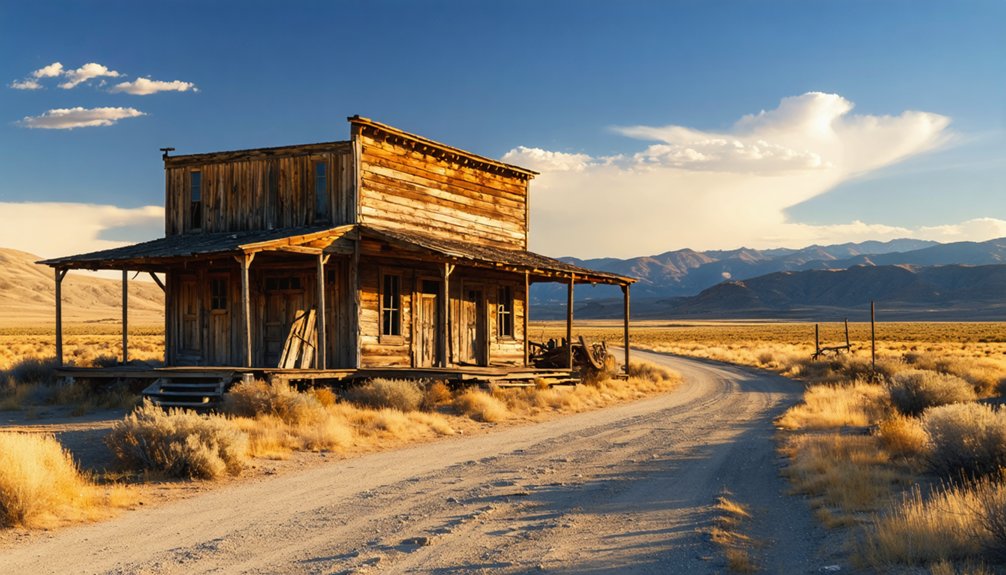
Getting to Rockville Stage Stop is straightforward once you know the turns. From Marsing, head south on Highway 95 toward Jordan Valley. Watch for McBride Creek Road on your right and turn there.
You’ll follow a well-maintained dirt road for roughly 2.5 miles until you reach a fork — turn right again.
Immediately after that fork, you’ll cross a creekbed. Don’t let it catch you off guard, especially in winter when mud softens the approach.
Once across, you’re standing on ground layered with cultural significance, where stagecoaches once rolled and travelers rested.
The foundations ahead hold historical artifacts buried in sagebrush and silence. It’s a remote, self-reliant adventure, but the route is manageable in a standard 2WD vehicle for most of the year.
Foundations, Wells, and What Survives at the Site
Once you cross the creekbed and reach the site, you’ll find the foundations of the stage stop building and a barn — the only remnants that survived decades of vandalism and neglect.
A clump of sage across the road conceals the old building’s foundations and porch outline, so keep your eyes sharp as you explore.
Two wells also hide within the grounds near the old cowboy camp area, rewarding curious visitors who take the time to search beyond the obvious ruins.
Foundations Still Standing Today
While Rockville Stage Stop won’t wow you with standing walls or intact structures, what remains tells a quiet story of the life that once thrived here. You’ll find the foundations of the stage stop building and a barn still visible beneath the Idaho sky, their outlines preserving the archaeological significance of a long-forgotten crossroads.
A clump of sage across the road partially conceals the old building and porch foundations, so keep your eyes sharp. Vandalism and neglect create real preservation challenges, as the original structures were burned in the early 1960s.
Two wells also survive near the old cowboy camp area, offering tangible connections to daily frontier life. It’s raw, unpolished history you can actually stand inside.
Discovering Two Hidden Wells
Beyond the foundations and barn outlines, the site holds two hidden wells that anchor your sense of what daily life actually demanded out here. Water wasn’t optional for a working stage stop, and these wells fed horses, travelers, and a 19-room hotel that once buzzed with activity.
You’ll find the wells near the old cowboy camp area, half-swallowed by the landscape but unmistakably intentional. They’re quiet keepers of local legends — stories of stagecoaches, Native American conflicts, and survival carved into rugged Owyhee County terrain.
Standing at the edge of one, you feel the weight of the historic ruins around you. Nothing glamorizes the effort it took to sustain this place. The wells simply tell the truth: people worked hard and lived harder out here.
The Violent and Forgotten History of Rockville Stage Stop
Rockville Stage Stop wasn’t just a waypoint for weary travelers — it was a battleground. The site carries a violent and forgotten history that shaped its legacy long before abandonment claimed it.
- Native American attacks repeatedly targeted the stop during the late 1800s stage route era.
- Historical crimes here include the death of Mrs. Ed Holmes, killed in 1889.
- A grave and stone marker still honor her near the original attack site.
- The stop connected rugged mining regions, making it a high-stakes target for conflict.
- Despite the violence, the community persisted until a rerouted road sealed its fate in 1928.
You’re not just visiting ruins when you come here — you’re standing where survival wasn’t guaranteed and history left its deepest scars.
What to Pack for a Self-Reliant Visit to Rockville Stage Stop
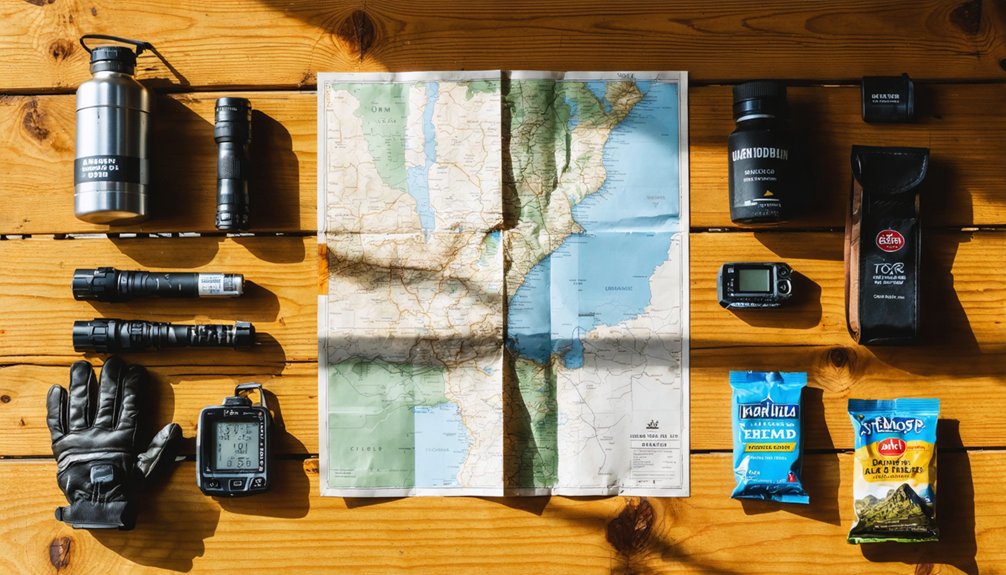
Carrying the right gear matters just as much as knowing the history when you’re heading to a remote site like Rockville Stage Stop. No facilities exist here, so you’re entirely on your own.
Pack plenty of water, a first aid kit, and sturdy boots for traversing uneven foundations and creek crossings. Bring a camera to document historical artifacts like the remaining stone corral and foundations before weather erodes them further.
A metal detector lets you explore cowboy camps tied to local legends of stagecoach travelers and Native American attacks.
Since roads turn muddy in winter, keep a tow strap and shovel in your vehicle. Cell service is unreliable, so download offline maps beforehand.
Freedom tastes best when you’re actually prepared for it.
How to Stay Safe at Rockville Stage Stop
Since no facilities or services exist at Rockville Stage Stop, you’re completely self-reliant the moment you arrive. Weather awareness and wildlife precautions aren’t optional—they’re essential for exploring this remote Owyhee County site safely.
- Watch for uneven terrain and unstable foundations near the ruins and barn remnants.
- Cross the creekbed cautiously, especially after rain when water levels rise unpredictably.
- Monitor weather conditions before departing—winter mud can strand unprepared vehicles.
- Stay alert for snakes and other wildlife around the sage, wells, and cowboy camp areas.
- Tell someone your planned route from McBride Creek Road before heading out.
The freedom to explore Idaho’s forgotten history comes with personal responsibility. Respect the remote landscape, stay aware of your surroundings, and you’ll navigate Rockville Stage Stop confidently.
Which Ghost Towns Near Rockville Stage Stop Are Worth the Detour?
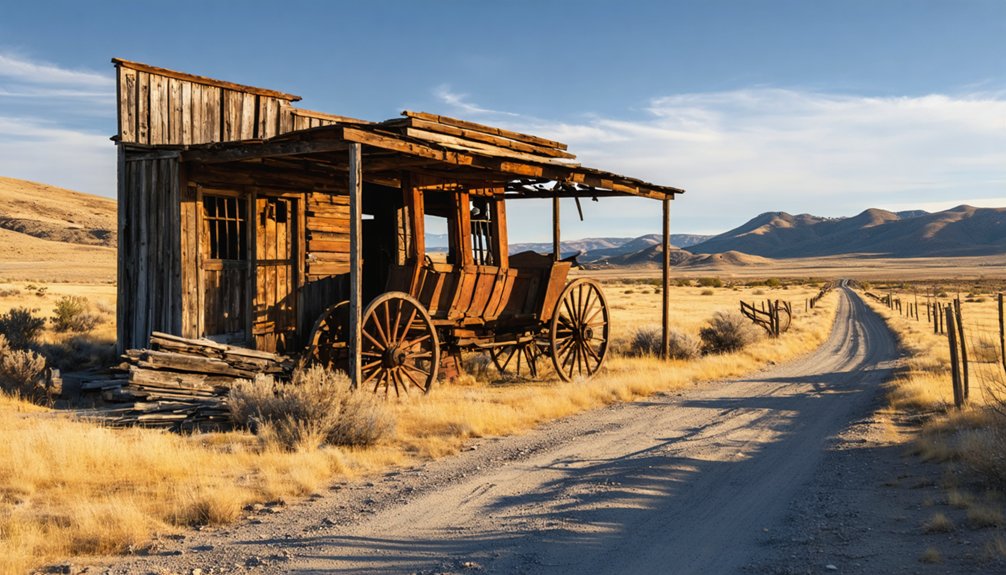
Once you’ve explored Rockville Stage Stop‘s foundations and cowboy camps, the surrounding Owyhee County backcountry rewards curious travelers with more ghost town discoveries worth the extra miles.
Poison Creek Stage Stop sits nearby and delivers a similar rugged experience, connecting you deeper into Idaho’s frontier network of mining relics and forgotten trails. It’s a natural extension of your route if you’re chasing the full picture of this region’s past.
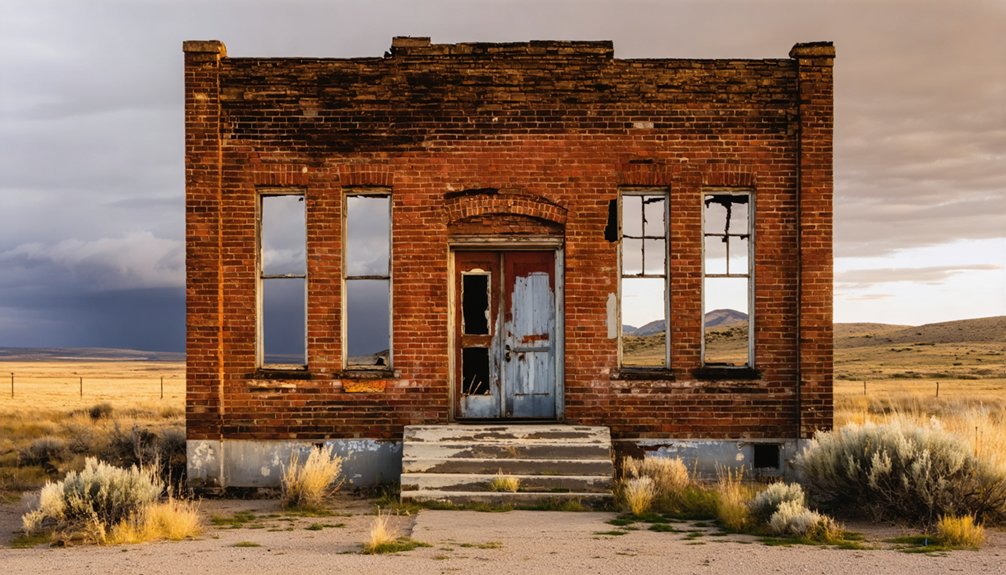
You’ll also want to track down the next original stage stop along the historic route, now standing as a striking two-story brick shell. Near the attack site, Mrs. Ed Holmes’ grave marker adds a sobering layer of Native American history to your journey, grounding the landscape’s wild beauty in genuine human consequence.
Frequently Asked Questions
Can You Metal Detect at Rockville Stage Stop Legally?
You’ll want to research local metal detecting regulations before exploring Rockville Stage Stop’s historical artifacts. While enthusiasts actively visit cowboy camps there, always verify land ownership rules to guarantee you’re detecting legally and responsibly.
What Year Did Rockville Stage Stop Lose Its Post Office?
You’ll find that Rockville Stage Stop lost its post office in January 1912, marking a decline in its historical significance. Local legends say this closure foreshadowed the town’s eventual abandonment, stripping away your connection to its vibrant past.
Is a 4WD Vehicle Required to Reach Rockville Stage Stop?
You don’t need 4WD for your off road adventures here — a 2WD handles the well-maintained dirt roads fine. Skip pricey vehicle rentals; just watch for muddy winter conditions and creek crossings carefully.
When Was the 19-Room Hotel at Rockville Stage Stop Built?
You’ll find the historical architecture of Rockville’s grand 19-room hotel follows a construction timeline of 1903, when builders crafted a remarkable space featuring sleeping rooms and a lively dance hall for free-spirited travelers.
Does Rockville Stage Stop Have Any Facilities for Visitors?
You won’t find any facilities at Rockville Stage Stop. It’s a raw, untamed destination where you’ll explore historic architecture ruins, encounter local wildlife, and embrace true freedom — so pack everything you’ll need before arriving!
References
- https://www.facebook.com/groups/397526214154529/posts/1869674563606346/
- https://kc7jsd.wordpress.com/2013/09/12/stage-stop/
- https://www.ghosttowns.com/states/id/rockvillestagestop.html
- https://en.wikipedia.org/wiki/List_of_ghost_towns_in_Idaho
- https://www.youtube.com/watch?v=l4CL6S14OE0