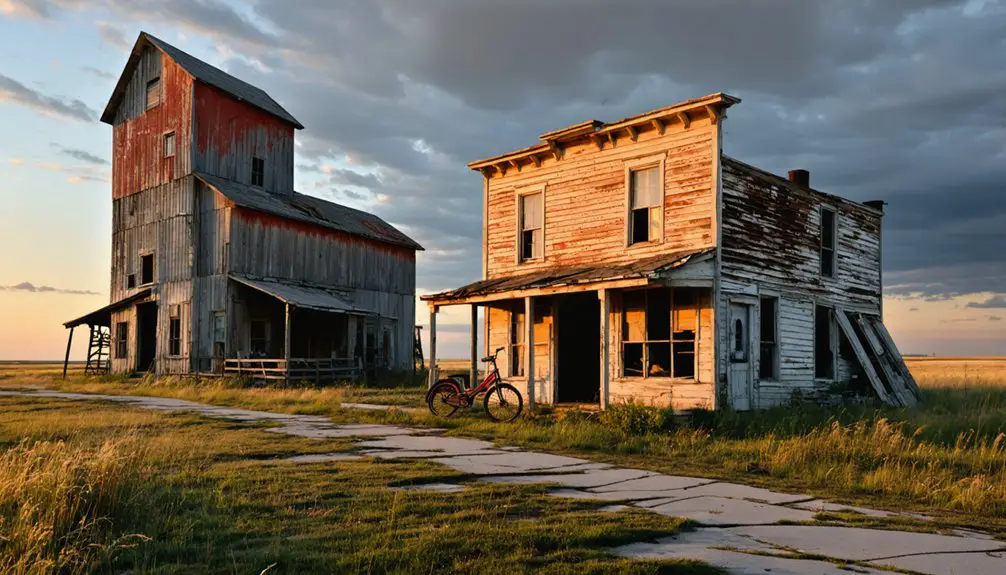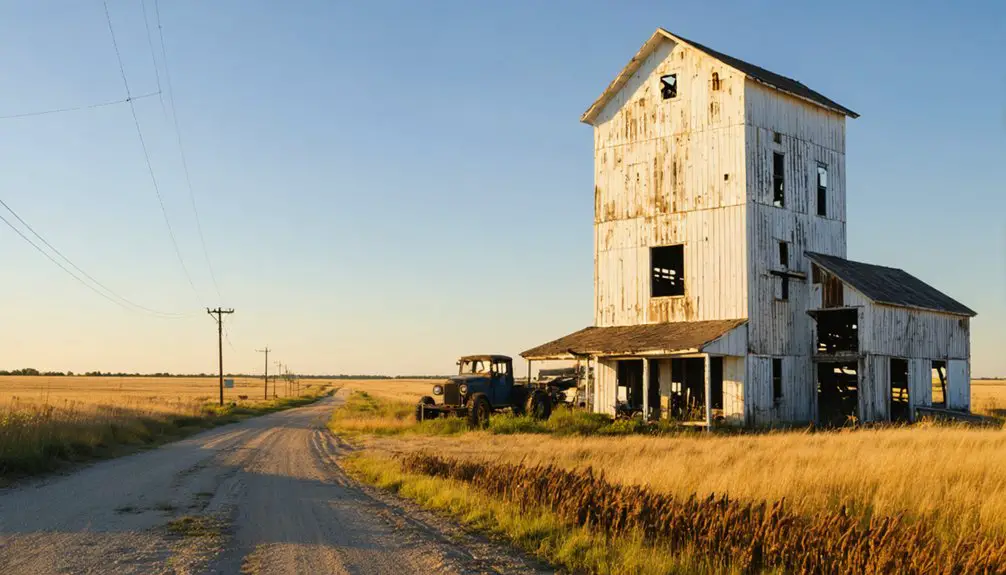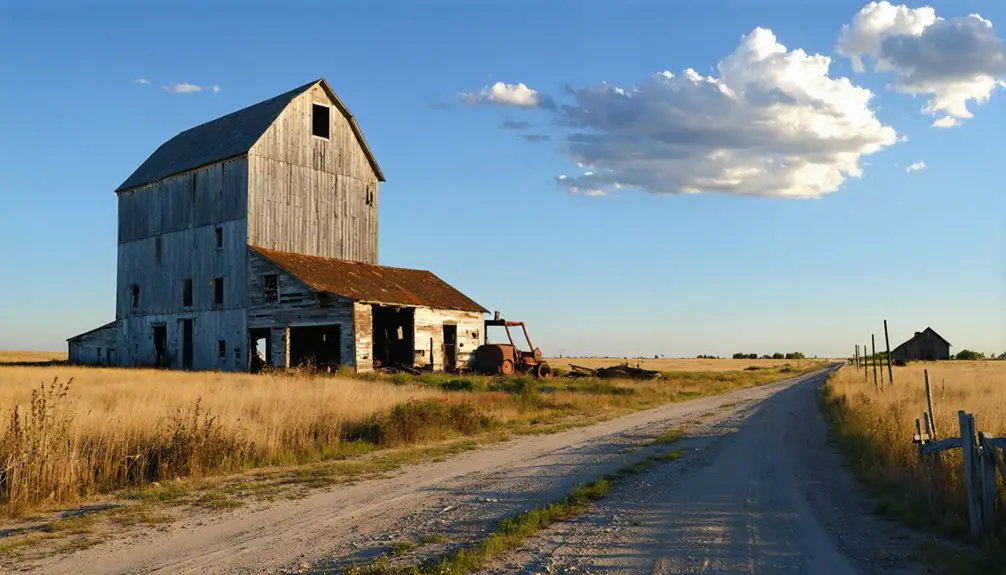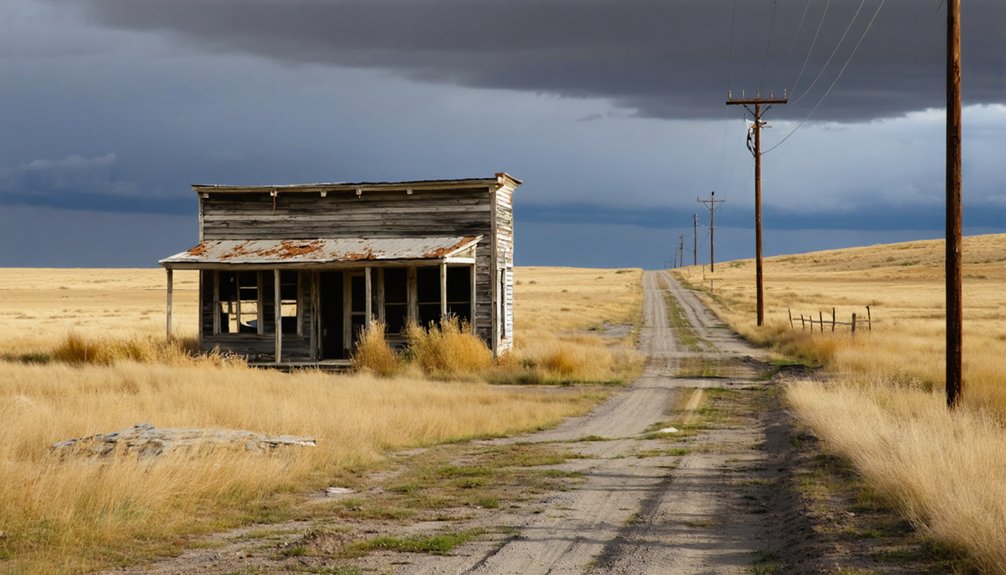
To plan your ghost town road trip to Sims, North Dakota, head south off Interstate 94 near Almont in Morton County. You’ll find a once-thriving 1880s coal town that peaked near 1,000 residents before the railroad rerouted and silence moved in. The 1884 Lutheran church still holds services, brick ruins scatter the prairie, and the legend of the “Gray Lady” lingers. Pack layers, bring curiosity, and there’s far more to this story than the quiet sign lets on.
Key Takeaways
- Sims, North Dakota, located south of Interstate 94 near Almont in Morton County, is an 1883 coal town now reduced to prairie ruins.
- The restored 1884 Lutheran church still hosts biweekly services, featuring original woodwork and organ, offering visitors an authentic glimpse into living history.
- The church parsonage carries the “Gray Lady” legend, with reported sightings of unexplained organ music and mysteriously opening windows since the 1930s.
- Visit between late spring and early fall, packing layers, sturdy boots, a camera, and provisions, as no local restaurants or amenities exist in Sims.
- Mandan, roughly 35 miles east, and nearby Almont provide food, supplies, and additional historical sites, making them ideal companion stops for your road trip.
Sims, North Dakota: Why This Ghost Town Is Worth the Drive
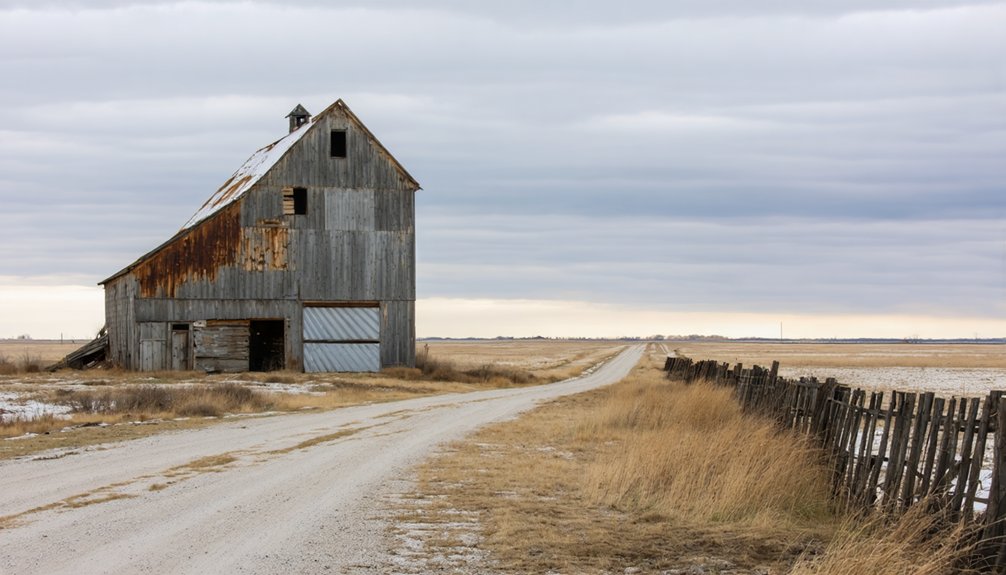
Tucked just a few miles south of Interstate 94 in Morton County, Sims, North Dakota doesn’t announce itself loudly — a small sign near Almont is about all the invitation you’ll get. But for travelers who crave open roads, honest history, and the freedom to explore forgotten places, Sims delivers something rare.
Founded in 1883, this once-thriving coal town peaked near 1,000 residents before the railroad rerouted and quietly erased its future. Today, the prairie reclaims its streets while wildlife sightings dot the surrounding landscape.
Pack your own local cuisine, because no restaurants await you here — only restored Lutheran church walls, ghost legends, and wide Dakota sky. Sometimes the most worthwhile destinations are the ones that don’t beg for your attention.
The Rise and Fall of Sims, North Dakota
When you stand in what’s left of Sims, it’s hard to imagine that just over a century ago, nearly 1,000 people called this windswept prairie home.
Founded in 1883, the town grew fast on the strength of easily mined coal and the arrival of the Northern Pacific Railroad, drawing settlers, merchants, and ambition to this remote stretch of Dakota Territory.
But the railroad that built Sims ultimately broke it, rerouting its line and draining the town of life until the post office finally closed in 1947 and the silence moved in for good.
Sims’ Founding and Growth
Sims didn’t start with a name — it started with coal. Miners discovered easily extractable deposits beneath the Dakota prairie, and settlers followed fast.
Before 1883, locals called it “Baby Mine” or “Bly’s Mine,” raw names for a raw place.
Then the Northern Pacific Railroad arrived, renamed the town after one of its own officials, and everything accelerated.
Decline Into Abandonment
At its peak around 1883–1884, nearly 1,000 people called Sims home — a remarkable number for a prairie settlement still finding its footing. But the town’s fate shifted dramatically when the Northern Pacific Railroad rerouted over the New Salem-Glen Ullin cutoff, severing Sims from its economic lifeline.
By 1906, only 300 residents remained. By 1910, just 86. The historical architecture that once defined the town — those distinctive red brick buildings — slowly crumbled without the hands needed to maintain them. The post office closed in 1947, and by 1975, a single resident remained.
Even as the population vanished, local folklore kept Sims alive in regional memory. You can still feel that tension today — a town refusing to be completely forgotten, standing quietly on the open prairie.
What Still Stands in Sims: The Church, Parsonage, and Brick Ruins
Despite the decades of silence that have settled over this stretch of North Dakota prairie, a few structures still stand in Sims as quiet witnesses to what once thrived here. You’ll find the 1884 Lutheran church among the most striking survivors, restored and still hosting services every other week — a rare pulse of life in an otherwise abandoned landscape.
Beside it stands the parsonage, small but storied, haunted by the legend of the “Gray Lady.” The original red brick buildings, once home to multiple stores that supported cultural festivals and local cuisine for nearly 1,000 residents, have largely crumbled into ruin.
Yet their scattered remnants still rise from the prairie grass, daring you to imagine the community that once called this forgotten place home.
The Sims Lutheran Church and Its Surprising Second Life
You might expect a ghost town’s church to be nothing more than a hollow shell, but the Sims Lutheran Church defies that assumption. Built in 1884, it’s been carefully restored and still holds worship services every other week, making it one of the few living threads connecting the present to Sims’ brief, bustling past.
When you visit, you’re not just walking through ruins — you’re stepping into a congregation that refused to let go.
Church Restoration And Revival
How does a church survive in a town that’s practically vanished from the map? Sims Lutheran Church, built in 1884, answers that question quietly but powerfully. Despite the railroad impact that ultimately gutted the town’s economic foundation and the slow erosion of agricultural history that once sustained its congregation, the church endured.
Volunteers eventually stepped in and restored the structure, refusing to let it disappear into the prairie grass like everything else around it. Today, the church hosts services every other week, drawing visitors and descendants of original settlers back to this windswept corner of Morton County.
When you stand inside, you’re not just visiting a restored building — you’re reconnecting with a community that refused to be completely forgotten, even after the last resident moved on.
Ongoing Worship Services Today
What strikes most visitors first is the sound — hymns rising from a restored 1884 church in a town where almost no one lives anymore.
Every other week, worshippers gather inside these walls, keeping a tradition alive that outlasted the railroad, the coal mines, and nearly the town itself.
You’re not just attending a service here — you’re stepping into living cultural preservation, where historical artifacts like the original organ and woodwork still carry the weight of generations.
The congregation refuses to let Sims disappear completely into the prairie grass.
If your road trip timing aligns with a service weekend, don’t pass it up.
There’s something quietly powerful about singing alongside people who choose, deliberately, to honor a place the rest of the world forgot.
The Gray Lady of Sims: North Dakota’s Most Stubborn Ghost Story
When you step onto the quiet grounds of Sims, the prairie silence has a way of making old legends feel surprisingly close. The most persistent of the ghost stories here centers on the “Gray Lady,” believed to be the spirit of a former pastor’s wife haunting the restored parsonage beside the Lutheran church.
The haunted legends date to the 1930s, when residents wrote directly to the bishop about strange happenings — the church organ playing on its own, windows opening and closing without explanation. At least two ministers reportedly fled the parsonage entirely.
The earliest documented reference appeared in the Bismarck Tribune in May 1988, lending the story a traceable history. Whether you’re a skeptic or a believer, you’ll feel something standing in that quiet North Dakota wind.
How to Get to Sims, North Dakota
Getting to Sims is invigoratingly straightforward — it sits just a few miles south of Interstate 94, roughly 35 miles west of Mandan in Morton County. Exit near Almont, and you’ll spot a small sign pointing toward the abandoned village. The open prairie road feels deliberate, like the landscape itself is preparing you for what’s ahead.
Exit near Almont, and the prairie road draws you in — Sims waits quietly, just miles from Interstate 94.
Before you arrive, stop in Almont or Mandan for local cuisine — fuel up, because Sims offers nothing but silence and history.
The drive rewards you with scenic overlooks across North Dakota’s wide, unhurried prairie, stretching endlessly toward a sky that feels borrowed from another century.
You’re not just passing through — you’re retracing the steps of settlers who once believed this windswept corner of Dakota Territory held everything they’d ever need.
The Best Time to Visit Sims and What to Pack

Timing your visit to Sims matters more than you’d expect. Late spring through early fall gives you the best access to this windswept prairie site, when the roads south of Interstate 94 are clear and the landscape breathes with life.
Summer mornings offer prime wildlife observation, as deer and meadowlarks reclaim what settlers once built. Pack layers — the North Dakota prairie shifts fast between warm sun and cutting wind.
Bring your own provisions, since local cuisine options near Sims are slim; Almont sits nearby if you need a quick stop. Wear sturdy boots for uneven ground around the remaining structures.
A camera, notebook, and genuine curiosity round out your kit. This place rewards those who come prepared and unhurried.
Almont, Mandan, and Other Stops Worth Adding to Your Route
Sims doesn’t stand alone on this stretch of prairie — build a route and the surrounding stops reward you richly. Almont, just a few miles away, once competed with Sims for regional dominance and shares that layered rivalry history. Stop there before pushing east toward Mandan, roughly 35 miles out, where local cuisine options let you refuel properly after hours of open-road exploring.
Mandan’s riverside setting also offers unexpected wildlife spotting along the Missouri River corridor — hawks, white-tailed deer, and migratory birds frequent the bluffs. Interstate 94 connects these stops efficiently, giving you freedom to move without rigid scheduling.
Treat the whole corridor as one living historical thread, from forgotten coal towns to river towns that survived, and you’ll leave understanding the prairie’s full, complicated story.
Frequently Asked Questions
What Was Sims Called Before It Was Officially Renamed in 1883?
Before its 1883 renaming, you’d have known Sims as “Baby Mine” or “Bly’s Mine” — names rooted in early settlement history and historical naming origins that evoke the rugged, coal-driven freedom of Dakota Territory’s pioneering spirit.
How High Above Sea Level Is the Ghost Town of Sims Located?
Standing at 1,982 feet above sea level, you’ll feel the vast prairie winds sweeping through Sims’ ghost town architecture and abandoned structures, stirring a nostalgic ache for the freedom this forgotten community once boldly promised its thousand souls.
Did Any Famous Public Figures Ever Visit the Ghost Town of Sims?
In 2008, you’d have crossed paths with Former First Lady Laura Bush, who visited Sims, drawn by its haunted legends. Her celebrity visit breathed nostalgic life into this beautifully desolate, freedom-filled prairie ghost town.
When Did the Sims Post Office Permanently Close Its Doors?
Like a flame slowly fading, Sims’ post office permanently closed its doors in 1947. You’ll find its abandoned buildings and historic landmarks standing as nostalgic whispers of a free, forgotten era on North Dakota’s open prairie.
How Many People Were Reportedly Still Living in Sims in 1975?
By 1975, you’d find only 1 soul still calling Sims home — a haunting symbol of population decline that sealed this prairie settlement’s ghost town history, reminding you how freedom’s promise can quietly fade into the wind.
References
- https://en.wikipedia.org/wiki/Sims
- https://ghostsofnorthdakota892857007.wordpress.com/category/sims-nd/
- https://www.facebook.com/groups/2030822207183428/posts/4101561440109484/
- https://photobyjohnbo.com/2022/02/22/sims-north-dakota/
- https://ghostsofnorthdakota892857007.wordpress.com/2016/09/11/a-ghost-town-built-from-coal-and-bricks/
- https://www.facebook.com/groups/2030822207183428/posts/2391885904410388/
- https://news.prairiepublic.org/show/dakota-datebook-archive/2022-05-22/sims