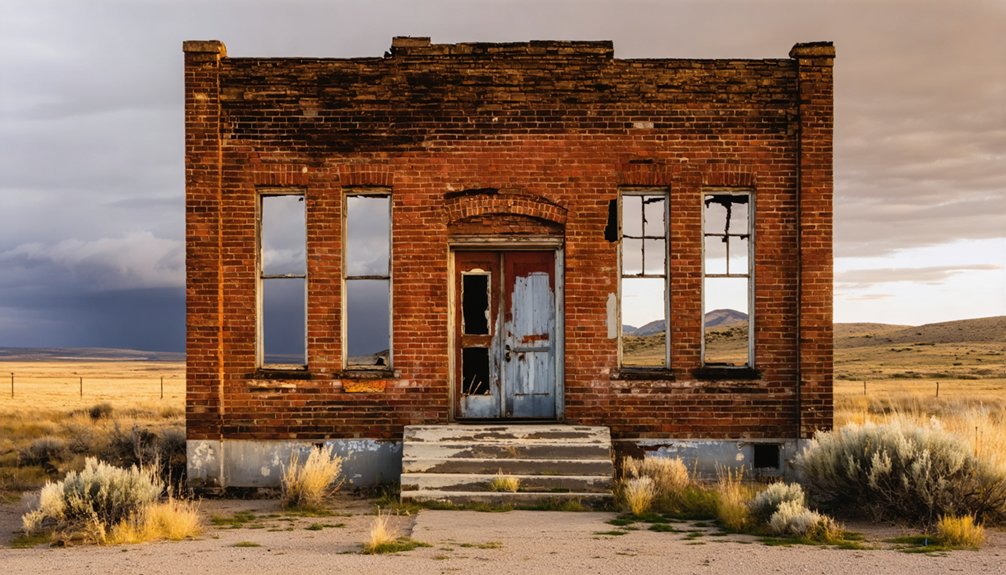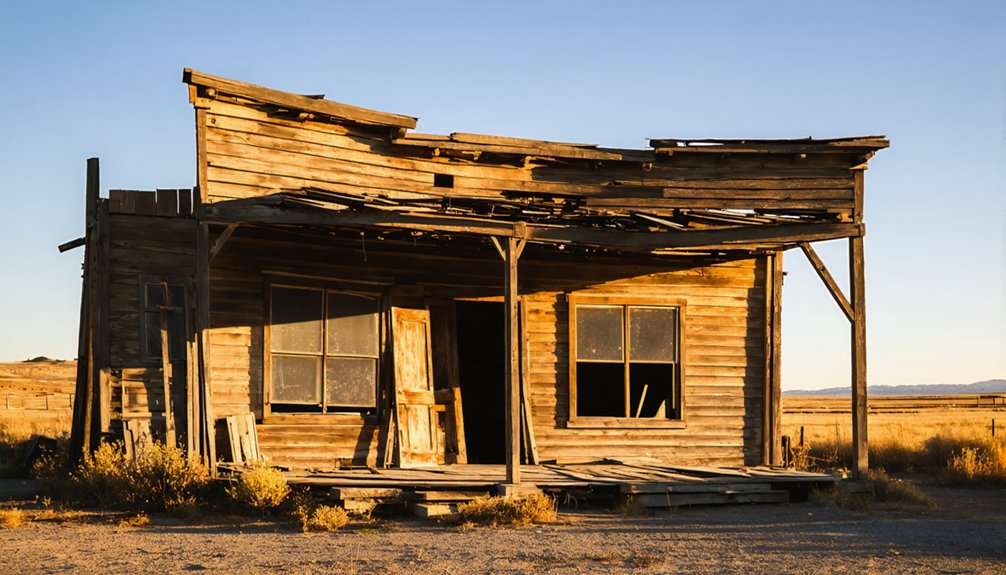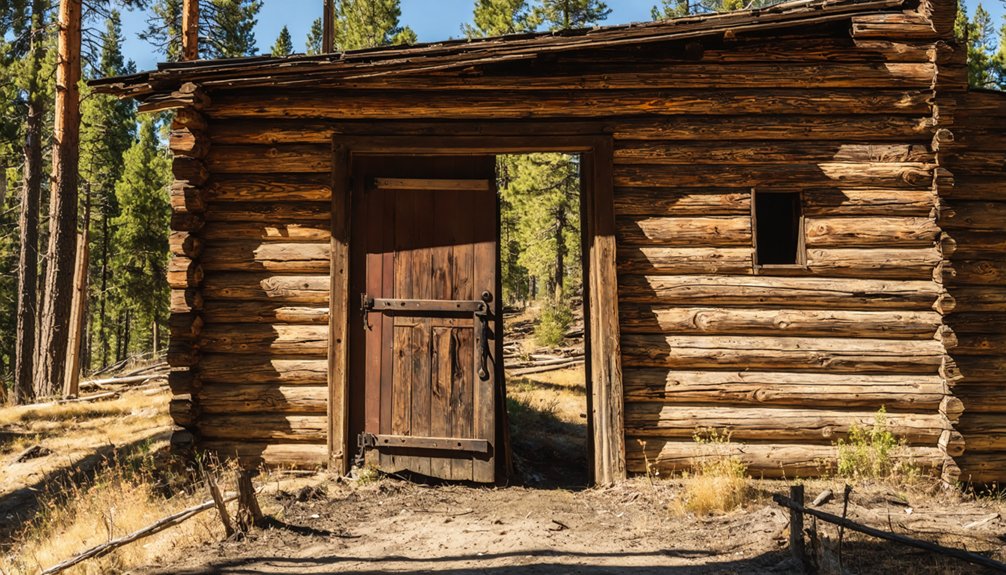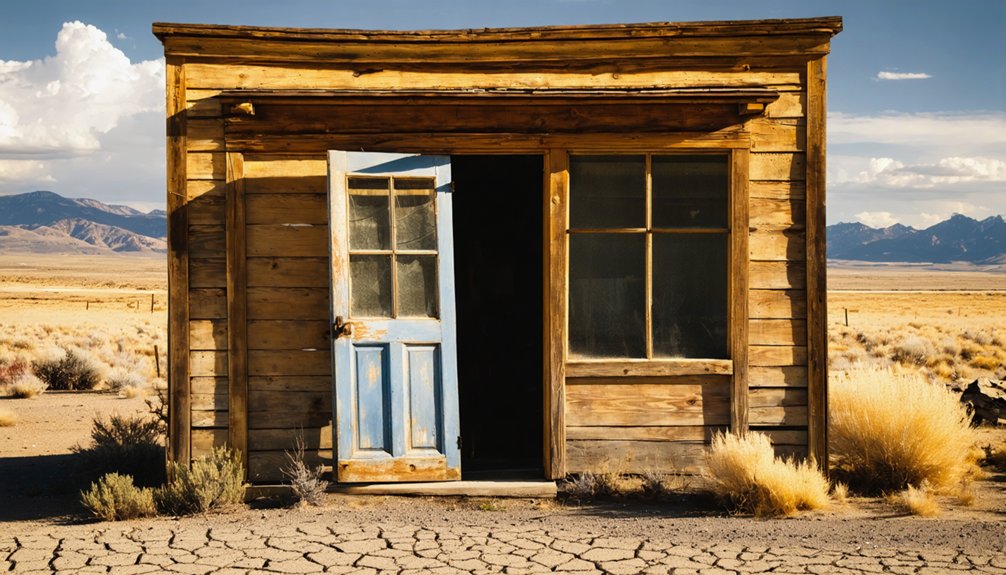
Ruby City is Idaho’s forgotten gold rush ghost town, sitting one mile below Silver City in Owyhee County’s Owyhee Mountains. You don’t need a 4WD vehicle to explore it — just follow the road branching left behind Silver City’s public restrooms and hike toward Jordan Creek. You’ll find cut-stone foundations, square nails, broken china, and cemetery markers whispering stories of 2,500 prospectors who arrived in 1863. There’s far more to this abandoned county seat than first meets the eye.
Key Takeaways
- Ruby City, Idaho’s first county seat in 1863, sits near Jordan Creek in Owyhee County and attracted over 2,500 prospectors during the gold rush.
- Start your visit at Silver City’s public restrooms, follow the road branching left, and hike trails toward Jordan Creek to explore Ruby City’s foundations.
- No 4WD vehicle is required to reach Ruby City, making it accessible for all road trip explorers seeking ghost town adventures.
- Artifacts like square nails, broken china, and opium bottles reveal the lives of mid-1800s miners who once called Ruby City home.
- Visit in fall for crisp air and fewer crowds, or explore nearby Silver City, just one mile uphill, for additional mining heritage.
What Makes Ruby City Worth the Drive?
Though it’s easy to drive past the junction without a second glance, Ruby City rewards those who stop with fragments of Idaho’s earliest mining ambitions scattered across a windswept hillside above Jordan Creek.
Its ghost town allure isn’t manufactured — you’ll crouch beside one-ton cut stones laid without mortar, pocket square nails, and spot broken china half-buried in the dirt.
The historical significance runs deep: Ruby City served as Owyhee County’s first county seat in 1863, sheltering over 2,500 souls chasing gold and silver through rugged mountain terrain.
That freedom you’re craving on the open road? You’ll find it here, where silence has replaced the chaos of a boomtown and the landscape holds every secret the 1860s left behind.
How Ruby City Rose From the 1863 Gold Rush
When you stand beside Ruby City’s crumbling foundations today, it’s hard to imagine that November 1863 kicked this hillside into a roaring frenzy.
Prospectors chasing the Morning Star quartz discovery swarmed War Eagle Mountain’s slopes, transforming raw wilderness into Owyhee County’s first county seat almost overnight.
Gold mining fever pulled over 2,500 people to this Jordan Creek canyon, making Ruby City the second permanent settlement in the Owyhee Mountains.
Placer miners worked fast, lode miners worked harder, and quartz mills hummed through the winding valley. By December 1863, county government had planted its flag here.
Ghost towns rarely reveal their former intensity, but Ruby City’s one-ton cut stones and square nails scattered across the hillside still whisper about the unstoppable ambition that once ignited this remote Idaho canyon.
Where Exactly Ruby City Sits in Owyhee County
Six miles from the Oregon line, Ruby City hunkers along Jordan Creek at 6,135 feet in the Owyhee Mountains of southwestern Idaho, sitting just one mile below its more famous neighbor, Silver City.
This remote corner of Owyhee Geography rewards travelers who crave raw, untamed country far from crowded destinations. You’ll find yourself deep in a winding valley where quartz mills once thundered and fortune-seekers carved Mining Heritage into these rugged slopes.
The Owyhee district’s rich lode mines defined this land, and you can still feel that weight standing here. The nearest reference point you’ll use is Silver City’s public restrooms at the intersection — from there, Ruby City’s foundations and ridge cemetery open up just ahead, waiting for you.
Why Ruby City Was Abandoned Before the 1930s
When you stand among Ruby City’s crumbling foundations, you’re witnessing the aftermath of three quiet blows that sealed its fate: losing the county seat to Silver City in 1867, watching its post office shutter that same year, and surrendering its residents and businesses to its ambitious neighbor just one mile up the creek.
Silver City didn’t just compete — it consumed, pulling the economic lifeblood straight out of Ruby City’s veins as the mines grew less active and the practical advantages of staying dwindled.
County Seat Lost
By 1867, Ruby City had already begun losing its grip on relevance—the county seat transferred to Silver City, and the post office shuttered as the mines grew quieter.
That shift stripped Ruby City of its historical significance almost overnight. Silver City didn’t just steal the title; it pulled the better buildings right off Ruby City’s hillside slopes and hauled them away.
Residents followed the opportunity, as free people always do. You can still feel that exodus when you walk the quiet foundations today—the absence speaks loudly.
Ruby City’s county seat status had been its lifeline, and once Silver City severed it, the town had no anchor left. What remained slowly faded, leaving only stone, silence, and a story worth chasing on your own terms.
Post Office Closure
The post office closing in 1867 didn’t just end mail delivery—it severed Ruby City’s last institutional thread to the outside world. Its post office significance ran deeper than letters; it signaled legitimacy, connection, and commerce.
Once it shuttered, the community impact was irreversible.
When a town loses its post office, it loses its identity. Ruby City’s residents felt that absence immediately:
- Mail routes redirected entirely to Silver City
- Businesses abandoned storefronts without reliable correspondence
- Families relocated, following infrastructure rather than loyalty
- Isolation accelerated the town’s quiet surrender to wilderness
You’re now walking ground where people made that painful calculation—stay or leave. Most left.
Silver City’s Rise
Ruby City didn’t just lose its post office—it lost its future to a hungrier neighbor creeping up the canyon. Silver City’s growth was relentless, pulling residents, businesses, and ambition straight up the hillside.
Mining competition between the two towns was never really a fair fight—Silver City sat closer to the richest lode discoveries, and builders literally dismantled Ruby City‘s better structures and hauled them uphill.
You can feel that desertion when you walk the foundations today. People didn’t abandon Ruby City in panic—they simply chose better odds elsewhere.
How to Get to Ruby City From Silver City
Getting to Ruby City from Silver City takes just a few simple steps, and you’ll find the journey as rewarding as the destination itself.
Getting to Ruby City is simple — and the journey itself is half the adventure.
The access routes are straightforward, keeping adventure within reach for every explorer.
- Park at Silver City’s public restrooms at the main intersection
- Follow the smaller road branching left behind the restrooms
- Walk the hiking trails leading toward Jordan Creek’s lower stretch
- Explore foundations on both sides of the road, watching for square nails and china fragments
You won’t need 4WD to reach this forgotten settlement — just curiosity and comfortable walking shoes.
Fall, spring, and summer offer the clearest conditions for discovery. Ruby City rewards those bold enough to seek its silent, stone-scattered remains just one mile below Silver City.
What Ruby City’s Ruins, Foundations, and Cemetery Actually Look Like
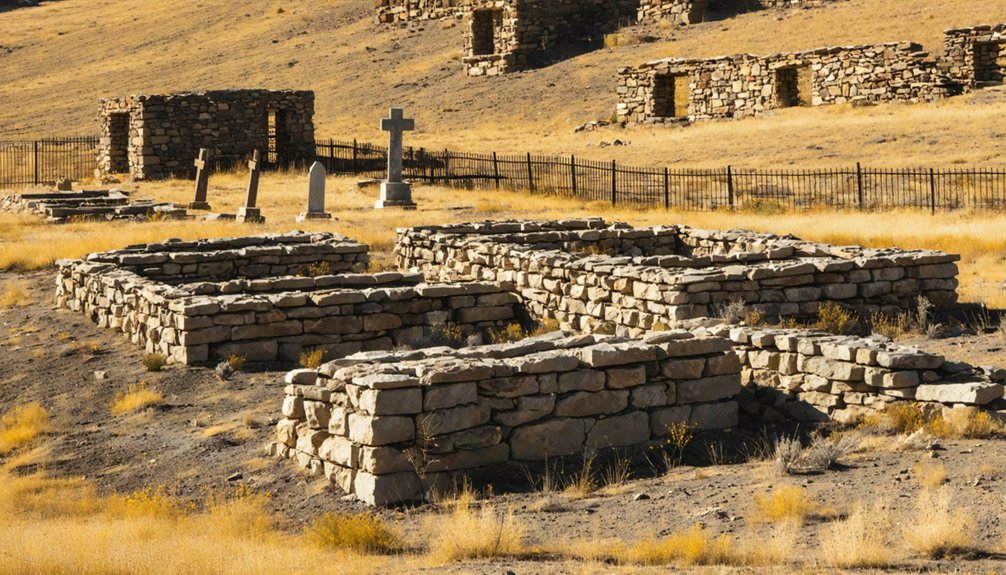
What’s left of Ruby City isn’t much — but what remains carries a quiet, stubborn weight that photographs rarely capture.
You’ll find foundation remnants on both sides of the road — massive, one-ton cut stones fitted together without a drop of mortar. Someone built these to last, and they did.
Scatter your eyes across the ground and you might spot square nails, broken china, or the occasional opium bottle half-buried in the dirt. History doesn’t announce itself here; you have to look.
Climb the ridge and the cemetery markers emerge against a backdrop of junipers — white stones standing with surprising dignity in the open air.
No grand monuments, no iron fences. Just names, silence, and the wind moving through the mountains.
What the Artifacts and Cut-Stone Foundations Reveal Up Close
As you crouch near the foundations, you’ll spot square nails half-buried in the dirt, broken china plate pieces, and the occasional opium bottle peeking through the soil — each artifact a sharp, personal detail from lives once lived here.
The cut-stone foundations themselves demand your attention, built from one-ton stones fitted together without a single drop of mortar, a reflection of the skill and raw ambition of Ruby City’s early builders.
Run your hand along the stones and you’ll feel the weight of 1863 pressing back against you, solid and unyielding even as everything else has long since crumbled away.
Artifacts Found On-Site
Scattered across the ground near Ruby City’s foundations, artifacts tell a quiet but vivid story of the miners who once called this remote Idaho canyon home.
You’ll find remnants carrying real artifact significance, each grounding you in the historical context of Idaho’s 1863 gold and silver rush. Walk slowly, scan carefully, and let these silent objects speak.
Watch for these discoveries:
- Square nails — hand-forged fasteners confirming mid-1800s construction techniques
- China plate fragments — suggesting surprising domestic comfort amid wilderness hardship
- Opium bottles — hinting at the brutal realities miners quietly endured
- One-ton cut stones laid without mortar — engineering that outlasted the town itself
You’re not just sightseeing here.
You’re reading a chapter most history books skip entirely.
Cut-Stone Foundation Details
Beyond the scattered artifacts, the cut-stone foundations themselves demand your attention — and they’ll stop you cold the moment you crouch down beside one. These aren’t rough fieldstone stacks. The cut stone craftsmanship here reflects serious intention — massive blocks, some weighing a full ton, shaped and fitted without a drop of mortar holding them together. That’s the part that’ll genuinely surprise you.
Run your hand along the edges and you’ll feel precision that contradicts the chaos of a boomtown. The foundation significance extends beyond aesthetics — these structures anchored Ruby City’s earliest commerce and shelter during brutal Owyhee winters.
They weren’t built for temporary use. Somebody planned permanence here. Yet permanence failed anyway, leaving you standing over stones that outlasted every soul who ever called this canyon home.
When Is the Best Time of Year to Visit Ruby City?
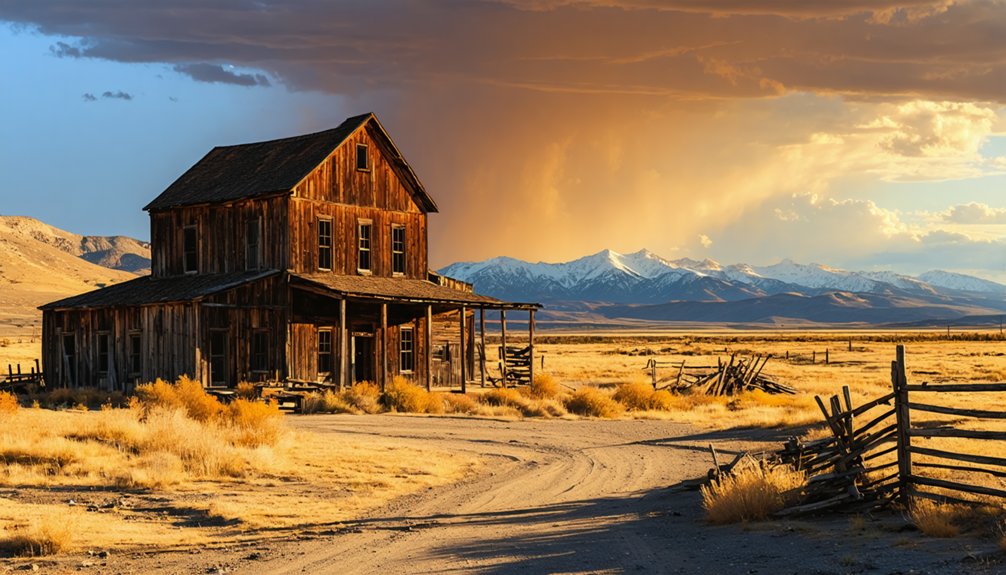
When you visit Ruby City matters as much as why you visit — this remote ghost town at 6,135 feet in the Owyhee Mountains rewards careful timing.
Snow locks down winter access, so plan your road trip strategically to fully absorb its historical significance.
Your best windows for exploring Ruby City’s silent foundations and cemetery:
- Fall — crisp air, golden light, minimal crowds, dry roads
- Spring — wildflowers frame white stone markers beautifully
- Summer — longest daylight hours for thorough exploration
- Avoid winter — snow renders the remote Owyhee roads impassable
Each season except winter opens Ruby City’s quiet ruins to curious travelers craving authentic Idaho history.
Time your visit right, and you’ll walk those foundations undisturbed, camera ready, completely free.
What Else Is Worth Seeing Near Ruby City?
Ruby City rewards patient timing, but once you’ve walked its foundations and photographed those white stone cemetery markers against the junipers, you’re already standing at the gateway to one of Idaho’s richest ghost town corridors — and Silver City sits just one mile uphill, practically demanding your attention next.
Silver City’s historical significance dwarfs most Idaho settlements, preserving genuine mining heritage through standing structures that Ruby City never retained.
Nearby trails wind through terrain where local wildlife — mule deer, raptors, jackrabbits — roams freely across the Owyhee Mountains. Scenic views from War Eagle Mountain stretch toward Oregon’s borderlands, rewarding anyone willing to climb higher.
Summer occasionally draws history-focused cultural events into this remote corridor. You’re not just visiting one ghost town here — you’re exploring an entire abandoned civilization.
Frequently Asked Questions
Was Ruby City Ever Officially Declared a Historic Landmark or Protected Site?
Why let bureaucracy define Ruby City’s legacy? The knowledge doesn’t confirm its official historic preservation or landmark status, but you’ll discover its raw, unprotected ruins—square nails, stone foundations—waiting freely for your adventurous exploration.
Are Guided Tours of Ruby City Available Through Any Local Organizations?
No guided tour options exist for Ruby City, but you’ll uncover local history solo! Wander freely past weathered foundations, discover square nails, and let the canyon’s whispered secrets guide your own unforgettable, untamed adventure.
Can Visitors Legally Collect Artifacts Like Square Nails Found at Ruby City?
You shouldn’t pocket those square nails! Legal regulations protect Ruby City’s remnants under artifact preservation laws. Respect the freedom of future explorers by leaving history untouched — photograph discoveries, soak in the adventure, and carry only memories away.
Has Ruby City Ever Appeared in Films, Documentaries, or Television Programs?
The available knowledge doesn’t confirm Ruby City history in any films or documentaries. You’d want to research ghost town legends independently, as this silent Idaho ruin’s cinematic appearances remain unverified — explore deeper and you might uncover surprising media connections yourself!
Are There Any Published Books or Maps Dedicated Specifically to Ruby City?
No dedicated Ruby City literature or historical maps exist solely for this ghost town. You’ll uncover its secrets through broader Owyhee County mining histories, old survey records, and adventurous firsthand exploration of its forgotten foundations.
References
- https://kids.kiddle.co/Ruby_City
- https://www.youtube.com/watch?v=OUou8OOHU4I
- https://www.ghosttowns.com/states/id/rubycity.html
- https://www.fs.usda.gov/r01/idahopanhandle/recreation/idaho-gold-and-ruby-mine-boulder-city-ghost-town
- http://www.ghosttownsusa.com/ruby2.htm
- https://westernmininghistory.com/towns/idaho/ruby-city/
- https://info.oregon.aaa.com/ghost-towns-of-oregon-and-idaho-experience-the-lore-history-and-intrigue-of-days-gone-by/