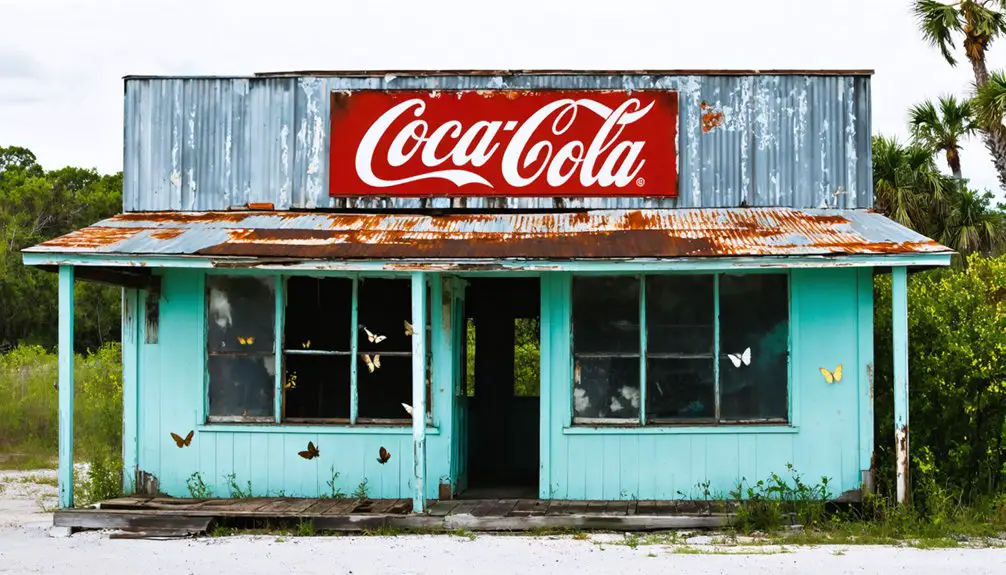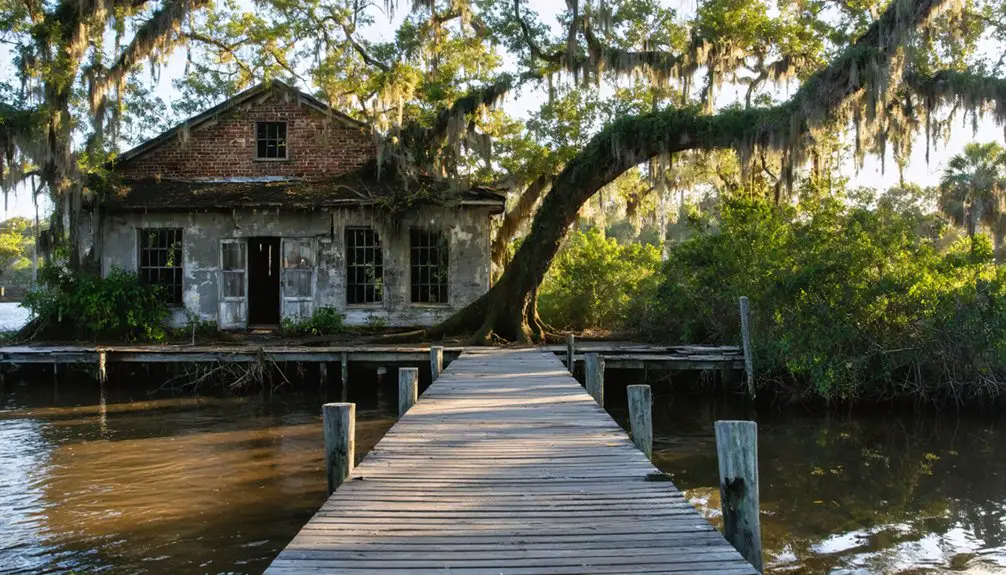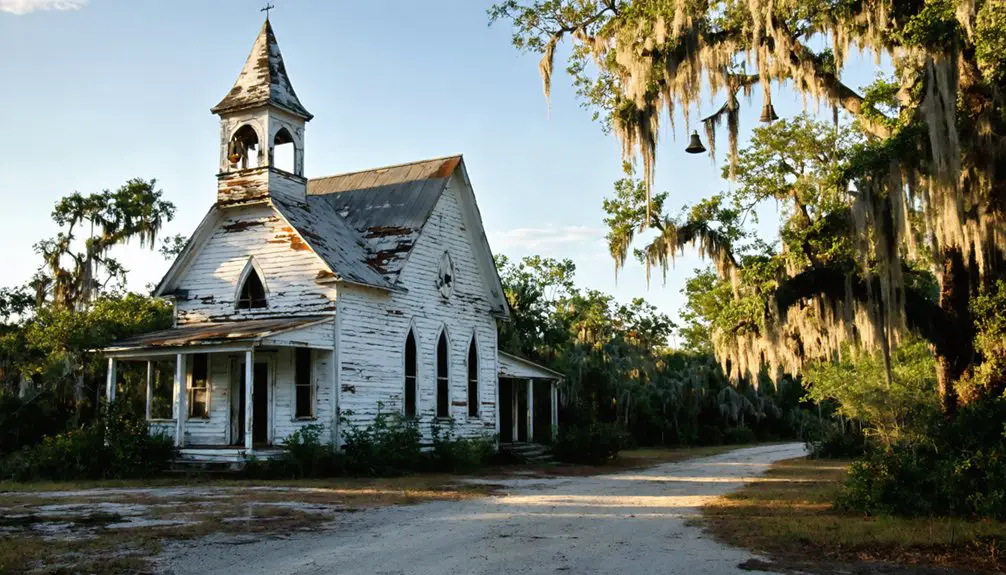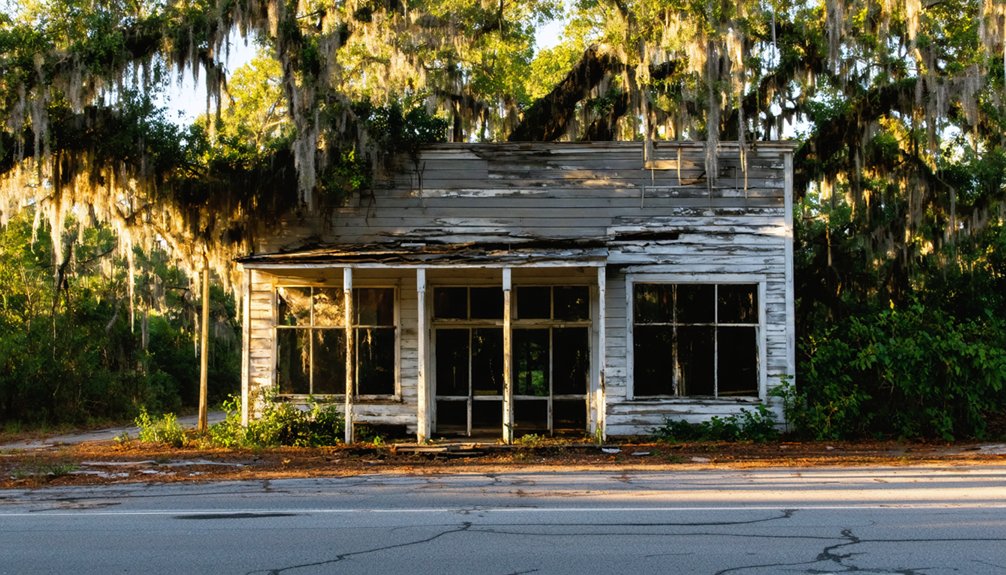
Planning a ghost town road trip to Freemanville, Florida means trading roadside signs for quiet storytelling. Tucked into the northeast corner of Port Orange, this former African-American settlement dates back to just after the Civil War. You’ll find no formal tourist markers here — just Valley Street’s weathered path, a rusty water pump hiding in the trees, and Mt. Moriah Baptist Church standing watch over it all. There’s far more to this story than the landscape first reveals.
Key Takeaways
- Freemanville, located in northeast Port Orange, Florida, is a “ghost settlement” with remaining traces rather than a completely vanished town.
- Begin your visit at Mt. Moriah Baptist Church, the most significant preserved landmark and active community gathering site.
- Explore Valley Street, Freemanville’s original main road, and search for a rusty water pump hidden near the church in the woods.
- No roadside signage or marked town center exists, so approach the site expecting quiet, observational exploration.
- Extend your road trip to Newtown, a nearby historic Black community that absorbed Freemanville’s former residents.
What Is Freemanville and Where Is It?
Tucked into the northeast corner of present-day Port Orange, Freemanville holds the distinction of being Volusia County’s first African-American community — though you won’t find it on most maps.
Historians often call it a ghost settlement rather than a ghost town because a few traces still survive. You’re not chasing a fully vanished place; you’re following a thread of community resilience woven into local folklore and living memory.
Valley Street once served as a main road here, remaining unpaved as late as 2000. Today, the area falls within Port Orange’s boundaries rather than standing as a separate incorporated town.
When you plan your visit, orient yourself toward northeast Volusia County and think of Freemanville as a historic neighborhood waiting to be discovered rather than a marked town center.
Why Did Freemanville Collapse So Quickly After the Civil War?
Freemanville’s collapse wasn’t slow — it began almost immediately, driven by a single catastrophic moment in 1866 when a boat carrying the sawmill’s equipment and funding sank. That loss triggered rapid economic decline, crippling a venture already stretched too thin to survive.
The Freedmen’s Bureau offered inadequate support, and of roughly 1,500 Black settlers who’d arrived with hope, only 142 adults remained by 1867.
Environmental impacts delivered the next blow. Hard freezes in 1886 and again in 1894–95 destroyed the orange groves that surviving residents had depended on for seasonal income.
With farming and grove work gone, families scattered to Daytona and communities like Waycross and Newtown.
What began as a bold pursuit of freedom unraveled through financial disaster, federal neglect, and brutal weather.
What’s Actually Left to See at the Freemanville Historic Site?
After so much loss — a sunken boat, federal neglect, devastating freezes — you might expect nothing to remain of Freemanville. Surprisingly, a few historic landmarks endure. Mt. Moriah Baptist Church stands as the most significant, hosting annual remembrance gatherings that keep local stories alive and rooted in the community’s identity. It’s not a museum or a monument — it’s a living institution.
Wander the surrounding woods and you’ll reportedly find a rusty water pump, one of the few tangible physical remnants still hiding among the trees. There’s no marked town center, no roadside signage pointing the way. What you’re visiting is essentially a historic neighborhood folded into modern Port Orange.
Come ready to listen, observe, and let the quiet landscape tell you what the history books can’t fully capture.
How Do You Get to Freemanville in Port Orange?
Here’s how to anchor your visit:
start at Mt. Moriah Baptist Church, the beating heart of Freemanville’s preservation story.
- Navigate to Mt. Moriah Baptist Church, the strongest surviving landmark and heart of preservation efforts.
- Explore Valley Street, once Freemanville’s main unpaved road, which still traces the community’s old footprint.
- Look for the rusty water pump hidden in the woods near the church, one of the few tangible remnants left.
You’re not chasing a ghost town sign here. You’re uncovering a living memory embedded within Port Orange’s landscape.
Which Black History Sites Can You Pair With a Freemanville Visit?
You can also visit Newtown, one of the historic Black communities that absorbed Freemanville’s scattered residents after those brutal freezes of the 1880s and 1890s.
Newtown’s cultural corridor celebrates that resilience directly.
Together, these sites connect Freemanville’s fragile beginnings to a broader story of survival, self-determination, and enduring community pride across northeast Florida’s landscape.
Frequently Asked Questions
Is There an Annual Event or Remembrance Held at Freemanville?
Yes, you’ll find Mt. Moriah Baptist Church hosting an annual remembrance, where historical landmarks echo local legends of freedom’s resilience. It’s your gateway to honoring Freemanville’s powerful legacy of survival and hard-won liberty.
Who Was John Milton Hawks and Why Did He Choose Florida?
You’ll find Hawks was an abolitionist and Union Army surgeon who chose Florida’s Ponce Inlet for history preservation, believing ghost town legends could become reality by building a sawmill community for 500 freed slaves seeking freedom.
Were Any Freemanville Residents Documented by Name in Historical Records?
You’ll find that historical records don’t prominently document individual Freemanville residents by name—the historical population remains largely anonymous. Architectural remnants and church heritage preserve their collective story, but you’re exploring a community remembered through spirit, not personal records.
Did Freemanville Ever Have an Official Town Government or Mayor?
Freemanville never had an official town government or mayor — it’s always been an informal community. As you explore ghost town tourism and its abandoned landmarks, you’ll find it thrived on resilient, self-governed freedom instead.
Can Descendants of Original Freemanville Settlers Still Be Contacted Today?
Who better to honor freedom’s legacy than those who lived it? You can connect with descendants through genealogical research or family reunion planning centered at Mt. Moriah Baptist Church, where Freemanville’s living heritage actively gathers annually.
References
- http://www.floridahistorynetwork.com/blog—the-ghost-settlement-of-freemanville.html
- https://www.youtube.com/watch?v=zTD7T4je6y4
- https://volusiahistory.wordpress.com/2013/11/06/freemanville-volusias-1st-african-american-community/
- https://en.wikipedia.org/wiki/List_of_ghost_towns_in_Florida
- https://www.facebook.com/TheHughleys/posts/florida-history-repost-port-orange-florida-has-a-ghost-town-community-named-free/1405097337738779/
- https://www.ghosttowns.com/states/fl/fl.html
- http://www.gribblenation.org/2018/06/florida-friday-where-hell-is-centraila.html
- https://cccourthouse.org/wp-content/uploads/2023/12/Ghost-towns-and-Cemeteries-of-Citrus-County.pdf