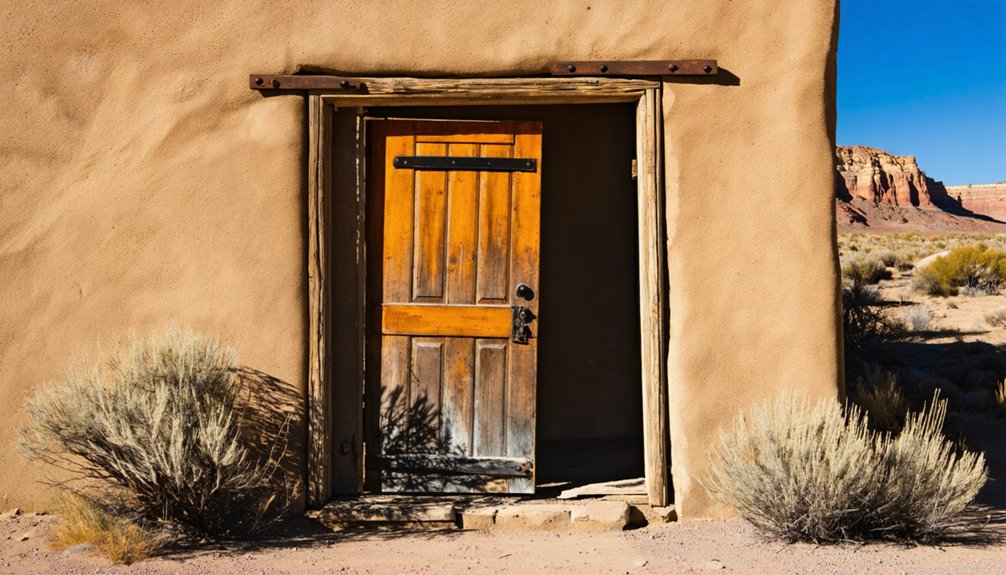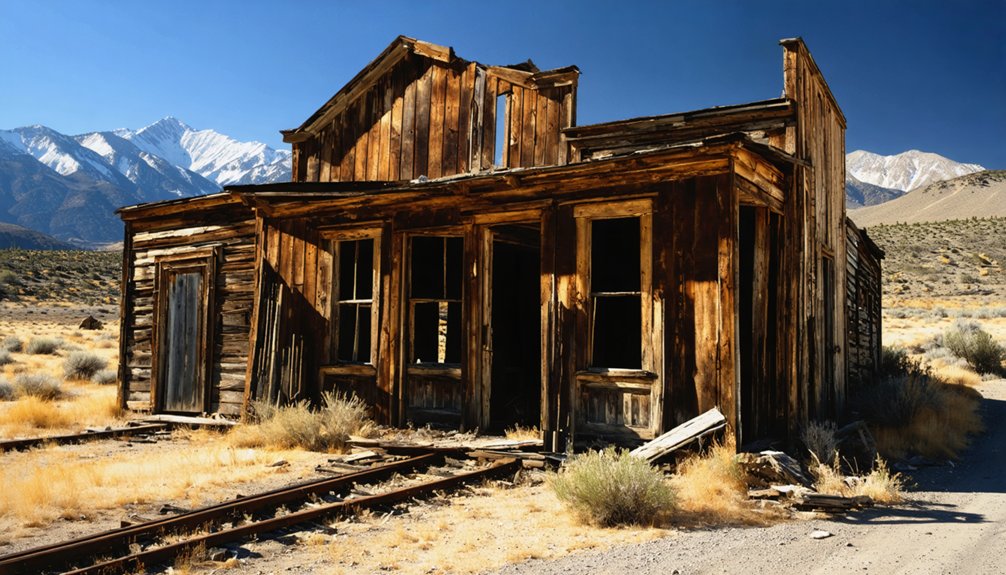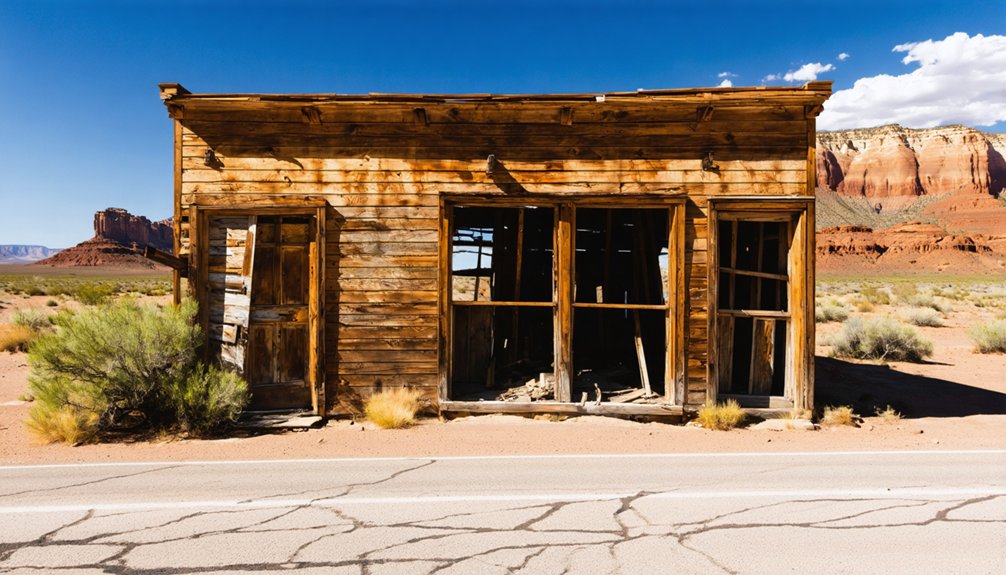
Planning a ghost town road trip to Silver City, Utah starts in Eureka, where you’ll head south toward Dragon Canyon’s historic ruins. You’ll find crumbling smelter walls, scattered mining equipment, and a weathered cemetery waiting at the end of an unpaved road. Pack water, sturdy shoes, and offline maps since cell service is unreliable out here. Silver City’s story runs deeper than what’s visible on the surface, and there’s plenty more to uncover.
Key Takeaways
- Start your trip in Eureka, Utah, fueling up before heading south toward Dragon Canyon and Silver City’s historic mining ruins.
- Silver City began after George Rust’s 1869 discovery, growing rapidly with telegraph lines, railroads, and a bustling regional mining economy.
- Explore remnants including the Tintic Smelter ruins, Knight-Dern Mill walls, scattered mining equipment, and a weathered pioneer cemetery.
- Extend your road trip by visiting nearby ghost towns: Mammoth, Robinson, McIntyre, and Diamond, each offering unique abandoned landscapes.
- Pack water, offline maps, sun protection, and use a high-clearance vehicle, as roads are unpaved and cell service is unreliable.
What Is Silver City Ghost Town, Utah?
Tucked into the mouth of Dragon Canyon on the west flank of Utah’s East Tintic Mountains, Silver City is a ghost town in Juab County that once served as the beating heart of the historic Tintic Mining District. Sitting about 90 miles south-southwest of Salt Lake City, this high desert site once bustled with nearly 1,500 residents chasing silver, gold, copper, lead, and bismuth.
Today, you’ll find concrete ruins, scattered mining equipment, and an expansive cemetery where a thriving town once stood. Historic photos reveal just how dramatically this place has transformed from a fully functioning community into silent desert rubble.
If you crave open road exploration and raw American history, Silver City delivers an unfiltered look at Utah’s boom-and-bust mining past.
How One Mine Started the Tintic District Rush
Everything that Silver City became traces back to a single discovery in 1869, when a prospector named George Rust stumbled upon old Native American mine workings deep in Dragon Canyon. That find sparked the Sunbeam Mine claim, igniting a rush that transformed the entire Tintic District almost overnight.
Prospectors flooded in, adapting early mining techniques to extract silver, gold, copper, lead, and bismuth from the rugged high desert terrain. Silver City quickly became the district’s nerve center, hosting telegraph lines, express offices, and a recorder’s office.
Today, preservation challenges make reading that history difficult — fire, flooding, and abandonment have erased most physical evidence. But standing at the site, you can still feel the explosive energy that one canyon discovery *unleashed* across an entire region.
Why the Railroad Arrival Accelerated Silver City’s Boom
When the Salt Lake & Western Railway pushed into Silver City in 1882, it didn’t just bring supplies — it brought scale. Suddenly, heavy equipment moved in and ore moved out at a pace no mule team could match. Railroad expansion enabled the full potential of the district’s richest veins, connecting Silver City to regional markets that once felt impossibly distant.
Mining innovations followed fast. With reliable rail access, operators introduced more efficient processing methods, deeper extraction techniques, and larger workforce operations.
A second line, the Tintic Range Railway, arrived in 1892, doubling down on that momentum.
For you as a road tripper, this chapter explains why Silver City grew so boldly — and why its ruins today still carry the unmistakable scale of industrial ambition.
What Brought Silver City’s Mining Era to an End
Silver City’s boom carried within it the seeds of its own unraveling. Several mines hit unexpected water in the late 1800s, halting extraction and triggering mining decline across the district.
Then fire destruction swept through in 1902, scorching buildings and breaking the town’s momentum. Jesse Knight responded by building the Tintic Smelter in 1908, briefly pulling Silver City back from the edge.
You can almost feel that last desperate push when you walk the ruins today. But the smelter couldn’t compete with larger Salt Lake Valley operations, and it eventually shut down.
How to Get to Silver City, Utah
Getting to Silver City puts you on a straightforward desert drive that sets the mood long before you reach the ruins. Start from Eureka, Utah, and head south — you’re only about 90 miles south-southwest of Salt Lake City.
- Drive south from Eureka toward Dragon Canyon on the west flank of the East Tintic Mountains.
- Watch for the turnoff that drops you into the canyon’s mouth and the main historic site.
- Scan the roadside for mine tailings and scattered mining equipment marking the zone.
- Park near the smelter ruins to explore historical artifacts and foundations on foot.
The high desert terrain rewards the drive with open skies, industrial ghost-town atmosphere, and the raw freedom of wide-open Utah country.
What Survives at the Silver City Ghost Town Site Today
Once you step onto the Silver City site, you’ll find the town has given way almost entirely to foundations, concrete shells, and open desert. The most striking structures are the ruins of the Tintic Smelter and Knight-Dern Mill, where thick concrete walls still rise against the desert sky.
Scattered mining equipment dots the landscape, giving you a raw, unfiltered look at the industrial muscle that once drove this place. You’ll also want to walk the cemetery remains just below the main site, where weathered markers tell quieter stories of the people who lived and died here.
There are no restored buildings or guided tours — just open land, honest ruins, and a mining landscape that rewards curious explorers willing to look closely.
Nearby Ghost Towns to Pair With Silver City
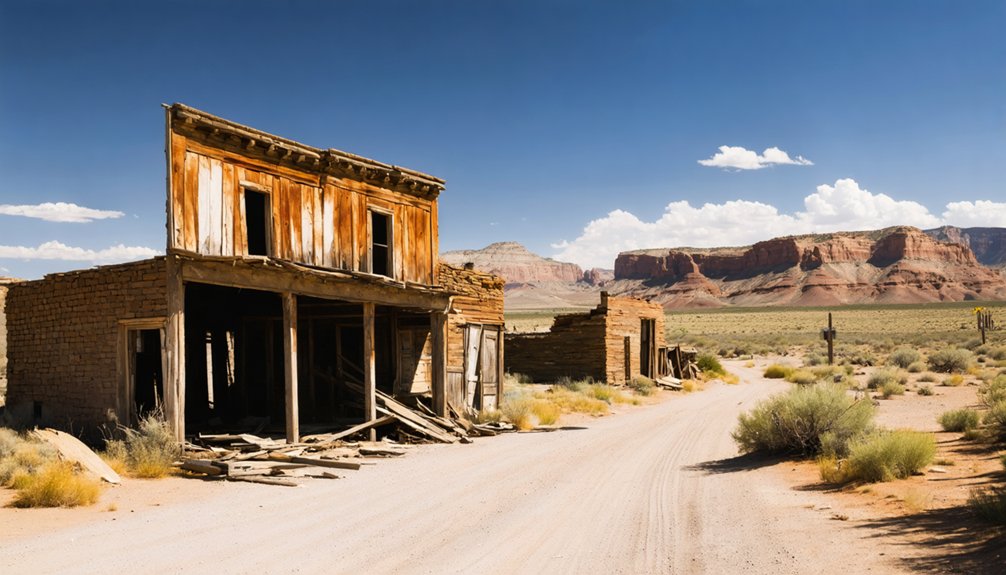
The Tintic Mining District doesn’t end at Silver City, and that’s exactly what makes this stretch of Utah road-trip country worth your full attention. Eureka anchors the region and connects you to several forgotten stops worth exploring:
- Mammoth – wander past collapsed historic buildings and scattered mining equipment left behind mid-boom.
- Robinson – a quiet site with foundations that reveal its short but intense mining life.
- McIntyre – small and raw, ideal for visitors who prefer solitude over signage.
- Diamond – offers a stark desert backdrop with remnants that reward patient explorers.
String these stops together into a single ambitious day. You’ll cover serious ground, absorb real history, and move through the landscape entirely on your own terms.
What to Bring Before You Drive Out to Silver City
Before you head out to Silver City, pack water, sturdy shoes, and sun protection, since this high desert site offers no services and little shade.
You’ll also want a printed map or downloaded offline route, because cell service gets spotty once you leave Eureka and turn south toward Dragon Canyon.
A vehicle with decent clearance handles the unpaved sections far more comfortably than a standard sedan will.
Essential Gear To Pack
Packing smart makes the difference between a rewarding desert exploration and a miserable one. Silver City sits in rugged high desert terrain with no services, so you’re entirely on your own once you leave Eureka. Pack these four essentials before you roll out:
- Water and food — carry more than you think you’ll need
- Camera equipment — the smelter ruins and cemetery beg to be documented
- Sturdy footwear — uneven foundations and tailings make footing unpredictable
- Navigation tools — cell service is unreliable in Dragon Canyon
If you’re extending your Tintic District tour into an overnight, camping gear lets you explore surrounding ghost towns at dawn before crowds arrive.
Travel light, stay prepared, and you’ll walk away with memories worth keeping.
Navigation And Road Prep
Getting to Silver City means steering roughly 90 miles south-southwest of Salt Lake City through high desert terrain where cell service drops out fast once you enter Dragon Canyon. Download offline maps before you leave, and mark the turnoff south of Eureka as a saved waypoint.
You’ll want a vehicle with decent clearance since the road into the canyon isn’t maintained for casual sedans. Print a backup route too — digital navigation fails exactly when you need it most.
Once you’re on-site, you’ll navigate scattered historical artifacts and aging mining equipment across a broad, uneven landscape, so note your parking spot carefully. Fuel up in Eureka before heading out because there’s nothing waiting for you at a ghost town.
Frequently Asked Questions
Is Silver City Ghost Town on Public or Private Land?
Like a forgotten dream, Silver City’s land ownership remains unclear in available records. For historical preservation purposes, you’ll want to verify current access rights before exploring, as land ownership details aren’t confirmed here.
Are There Any Guided Tours Available at Silver City?
No formal guided exploration exists at Silver City, so you’ll embrace true freedom as you independently discover its haunting ruins. Historical preservation efforts keep the site accessible, letting you chart your own adventurous path through this mesmerizing ghost town.
Is the Road to Silver City Suitable for Regular Vehicles?
You’d need a monster truck to tackle every back road, but standard vehicle safety holds up fine on main routes. Road conditions vary, so you’ll want to confirm access before heading into Dragon Canyon’s rugged terrain.
Can You Camp Overnight Near the Silver City Ghost Town Site?
No designated campsite exists at Silver City, but you’ll find nearby dispersed camping options that preserve your freedom to explore historical preservation efforts and capture stunning photography opportunities amid the hauntingly beautiful, abandoned mining landscape at dawn.
Are There Any Entry Fees or Permits Required to Visit?
Like an open door to history, you’ll find no entry fees or permits required here! Historical preservation keeps the site accessible, though visitor amenities are minimal, so embrace your freedom and explore Silver City’s haunting ruins independently.
References
- https://en.wikipedia.org/wiki/Silver_City
- https://beyond.nvexpeditions.com/utah/juab/silvercity.php
- https://westernmininghistory.com/towns/utah/silver-city/
- https://marigoldmoose.com/2020/05/27/utah-ghost-towns-dividend-to-silver-city/
- https://www.deseret.com/utah/2024/06/03/how-to-visit-utah-ghost-towns/
- https://www.youtube.com/watch?v=R9yThwWzm9Q
- https://www.youtube.com/watch?v=tMy6s-IKV4I
- https://www.visitutah.com/things-to-do/history-culture/ghost-towns
- https://www.facebook.com/groups/utahgroup/posts/2823339154662445/
- https://www.utahoutdooractivities.com/silvercity.html