Planning a ghost town road trip to Three Sands, Oklahoma means heading to US Route 77, roughly 2 miles south of Tonkawa near the Kay and Noble County border. You won’t find street signs or storefronts—just open land, Riverside Cemetery, and a lone surviving church from the 1920s oil boom era. Spring’s your best bet for comfortable exploration. Pack water, snacks, and offline maps, because there are zero facilities out there. Stick around, and you’ll uncover everything you need for the perfect visit.
Key Takeaways
- Three Sands sits along US Route 77, about 2 miles south of Tonkawa, accessible via Fountain Road and 108th Street.
- The only surviving remnants are Riverside Cemetery and a historic church structure from the original oil boom settlement.
- Visit in spring for mild temperatures and dry roads; avoid July and August due to extreme Oklahoma heat.
- No restrooms, water, food vendors, or emergency services exist nearby—pack all essentials before leaving Tonkawa or Perry.
- Bring offline maps, an emergency kit, sturdy shoes, and travel during daylight for safe navigation on rural roads.
What Was Three Sands, Oklahoma?
Three Sands, Oklahoma was a classic oil and gas boomtown that erupted into existence around November 1922, built atop one of the state’s largest oilfields along the Kay and Noble County border. It thrived as a wild, transient settlement where fortune-seekers flooded in practically overnight. You can imagine the chaos and energy of those early days, driven purely by black gold beneath the earth.
But like most boomtowns, Three Sands couldn’t outlast its resources. As oil production declined, residents packed up and moved on, and by 1957, the town officially ceased to exist.
Today, local legends keep its memory alive, and surviving historical architecture at Riverside Cemetery gives you a rare, tangible connection to this vanished community’s 35-year story.
Where Is Three Sands Located on Highway 77?
Sitting right along US Route 77, the former townsite of Three Sands rests roughly 2 miles south of Tonkawa at the Kay and Noble County border. As you drive south from Tonkawa, watch for the county line — that’s your landmark. The road follows what locals once called the Tonkawa-Perry road, connecting two towns that still anchor either end of this stretch today.
For ghost town tourism enthusiasts, pinpointing the exact location is straightforward. You won’t find a town sign or historic marker welcoming you, but the landscape itself tells the story.
Historical preservation efforts remain centered at Riverside Cemetery, west of Tonkawa off Fountain Road and 108th Street. That cemetery, complete with a surviving church structure, is your clearest physical connection to Three Sands’ short but dramatic existence.
What’s Left of Three Sands Ghost Town Today?
When you visit Three Sands today, you won’t find a single house or storefront from its boomtown days. What you *will* find is Riverside Cemetery, standing west of Tonkawa off Fountain Road and 108th Street.
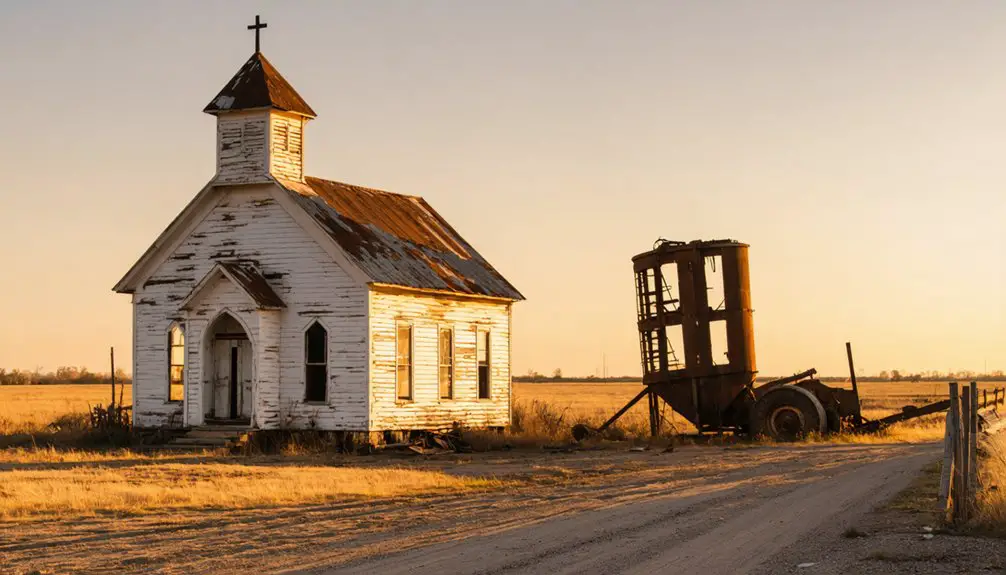
There, a church structure from the original settlement still holds its ground. These two remnants are all that’s left to tell the story of a town that lived fast and disappeared by 1957.
Riverside Cemetery Still Stands
Although the boomtown itself has vanished, Riverside Cemetery survives as Three Sands’ most tangible link to its oil rush past. You’ll find it west of Tonkawa via Fountain Road and 108th Street, where an original church structure still stands alongside the graves.
Historical photographs confirm this cemetery served the wild, transient community that exploded during the oil boom of the 1920s.
When you visit, here’s what you can expect:
- A standing church structure preserved from the original settlement
- Headstones marking residents of Oklahoma’s most notorious boomtown
- Peaceful grounds accessible anytime throughout the year
- No facilities, so bring your own supplies
The cemetery lets you walk directly through history without barriers or admission fees — true freedom for the independent explorer.
Church Structure Remains
Beyond the headstones, the church structure standing at Riverside Cemetery is the last built remnant you’ll find of Three Sands. Urban decay claimed everything else — the saloons, the shanties, the oil-field supply stores — leaving this single structure as the town’s only architectural survivor.
You’re looking at historical preservation in its rawest form here. No restoration crews have polished this place up for tourists. What stands is simply what time hasn’t yet taken.
The church represents the spiritual anchor of a community that lived hard, worked harder, and vanished by 1957.
When you visit, take a moment to study its construction. It connects you directly to the 1920s oil rush settlers who built something permanent in a town that was anything but.
How To Get To Three Sands From Tonkawa or Perry
Reaching Three Sands is straightforward whether you’re coming from Tonkawa or Perry, since both towns sit along US Route 77. From Tonkawa, head south approximately 2 miles until you reach the Kay-Noble County line.
Traveling from Tonkawa or Perry is simple—both towns line US Route 77, putting Three Sands within easy reach.
From Perry, you’ll travel north along the same route.
Before leaving either town, stock up on supplies and check out local dining options or hotel accommodations, as Three Sands offers nothing on-site.
Keep these navigation essentials in mind:
- Tonkawa departure point: Head south on US Route 77 for roughly 2 miles
- Perry departure point: Travel north on US Route 77 toward Kay County
- Landmark: Watch for the Kay-Noble County line marker
- Cemetery access: Turn onto Fountain Road west of Tonkawa to reach Riverside Cemetery
The Best Time of Year To Visit Three Sands
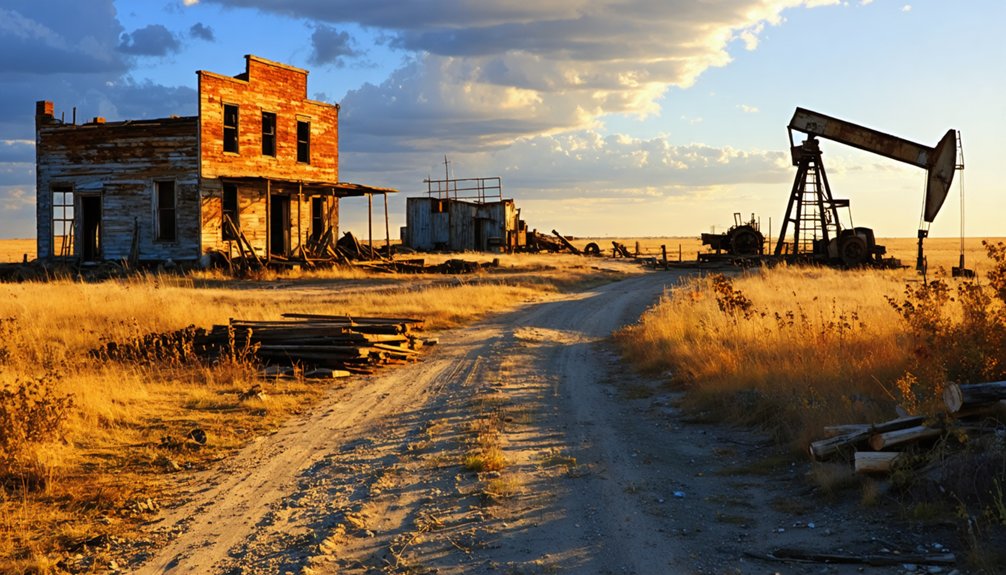
If you’re planning a trip to Three Sands, spring is your best bet, offering mild temperatures and favorable road conditions that make exploring the site far more comfortable.
You’ll want to avoid July and August, when Oklahoma’s heat turns the open landscape into an exhausting experience with no shade or facilities to offer relief.
Winter visits are possible but unpredictable, as cold snaps and wet conditions can make the rural roads leading to the site difficult to navigate.
Spring Offers Ideal Conditions
Spring transforms Three Sands into its most welcoming version, making it the ideal season to explore this forgotten Oklahoma oil boomtown. Mild temperatures replace winter’s chill before July and August’s intense heat arrives, giving you a comfortable window to roam freely and uncover historical artifacts and local legends tied to this 1920s oil rush settlement.
Spring conditions deliver distinct advantages:
- Mild temperatures keep exploration comfortable without summer’s brutal Oklahoma heat
- Dry road conditions ensure reliable 2WD access along US Route 77
- Clear visibility helps you navigate the Kay-Noble County border landmarks
- Blooming landscape frames Riverside Cemetery’s church structure beautifully
You’ll appreciate having favorable weather while walking grounds where an entire boomtown once thrived and vanished within 35 remarkable years.
Summer Heat To Avoid
July and August transform Three Sands from an intriguing destination into an endurance test, as Oklahoma’s summer heat turns the exposed, treeless site into an uncomfortable and potentially dangerous place to explore. Temperatures routinely climb into triple digits, and without shade or nearby facilities, you’ll struggle to focus on the historical artifacts and remnants that make this ghost town worth visiting.
Heat exhaustion becomes a real risk before you’ve had a chance to absorb the site’s story. Preservation efforts are also better appreciated when you’re not rushing back to your vehicle for relief.
Save Three Sands for cooler months when you can move freely, think clearly, and truly connect with what remains of this 1920s oil boomtown without the Oklahoma summer working against you.
Winter Weather Considerations
While Three Sands rewards visitors most generously in spring, winter deserves a closer look before you write it off entirely. The climate here features mild winters, meaning you won’t always face brutal conditions. However, winter storms can strike unpredictably, making road conditions along US Route 77 genuinely hazardous.
Before committing to a winter visit, consider these realities:
- Winter storms can render the two-mile stretch south of Tonkawa difficult to navigate safely.
- Road conditions along the Kay-Noble County line deteriorate quickly after ice or snowfall.
- Remote access means no nearby services exist if your vehicle encounters trouble.
- Daylight hours are markedly shorter, limiting your exploration time at the cemetery site.
Plan carefully, monitor weather forecasts, and always carry emergency supplies if you choose winter travel.
No Facilities, No Services: What To Pack Before You Go
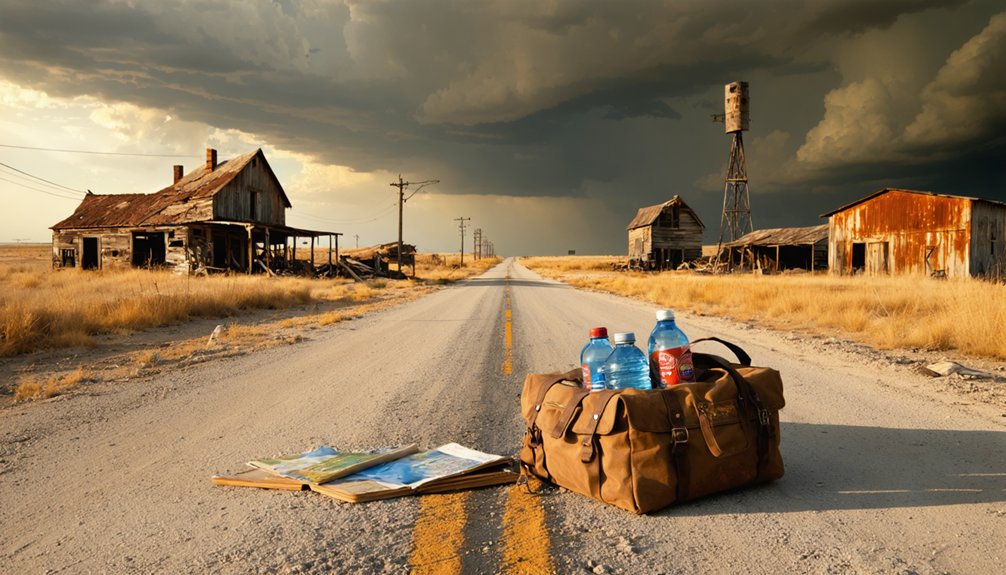
Visiting Three Sands means stepping into a site with zero infrastructure, so you’ll want to pack everything before leaving Tonkawa or Perry. There are no tourist amenities whatsoever — no restrooms, no water, no food vendors, and no emergency services nearby.
Road conditions can shift seasonally, so toss a basic emergency kit in your vehicle alongside plenty of water and snacks. Wear sturdy shoes since you’ll be walking uneven terrain around the cemetery and church remains.
A fully charged phone with downloaded offline maps keeps you oriented when signals drop. Sunscreen and a hat are essential during warmer months.
Grab fuel before heading out, since the site sits in a rural corridor with limited stops between the two towns flanking Highway 77.
Frequently Asked Questions
Is Three Sands Ghost Town Safe to Visit With Children?
Yes, you’ll find Three Sands safe for children! It’s got no haunted legends or dangers, just rich historical significance. Bring supplies, visit in spring, and you’ll enjoy exploring Oklahoma’s fascinating oil boomtown legacy together.
Can You Metal Detect or Artifact Hunt at Three Sands Legally?
You’ll want to research a million regulations before you dig! Historical preservation laws govern metal detecting on Oklahoma’s historic sites. Check local metal detecting regulations with Kay and Noble County authorities before you hunt Three Sands.
Are Pets Allowed at Riverside Cemetery Near Three Sands?
The knowledge base doesn’t confirm Riverside Cemetery’s pet policies, so you’ll want to call ahead before visiting. Prioritize pet safety and respect cemetery regulations by leashing your companion and staying on designated paths.
Is Three Sands Ghost Town Privately Owned or on Public Land?
The knowledge doesn’t confirm Three Sands’ land ownership status, but you’ll find historical preservation efforts alive at Riverside Cemetery. Explore this fascinating site freely, as no restrictions on public access to this ghost town’s land ownership are documented.
Have Any Films or Documentaries Been Made About Three Sands?
No films or documentaries about Three Sands have been confirmed. You’ll find its story lives through historical preservation efforts and the abandoned structures still standing, inviting you to explore and document this forgotten Oklahoma boomtown yourself.
References
- https://en.wikipedia.org/wiki/Three_Sands
- https://www.facebook.com/groups/ponca.city.community/posts/1782325485576989/
- https://en.wikipedia.org/wiki/List_of_ghost_towns_in_Oklahoma
- https://www.ghosttowns.com/states/ok/threesands.html