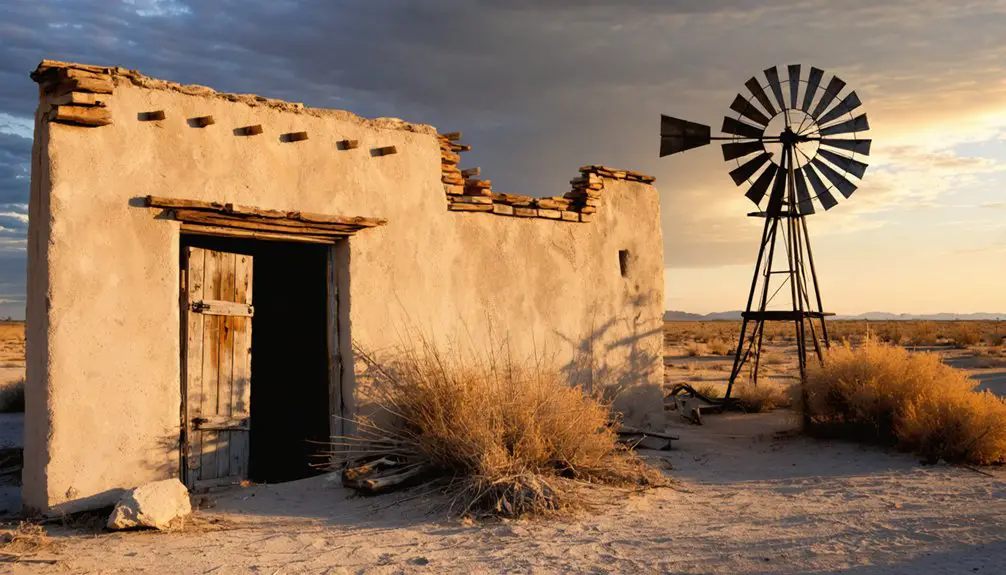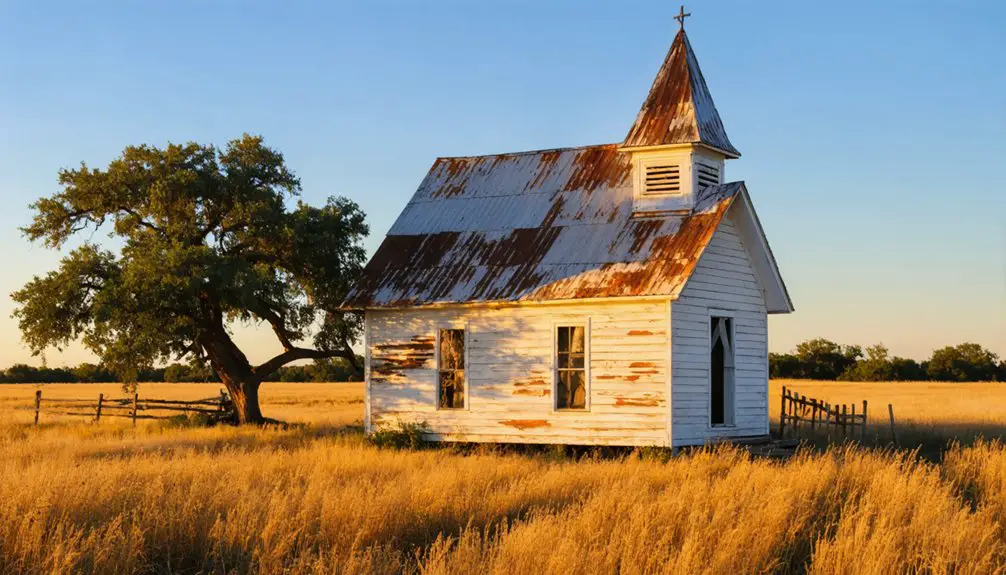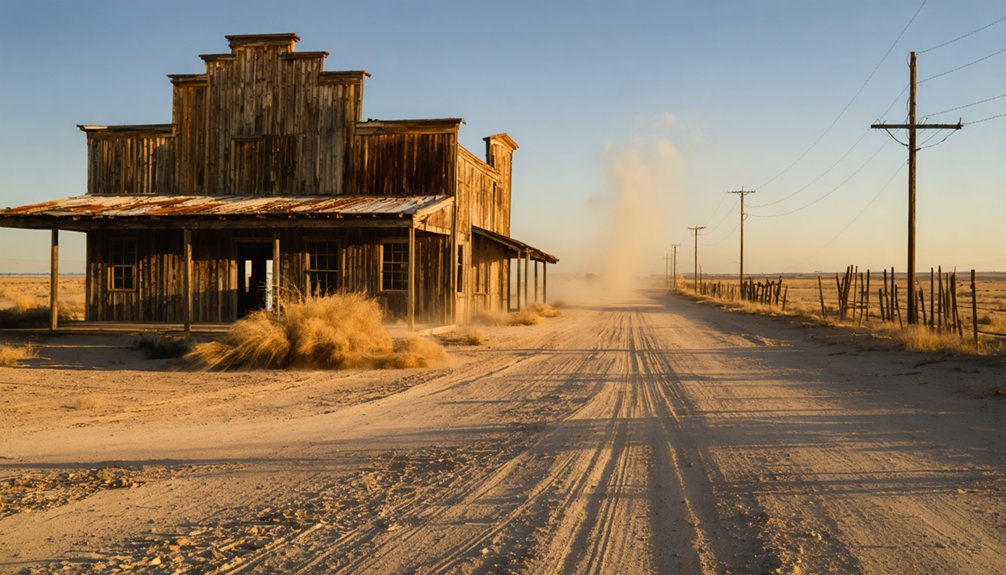
Planning a ghost town road trip to Mount Blanco, Texas means heading 55 miles northeast of Lubbock into raw Caprock escarpment country, where West Texas’s first permanent plains settlement once stood. You’ll navigate Farm Road 193 through open terrain to reach scattered foundations, an abandoned farmhouse, and a small white erosional hill marking the historically significant Blanco Formation. Pack water, fuel up beforehand, and bring reliable navigation — there’s far more to this remote destination than first meets the eye.
Key Takeaways
- Mount Blanco is located 55 miles northeast of Lubbock, accessible via Farm Road 193 through remote West Texas rural roads.
- Spring and fall offer the best visiting conditions, with moderate temperatures ideal for safely exploring abandoned structures and uneven terrain.
- Pack water, food, a first-aid kit, GPS or paper maps, and a full fuel tank, as no services are nearby.
- The site features an abandoned farmhouse, scattered foundations, and an erosional hill marking the first permanent settlement on the West Texas plains.
- Nearby ghost towns and Blanco Canyon offer additional exploration, connected by rural roads through rugged, artifact-rich canyon terrain.
The History That Makes Mount Blanco Texas’s First Plains Settlement
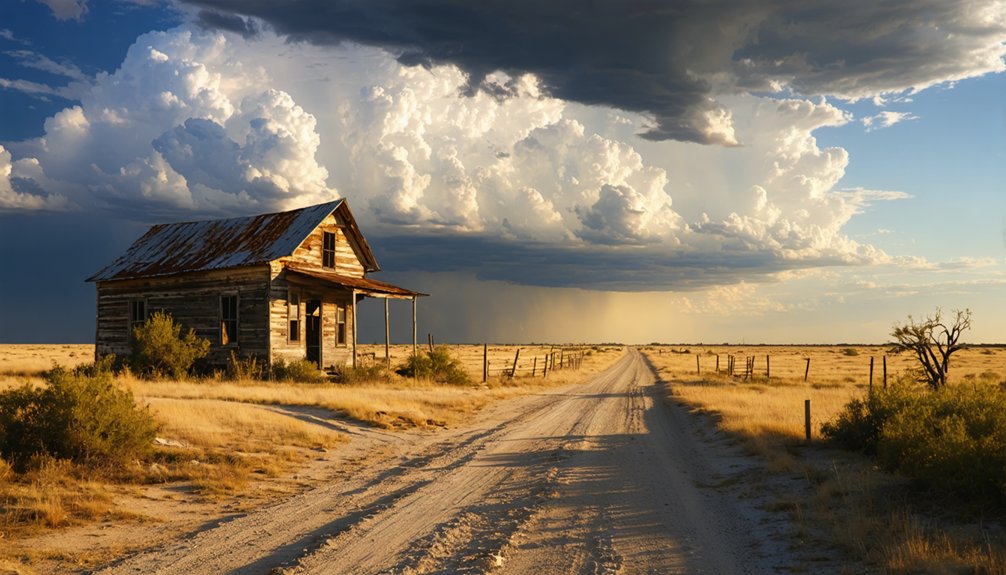
Mount Blanco holds a distinction that few Texas communities can claim: it’s the first permanent settlement on the West Texas plains. Nestled in northern Crosby County, this founding community shaped the entire region’s history before fading into silence.
Mount Blanco stands alone as the first permanent settlement on the West Texas plains — a founding community that shaped an entire region.
Its cultural significance runs deep, representing the inaugural chapter of Crosby County’s story and marking the critical *shift* point onto the Caprock escarpment.
The mesa took its name from Blanco Canyon to the west, connecting geography and identity in ways that still resonate today. Preservation efforts matter here because what remains tells an irreplaceable story about early Plains settlers who carved out existence in an unforgiving landscape.
When you visit, you’re not just seeing a ghost town — you’re standing where West Texas civilization began.
Where Exactly Is Mount Blanco, Texas?
You’ll find Mount Blanco sitting on the Caprock escarpment in northern Crosby County, roughly fifty-five miles northeast of Lubbock, accessible via Farm Road 193. To get there, you’ll navigate rural West Texas farm roads rather than major interstates, so plan your route carefully and verify road conditions before heading out.
Once you arrive, a small white erosional hill marks the type locality of the Blanco Formation.
Blanco Canyon stretches out to the west, grounding the site in both geological and geographic significance.
Geographic Location Overview
Tucked away on the Caprock escarpment off Farm Road 193, Mount Blanco sits in northern Crosby County, roughly fifty-five miles northeast of Lubbock. You’ll find this remote destination at the eastern border of the Llano Estacado, where a small white erosional remnant hill defines the landscape and marks the type locality for the early Pleistocene Blanco Formation found across Texas and Kansas.
The mesa takes its name from Blanco Canyon stretching to the west, a detail you can verify through historical archives documenting the region’s earliest settlements.
The surrounding terrain features local flora typical of West Texas escarpment country, framing an isolated setting that rewards curious travelers. It’s genuinely off the beaten path, making it ideal for anyone craving wide-open, uncrowded exploration.
Getting There By Road
Getting to Mount Blanco means committing to rural West Texas roads, so plan your route out of Lubbock and head northeast for fifty-five miles into northern Crosby County.
Farm Road 193 is your primary artery, cutting through open Caprock escarpment country where the landscape itself tells stories of local legends and cultural heritage stretching back to the region’s first permanent settlement.
You won’t find interstate shortcuts here — that’s part of the appeal. These farm roads demand your attention and reward your effort with raw, unfiltered West Texas scenery.
Check road conditions before you leave, carry extra fuel, and keep your GPS ready since rural maintenance schedules can affect pavement quality.
Arrive prepared, and Mount Blanco delivers an experience that no polished tourist destination ever could.
Nearby Landmarks And Features
Where exactly does Mount Blanco sit on the map? You’ll find it fifty-five miles northeast of Lubbock in northern Crosby County, perched along the Caprock escarpment off Farm Road 193. Its cultural significance runs deep — it’s recognized as the first permanent settlement on the West Texas plains, making it the foundational community for the entire Crosby County region.
Just west lies Blanco Canyon, the geographic feature that gave this mesa its name. Nearby, a small white erosional hill marks the type locality for the early Pleistocene Blanco Formation, found across Texas and Kansas.
Local legends surrounding this frontier outpost echo through the landscape’s raw beauty. Explore freely here — the escarpment’s dramatic terrain tells stories that no museum ever could.
How to Get to Mount Blanco From Lubbock
From Lubbock, you’ll head northeast for roughly fifty-five miles through rural West Texas terrain to reach Mount Blanco in northern Crosby County.
The route relies on farm roads rather than interstates, so you’ll want to map your path carefully before leaving the city behind.
Farm Road 193 serves as your final approach, carrying you directly off the Caprock escarpment to the ghost town site.
Lubbock Starting Point
Since Mount Blanco sits fifty-five miles northeast of Lubbock, you’ll want to head out via the rural farm roads cutting through West Texas’s Caprock escarpment country. Farm Road 193 is your primary route, delivering you directly to this ghost town loaded with cultural significance and historical artifacts from the region’s earliest settlement era.
Before leaving Lubbock, confirm these three essentials:
- Fuel up completely — no services exist near Mount Blanco
- Check Farm Road 193 conditions — rural maintenance schedules affect road accessibility
- Pack navigation tools — cell service gets unreliable across remote Caprock terrain
Lubbock gives you a solid urban launching pad before you trade city infrastructure for open plains. The progression northeast transitions quickly into raw, unfiltered West Texas landscape worth every mile.
Rural Route Navigation
Heading northeast out of Lubbock, you’ll leave city infrastructure behind fast as the landscape opens into flat, sweeping Caprock country. Your target sits fifty-five miles out in northern Crosby County, where Farm Road 193 cuts directly toward the Caprock escarpment.
No interstates guide you here. Instead, rural farm roads wind through terrain steeped in agricultural history — fields once worked by early West Texas settlers who built the region from raw earth. Stay alert for single-lane stretches and verify road conditions before departing, since maintenance schedules on rural routes can be unpredictable.
As you approach, local legends surrounding Texas’s first permanent plains settlement begin feeling tangible. The small white erosional hill marking Mount Blanco appears against the horizon, quietly anchoring you to something genuinely significant in West Texas history.
Farm Road 193 Access
Once you clear Lubbock’s city limits, the route to Mount Blanco unfolds across fifty-five miles of open West Texas terrain through northern Crosby County.
Farm Road 193 delivers you directly onto the Caprock escarpment, where local folklore and geological formations converge at one of Texas’s most overlooked historical sites.
Keep these access points in mind:
- Navigate northeast from Lubbock using rural farm roads toward northern Crosby County.
- Follow Farm Road 193 as it cuts along the Caprock escarpment toward the site.
- Verify road conditions before departure since rural maintenance schedules vary seasonally.
You’ll find no interstate shortcuts here — just raw, unfiltered West Texas landscape rewarding anyone willing to seek it out independently.
Is Farm Road 193 Safe to Drive to Mount Blanco?
Farm Road 193 is a rural, single-lane route that’ll take you directly off the Caprock escarpment to Mount Blanco, so you’ll want to prepare before you head out. Check road conditions before leaving, since rural maintenance schedules can leave stretches uneven or weathered. Keep your fuel tank full, because you won’t find services nearby. Bring adequate lighting if you’re driving near dusk, as the remote terrain offers no streetlights.
Once you arrive, you’ll discover historical artifacts scattered across the site, from foundation remnants to abandoned structures carrying real cultural significance as the first permanent settlement on the West Texas plains. Respect posted boundaries around unstable structures, stay aware of your surroundings, and you’ll experience this ghost town safely and on your own terms.
What Remains at Mount Blanco Today
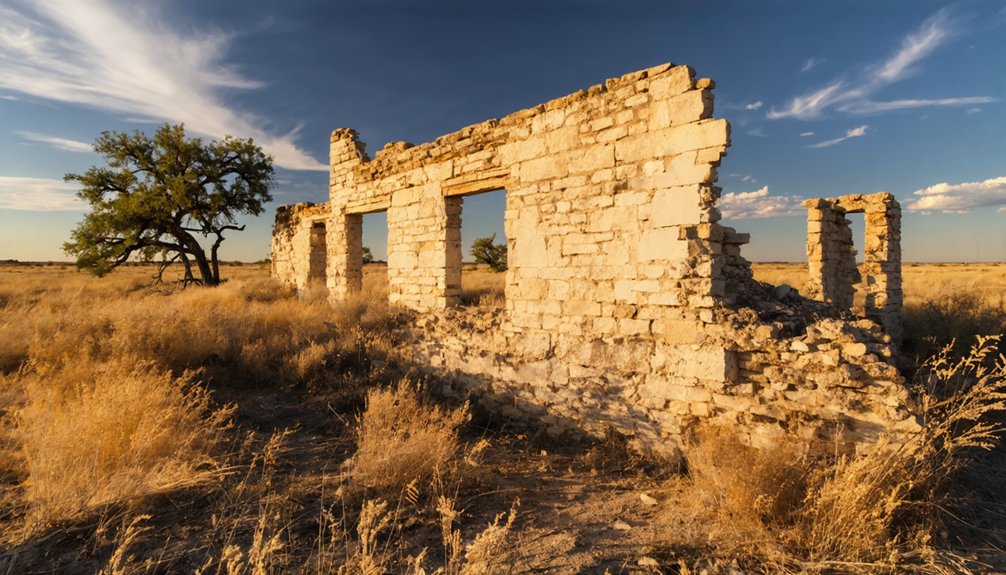
Although Mount Blanco no longer functions as an active community, you’ll find tangible remnants that make the site worth exploring. The cultural significance of this first permanent West Texas plains settlement still resonates through what survives on the landscape today. Modern preservation efforts remain minimal, so you’re experiencing history in its unrefined form.
Three key remnants define your visit:
- Abandoned farmhouse — a weathered structure reflecting early settler life on the Caprock escarpment
- Erosional remnant hill — the small white formation marking the geological type locality for the Blanco Formation
- Scattered foundations — physical traces of Crosby County’s inaugural community
You’re essentially walking through an open-air historical record, where geography and human history intersect without barriers or crowds.
Ghost Towns Near Mount Blanco in the Caprock Region
Exploring the Caprock region beyond Mount Blanco rewards you with additional ghost towns scattered across the West Texas plains, each carrying its own chapter of abandoned settlement history.
Blanco Canyon to the west connects geographically and historically to Mount Blanco, making it a natural next stop on your route. The canyon’s rugged terrain shelters historical artifacts that speak directly to early settlement patterns across Crosby County.
As you navigate Farm Road 193 and surrounding rural roads, you’ll encounter abandoned farmhouses similar to Mount Blanco’s remnants, each demanding thoughtful cultural preservation from visitors who explore them. Photograph, observe, and respect what remains standing.
These sites exist outside mainstream tourism, offering you authentic engagement with West Texas history on your own terms.
Best Time to Visit Mount Blanco, Texas
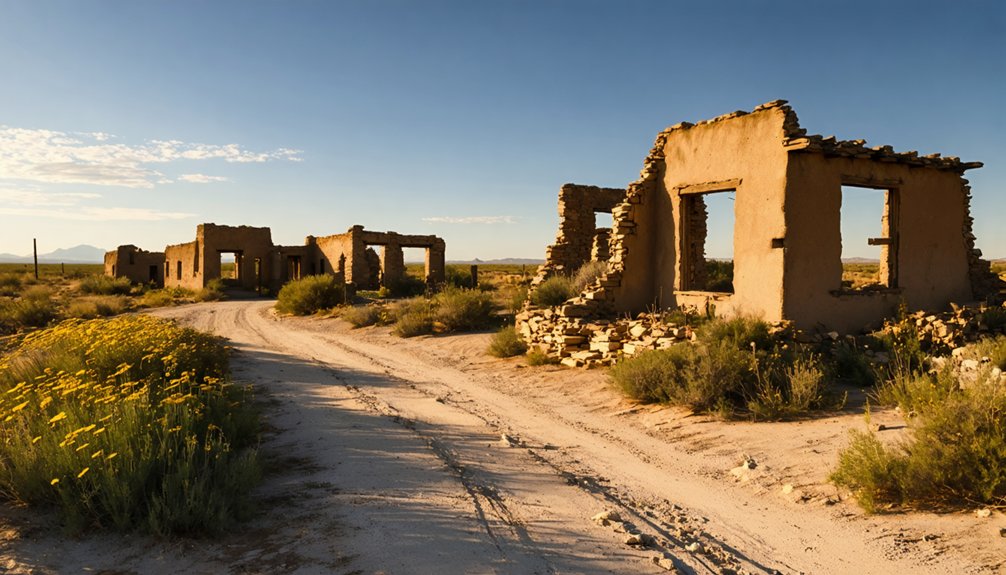
Spring and fall deliver the most comfortable conditions for your Mount Blanco road trip, when moderate temperatures make walking the Caprock escarpment genuinely enjoyable rather than a test of endurance. Summer heat in West Texas hits hard, while winter winds across the plains can cut through quickly.
Plan your visit around these three considerations:
- March through May offers mild temperatures and clearer skies for exploring abandoned structures safely.
- September through November pairs well with nearby cultural festivals in Lubbock, extending your trip’s value.
- Weekdays give you undisturbed access without competing with weekend explorers on Farm Road 193.
After your exploration, sample local cuisine in Crosby County towns heading back toward Lubbock. You’ll appreciate having a warm meal after walking those wide-open, windswept grounds.
What to Bring for a Remote Mount Blanco Road Trip
Once you’ve locked in your ideal travel window, packing smart separates a smooth Mount Blanco excursion from a frustrating one. Farm Road 193 offers no fuel stops, convenience stores, or cultural festivals to resupply your essentials, so self-sufficiency is non-negotiable.
Pack extra water, a first-aid kit, and emergency roadside tools before leaving Lubbock. Since no local cuisine options exist near this ghost town, bring your own meals and snacks.
A charged GPS device, paper maps, and a portable power bank ensure navigation stays reliable when cell signals fade across the remote Caprock escarpment.
Sturdy walking shoes handle uneven terrain around the abandoned farmhouse safely. Bring a camera to capture the erosional remnant and foundations.
Always carry sufficient fuel, since rural West Texas distances punish underprepared travelers quickly.
Frequently Asked Questions
Can You Camp Overnight Near Mount Blanco’s Ghost Town Site?
You’ll find no official camping regulations exist here — it’s almost coincidental how this ghost town’s isolation mirrors true freedom. Check local amenities in nearby towns, as Mount Blanco’s remote Caprock location offers no on-site services.
Are There Any Guided Tours Available at Mount Blanco?
You won’t find formal guided tours at Mount Blanco, but you can explore its historical significance independently. Preservation efforts remain minimal, so you’re free to experience this hauntingly beautiful ghost town on your own terms.
Is Mount Blanco Accessible to Visitors With Mobility Limitations?
Coincidentally, if you crave freedom and open roads, Mount Blanco’s rural terrain isn’t wheelchair friendly. Mobility accessibility remains challenging — unpaved paths and abandoned structures make traveling this ghost town difficult for visitors with mobility limitations.
Does Mount Blanco Appear on Standard GPS Navigation Applications?
You’ll find Mount Blanco’s GPS accuracy varies across navigation apps, so don’t rely solely on them. Cross-reference coordinates for the Caprock escarpment off Farm Road 193 to make certain you’re hitting this remote ghost town accurately.
Are Photography Permits Required When Visiting Mount Blanco’s Abandoned Structures?
No photography restrictions or permit requirements exist—you’re free to shoot away! Just don’t expect a ranger to pop out of the tumbleweeds demanding paperwork. Mount Blanco’s abandoned structures welcome your camera, but enter those ruins cautiously.
References
- https://www.tshaonline.org/handbook/entries/mount-blanco-tx
- https://daytrippintexas.com/panhandle/abandoned-farmhouse-in-mount-blanco/
- https://en.wikipedia.org/wiki/Mount_Blanco
- https://www.youtube.com/watch?v=1FNxpWg3KMg
- https://www.youtube.com/watch?v=tj4xz5u1fT0