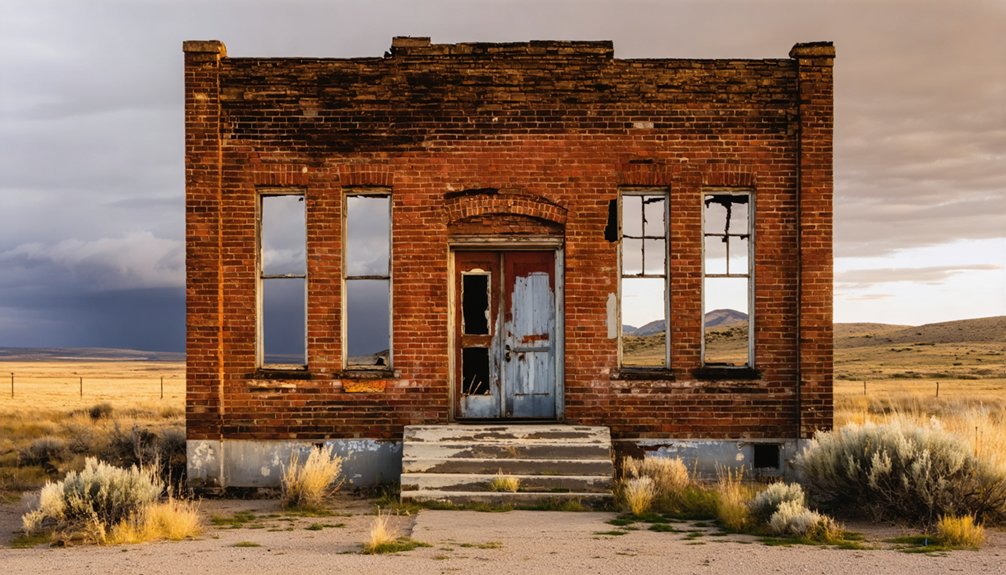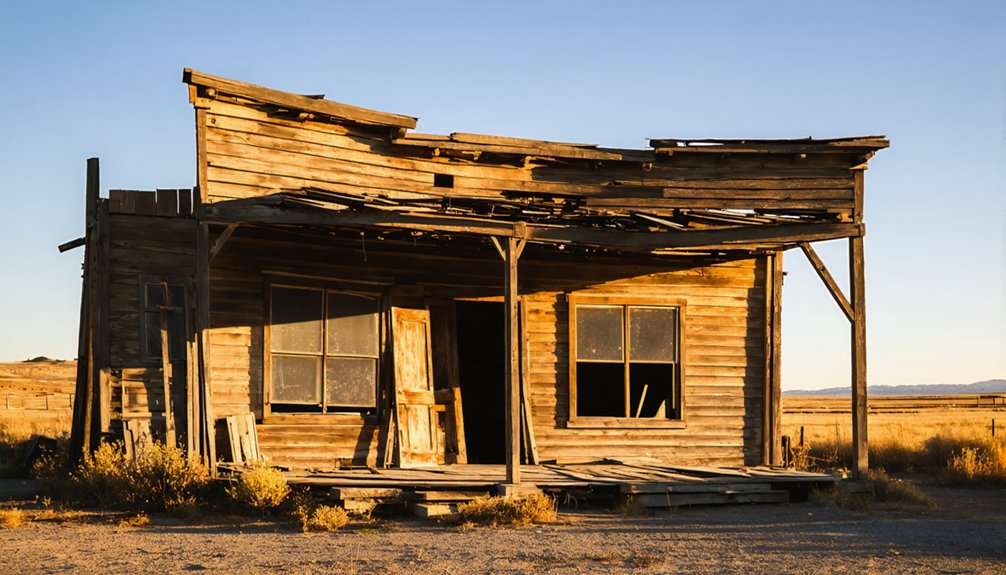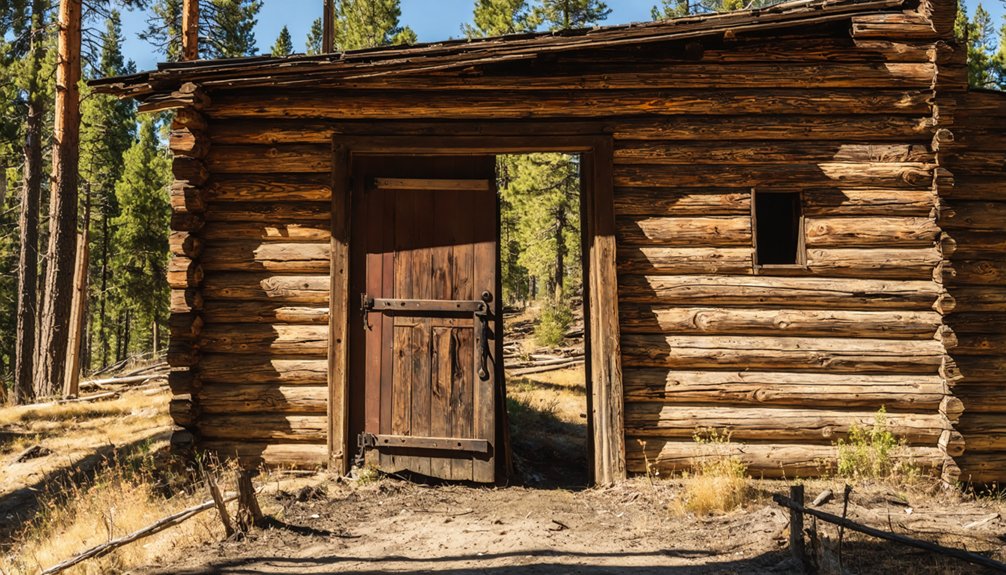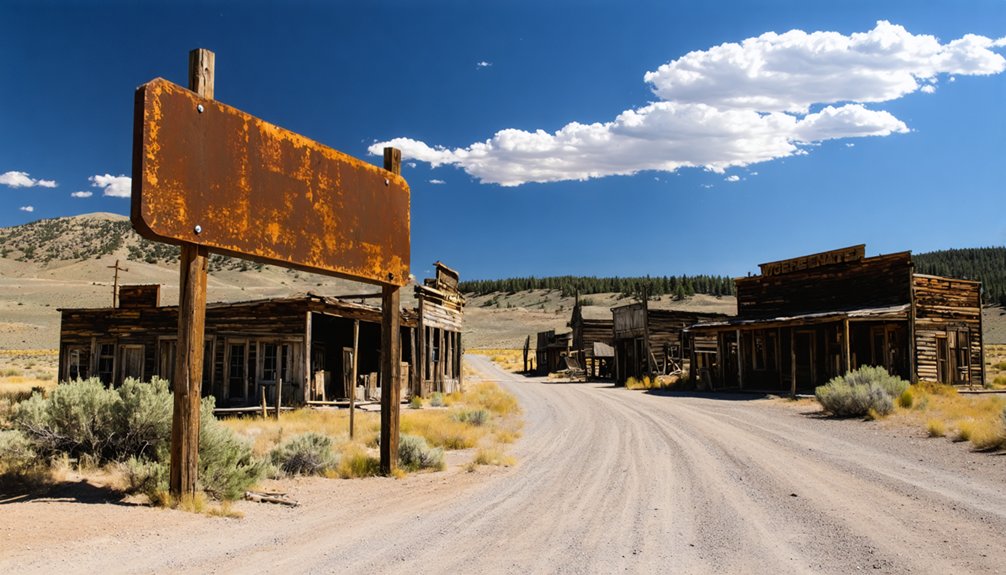
Planning a ghost town road trip to Thunder Mountain City means committing to Idaho’s deep backcountry, where Monumental Creek carves through the Frank Church Wilderness. You’ll need a 4WD, high-clearance rig, extra fuel, and water before you leave civilization behind. Summer, fall, or spring offer the best access before snow closes the routes. Weathered log buildings and scattered mining artifacts reward those who make the journey, and there’s far more to this story waiting ahead.
Key Takeaways
- Thunder Mountain City lies deep in central Idaho’s Frank Church Wilderness, accessible only by 4WD, high-clearance vehicles along Monumental Creek.
- Visit in summer, spring, or fall, as winter snow typically closes backcountry roads leading to the site.
- Carry extra fuel, water, navigation tools, and emergency supplies, as no services exist along remote stretches.
- Explore scattered weathered log buildings, leveled platforms, and mining artifacts reflecting a short-lived early 1900s boom.
- Nearby Roosevelt, just 3 miles up the valley, offers additional mining remnants and a cemetery worth visiting.
How Remote Is Thunder Mountain City, Idaho?
Thunder Mountain City sits deep in central Idaho’s mountainous backcountry, and getting there isn’t a casual drive. The town rests along Monumental Creek, roughly three miles down the valley from Roosevelt, tucked inside what’s now part of the Frank Church Wilderness.
You’ll need a 4WD vehicle and a high-clearance rig to handle the rough terrain. Plan your fuel, water, and navigation carefully before heading out.
The isolation that once limited the town’s survival now works in your favor. Fewer crowds mean genuine encounters with local wildlife and a landscape largely unchanged by modern interference.
That same remoteness has contributed to historical preservation, keeping the remaining log structures and leveled tent sites from disappearing entirely. This is freedom-seeking travel at its most honest — raw, rewarding, and unapologetically wild.
What Made Thunder Mountain City a Ghost Town?
Like so many boomtowns before it, Thunder Mountain City rose fast and collapsed faster. Historical mining excitement pulled hundreds of prospectors into central Idaho’s rugged backcountry, and townsite speculation drove lot prices to $100 and beyond. It felt like opportunity carved straight out of the mountains.
But the geology didn’t deliver. Ore values dropped steadily, and by 1908, the large mines had already shut down. Limited extraction dragged on after 1909, yet the district’s total output reached only $500,000 — a fraction of what investors had wagered.
The post office closed in 1916, and the people followed.
What’s left today are a few weathered log buildings and leveled-off spots where tents once stood. The wilderness swallowed the rest.
When Is the Best Time to Visit Thunder Mountain City?
Planning a visit to what’s left of Thunder Mountain City means thinking carefully about when you go — because in this remote corner of central Idaho, the season can make or break your trip.
Fall, spring, and summer open the backcountry roads best suited for 4WD travel, giving you real access to the site’s surviving log buildings and leveled tent-house spots.
Summer brings longer days perfect for chasing local legends tied to the old mining rush.
Fall rewards you with crisp air and wildlife encounters along Monumental Creek.
Winter shuts things down fast — snow closes rough mountain routes and turns adventure into risk.
Choose your window wisely, pack fuel and navigation tools, and you’ll reach this ghost town on your own terms.
How to Get to Thunder Mountain City by 4WD
Getting to Thunder Mountain City isn’t a casual Sunday drive — you’ll need a capable 4WD vehicle, high clearance, and a genuine respect for Idaho’s backcountry terrain. The route carves through central Idaho’s rugged wilderness, rewarding those bold enough to make the journey with raw mountain scenery and genuine frontier history.
Before you head out, prepare for:
- Fuel and water: Remote stretches offer zero services
- Navigation tools: Maps and GPS, since backcountry signals fail
- Road conditions: Rough surfaces demand high clearance and 4WD confidence
Once you arrive, scattered historical artifacts and evidence of early mining techniques tell the story of a boom that burned bright and faded fast.
This isn’t a guided tour — it’s freedom on your own terms, deep in Idaho wilderness.
Fuel, Water, and Permits: What to Sort Before You Drive
Before you turn a single wheel toward Thunder Mountain City, sort out your fuel, water, and wilderness permits — because once you’re deep in central Idaho’s backcountry, you’re on your own. The Frank Church Wilderness demands respect: fill your tank in the last town you trust, carry more drinking water than you think you’ll need, and check current trail conditions before departing, since seasonal snow and washouts can shut down routes fast.
Wilderness permits may be required depending on your entry point and travel dates, so confirm requirements with the local ranger district ahead of time. While you’re at it, ask about local wildlife activity — bear and mountain lion sightings aren’t rare here.
Freedom tastes best when you’ve planned well enough to actually enjoy it.
What Still Stands at the Thunder Mountain City Site
After the boom years faded and the last miners packed out, Thunder Mountain City didn’t leave much behind. Still, the site rewards those willing to make the trek.
You’ll find scattered remnants that connect you directly to that frantic early-1900s rush:
- Several log buildings still stand weathered against the Idaho wilderness
- Leveled-off platforms mark where tent houses once sheltered hundreds of miners
- Historic artifacts and mining equipment fragments occasionally surface around the grounds
Don’t expect a preserved museum piece. This is raw, unpolished history sitting open under mountain sky.
The silence here hits differently when you realize 250 miners once crowded these same slopes chasing gold.
Walk the site slowly, read the landscape, and let the remnants tell their own story.
Add Roosevelt to Your Thunder Mountain Drive
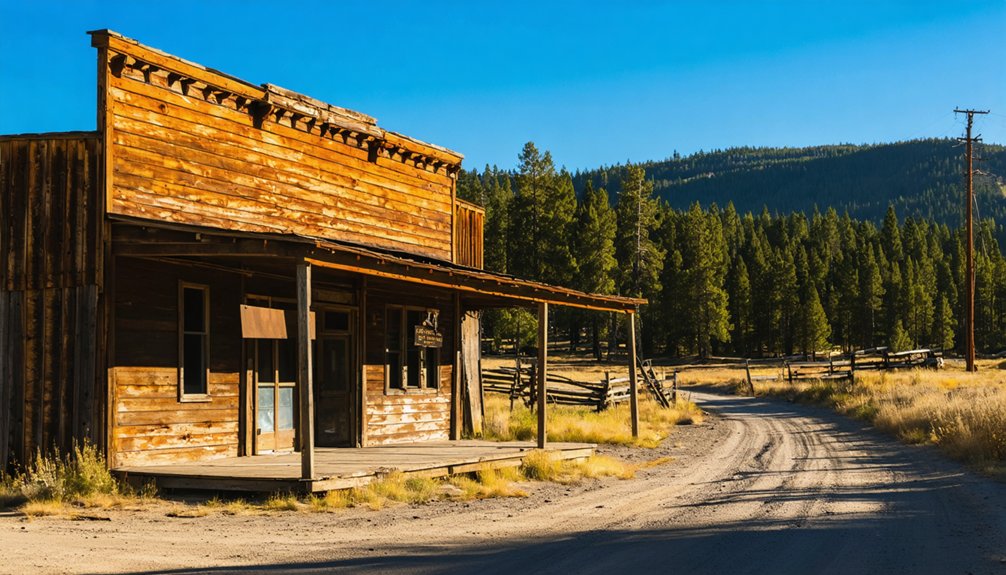
While Thunder Mountain City draws most of the historical curiosity in this corner of Idaho, Roosevelt sits just three miles up the valley and deserves a stop of its own. You’ll find remnants that have survived more than a century, including scattered mining equipment and structures that hint at the town layout that once supported a working mountain community.
A small cemetery anchors the site with quiet weight, and old dirt roads still trace the bones of where buildings once stood. Roosevelt gives you a sharper sense of how these high-country settlements were organized and operated.
Pairing both stops on a single drive makes the history feel connected rather than isolated, and it rewards the effort it takes to reach this remote stretch of central Idaho.
What to Pack for a Remote Idaho Ghost Town Trip?
Reaching both Roosevelt and Thunder Mountain City takes serious preparation, and what you pack can make or break a backcountry run this deep into central Idaho. The terrain demands respect, and smart gear choices keep you moving freely through wilderness that hasn’t changed much since the mining boom collapsed.
- Navigation tools: Carry paper maps and a GPS unit since cell service vanishes fast out here.
- Camera and notebook: Local legends and historical artifacts deserve documentation, not just memory.
- Emergency supplies: Extra fuel, water filtration, a first-aid kit, and recovery gear for 4WD situations.
You’re traveling through country where towns simply disappeared, so self-sufficiency isn’t optional. Pack deliberately, travel light where possible, and give yourself enough margin to explore without rushing.
Where Does Thunder Mountain City Fit in Idaho’s Gold Rush Story?
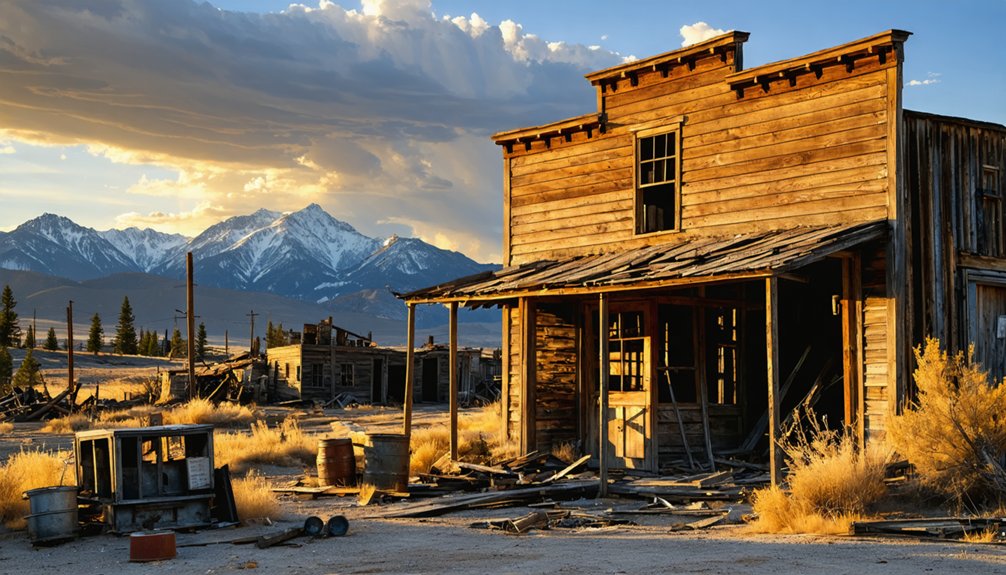
Though Idaho had seen gold excitement dating back decades, Thunder Mountain City arrived at a moment when the region desperately needed a new rush to believe in. Gold-bearing outcrops were first spotted here in 1867, but the real boom ignited in the early 1900s, drawing miners who brought fresh mining techniques and speculative energy into this remote central Idaho canyon.
You’re looking at a place where town infrastructure rose fast — five mercantile stores, a hotel, a blacksmith, an assay office, nine whiskey mills — all carved into wilderness along Monumental Creek. But the excitement burned short. Large mines closed by 1908, and total production reached only $500,000.
Thunder Mountain City stands as Idaho’s vivid reminder that gold rush dreams and hard reality rarely match.
Frequently Asked Questions
Did Thunder Mountain City Ever Have a Formal Town Government or Mayor?
Like a campfire without a marshal, Thunder Mountain City never had a formal mayor or town government. Its ghost town architecture and historical significance tell the story of free-spirited miners who governed themselves through frontier grit.
How Long Did the Post Office in Thunder Mountain City Actually Operate?
You’ll find that Thunder Mountain City’s post office operated for 12 years, from 1904 to 1916 — a vivid thread in its mining history, connecting rugged souls who built that raw historical architecture amid Idaho’s untamed wilderness.
Were Any Notable or Famous Individuals Connected to Thunder Mountain City’s Boom?
The records don’t name famous prospectors or legendary tales tied to specific individuals — it’s more of a wild-west-at-large story. You’ll find the boom attracted everyday dreamers chasing gold, not celebrated names etched in history.
Can You Camp Overnight Near the Thunder Mountain City Ghost Town Site?
You can camp overnight near the ghost town! Embrace the wild surroundings, but you’ll find minimal campground amenities here. Follow essential safety tips — pack water, supplies, and a map before venturing into this remote, untamed Idaho wilderness.
How Much Did Lot Prices at Thunder Mountain City Compare to Other Idaho Boomtowns?
Like gold dust in a prospector’s pan, opportunity slipped fast — lots fetched $100 and up, reflecting fierce boomtown economics and real estate trends, though you’d find comparable speculation shaped most Idaho rushes similarly.
References
- https://westernmininghistory.com/towns/idaho/thunder-mountain/
- https://www.tpl.org/our-work/thunder-mountain
- https://www.ghosttowns.com/states/id/thundermountaincity.html
- https://www.youtube.com/watch?v=zugpvVMZGsg
- https://yellowpinetimes.wordpress.com/2022/11/13/idaho-history-nov-13-2022/
- https://en.wikipedia.org/wiki/List_of_ghost_towns_in_Idaho
- https://americafromtheroad.com/ghost-towns-in-idaho/
- https://cascadechamber.com/place-to-visit-the-ghost-town-of-roosevelt/
- https://history.idaho.gov/wp-content/uploads/2018/08/0064.pdf