Loseeville, Utah isn’t a verified ghost town, so you won’t find it on any official map or historic registry. But don’t scrap your road trip plans just yet. Grafton, Utah, near Zion National Park, is one of the state’s best-preserved ghost towns and makes a worthy alternative. It’s got crumbling pioneer structures, a haunting cemetery, and rugged desert roads that’ll test your adventurous spirit. Stick around to uncover everything you need to plan this unforgettable journey.
Key Takeaways
- Loseeville, Utah is not a verified ghost town and may be a misspelling, making it unreliable as a road trip destination.
- Grafton, near Zion National Park, is the closest authentic ghost town, founded in 1859 by Mormon pioneers.
- Reach Grafton from Rockville by crossing the Virgin River bridge and following an unpaved road approximately one mile.
- High-clearance vehicles are recommended, and offline maps are essential since cell service is virtually nonexistent in the area.
- Pack extra water, a spare tire, sturdy boots, and a first-aid kit for this remote desert excursion.
Is Loseeville, Utah a Real Ghost Town?
While the name “Loseeville” sparks curiosity, it doesn’t appear in any official Utah geographic records or verified ghost town registries — it’s actually a common misspelling of “Losteeville,” which itself remains unconfirmed as a legitimate historical settlement.
Loseeville appears in no official Utah records — and may simply be a misspelling of another unconfirmed settlement.
If you’re chasing authentic ghost town experiences, you’ll want verified sites instead.
Southern Utah rewards explorers with confirmed destinations like Grafton, where crumbling structures, local cuisine from nearby Rockville, and unexpected wildlife sightings create genuinely memorable road trips.
You won’t find Loseeville on any reliable map, county record, or post office registry — the essential indicators historians use to authenticate former settlements.
Don’t let an unverified name derail your adventure. Redirect your freedom toward documented ghost towns that deliver real history, tangible ruins, and stories worth discovering.
What’s the Closest Verified Ghost Town Near Loseeville?
If you can’t pin down Loseeville on a map, you can still satisfy your ghost town curiosity by heading to Grafton, a well-preserved settlement near Zion National Park in southern Utah.
Founded in 1859 by Mormon pioneers, Grafton features original structures like a schoolhouse, a church, and a cemetery, making it one of the most historically rich abandoned towns in the region.
You’ll want to use a reliable map centered around Zion National Park and nearby Rockville, where you can stock up on supplies before steering through the unpaved roads leading to the site.
Grafton Near Zion
Since Loseeville doesn’t appear in any official Utah geographic records, your best bet for a verified ghost town experience in the region is Grafton, tucked just outside Zion National Park in southern Utah.
Founded in 1859 by Mormon pioneers, Grafton carries real ghost town legends rooted in flooding, conflict, and eventual abandonment by 1944.
You’ll find preserved structures including a schoolhouse, church, and homes that local folklore has kept alive for generations.
The Grafton Cemetery tells hard stories through weathered headstones marking deaths from disease, accidents, and Native American conflicts.
Hollywood even chose Grafton for *Butch Cassidy and the Sundance Kid* in 1969.
It’s a place where history breathes through standing walls, making it worth every mile of your road trip.
Verified Southern Utah Sites
Where exactly should you head when Loseeville doesn’t show up on any verified map? Point your wheels toward Grafton, Utah’s most reliable ghost town near Zion National Park. It’s a real place with real history you can touch.
Grafton delivers historical artifacts worth exploring — a preserved schoolhouse, a pioneer church, and weathered homes that echo a vanished era.
The Grafton Cemetery holds headstones that whisper local legends about settlers who battled floods, disease, and conflict to carve out a life here.
Founded in 1859, abandoned by 1944, Grafton rewards curious travelers who crave authentic experiences over tourist traps.
You’ll walk through structures that survived both the Virgin River’s wrath and Hollywood’s cameras. That’s freedom with actual historical roots beneath your boots.
Why Grafton Is Utah’s Best-Preserved Ghost Town
Although many of Utah’s ghost towns have crumbled beyond recognition, Grafton stands out as a rare exception, with several original structures still intact, including a schoolhouse, a church, and multiple homes. Its historical architecture tells a raw, unfiltered story of Mormon pioneers who built a life along the Virgin River, only to face relentless flooding and conflict.
You’ll walk through a place where local legends breathe through weathered wood and aging headstones in the cemetery, marking settlers lost to disease, accidents, and struggle.
Grafton even earned Hollywood recognition as a filming location for *Butch Cassidy and the Sundance Kid* in 1969. Thanks to the Grafton Heritage Partnership Project, these structures remain preserved, giving you an authentic, tangible connection to Utah’s frontier past.
Why Grafton Was Built, Flooded, and Finally Abandoned
Grafton’s story begins in 1859, when Mormon pioneers settled along the Virgin River as part of Brigham Young’s “Cotton Mission,” an ambitious agricultural initiative pushing cultivation into Utah’s rugged southern frontier. They built homes, a schoolhouse, and a church — structures whose historical preservation still captivates visitors today.
But the Virgin River wasn’t cooperative. A devastating 1862 flood forced residents to relocate Grafton to higher ground.
Ongoing flooding, harsh weather, and conflicts with Native American tribes steadily eroded the community’s resolve. The cultural significance of those hardships remains embedded in Grafton’s cemetery headstones, marking settlers lost to disease, accidents, and violence.
What’s Left Standing at Grafton Today?
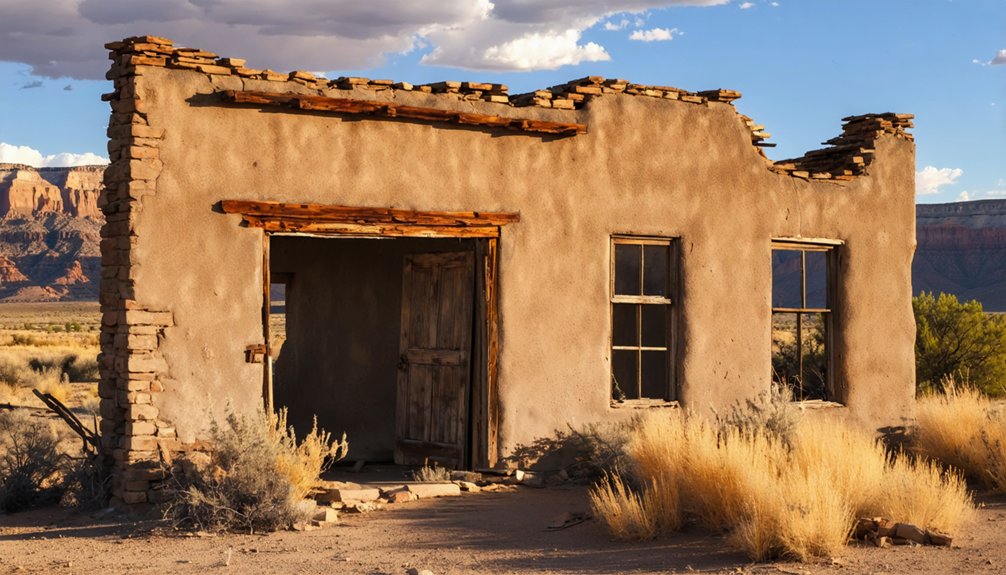
When you walk through Grafton today, the town’s surviving structures tell a story that’s easier to feel than describe. Unlike sites tied to historical mining, Grafton’s pioneer architecture reflects an agricultural settlement built to last — and parts of it did.
You’ll find a preserved schoolhouse, a church, and several homes still standing against the desert backdrop. The Grafton Heritage Partnership Project restored these buildings, keeping them structurally sound and historically honest. Most other structures remain roofless ruins, raw and unfiltered.
The cemetery sits nearby, headstones marking settlers lost to disease, accidents, and conflict. It’s sobering and real.
Hollywood even noticed — *Butch Cassidy and the Sundance Kid* filmed here in 1969. You’re walking through living history, not a reconstruction. Bring a camera and take your time.
Unpaved Roads and No Cell Service: Driving to Grafton
Once you leave the paved roads behind, you’ll need a vehicle equipped to handle rough, unpaved terrain to reach Grafton safely.
Don’t count on your phone for navigation — cell service is virtually nonexistent in this remote stretch of southern Utah.
Download offline maps before you go, and pack a printed reference like a southern Utah road map highlighting Zion National Park and Rockville to keep yourself oriented.
Preparing For Unpaved Roads
Reaching Grafton means leaving behind paved roads and reliable cell service, so you’ll want to prepare your vehicle before heading out. Check your tire pressure, pack a spare, and bring extra water and fuel since services disappear fast in southern Utah. High-clearance vehicles handle the rough terrain far better than standard sedans.
Road safety isn’t optional out here — it’s survival. Download offline maps before you lose signal, and tell someone your planned route and return time. Grafton’s historical preservation depends on respectful visitors who arrive prepared rather than stranded and desperate.
Carry a basic emergency kit, including jumper cables, a first-aid kit, and a flashlight. The reward for this preparation is total freedom — open desert, untouched ruins, and history exactly as time left it.
Navigating Without Cell Service
Cell service drops out fast on the drive to Grafton, so download at least 2 offline maps before you leave — Google Maps and Maps.me work well as backups for each other. Mark your waypoints in advance, including the turnoff from Rockville near the Virgin River.
Paper maps still earn their place here — print a southern Utah overview before you head out.
Grafton’s cultural significance runs deep, and you’ll want your navigation locked down so you can focus on absorbing it. Local legends about pioneer hardships feel more vivid when you’re standing in that silence, far from distractions.
Trust your prep, keep a compass in your kit, and let the freedom of the open road carry you straight into Utah’s forgotten history.
How to Get to Grafton From Southern Utah
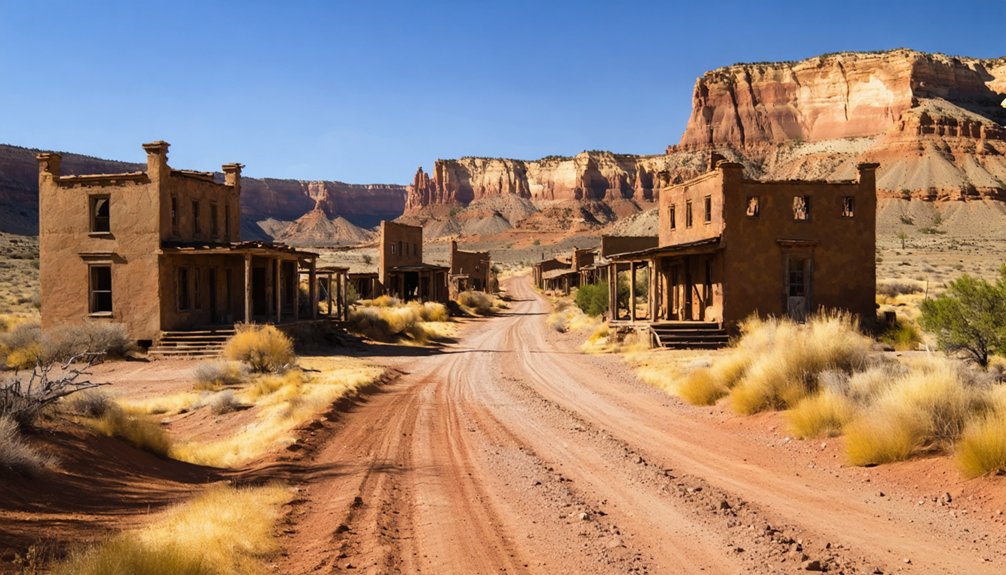
Getting to Grafton is straightforward if you’re already exploring southern Utah’s canyon country. Head toward Rockville, a small town just east of Grafton that’s worth a stop for local cuisine and restocking supplies before venturing further.
From Rockville, cross the bridge over the Virgin River and follow the unpaved road roughly a mile to Grafton’s entrance.
The drive itself rewards you with sweeping canyon views, so keep your camera ready — the golden afternoon light hitting red rock formations offers some of the best photography tips you’ll naturally discover on your own.
The road is manageable for most vehicles, though high-clearance helps on rougher sections.
Plan your arrival during early morning or late afternoon for the most dramatic, shadow-rich shots of Grafton’s preserved structures.
What to Pack for a Southern Utah Ghost Town Trip
Once you’ve mapped your route to Grafton and loaded up on supplies in Rockville, what you carry with you can make or break the experience. Cell service disappears fast in southern Utah, so pack a paper map alongside your digital tools.
Your packing essentials should include extra water, snacks, sunscreen, and sturdy hiking boots built for uneven terrain. Unpaved roads demand a spare tire, jumper cables, and basic tools — non-negotiable safety gear for remote driving conditions. Bring a first aid kit, since help won’t arrive quickly if something goes wrong.
A charged camera captures Grafton’s preserved schoolhouse, church, and cemetery in remarkable detail. Dress in layers, because desert temperatures shift dramatically between morning and afternoon.
Travel prepared, and you’ll move through this landscape with genuine confidence.
Three More Southern Utah Ghost Towns Near Grafton
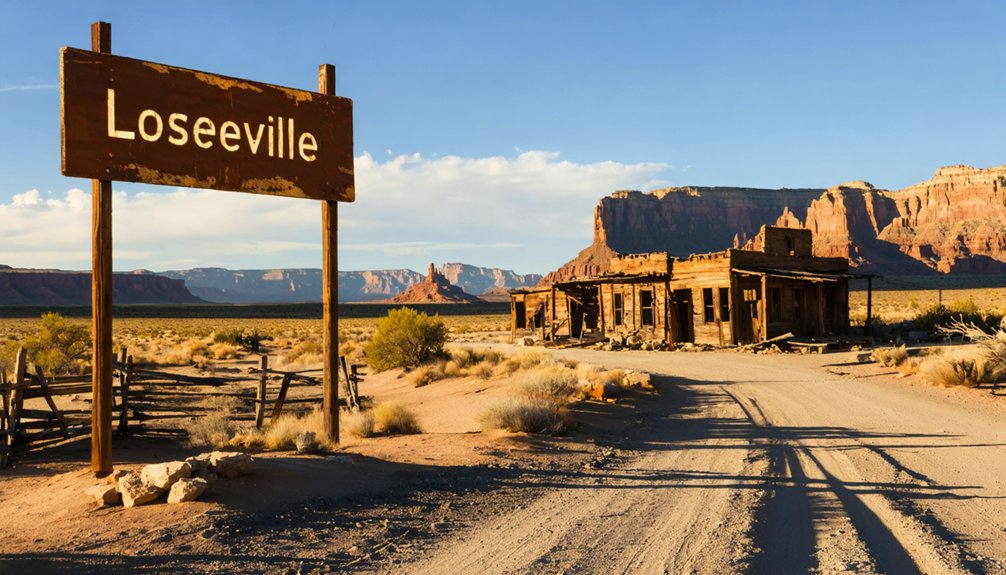
Grafton isn’t the only ghost town worth your time in southern Utah — several abandoned settlements sit within reasonable driving distance and reward curious travelers with their own distinct histories. You’ll find historical architecture, local legends, and raw desert atmosphere at every turn.
- Silver Reef — Once a booming silver mining town near Leeds, it offers preserved ruins and a functioning museum.
- Rockville — Sitting just east of Grafton, it blends a living community with remnants of early settler life along the Virgin River.
- Harrisburg — An 1850s Mormon farming settlement near Leeds where stone foundations and a cemetery mark what floods eventually erased.
Each site tells a different story of ambition, hardship, and abandonment — exactly what draws freedom-seeking explorers to southern Utah’s forgotten corners.
Before You Go: Safety at Abandoned Sites
Ghost town structures have stood without maintenance for decades. Floors, stairs and roof timbers fail without warning, and a building that looks solid from outside may not hold your weight. Stay out of standing structures unless the site is actively maintained and open to visitors.
Mine workings are the more serious hazard. Vertical shafts can be hundreds of feet deep, are often unfenced, and may be hidden by brush or capped with rotted boards. Never enter an adit, tunnel or shaft: abandoned workings can hold oxygen-poor or toxic air that gives no warning before you lose consciousness.
Enclosed spaces with rodent droppings carry a risk of hantavirus, which is contracted by breathing contaminated dust. Do not sweep or stir up dust inside old cabins and outbuildings.
Cell coverage at these sites is usually poor or absent. Tell someone your route and expected return time, and carry more water than you think you need.
Frequently Asked Questions
Can I Find Loseeville in Official Utah Geographic or Post Office Records?
You won’t find Loseeville in official Utah geographic or post office records. It’s absent from verified databases, making it more of ghost town legends than historical preservation. Explore confirmed sites like Grafton instead!
Are There Guided Tours Available at Grafton Ghost Town?
Since 1944, Grafton’s been fully abandoned, yet you’ll find it’s a thriving hub for historical preservation and tourist attractions today. Guided tours aren’t formally structured, but you can freely explore its preserved schoolhouse, church, and cemetery independently.
What Is the Best Time of Year to Visit Southern Utah Ghost Towns?
Spring and fall offer you the best seasonal weather for exploring southern Utah’s ghost towns. You’ll enjoy mild temperatures and stunning photography conditions that make Grafton’s preserved ruins and dramatic landscapes truly come alive!
Are Southern Utah Ghost Towns Free to Visit or Do They Charge Admission?
Like a door left open to the past, most southern Utah ghost towns are free to explore. You’ll wander through ghost town history and seize breathtaking photography opportunities without spending a dime.
Can I Camp Overnight Near Grafton or Other Southern Utah Ghost Towns?
You can’t camp directly at Grafton, but you’ll find camping permits available at nearby Zion National Park. Local accommodations in Rockville also offer cozy bases, giving you the freedom to explore southern Utah’s ghost towns fully!
References
- https://en.wikipedia.org/wiki/List_of_ghost_towns_in_Utah
- https://www.youtube.com/watch?v=qUEhA_dtUD0
- https://www.familysearch.org/en/wiki/Utah_Ghost_Towns
- http://www.youtube.com/watch?v=AoiIha-3iNo