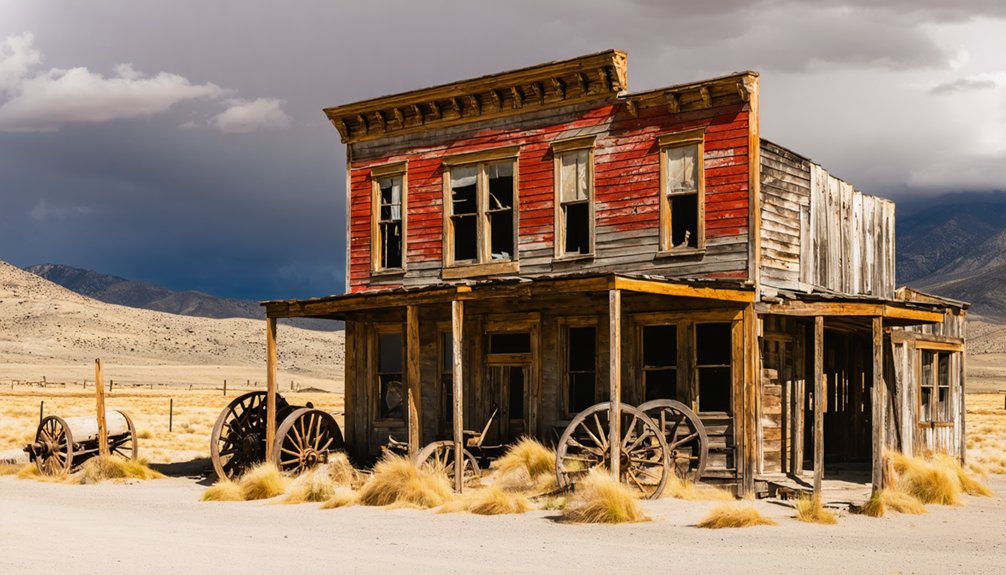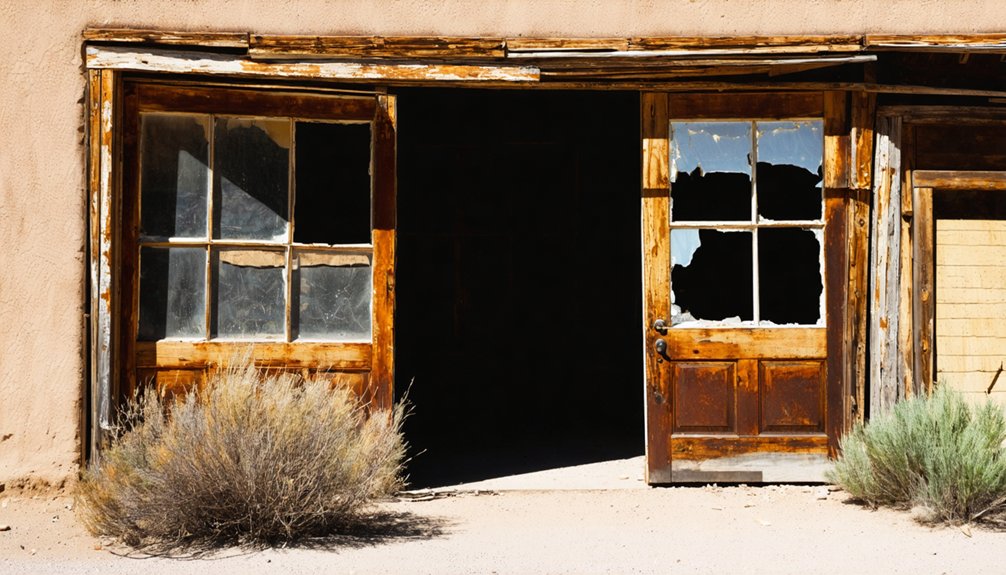
Old mining ghost towns in the American West aren’t just crumbling ruins — they’re frozen echoes of a wild era when silver and gold transformed empty wilderness into roaring boomtowns almost overnight. You’ll find weathered saloons, collapsed mine shafts, and timber frames that once hummed with frontier ambition. Towns like Bodie, Rhyolite, and South Pass City rose fast and fell faster once the ore ran dry. Their stories of boom, bust, and eerie abandonment are only just beginning.
Key Takeaways
- Bodie, California, features about 170 preserved structures in “arrested decay,” including mine shafts, stamp mills, and industrial relics from the Gold Rush era.
- Western ghost towns like Rhyolite, Nevada, and South Pass City, Wyoming, collapsed after mineral depletion triggered rapid population abandonment overnight.
- The boom-and-bust cycle drove towns from thriving settlements to ruins, with exhausted ore deposits shuttering businesses and emptying communities entirely.
- Animas Forks, Colorado, sits above 11,000 feet, preserving silver and gold mining ruins, including the iconic William Duncan House with bay windows.
- Visiting western ghost towns requires offline maps, emergency supplies, seasonal accessibility checks, and research into sites like Belmont, Bodie, and South Pass City.
What Turned Thriving Mining Towns Into Ghost Towns?
Once thriving hubs of economic activity, western mining towns collapsed almost as quickly as they rose—and the reasons why are as fascinating as the towns themselves. When mineral veins ran dry, the economic engine powering everything—from mining infrastructure to daily commerce—simply stopped. Workers departed overnight, businesses shuttered, and town architecture that once symbolized frontier ambition crumbled into quiet ruins.
Between 1880 and 1940, economic shifts accelerated abandonment across the American West. You can trace this pattern repeatedly: a gold or silver discovery sparks rapid settlement, investment floods in, then resource depletion triggers sudden exodus.
No minerals meant no money, no people, and ultimately no town. What remains today are skeletal reminders of communities that burned brilliantly before the frontier’s unforgiving economics extinguished them entirely.
How the Gold Rush Turned Wilderness Into Boomtowns
When gold fever swept the American West, it transformed vast stretches of untouched wilderness into bustling frontier communities almost overnight. You’d have witnessed crude tent camps evolve into structured settlements featuring saloons, assay offices, and merchant halls — all representing a distinctive mining architecture born from necessity and ambition.
Prospectors flooded river valleys and mountain passes, staking claims and building lives where silence once reigned. Communities like Bodie and South Pass City emerged within months of significant discoveries, drawing thousands seeking fortune and freedom.
Yet these towns carried fragile foundations — entirely dependent on mineral wealth. Today, ghost town preservation efforts protect what remains of that raw, entrepreneurial spirit, letting you connect directly with the audacious men and women who carved civilization from untamed Western landscapes.
Saloons, Shanties, and Survival: Daily Life in Mining Ghost Towns
Life in a Western mining town demanded grit, adaptability, and a tolerance for chaos that few modern people can fully imagine. You’d wake before dawn, grab your mining equipment, and descend into dangerous shafts alongside men chasing the same desperate dream.
Town architecture reflected this rawness — canvas tents evolved into wooden shanties, saloons, and general stores erected almost overnight. The saloon wasn’t merely a drinking establishment; it was your courthouse, bank, and social hall combined. You’d settle disputes there, hear news, and briefly forget exhaustion.
Food was scarce, sanitation nearly nonexistent, and winters brutal. Yet communities formed genuine bonds forged through shared hardship. These towns weren’t just economic ventures — they were lived experiments in frontier freedom, self-reliance, and the relentless human pursuit of something better.
The Best-Preserved Mining Ghost Towns in the American West
Three ghost towns stand above the rest when it comes to preservation, each offering an almost tangible connection to the mining era’s raw ambition. Bodie, California, frozen in arrested decay, lets you walk streets once electrified by gold fever and advancing mining technology.
Rhyolite, Nevada, rose swiftly on railroad expansion’s backbone, its stone ruins still narrating a boom that collapsed just as dramatically.
South Pass City, Wyoming, founded in 1867 by Mormon prospectors amid the Wind River Mountains, anchors the Oregon Trail’s legacy with remarkable structural integrity.
You’ll find in these towns no sanitized museum experience—just authentic remnants of frontier determination. Each site demands your respect, rewarding curious visitors with unfiltered glimpses into the ambitions, failures, and resilience that defined America’s westward expansion.
Bodie, California: The West’s Most Famous Ghost Town
Perched high in the Eastern Sierra Nevada at an elevation exceeding 8,000 feet, Bodie endures as the West’s most iconic mining ghost town. Its windswept streets and weathered timber structures evoke an era when gold fever drove thousands into California’s unforgiving highlands.
You’ll find roughly 170 original structures still standing, frozen deliberately in a state of “arrested decay” by California State Parks.
Mining technology once hummed through stamp mills and hoisting works here, processing ore that sustained a population exceeding 10,000 at its 1880 peak.
Cultural preservation efforts now protect what remains, letting you walk saloon floors and peer through dusty windowpanes at furniture left exactly as miners abandoned it.
Bodie doesn’t romanticize frontier life — it preserves its raw, unfiltered reality.
Belmont and Rhyolite: Nevada’s Forgotten Silver Boomtowns
If you trace Nevada’s silver rush, you’ll find Belmont and Rhyolite standing as haunting testaments to the boom-and-bust cycle that defined the Old West.
Belmont generated $15 million in silver and lead ore before its mines exhausted themselves.
While Rhyolite surged during the early 20th-century gold rush only to collapse just as swiftly.
Today, you can walk among their crumbling ruins and feel the weight of a frontier ambition that burned bright, then vanished almost overnight.
Silver Rush Origins
During the silver rush era, Nevada became the heart of boomtown culture in the American West, and two towns—Belmont and Rhyolite—stand as particularly compelling evidence to that fleeting prosperity. You’d find that early prospectors relied on rudimentary prospecting techniques—panning, surface sampling, and hard-rock drilling—to unearth the region’s staggering mineral wealth.
Once silver veins were confirmed, mining infrastructure expanded rapidly: stamp mills, smelters, and rail connections transformed barren desert landscapes into thriving industrial centers almost overnight. Belmont alone produced $15 million in silver and lead ore during the 1860s, while Rhyolite surged during the early 20th-century gold rush.
Both towns remind you that Nevada’s frontier freedom came with an equally fierce impermanence, as economic collapse followed resource exhaustion with unforgiving speed.
Boom And Bust
Belmont and Rhyolite rose and collapsed with a speed that still feels almost cinematic, their stories capturing the raw volatility of Nevada’s mining economy in stark, human terms.
Belmont extracted $15 million in silver and lead ore before exhaustion silenced its mills.
Rhyolite surged during the early 20th-century gold rush, briefly boasting banks, schools, and rail connections before folding within a decade.
You can trace their trajectories through surviving ruins, where cultural preservation efforts now protect what economic forces once discarded.
Mining legislation shaped both towns’ fates, governing extraction rights, corporate claims, and ultimately, abandonment procedures.
These weren’t failures of ambition — they were consequences of a system designed to extract, not sustain.
Their remnants remind you that freedom built on finite resources rarely holds.
Ruins And Legacy
What remains of Belmont and Rhyolite speaks louder than their boom years ever could. You’ll find crumbling courthouses, fractured walls, and skeletal frameworks that once housed ambitious dreamers chasing silver and gold.
Belmont’s town architecture reflects a community that believed in permanence — banks, saloons, and civic buildings constructed with conviction, now surrendered to Nevada’s desert silence.
Rhyolite tells a similar story. Its ruins reveal sophisticated mining technology and urban ambition compressed into a single restless decade.
Walking through these sites, you’re confronting real freedom — the kind men sought and ultimately lost when the ore vanished.
These ghost towns don’t just memorialize failure; they document raw human determination. Their legacy endures precisely because no one bothered to erase it.
The Best Rocky Mountain Ghost Towns Still Standing
If you’re drawn to the rugged legacy of Rocky Mountain mining culture, you’ll find no better witnesses to that era than Animas Forks, Colorado, Bodie, California, and Belmont, Nevada.
Each town rose swiftly on the promise of silver or gold, drew thousands of ambitious settlers, and collapsed just as dramatically once the ore ran thin.
Walking their weathered streets today, you can almost hear the echoes of a frontier world that flourished, faltered, and froze in time.
Animas Forks, Colorado
Nestled deep in the San Juan Mountains of Colorado, Animas Forks stands as one of the most evocative remnants of the Rocky Mountain mining era, where the ghosts of ambition and hardship still echo through its weathered ruins. Founded in the 1870s, this high-altitude settlement reached elevations exceeding 11,000 feet, demanding extraordinary resilience from its inhabitants.
Miners employed hard-rock mining techniques to extract silver and gold from the surrounding peaks, driving remarkable economic activity despite brutal winters. The town architecture reflects that determination — you’ll still find the iconic William Duncan House standing, its bay windows defying decades of alpine neglect.
When you walk these grounds, you’re confronting frontier freedom at its rawest: men who carved civilization from unforgiving wilderness, then watched it quietly crumble when the ore ran dry.
Bodie, California
Though it sits in the high desert of eastern California rather than the Rockies, Bodie stands as arguably the West’s most celebrated preserved ghost town, its windswept streets and sagging storefronts frozen in what historians call “arrested decay.”
At its peak in 1879, the town’s population swelled to roughly 10,000 residents, fueled by a gold strike that made Bodie one of California’s most productive mining districts.
You’ll find the remaining mining infrastructure—stamp mills, mine shafts, and weathered timber frames—remarkably intact, offering unfiltered access to frontier-era industrial life.
California’s State Park system prioritizes cultural preservation here, maintaining structures without restoration, letting decay tell the honest story.
Walking Bodie’s empty corridors, you’re confronting genuine freedom’s cost: ambition, isolation, and eventual abandonment etched permanently into the landscape.
Belmont, Nevada
Shifting eastward from California’s high desert into Nevada’s central basin, Belmont offers a starkly different but equally compelling chapter in the West’s mining legacy. During the 1860s, advanced mining technology helped extract $15 million in silver and lead ore, leaving a profound environmental impact on the surrounding landscape.
You’ll discover Belmont’s enduring legacy through these defining characteristics:
- Rapid boom-and-bust economic cycle
- Sophisticated 19th-century ore extraction methods
- Significant landscape disruption from industrial operations
- Remarkably preserved courthouse ruins
- Direct reflection of frontier-era ambition and resourcefulness
Walking these grounds connects you directly to miners who carved prosperity from unforgiving terrain. Belmont’s remnants aren’t merely ruins—they’re tangible evidence of human determination, technological ingenuity, and the inevitable consequences of resource-driven expansion across Nevada’s rugged central basin.
Are Any Western Ghost Towns Haunted?
While the eerie silence of abandoned mineshafts and crumbling saloons sets an unmistakable atmosphere, many Western ghost towns carry reputations that extend well beyond their historical significance. You’ll find that urban legends and supernatural tales have become inseparable from sites like Bodie, California, where visitors report unexplained phenomena among its preserved ruins.
Locals and historians alike acknowledge that these stories, whether rooted in truth or imagination, amplify the cultural mystique surrounding frontier settlements. You can explore these locations freely, absorbing both their documented past and their spectral folklore.
The haunted reputation of several preserved Western ghost towns has genuinely strengthened heritage tourism, drawing curious travelers who seek something deeper than architecture — an unfiltered connection to lives once boldly lived on America’s untamed frontier.
How to Plan a Ghost Town Road Trip Out West
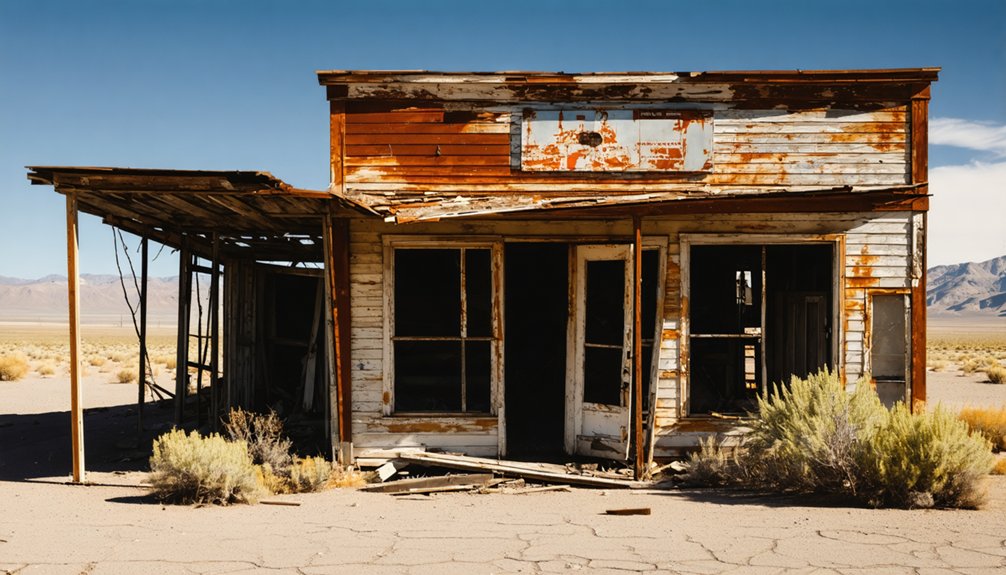
Planning a ghost town road trip out West demands more than a filled gas tank and a sense of wanderlust — you’ll need deliberate research, a reliable regional map, and a prioritized list of destinations anchored by historically significant sites like Bodie, California, Belmont, Nevada, and South Pass City, Wyoming.
Railroad expansion once connected these forgotten corridors, and tracing those old lines reveals hidden clusters of abandoned settlements shaped by mining technology and resource exhaustion.
Prioritize your route around these essentials:
- Research seasonal road accessibility before departing
- Download offline maps covering remote high-desert terrain
- Study each town’s mineral and economic history beforehand
- Pack emergency supplies for isolated stretches
- Document ruins responsibly — leave everything undisturbed
You’ll uncover landscapes where ambition, extraction, and eventual silence converged powerfully.
Frequently Asked Questions
Which Western Ghost Towns Are Located Along the Oregon Trail?
Over 400,000 pioneers traveled the Oregon Trail. You’ll find South Pass City, Wyoming — a mesmerizing Oregon Trail landmark steeped in pioneer settlement history, founded in 1867 after Mormon prospectors discovered gold in the Wind River Mountains.
Did Any Religious Groups Play a Role in Founding Mining Ghost Towns?
Yes, you’ll find religious influence shaped these spiritual settlements. Mormon prospectors founded South Pass City in 1867 after discovering gold in Wyoming’s Wind River Mountains, linking faith-driven migration directly to the West’s fascinating, freedom-seeking mining expansion.
How Much Ore Did Belmont, Nevada Produce During Its Operational Years?
Imagine you’re a 19th-century miner — Belmont’s ore extraction yielded $15 million in silver and lead. Those mining techniques drove remarkable production before resources depleted, leaving you with a ghost town’s haunting, freedom-filled legacy.
Are There Significant Mining Ghost Towns Outside the United States?
Yes, you’ll find significant examples worldwide! British Columbia’s forgotten settlements, Chile’s Atacama Desert ruins, and South Africa’s Leydsdorp reflect international mining history. Global ghost town preservation efforts remind you that humanity’s resource-driven ambitions transcended borders beautifully.
How Has Heritage Tourism Impacted the Preservation of Western Ghost Towns?
Heritage tourism’s revitalized these storied sites, empowering you to witness cultural preservation firsthand. You’ve helped reverse economic decline by attracting global visitors, breathing life into ruins that’d otherwise crumble, ensuring frontier freedom endures through education and nostalgic exploration.
References
- https://en.wikipedia.org/wiki/Ghost_town
- https://en.wikipedia.org/wiki/List_of_ghost_towns_by_country
- https://www.wideopencountry.com/the-10-eeriest-ghost-towns-in-america/
- https://www.thrillist.com/travel/nation/awesome-ghost-towns-the-west-rhyolite-animas-forks-mogollan-lester-ruby-belmont-bodie
- https://www.latimes.com/travel/la-trw-ghost28oct28.pg-photogallery.html
- https://www.youtube.com/watch?v=Pr3J1UWBNEY
- https://www.youtube.com/watch?v=WnCM85l4o7g
- https://www.geotab.com/ghost-towns/