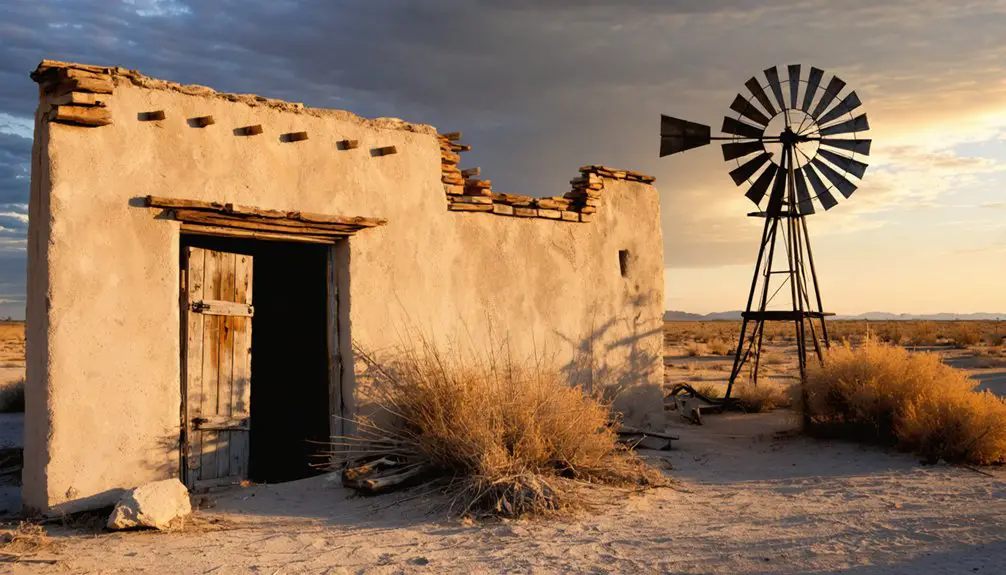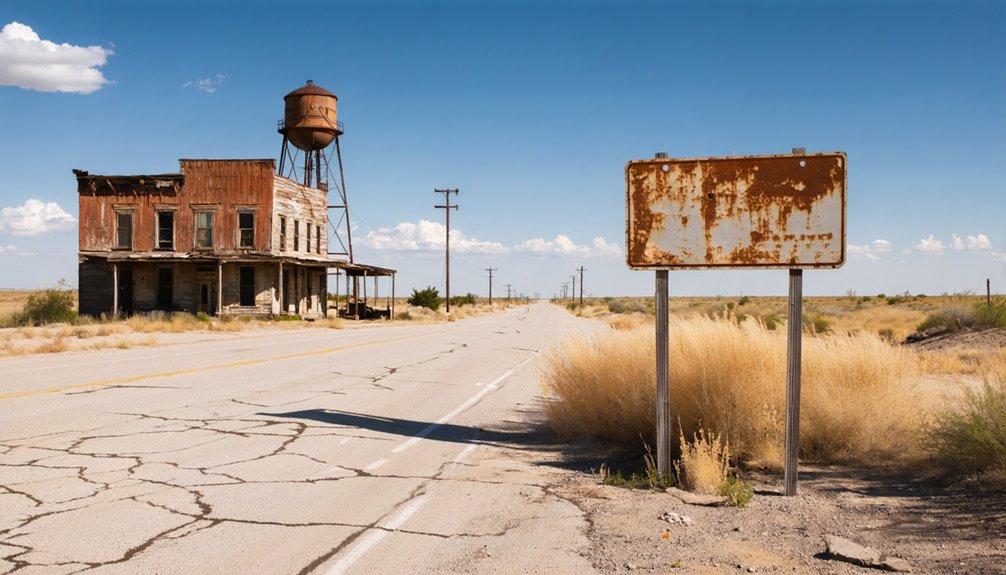
Planning a ghost town road trip to Wintergreen, Texas means heading into the quiet back roads of northeastern Karnes County, where this forgotten crossroads thrived briefly from 1858 to 1868. You won’t find signage or markers here—just converging overgrown roadbeds and weathered foundations where frontier commerce once moved freely. Bring sturdy boots, a paper map, and plenty of water. Visit between October and March to beat the Texas heat. There’s far more to this vanished town’s story than first meets the eye.
Key Takeaways
- Wintergreen, Texas, sits at the intersection of old Victoria-San Antonio and Helena-Gonzales Roads in northeastern Karnes County.
- No formal markers exist, so bring detailed historical maps and prepare for unreliable cell service.
- Visit between October and March to avoid extreme heat and enjoy mild temperatures and longer daylight.
- Bring water, sturdy boots, and a camera to document weathered foundations and overgrown roadbeds on foot.
- Combine your visit with nearby Helena, Concrete, and Yorktown for a fuller frontier ghost town experience.
What Was Wintergreen, Texas?
Once an essential crossroads community in northeastern Karnes County, Wintergreen, Texas thrived briefly during the mid-19th century before vanishing entirely from maps by 1868. Sitting at the intersection of the Victoria-San Antonio and lower Helena-Gonzales Roads, it served merchants, travelers, and cattle drivers moving freely across frontier Texas.
You’d have found wagon yards, corrals, and stage stands supporting regional trade during the Civil War era. Its cultural significance lies in how it reflects broader frontier settlement patterns — communities that rose and fell with shifting transportation routes.
Historical preservation efforts remind us that Wintergreen’s ten-year existence, from 1858 to 1868, tells a powerful story. When new routes bypassed the crossroads, residents left, transforming a critical trade hub into one of Texas’s many forgotten ghost towns.
Where Exactly Is Wintergreen Located in Karnes County?
Tucked into northeastern Karnes County, Wintergreen sits at the historic intersection of the Victoria-San Antonio and lower Helena-Gonzales Roads. Historical maps recorded this crossroads from 1858 to 1868, including an 1865 Civil War-era map that confirmed its strategic position along active frontier routes.
Today, you won’t find a town waiting for you — transportation shifts erased Wintergreen from the landscape long ago. What remains are overgrown roadbeds and weathered foundations marking where merchants, drovers, and travelers once passed through.
The original intersection still exists physically, giving you a rare opportunity to stand at a crossroads that shaped mid-19th century Texas commerce. If you’re chasing frontier history off the beaten path, northeastern Karnes County delivers exactly the kind of raw, unfiltered connection to the past you’re looking for.
What’s Left of Wintergreen Today?
Although Wintergreen’s role as a frontier trade hub once drew merchants and drovers from across the region, almost nothing physical survives today. When you visit the northeastern Karnes County site, you’ll find weathered foundations and overgrown roadbeds marking the original intersection of the Victoria-San Antonio and Helena-Gonzales Roads. These faint traces are the only historical artifacts remaining from a community that vanished by 1868.
Don’t expect museum-quality preservation efforts here. The landscape has quietly reclaimed what settlers once built, leaving little beyond subtle ground-level evidence. Yet that raw, unpolished reality makes the site compelling for travelers who value authentic history over reconstructed displays.
You’re standing where frontier commerce once moved freely, and that connection to an unfiltered past carries its own quiet power.
How Do You Get To Wintergreen?
Reaching Wintergreen means steering through the quiet back roads of northeastern Karnes County, Texas, where the old Victoria-San Antonio Road once crossed the lower Helena-Gonzales Road.
Reaching Wintergreen means steering through the quiet back roads of northeastern Karnes County, Texas.
You’ll navigate rural stretches where local legends echo across open fields, reminding you that this land once hummed with wagon wheels and cattle drives.
No formal markers guide you in, so you’ll want detailed historical maps before heading out.
Preservation efforts haven’t transformed this site into a polished destination, which honestly makes the journey feel more authentic.
You’re retracing a forgotten path, not following a tourist trail.
Park where the overgrown roadbeds converge and walk the intersection yourself.
That quiet crossroads is your destination — raw, unhurried, and entirely yours to discover.
When Should You Visit Wintergreen?
You’ll find Wintergreen most rewarding in the cooler months of October through March, when Texas heat won’t drain your energy as you explore the overgrown roadbeds and weathered foundations.
Spring and fall offer the best balance of mild temperatures and longer daylight hours, giving you ample time to study the faint traces of this mid-19th century crossroads before dusk.
Plan your arrival in the mid-morning to take full advantage of natural light, since the subtle remnants of the site demand careful observation and good visibility.
Best Visiting Seasons
When you visit Wintergreen matters more than you might expect, since this remote Karnes County site offers little shelter from Texas’s punishing summer heat. Spring and fall deliver the ideal conditions for historical preservation enthusiasts and serious tour planning alike.
March through May brings mild temperatures and wildflowers that soften the rugged landscape without obscuring weathered foundations or overgrown roadbeds. October and November offer similar comfort with golden light that highlights faint traces of the old crossroads beautifully.
You’ll want to avoid June through August entirely — brutal heat makes outdoor exploration genuinely dangerous. Winter visits work reasonably well, though occasional cold fronts can sweep across the open terrain quickly.
Arrive early morning regardless of season, giving yourself maximum daylight to explore this fleeting piece of Texas frontier history.
Weather Considerations
Karnes County’s climate dictates your entire Wintergreen experience, so understanding its seasonal extremes helps you plan smarter. Texas summers here are brutal — temperatures routinely exceed 100°F, turning your exploration into an exhausting ordeal. You’ll want to avoid July and August entirely if you’re serious about comfortably walking those overgrown roadbeds.
Spring and fall offer your best windows. March through May delivers mild temperatures and manageable humidity, letting you freely examine weathered foundations without battling heat exhaustion. October and November provide similar relief with clearer skies.
Winter visits are surprisingly viable — cool, dry conditions make hiking comfortable, though occasional freezes can complicate rural road access.
Historical preservation efforts at crossroads sites like Wintergreen depend on responsible tourism development, meaning visiting during optimal seasons protects both you and the fragile remnants you’ve traveled to witness.
Optimal Daylight Hours
Timing your arrival at Wintergreen around ideal daylight hours dramatically sharpens what little remains visible at this faded crossroads. Aim for mid-morning, when low-angle sunlight casts shadows across weathered foundations and overgrown roadbeds, revealing textures that flat midday light erases entirely.
That raking light becomes your greatest tool for spotting historical artifacts buried beneath decades of vegetation. Avoid arriving too late in the afternoon; fading light swallows the subtle contours you’ve traveled to witness.
Early visits also let you move freely without heat fatigue clouding your focus. Although preservation efforts here remain minimal, respecting the site means leaving before dusk obscures your footing on uneven ground.
You came for clarity — give yourself every advantage by choosing your timing deliberately.
Ghost Towns Near Wintergreen Worth Adding to Your Route
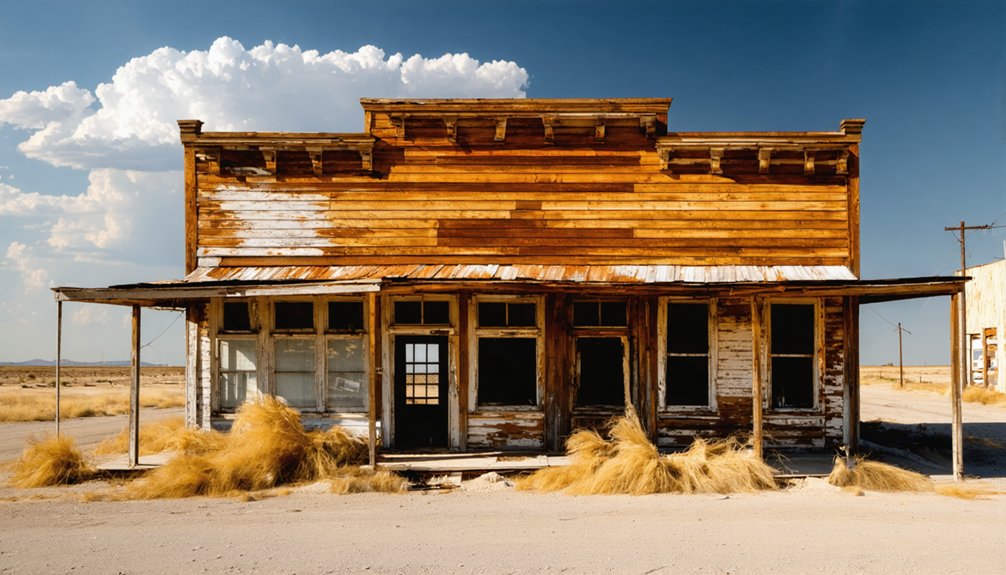
Since Wintergreen sits in northeastern Karnes County at a historic crossroads, you’re already positioned near several other forgotten Texas settlements worth tracking down. The same Civil War transportation corridors that once sustained Wintergreen connected dozens of similar communities across south-central Texas.
Historical trade patterns along the Victoria-San Antonio and Helena-Gonzales routes spawned multiple crossroads settlements that shared Wintergreen’s brief, intense existence before disappearing when roads shifted.
Helena, the former Karnes County seat, sits nearby and offers far more visible ruins than Wintergreen itself. Concrete, Texas, and Yorktown also reward detours with preserved architecture and compelling histories.
Map these stops before you leave home, plot them against old frontier road surveys, and you’ll transform a single ghost town visit into a genuinely immersive journey through vanished Texas.
How To Prepare for a Remote Wintergreen Site Visit
Reaching Wintergreen demands preparation that most day trips don’t require. You’re venturing into northeastern Karnes County where overgrown roadbeds and weathered foundations replace clear signage. Bring water, sturdy boots, and a paper map since cell service gets unreliable fast.
For photography tips, arrive during golden hour when low light reveals texture in crumbling foundations and shadowed road traces that midday sun flattens completely. Shoot wide to capture the intersection’s spatial relationship with the surrounding landscape.
Historical preservation matters here — don’t disturb foundations or remove artifacts. What little remains deserves protection so future visitors experience the same quiet authenticity you found. Document everything photographically instead of physically.
Wintergreen’s story survives through careful observation, not extraction. Respect that, and the site rewards you richly.
How Wintergreen Reflects the Rise and Fall of Civil War-Era Trade Routes
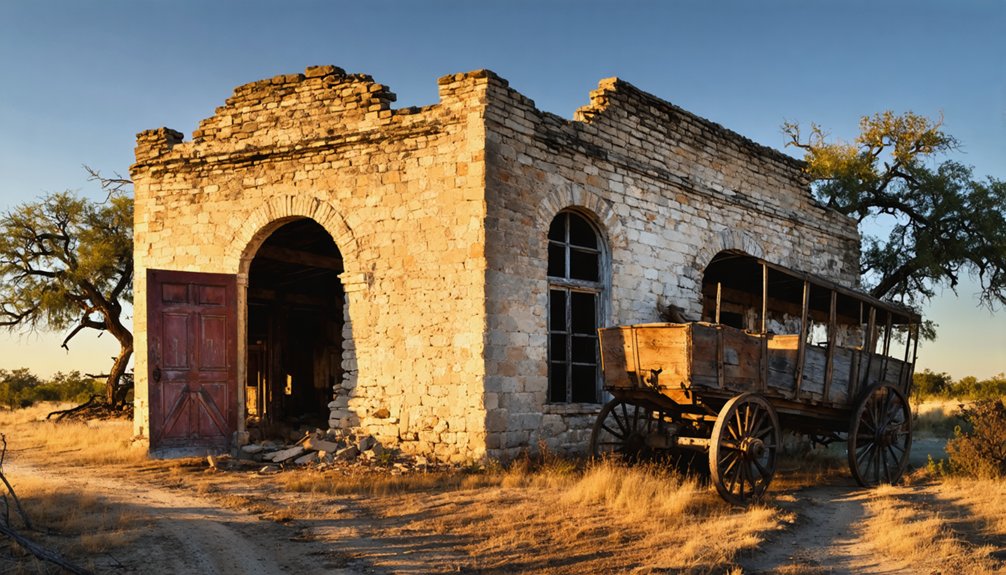
When you stand at Wintergreen’s forgotten crossroads, you’re standing at the intersection of two essential Civil War-era arteries — the Victoria-San Antonio and Helena-Gonzales Roads — that once drove the settlement’s entire reason for existing.
Trade routes shaped Wintergreen’s identity, drawing merchants, cattle drivers, and travelers who needed wagon yards, corrals, and stage stands to keep goods and people moving across frontier Texas.
Once shifting transportation routes bypassed that original crossroads, the town’s purpose evaporated, and by 1868 it had disappeared from maps entirely.
Trade Routes Shaped Wintergreen
Wintergreen’s entire existence hinged on two critical frontier roads—the Victoria-San Antonio and the lower Helena-Gonzales—whose intersection gave the settlement its purpose and, ultimately, sealed its fate.
Historical trade flowed through this crossroads, sustaining wagon yards, corrals, and stage stands that kept merchants and travelers moving freely across Texas.
Picture what you’d have encountered at this junction:
- Loaded freight wagons rumbling toward San Antonio carrying regional goods
- Cattle drives pushing herds along established corridors between Victoria and Gonzales
- Travelers stopping briefly for supplies before disappearing into the frontier landscape
When route shifts redirected traffic elsewhere, Wintergreen lost its reason to exist.
Shifting Roads Caused Decline
Few ghost towns illustrate Civil War-era economic fragility quite like Wintergreen—a settlement that didn’t collapse from drought, disease, or conflict, but simply from roads that changed direction.
When shifting travel routes bypassed the Victoria-San Antonio and Helena-Gonzales crossroads, merchants moved on, wagon yards emptied, and residents followed opportunity elsewhere.
By 1868, Wintergreen had vanished from maps entirely.
You’ll find local legends sparse here—the town existed too briefly to accumulate deep storytelling traditions.
That silence itself tells you something powerful about frontier impermanence.
Preservation challenges compound the obscurity; weathered foundations and overgrown roadbeds offer little for historians to protect or restore.
Wintergreen reminds you that freedom on the frontier came with brutal conditions—your livelihood depended entirely on which direction travelers chose to ride.
Frequently Asked Questions
Was Wintergreen, Texas Ever Officially Incorporated as a Town?
Wintergreen never achieved official incorporation. You’ll find no formal charter in its history—it existed purely as a crossroads stop. Today, it draws ghost town tourism enthusiasts who explore its abandoned landmarks and feel the freedom of Texas’s untamed past.
Are There Any Photographs or Drawings of Wintergreen During Its Peak?
Unfortunately, you won’t find ghost town photography or historic town drawings of Wintergreen’s peak — it’s like searching the internet in 1858. No known visual records captured this fleeting crossroads community before it vanished entirely from Texas history.
Did Any Notable Historical Figures Pass Through Wintergreen, Texas?
No records confirm famous residents or notable figures passing through Wintergreen, but local legends suggest countless frontier travelers, merchants, and Civil War-era wanderers crossed its dusty roads, each carrying untold stories of freedom and survival.
Is Wintergreen, Texas on Any Heritage or Historical Preservation Registry?
You’ll find Wintergreen listed on Texas’s official ghost town registry, though formal preservation efforts remain limited. The site’s ghost town legends endure, inviting you to explore its fading crossroads and honor its fleeting frontier legacy.
Were Any Artifacts From Wintergreen Recovered and Preserved in Museums?
Like whispers lost to wind, no confirmed artifact discoveries link Wintergreen to museum exhibits. You’ll find history’s fingerprints faded here—records don’t document preserved relics from this fleeting crossroads community that vanished into Texas dust.
References
- https://en.wikipedia.org/wiki/Wintergreen
- https://www.tshaonline.org/handbook/entries/wintergreen-tx
- https://www.texasalmanac.com/places/wintergreen
- https://kids.kiddle.co/Wintergreen
- https://en.wikipedia.org/wiki/List_of_ghost_towns_in_Texas
- https://www.youtube.com/watch?v=Ux4FjzHs5DE