Planning a ghost town trip to Ukivok isn’t your typical road trip — there’s no road. This hauntingly preserved Inupiat village clings to King Island’s steep cliffs above the Bering Sea, reachable only by boat from Nome during a narrow summer weather window. You’ll need an experienced operator, flexible scheduling, and deep respect for the cultural protocols that protect this living ancestral site. Keep going to uncover everything you’ll need to plan this unforgettable Arctic journey.
Key Takeaways
- Ukivok is only reachable by private boat from Nome, as King Island has no dock, harbor, or road access.
- Visit between late June and August for calmer seas, better weather windows, and optimal wildlife viewing conditions.
- Always contact Indigenous community organizations before visiting to understand cultural protocols and obtain proper permissions.
- Never remove artifacts or disturb structures; treat every element of the site with ancestral respect and leave nothing displaced.
- Pair your trip with other Alaska ghost towns like Kennecott or Teller to maximize your remote exploration itinerary.
What Makes Ukivok Alaska’s Most Remote Ghost Town?
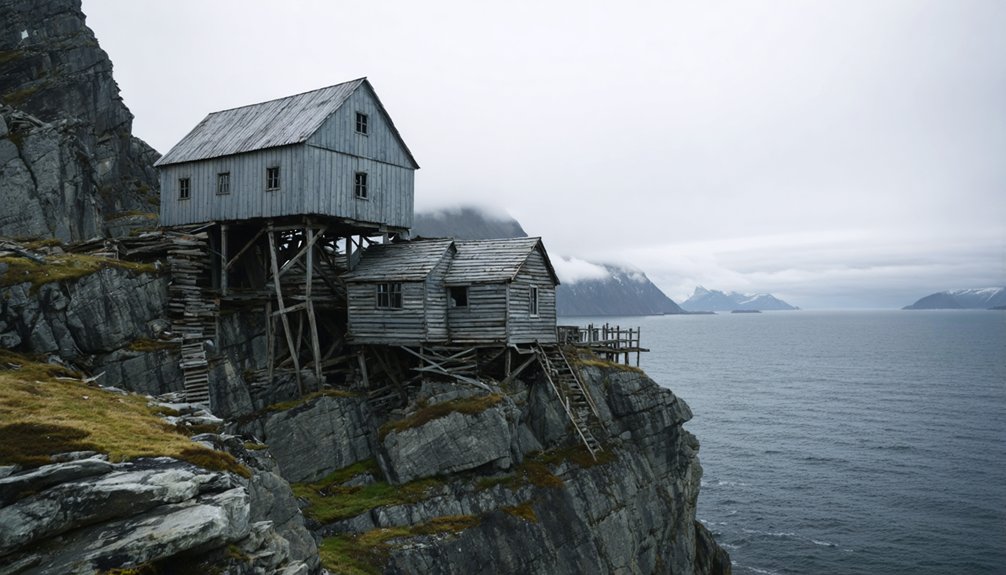
Perched on a near-vertical hillside above the Bering Sea, Ukivok isn’t your typical ghost town you can stumble upon during a casual road trip. This abandoned Inupiat village sits on King Island, a tiny, isolated landmass off western Alaska’s coast, accessible only by boat through notoriously unforgiving Bering Sea waters.
Ukivok isn’t your typical ghost town — reaching this abandoned Inupiat village means braving the unforgiving Bering Sea.
What sets Ukivok apart is its sheer improbability. The Ukivokmiut built stilt houses directly into rock on a 45-degree slope, stacking structures against each other and connecting them with walkways.
Local legends surrounding the community’s deep seafaring traditions add cultural richness to the site, while archaeological findings reveal centuries of Arctic adaptation.
The village reportedly still stands largely unchanged since residents left in the late 1960s, making it a remarkably preserved window into Inupiat history.
Why a School Closure Emptied King Island
When you look into why Ukivok fell silent, one policy decision stands out above the rest: the Bureau of Indian Affairs closed the King Island school. That closure forced children off the island and onto the mainland to continue their education.
This pulling of children away from their community and families made year-round life on the steep hillside increasingly unsustainable. Once the younger generation left, the community couldn’t hold together.
The exodus that followed turned a thriving Inupiat village into a ghost town.
BIA School Closure Impact
Few decisions unraveled a community as swiftly as the Bureau of Indian Affairs’ closure of the King Island school. Without local education, families faced an impossible choice: keep children on the island or follow them to mainland Alaska. Most chose their children.
That migration fractured everything. Elders who carried traditional practices — walrus hunting rhythms, seasonal fishing knowledge, survival skills shaped by generations — suddenly had no younger hands to teach.
Historical artifacts and the structures holding collective memory sat frozen on a near-vertical hillside, slowly becoming relics.
You can see the consequences today. Ukivok’s stilt houses still cling to the rock, preserved almost exactly as residents left them. One bureaucratic decision didn’t just close a school — it erased a living, breathing Arctic community.
Children Forced To Mainland
The school’s closure didn’t just reshape the community — it physically relocated it. When the Bureau of Indian Affairs shut down the King Island school, families faced an impossible choice: stay on the island or follow their children to mainland Alaska.
Most chose their kids. One by one, households packed up and left behind generations of cultural preservation, ancestral knowledge, and a way of life built around walrus hunts and wildlife sightings along the Bering Sea.
You can feel the weight of that decision when you look at Ukivok today — houses still standing on stilts, walkways intact, as if waiting for residents who’ll never return.
A government policy didn’t just close a school; it emptied an entire island.
Community Exodus Follows
What started with a school closure ended with an entire island emptied. Once families followed their children to the mainland, there was no returning to the life they’d built on that steep Bering Sea hillside. The Ukivokmiut didn’t abandon Ukivok by choice — government policy made staying nearly impossible.
Without younger residents, winter hunting grew unsustainable, and the community unraveled fast.
Today, the stilted houses still cling to the rock, frozen in time and surrounded by local legends of a people shaped by ice, sea, and survival. Wildlife sightings — walrus, seabirds, marine mammals — still define the waters around King Island.
You’re stepping into a place history forgot to erase, where an entire way of life remains visible, silent, and strikingly intact.
What the Abandoned Village of Ukivok Looks Like Today
Clinging to a near-vertical hillside above the Bering Sea, Ukivok looks remarkably preserved for a village that’s been empty for more than 50 years. The stilt-supported homes still stand, stacked against the slope and connected by weathered walkways, creating a striking visual record of Inupiat community heritage.
You’ll notice the schoolhouse and residential structures appear largely unchanged, frozen in the moment families left. Historical preservation here isn’t the result of any formal effort — it’s isolation doing the work.
Few visitors reach King Island, so the site escapes the vandalism and decay that claim more accessible ghost towns. What remains is raw and honest: a hillside village that tells its own story without restoration, signage, or interpretation. You just have to look.
Bering Sea Conditions That Make King Island Dangerous to Reach
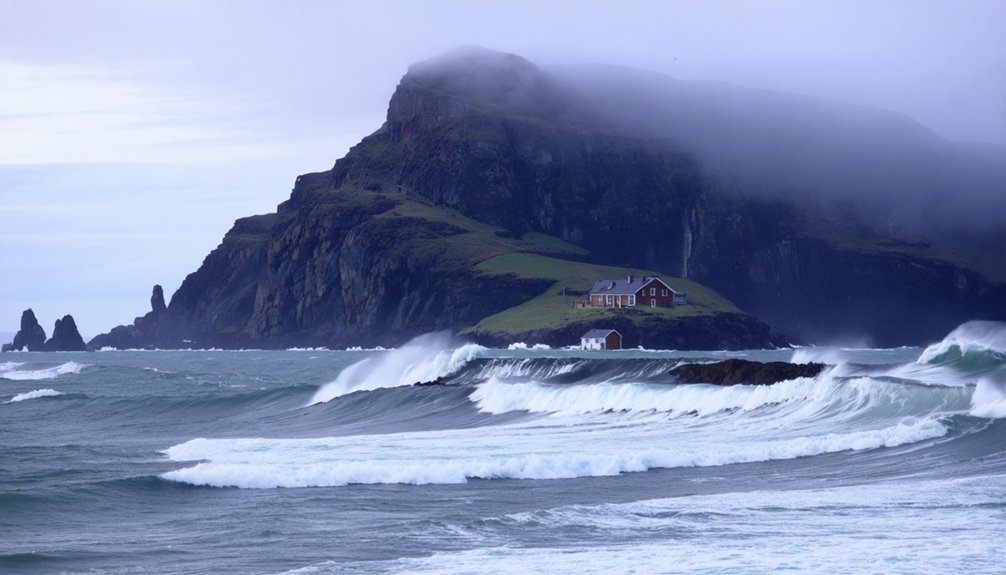
Before you even set foot on King Island, the Bering Sea will test your resolve with some of the most unpredictable Arctic weather on the planet, where conditions can shift from calm to dangerous within hours.
You’ll face relentless winds, heavy swells, and dense fog that routinely delay or cancel boat trips altogether.
Landing is equally brutal, since the island’s steep, cliff-lined shores offer no natural harbor, forcing you to time every approach against unforgiving surf.
Unpredictable Arctic Weather
Even if you’re drawn to the haunting image of Ukivok’s stilted homes clinging to that near-vertical cliff face, the Bering Sea will have the final say on whether you actually get there. Arctic weather shifts without warning, turning calm water into dangerous swells within hours.
Fog rolls in thick and fast, grounding boats and cutting visibility to near zero. Wind gusts regularly exceed safe travel thresholds, leaving you stranded on the mainland longer than planned.
These conditions don’t just threaten your travel timeline — they limit wildlife encounters and reduce opportunities for meaningful cultural preservation efforts at the site. Respect the weather forecasts, build flexible days into your itinerary, and understand that reaching Ukivok is a privilege the Bering Sea grants on its own terms.
Treacherous Landing Conditions
Weather isn’t the only obstacle standing between you and Ukivok — once you’ve found a weather window, you’ll still face one of the most punishing landing situations in remote Alaska.
King Island has no harbor, no dock, and no forgiving shoreline. You’re arriving where steep cliffs meet open Bering Sea swells, which means timing every move against unpredictable surf.
Local wildlife — sea lions, walrus, seabirds — navigate these waters naturally, but you won’t have that advantage.
Experienced boat operators who know the island’s rhythms are essential, not optional. Many visitors never make it ashore at all.
If you do land successfully, you’ll understand immediately why the Ukivokmiut, known for their remarkable traditional crafts and seafaring skill, built their lives elevated above this unforgiving coastline.
Best Time of Year to Visit Ukivok
Since Ukivok sits on a remote island in the Bering Sea, timing your visit isn’t just a matter of preference—it’s a matter of safety and feasibility. Summer, typically late June through August, offers your best window. Calmer seas make boat access more realistic, daylight stretches long, and you’ll have genuine opportunities for wildlife observation, spotting walrus, seabirds, and marine mammals along the coastline.
Spring and fall bring unpredictable storms and dangerous swells that can strand you or prevent landing altogether. Winter is effectively off-limits for most travelers.
Summer also lets you fully appreciate Ukivok’s historical preservation—the stilt houses and walkways remain eerily intact, and clearer conditions give you unobstructed views of this ghost town clinging to its steep, rocky hillside.
How to Reach King Island by Boat
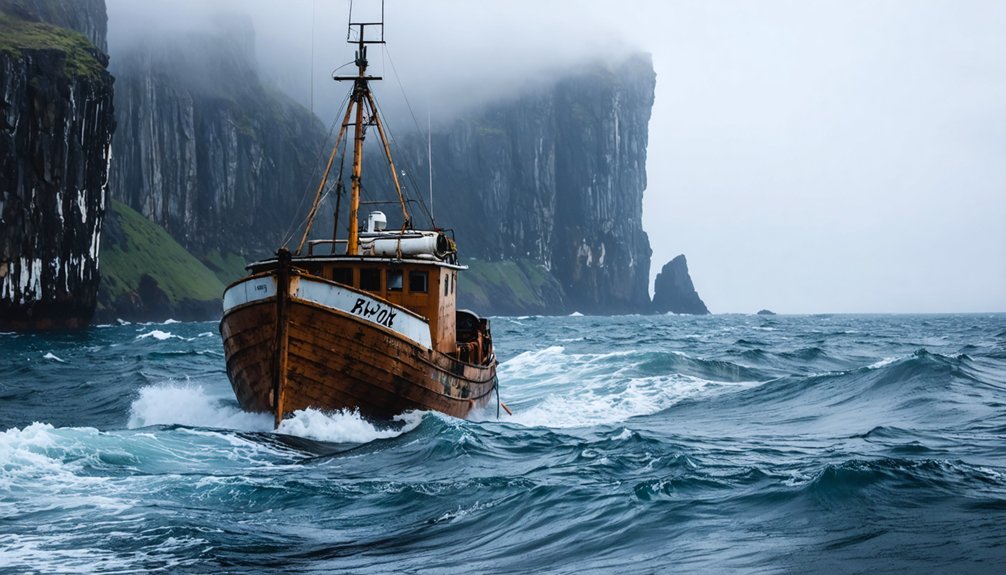
Once you’ve locked in your summer travel window, the next challenge is actually getting to King Island—and there’s no easy way to put it: this isn’t a trip where you pull up to a dock and hop off.
Getting to King Island isn’t easy—there’s no dock, no simple arrival, just open water and determination.
The Bering Sea is unpredictable, and King Island has no formal harbor. You’ll need to arrange private boat transport, typically departing from Nome. Connect with local fishing operators who know these waters intimately—they’re your most reliable option.
Some community members who maintain ties to Ukivok through traditional crafts and cultural preservation occasionally organize guided visits, so reaching out through Nome’s Indigenous community networks is worth your time.
Weather windows are narrow, seas can turn fast, and flexibility isn’t optional—it’s survival strategy. Plan for delays and embrace the uncertainty.
Inupiat Protocols and Cultural Boundaries Visitors Should Respect
Arriving at a place like Ukivok means stepping into living cultural memory, not just abandoned architecture. The Ukivokmiut didn’t vanish — they were displaced, and their descendants maintain deep ties to this land.
Cultural sensitivity isn’t optional here; it’s the foundation of responsible visitation.
Don’t remove artifacts, disturb structures, or treat the site like a photo set. Indigenous respect means asking questions before assuming access is unlimited. Connect with Inupiat community organizations before your visit to understand current boundaries and any restrictions in place.
Photograph thoughtfully. Some spaces carry spiritual significance that outsiders can’t immediately recognize.
Treat every structure as though someone’s grandfather built it — because someone’s grandfather did. Your freedom to explore comes with a responsibility to leave Ukivok exactly as you found it.
Other Alaska Ghost Towns Worth Combining With a King Island Trip
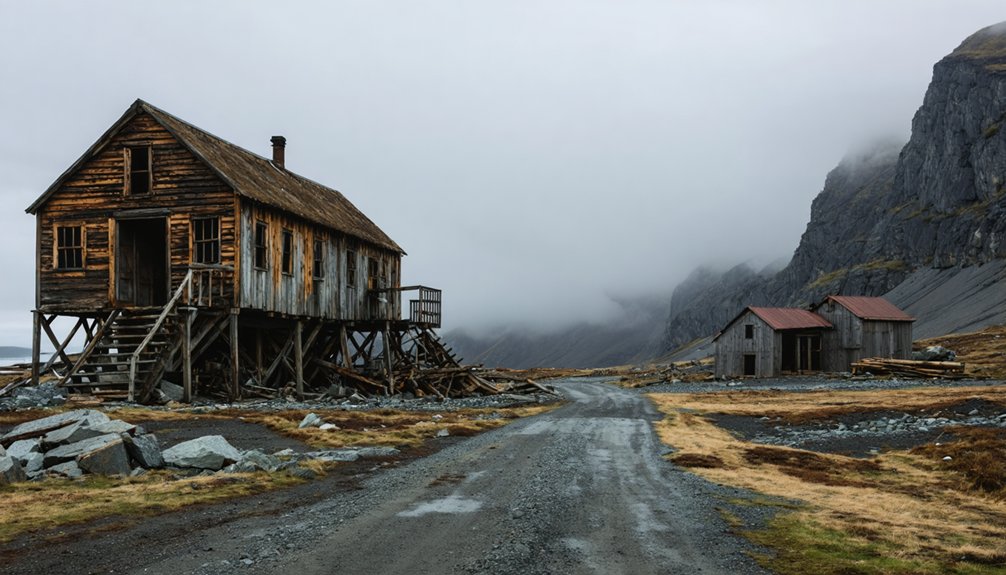
Respecting Ukivok’s cultural weight doesn’t mean your Alaskan ghost town journey has to end there. Alaska holds other abandoned communities worth weaving into your route, each offering distinct history, local wildlife encounters, and echoes of traditional storytelling passed down through generations.
Consider adding these stops:
- Candle, Alaska – A gold rush remnant near Kotzebue Sound with weathered structures and nearby migratory bird habitat.
- Teller, Alaska – A once-booming Nome-area settlement where coastal wildlife and Indigenous history intersect.
- Knik, Alaska – An early trading post frozen in time near the Matanuska-Susitna Valley.
- Kennecott, Alaska – A copper mining ghost town inside Wrangell-St. Elias National Park with striking industrial ruins.
Each destination layers a different chapter onto Alaska’s broader story of boom, survival, and quiet disappearance.
Frequently Asked Questions
Can You Legally Land on King Island Without Special Permission?
You’ll need special permission to land on King Island, as wildlife conservation and historical preservation regulations protect the area. Respect these rules to safeguard its untouched Indigenous heritage and fragile Arctic ecosystem for future explorers.
Are Any Ukivokmiut Descendants Still Connected to King Island Today?
Can heritage truly die? Yes, Ukivokmiut descendants remain spiritually and culturally connected to King Island today. They’re actively pursuing cultural preservation and heritage recognition, keeping ancestral traditions alive while advocating for their right to return to Ukivok.
Has Ukivok Ever Been Featured in Films or Documentaries?
Yes, you’ll find Ukivok featured in documentaries highlighting historical preservation of Indigenous Arctic life. These films let you witness wildlife observation opportunities alongside haunting imagery of the abandoned stilt village clinging dramatically to King Island’s rugged, clifftop slopes.
Is Drone Photography Permitted Over the Ukivok Abandoned Village Site?
Over 50 years abandoned, Ukivok’s skies remain regulated territory. You’ll need to research current aerial permissions and drone regulations before flying, as remote Alaskan sites often carry strict federal and Indigenous land-use restrictions protecting cultural heritage.
What Language Did the Original King Island Inupiat Community Speak?
You’ll find that the original King Island community spoke the Inupiat language, a crucial thread of their identity. Today, cultural preservation efforts work to keep this rich Arctic linguistic heritage alive for future generations.
References
- https://www.slate.com/blogs/atlas_obscura/2015/07/15/alaska_s_ukivok_fishing_village_is_a_ghost_town_on_stilts.html
- https://www.youtube.com/watch?v=B-9OGe-0LRI
- https://www.reddit.com/r/alaska/comments/1od088u/ukivok_the_ghost_on_the_cliff/
- https://www.onlyinyourstate.com/trip-ideas/alaska/historic-creepy-king-island-ak
- https://www.youtube.com/watch?v=2ehjCH8X0Do
- https://furillendotorg.wordpress.com/ukivok/
- https://getlostinamerica.com/alaska-ghost-towns/
- https://www.messynessychic.com/2016/11/01/alaskas-eskimo-ghost-village-on-stilts/
- https://thealaskafrontier.com/ghost-towns-in-alaska/
- https://www.islands.com/1931925/king-island-ukivok-alaska-forgotten-coastal-village-stilts-remote-wonder-stories-vanished-era/