Planning a ghost town road trip to Victor, Utah means heading into Emery County’s Castle Valley to explore a settlement that survived just ten years before drought and sand dunes swallowed it whole. You’ll find crumbling foundations, a weathered schoolhouse, and a well-preserved cemetery that connects you directly to the families who endured it all. Spring and fall offer the best conditions for exploring this remote, untouched site — and there’s far more to uncover than you’d expect.
Key Takeaways
- Victor, Utah, is a ghost town in Castle Valley, Emery County, abandoned in 1920 due to persistent drought and encroaching sand dunes.
- From Price, head south on Utah 10, transition to Utah 155 through Elmo, then turn east at the second stop sign to reach Victor.
- Much of Victor sits on private property, but the cemetery and old schoolhouse ruins remain accessible landmarks worth visiting.
- Visit in spring or fall for mild temperatures; pack water, sturdy boots, a first aid kit, and a full gas tank.
- Combine Victor with nearby ghost towns like Desert Lake, Elmo, and Lawrence for a fuller Emery County day trip.
What Is Victor, Utah and Why Visit This Ghost Town?
Tucked into Castle Valley within northern Emery County, Utah, Victor is a forgotten farming settlement that once struggled against sand dunes and relentless drought before its residents finally walked away for good in 1920. Founded in 1910 after settlers relocated from nearby Desert Lake, the town survived only a decade before dry conditions made life impossible.
Today, you’ll find crumbling buildings, exposed foundations, and a well-preserved cemetery quietly marking what remains. It’s a place where historical artifacts tell honest stories about resilience and failure, and where local legends about the town’s brief, stubborn existence still circulate among curious explorers.
If you crave open roads, raw history, and landscapes untouched by modern development, Victor delivers an experience that feels genuinely free from the ordinary.
The Rise and Fall of Victor in Ten Years
When residents of Desert Lake packed up and moved to Victor in 1910, they believed they’d found a more fertile stretch of Castle Valley perfect for farming and ranching.
You can imagine their optimism quickly fading, though, as the land proved drier than their previous home, and relentless sand dunes crept onto their fields and buildings.
After ten years of battling drought and blowing sand, the last residents finally gave up and walked away for good in 1920.
Victor’s Promising Agricultural Beginnings
In 1910, a group of determined settlers relocated from Desert Lake to Victor, drawn by the promise of more fertile farmland in Castle Valley. They built homes, a schoolhouse, and established a community rooted in agriculture and ranching. Early optimism ran high as families carved out their lives in this remote Utah landscape.
However, the land proved deceptive. Victor sat considerably drier than Desert Lake, and the settlers quickly discovered that nature wasn’t cooperating with their ambitions. Local legends speak of relentless winds driving sand dunes directly onto crops and buildings.
Historical artifacts scattered across the site today hint at the community’s early promise — foundations, structures, and remnants of a people who genuinely believed they could tame this unforgiving land. Their hope, though admirable, was short-lived.
Drought Forces Final Abandonment
Despite their resolve, Victor’s settlers couldn’t outlast the land’s stubborn refusal to cooperate. By 1920, relentless drought had drained every last hope from the community. No rain meant no crops, and no crops meant no future.
One by one, families packed their lives and left, surrendering Victor to the wind and sand that had tormented them for a decade.
Today, what remains tells a quiet story of human determination meeting natural limits. The site now doubles as a wildlife habitat, reclaimed by the desert it once fought.
For those passionate about historical preservation, Victor rewards curiosity — crumbling foundations, weathered structures, and a well-maintained cemetery stand as honest testaments to the ten years settlers carved meaning from an unforgiving landscape.
You’ll feel that resilience the moment you arrive.
What’s Left to See at the Victor Townsite Today?
When you visit Victor today, you’ll find a haunting mix of dilapidated buildings, crumbling foundations, and cement skeletons scattered across the townsite, each telling a quiet story of the families who once farmed this unforgiving land.
An old schoolhouse stands as the primary surviving structure, giving you a tangible connection to the community’s brief decade of life.
Just a short distance from the townsite, you’ll also discover a well-kept cemetery that remains fully accessible, offering a respectful and striking contrast to the decay surrounding it.
Standing Structures Still Remaining
What remains at Victor today is a quiet but tangible echo of the community that once struggled here. You’ll find several dilapidated buildings still standing, their weathered frames telling stories of resilience against relentless sand and drought.
The old schoolhouse serves as the most prominent structure, anchoring your sense of what daily life once looked like here.
Cement foundations sketch the footprint of vanished homes across the landscape. Historical preservation efforts remain minimal, so what you see is raw and unfiltered.
As you explore, don’t be surprised by wildlife sightings — the area has reclaimed much of its wildness. Jackrabbits and birds now occupy spaces where families once farmed.
It’s a striking reminder that nature moves in when people move on.
Foundations And Cement Skeletons
Beyond the weathered schoolhouse, cement skeletons and building foundations stretch across the landscape, giving you a rough blueprint of the town that once stood here. You’ll trace the outlines of homes and structures that once sheltered families battling sand dunes and relentless drought.
These remnants represent Victor’s historical architecture at its most raw and honest — no restoration, no recreation, just what time has chosen to leave behind.
Preservation efforts here are minimal, meaning what you’re seeing is genuinely untouched history. Walk carefully among the foundations and you’ll piece together where daily life unfolded between 1910 and 1920.
Each cement outline tells a quiet story of resilience and eventual defeat. It’s abandoned history on full display, completely unfiltered and entirely yours to interpret.
The Well-Kept Cemetery
Unlike the crumbling structures nearby, the cemetery at Victor stands as the site’s most carefully preserved feature. You’ll find it at 39.383218° N, 110.746910° W, completely open to visitors. It offers a quiet connection to local legends and the resilient families who battled sand and drought for a decade.
Here’s what makes the cemetery worth your stop:
- Historical artifacts — Gravestones reveal names and dates tied directly to Victor’s 1910–1920 occupation period.
- Maintained grounds — Unlike the townsite, the cemetery remains well-kept, making exploration straightforward.
- Personal stories — Each marker reflects the human cost of abandoning a drought-stricken community.
You can walk freely through the grounds, absorbing the raw history without restriction — a rare freedom compared to the limited-access townsite nearby.
Victor Cemetery: The One Site Anyone Can Visit
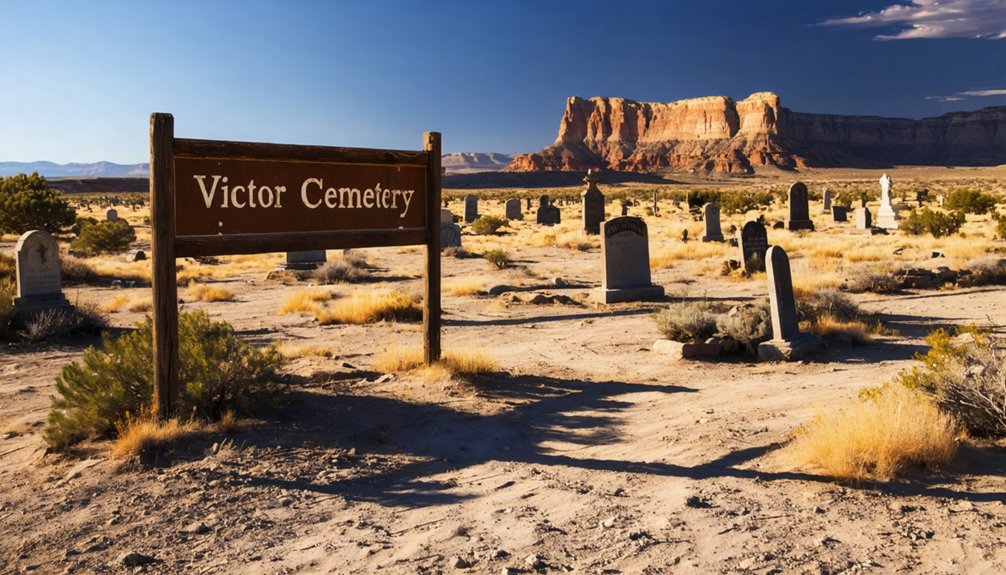
While the townsite itself sits behind private property lines, the Victor Cemetery welcomes visitors freely and it’s well worth the detour. You’ll find it at coordinates 39.383218° N, 110.746910° W, slightly southwest of the main settlement.
Unlike many forgotten burial grounds tied to local legends of hardship and abandonment, this cemetery defies expectations — it’s genuinely well-maintained. The headstones serve as historical artifacts connecting you directly to the farming families who struggled through a decade of blowing sand and relentless drought before finally surrendering the land in 1920.
You can walk the grounds on your own schedule, at your own pace, with zero restrictions. It’s one of the few places where Victor’s story remains completely accessible to anyone willing to make the drive from Elmo.
How to Get to Victor, Utah From Price
Starting your journey in Price, you’ll head south on Utah 10 toward Castle Valley, where the high desert landscape stretches out in every direction.
Follow Utah 10 until you reach Utah 155, which cuts through the small town of Elmo.
Once you’re in downtown Elmo, turn east at the second stop sign, and Victor’s remnants lie roughly 6 miles down the road.
Starting Point In Price
If you’re planning a road trip to Victor, Utah, you’ll want to begin your journey in Price, taking Utah 10 toward Elmo before switching to Utah 155. This straightforward route puts you on a path toward one of Utah’s most intriguing ghost towns, where historical artifacts and preservation efforts tell a compelling story of resilience and abandonment.
Follow these key steps from Price:
- Head south on Utah 10 from Price toward the Castle Valley corridor.
- Transition to Utah 155 as you approach Elmo, following signs through downtown.
- Turn east at the second stop sign in Elmo, continuing approximately 6 miles toward Victor.
The drive itself rewards you with stunning high-desert scenery before you even reach the townsite.
Route Via Utah 10
Taking Utah 10 south from Price is your gateway into Castle Valley, and the route sets the tone for the ghost town experience ahead. The highway cuts through open terrain, giving you a raw sense of the isolation that once defined communities like Victor.
You’ll pass through landscapes rich with local legends tied to early settlers who carved lives from unforgiving desert soil.
Once you spot the junction for Utah 155, turn onto it and follow the road toward Elmo. This stretch rewards patient travelers with sweeping views and a deepening quiet.
Keep your eyes open — the land holds historical artifacts and stories just beneath its surface.
Downtown Elmo marks your next navigational checkpoint, where a simple turn east puts Victor within reach.
Turning Toward Victor
Once you reach downtown Elmo, navigate to the second stop sign and turn east — that’s the road that carries you toward Victor, roughly 6 miles out. This final stretch connects you to a site carrying real cultural significance, a community that fought blowing sand and drought for a decade before surrendering.
Keep these points in mind as you approach:
- Private property restricts access to the main townsite, so respect posted boundaries.
- The cemetery remains fully open, offering direct contact with Victor’s historical preservation story.
- Watch for the old schoolhouse, the most recognizable standing structure among scattered foundations and cement skeletons.
The road is straightforward, the landscape stark. You’re not just driving toward ruins — you’re approaching ten years of human stubbornness frozen in desert silence.
Can You Actually Walk Around the Victor Townsite?
Visiting Victor’s townsite comes with a catch: much of the area sits on private property, limiting how much you can freely explore. You’ll need to respect those boundaries, but don’t let that discourage you.
From accessible vantage points, you can still spot dilapidated buildings, crumbling foundations, and cement skeletons — historical artifacts that paint a vivid picture of frontier struggle.
Crumbling foundations and cement skeletons rise from the desert, silent witnesses to a frontier community’s relentless struggle.
The old schoolhouse stands as the most prominent survivor, a testament to the community that fought blowing sand and relentless drought for a decade.
While formal preservation techniques aren’t actively employed here, the dry desert climate has naturally slowed deterioration.
Your best unrestricted option remains the cemetery, which stays completely open to visitors and offers a quiet, meaningful connection to Victor’s forgotten residents.
Best Time of Year to Visit Victor
Now that you know where you can and can’t roam, timing your visit smartly will make the experience even better. Victor’s local climate runs extreme — brutal summers and icy winters make spring and fall the clear winners for exploration.
- Spring (April–May): Mild temperatures make hiking to the cemetery and scanning foundations comfortable without harsh sun beating down.
- Fall (September–October): Cooler air and softer light create ideal conditions for photography, helping you document remaining structures and support informal preservation efforts.
- Winter (November–March): Passable but cold — roads can turn unpredictable, and frozen ground makes walking rough terrain trickier.
Whatever season you choose, arrive early to maximize daylight. Victor’s remote location means you’re working against fading light faster than you’d expect.
What to Bring for Victor’s Sand, Heat, and Remote Terrain
Victor’s environment will test your preparation — sand dunes actively encroach on the site, summer temperatures climb aggressively, and the nearest help sits miles away. Pack plenty of water, sunscreen, and a wide-brimmed hat to combat the relentless heat.
Sand dunes, brutal heat, and zero help for miles — Victor demands serious preparation before you ever arrive.
Sturdy, closed-toe boots protect your feet from shifting sand and rocky foundations. Bring a detailed map since cell service is unreliable this deep into Castle Valley.
For photography tips, shoot during golden hour when softer light highlights the weathered schoolhouse and cement skeletons dramatically. A lens cloth is essential since blowing sand scratches glass fast.
Wildlife encounters are possible, so carry a basic first aid kit and stay alert near abandoned structures where snakes shelter. A full gas tank before leaving Elmo isn’t optional — it’s survival.
Ghost Towns Near Victor Worth Visiting on the Same Day
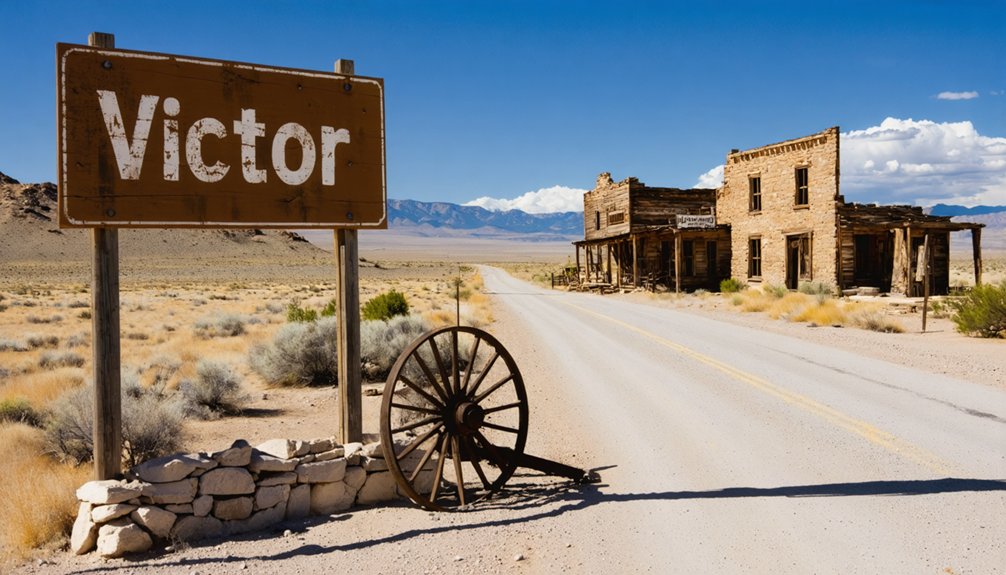
Castle Valley and the surrounding Emery County region pack several ghost towns close enough to combine with a Victor visit into a single rewarding day trip. You’ll find rich history, local legends, and historical artifacts scattered across the landscape without backtracking far.
- Desert Lake – Victor’s predecessor settlement offers fascinating context for understanding why residents relocated and ultimately failed twice against the elements.
- Elmo – Just six miles west, this small community anchors your route and provides insight into the valley’s broader agricultural struggles.
- Lawrence – Another Emery County ghost town where historical artifacts and crumbling structures reward curious explorers willing to venture slightly off the main road.
Plan your departure early so you’re hitting each stop with enough daylight to explore freely.
Don’t Be That Visitor: Leave Victor as You Found It
Though Victor already teeters on the edge of collapse, careless visitors accelerate that decline faster than wind-blown sand ever could. Historical preservation isn’t someone else’s responsibility — it’s yours the moment you step onto this fragile ground.
Every careless footstep hastens Victor’s disappearance. Preservation begins with you — not someone else.
Don’t touch crumbling walls, remove artifacts, or carve your name into weathered wood. These remnants exist for every future explorer who follows your tire tracks.
For photography tips, shoot from a distance using a zoom lens rather than climbing deteriorating structures for a closer angle. Early morning light bathes Victor’s old schoolhouse in dramatic shadows, giving you stunning shots without physical contact.
Respect private property boundaries strictly — trespassing jeopardizes access for everyone. The cemetery remains open, so treat it with quiet dignity.
Explore freely, but leave absolutely nothing behind except footprints.
Frequently Asked Questions
Who Was George W. Victor and What Was His Job?
You’ll find that George W. Victor was a historical figure who worked as a postal service worker. His name shaped mining history’s landscape when Victor, Utah’s fascinating ghost town, was named in his honor.
What Were the GPS Coordinates for the Victor Townsite?
Like a hidden treasure waiting to be unearthed, you’ll find Victor’s historical landmarks at 39.401531° N, 110.715538° W — coordinates that’ll guide you straight into the heart of local legends and forgotten stories.
How Long Did Residents Actually Live in Victor, Utah?
You’ll find that residents actually lived in Victor for just ten years, from 1910 to 1920. As you explore its historic landmarks and uncover local legends, you’d discover they battled relentless drought before finally abandoning their dream.
Why Did Desert Lake Residents Originally Choose Victor’s Location?
They chose Victor’s location for its historically significant, more fertile land in Castle Valley. You’d find the architectural features of their farming dreams built where better soil promised relief from Desert Lake’s harsh, unproductive conditions.
What Classification Does Victor Receive as a Neglected Town?
With only a 50% open status, Victor earns a Class 2 Neglected Town classification. You’ll witness urban decay firsthand, yet ghost town preservation efforts keep the cemetery accessible, letting you explore this fascinating, freedom-calling desert relic.
References
- http://www.expeditionutah.com/forum/index.php?threads/ghost-town-victor.5620/
- https://kids.kiddle.co/Victor
- https://en.wikipedia.org/wiki/Victor
- https://onlineutah.us/victorhistory.shtml
- https://www.ghosttowns.com/states/ut/victor.html
- https://en.wikipedia.org/wiki/List_of_ghost_towns_in_Utah
- https://en.wikipedia.org/wiki/Desert_Lake