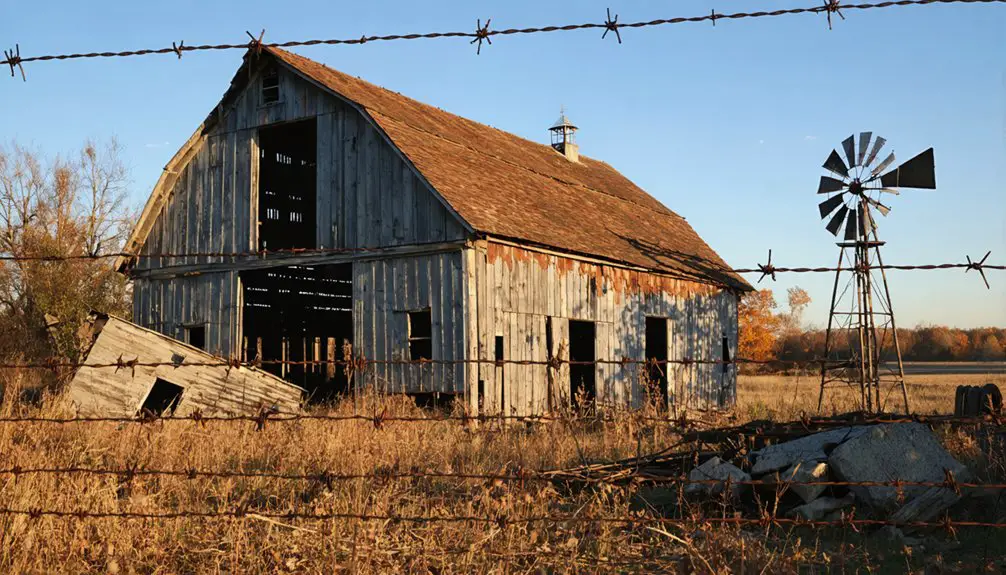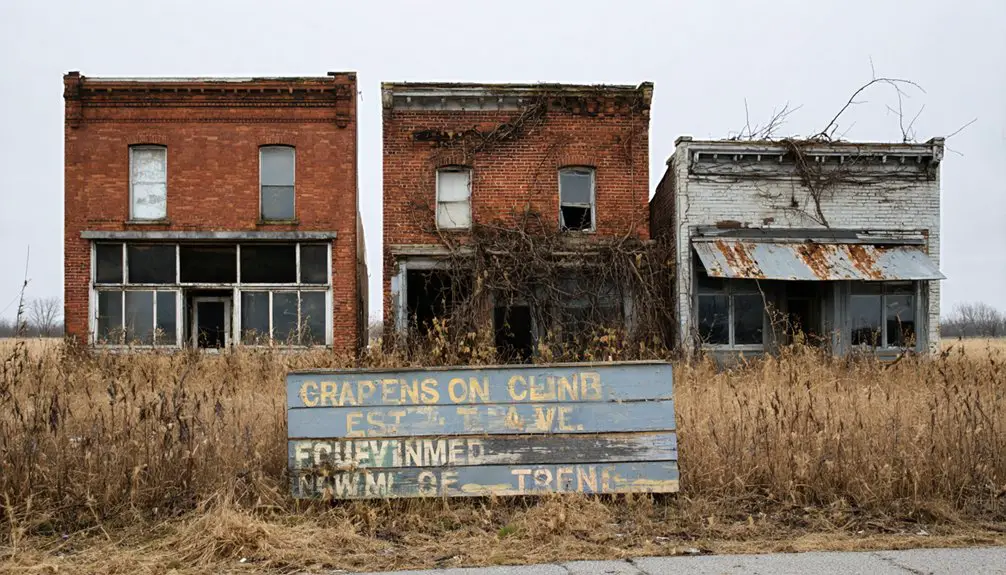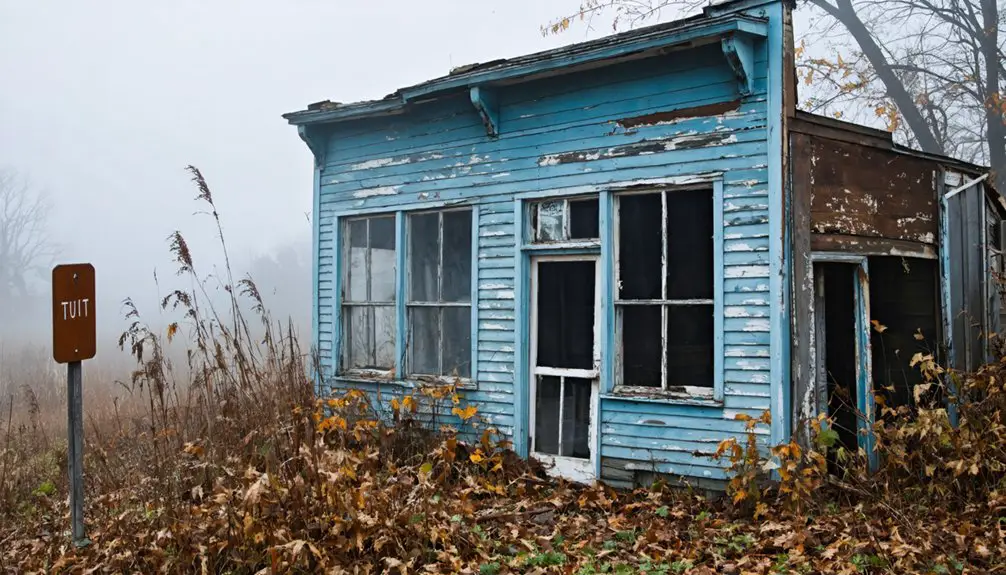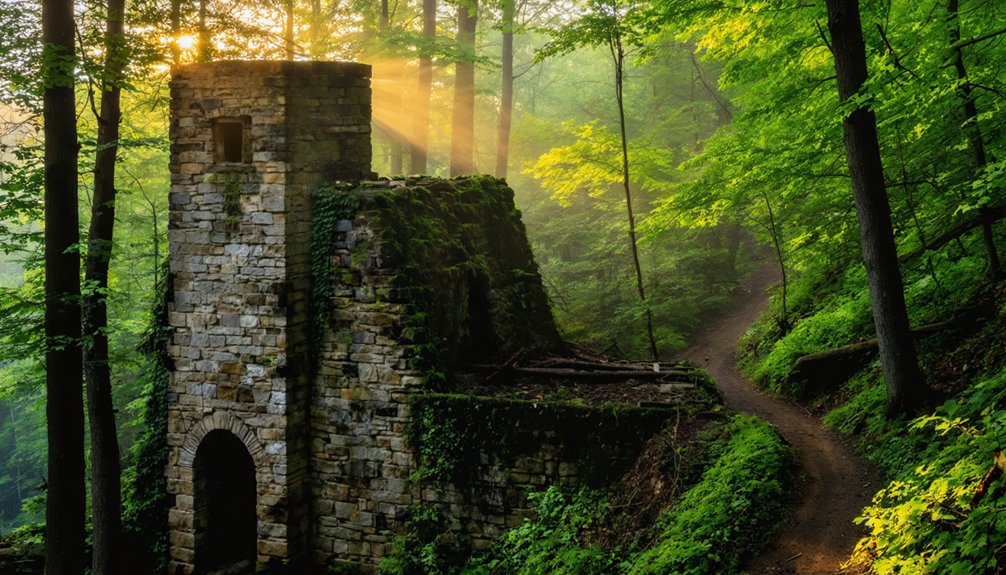
Planning a ghost town road trip to Vinton Furnace starts with heading about 75 miles southeast of Columbus into Vinton County, where over 12,000 forested acres hide the ruins of an 1854 iron furnace community. You’ll explore Belgian coke ovens, furnace foundations, and crumbling industrial remnants along wooded trails. Arrive before dusk, check road conditions beforehand, and pair the visit with nearby sites like Moonville Tunnel. There’s far more to uncover than you’d expect.
Key Takeaways
- Vinton Furnace, located in southeastern Ohio about 75 miles from Columbus, features Belgian coke ovens, furnace foundations, and industrial ruins from the 1850s.
- Two access routes exist: Stone Quarry Road for standard vehicles and the rougher Experimental Forest Road, requiring higher-clearance vehicles.
- Visit during forest hours (6 a.m.–11 p.m.), arriving early to safely explore ruins before daylight fades.
- Check road conditions before visiting, especially after rain, as unpaved roads and bridge closures can affect access.
- Combine the trip with nearby Moonville Tunnel, Lake Hope State Park, and Zaleski State Forest for a full-day itinerary.
What Is Vinton Furnace and Why Visit?
Tucked inside Vinton Furnace State Forest in southeastern Ohio, Vinton Furnace is a ghost town that once hummed with iron production before falling silent in the late 1800s. Founded in 1854, this former iron furnace community supported a company store, post office, and a working population before economic decline erased it from the map.
Today, you’ll find industrial remnants scattered across more than 12,000 forested acres, roughly 75 miles southeast of Columbus. Belgian coke ovens, furnace foundations, and crumbling structures wait quietly among the trees, carrying local legends of Ohio’s Industrial Revolution past.
If you’re drawn to off-the-beaten-path history, hands-on exploration, and open forest land, Vinton Furnace delivers a raw, uncrowded experience that few travelers ever discover.
Where Vinton Furnace Is Located in Ohio
Knowing what Vinton Furnace once was makes finding it on a map all the more satisfying. You’ll locate this ghost town within Vinton Furnace State Forest, straddling Elk and Madison Townships in Vinton County, Ohio. The forest covers roughly 12,089 acres and sits about 75 miles southeast of Columbus, placing it well off the usual tourist corridor.
McArthur is your closest town for supplies and orientation. From there, you’ll head east of U.S. 50 into one of Ohio’s largest intact forest blocks.
The setting isn’t accidental — the industrial remains and historical significance of iron production shaped this entire landscape. You’re not just visiting a quiet forest; you’re stepping into a region that fueled Ohio’s Industrial Revolution and never quite recovered.
The Iron Furnace Town Behind Vinton Furnace
Before the forest reclaimed it, Vinton Furnace was a working iron town built around a single industrial purpose. Starting in 1854, this settlement thrived on iron production until the industry collapsed and the population walked away.
Here’s what shaped the town’s industrial heritage:
- The iron furnace anchored everything, driving settlement and labor
- A company store and post office served daily community needs
- The town operated under the name Vinton Station during its active years
- Decline hit hard in the late 1800s, leaving ruins behind
Today, forest scenery surrounds what remains, blending quiet woodland atmosphere with scattered industrial remnants. You’re walking through Ohio’s manufacturing past when you visit, not just a trail. That combination of history and nature makes Vinton Furnace worth the detour.
What You Can Still See at the Ghost Town Site
Although the forest has reclaimed most of Vinton Furnace, you’ll still find tangible remnants of its industrial past scattered through the trees. The Belgian Coke Ovens stand as the site’s most striking feature, their stone arches surprisingly intact given their age.
Furnace foundations, boiler-house remains, and industrial debris tell the story of what was once a thriving iron production town.
Local legends suggest the ruins hold more than history — urban legends about the site have circulated among Vinton County residents for generations, adding an eerie layer to your exploration.
You’ll reach these features by hiking rather than driving, so wear sturdy shoes. The heavily wooded setting makes discovery feel genuinely rewarding, especially for travelers drawn to industrial archaeology and off-the-beaten-path Ohio history.
How to Get to Vinton Furnace From McArthur
Getting to Vinton Furnace is straightforward once you’re familiar with the two main routes out of McArthur. Both paths reward you with forest scenery before you reach the industrial ruins that define this site’s historical significance.
Route 1 – Stone Quarry Road:
- Head east from McArthur on U.S. 50.
- Turn onto Stone Quarry Road and follow it into the forest.
- Watch for the fork directing you toward the trail area.
- Park at roadside pull-offs near bridge crossings and hike in.
Route 2 – Experimental Forest Road:
Take Sam Russell Road from McArthur, connecting onto Experimental Forest Road toward the interior.
Expect unpaved lanes, quarry traffic, and narrow stretches on either route. Arriving during daylight keeps navigation safer, especially near closed bridges and rougher trail access points.
Which Route Works Best for Your Vehicle?
If you’re driving a standard passenger car, Stone Quarry Road off U.S. 50 offers the more straightforward approach.
However, you’ll still encounter narrow lanes and potential quarry traffic.
Higher-clearance vehicles open up Experimental Forest Road via Sam Russell Road, which pushes deeper into the forest toward the trail access points.
Either way, you’ll want to check road conditions before heading out, since unpaved stretches and closed bridges can quickly change your plans.
Stone Quarry Road Option
Once you leave McArthur, Stone Quarry Road off U.S. 50 becomes your most straightforward path toward Vinton Furnace State Forest—but straightforward doesn’t mean simple. Expect narrow lanes, quarry traffic, and unpaved stretches that reward patient, prepared drivers.
Here’s what you’ll encounter along this route:
- U.S. 50 turnoff – Watch for Stone Quarry Road; it’s easy to miss.
- Quarry traffic zones – Share the road and stay alert.
- Fork toward the trail area – Take it deliberately; dead ends exist nearby.
- Roadside pull-offs – Your parking options near historical artifacts and trailheads are limited.
Forest conservation efforts keep this corridor intentionally undeveloped, so you’re trading convenience for authenticity—exactly the kind of freedom this ghost town rewards.
Experimental Forest Road Access
While Stone Quarry Road suits most casual visitors, Experimental Forest Road—reached via Sam Russell Road from the McArthur area—offers a quieter alternative that puts you deeper into the forest with less quarry traffic to navigate.
You’ll find hunter’s camping along TR-6, so expect occasional company on weekends. This route rewards patient travelers with a more immersive experience, placing you closer to the experimental research lands dedicated to both historical preservation and wildlife conservation.
The tradeoff is rougher terrain—unpaved stretches demand a vehicle with decent clearance. Bridge closures can also limit progress, so confirm conditions before committing. If you’re driving something low to the ground, Stone Quarry Road remains the smarter call.
Otherwise, Experimental Forest Road delivers genuine solitude alongside Vinton Furnace’s layered industrial past.
What Gear You Actually Need for the Ruins Hike
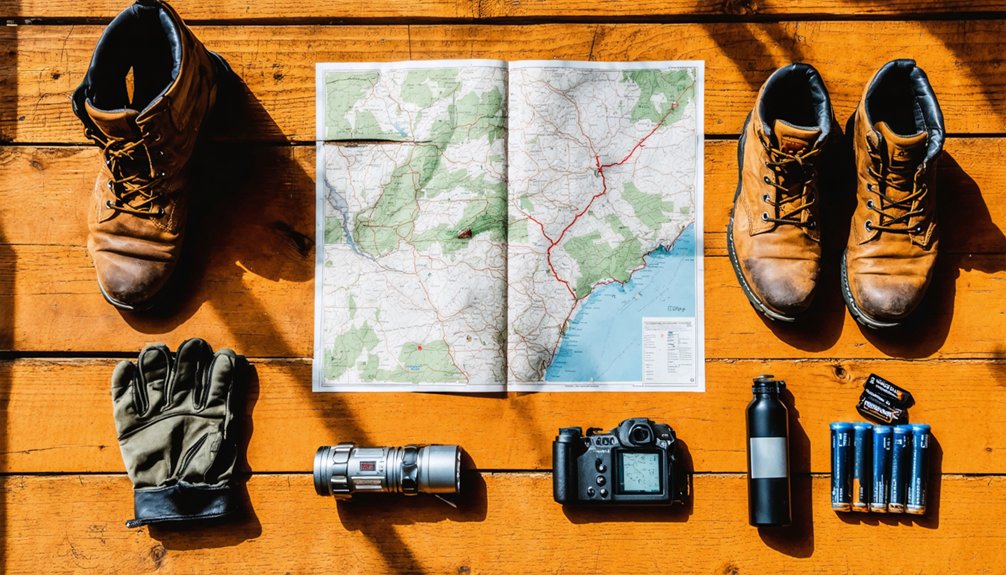
Because the ruins at Vinton Furnace sit deep within a heavily wooded state forest rather than along a paved roadside pullout, you’ll want to treat this less like a casual stroll and more like a short backcountry hike. Pack smart and move freely through the terrain with these four essentials:
- Sturdy footwear — Trail shoes handle uneven, root-crossed ground far better than sneakers.
- Water and snacks — No services exist once you leave McArthur.
- Camera with a wide-angle lens — Photography tips for ruins: shoot during golden hour when forest light filters dramatically through the canopy.
- Wildlife sightings kit — Binoculars and a field guide reward patient observers in this intact forest block.
Daylight visits keep navigation safer and wildlife sightings more rewarding.
Vinton Furnace Forest Hours, Rules, and Safety Tips
Vinton Furnace State Forest opens daily at 6 a.m. and closes at 11 p.m., so you’ll want to plan your visit well within daylight hours to navigate the unpaved roads and trailheads safely.
Hunting and camping activity can occur throughout the forest, which means you should stay alert and stick to marked paths rather than wandering off-trail.
Closed bridges and rough access points make after-dark visits genuinely risky, so arrive early, give yourself plenty of time to explore the ruins, and head out before the light fades.
Forest Hours And Rules
Before heading out to explore Vinton Furnace, you’ll want to know the ground rules. The state forest operates daily, and respecting its rules keeps the experience accessible for everyone.
Here’s what you need to know:
- Hours run from 6 a.m. to 11 p.m. — plan your arrival and departure around daylight for the safest visit.
- Hunting and camping occur on designated trails, including TR-6 along Experimental Forest Road, so stay alert during hunting seasons.
- Wildlife observation is welcome, but disturbing animals or their habitats violates forest conservation principles.
- Access is controlled, meaning some roads and bridges may be closed or restricted without notice.
Respecting these rules protects both the forest and your freedom to explore it responsibly.
Daylight Safety Considerations
Although the forest closes at 11 p.m., you’ll want to arrive well before dusk — uneven terrain, closed bridges, and overgrown trail approaches become genuine hazards once natural light fades. Give yourself enough daylight to explore the furnace ruins, scan for wildlife observation opportunities along the trail edges, and still navigate safely back to your vehicle.
Morning visits offer the clearest light for photographing industrial remnants and the quietest conditions for spotting deer or birds near the forest interior. If you’re packing lunch, a few roadside pull-offs double as informal picnic spots where you can regroup before pushing deeper into the site.
Avoid assuming unpaved roads stay passable after rain — check conditions beforehand and keep your turnaround time realistic.
Vinton County Sites That Pair Well With Vinton Furnace
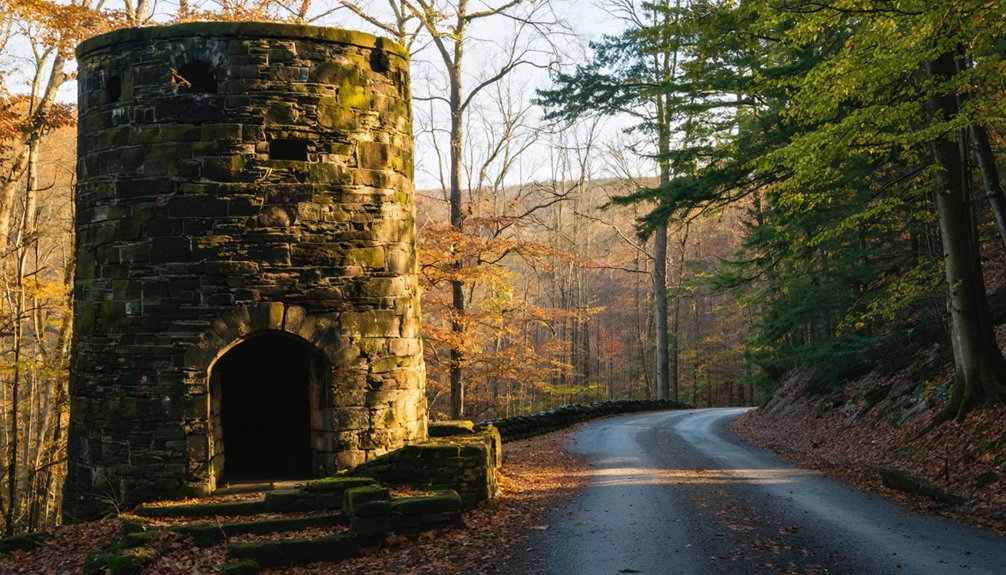
Since Vinton County sits deep in southeastern Ohio‘s hill country, you’ll find no shortage of history and scenery to round out a day centered on Vinton Furnace.
Pair your visit with these nearby stops:
- Lake Alma State Park – Offers photography opportunities along calm shorelines and wildlife encounters with deer, herons, and woodland birds.
- Lake Hope State Park – A peaceful retreat surrounded by Zaleski State Forest, ideal for hikers and history seekers alike.
- Zaleski State Forest – Miles of backcountry trails through rugged, largely untouched terrain.
- Moonville Tunnel – A haunted railroad tunnel and ghost town remnant that complements Vinton Furnace’s industrial past perfectly.
Together, these destinations build a full southeastern Ohio road trip rooted in wilderness, forgotten history, and authentic exploration.
Frequently Asked Questions
Is There a Fee to Enter Vinton Furnace State Forest?
You’ll enter Vinton Furnace State Forest for free! There’s no fee, so you’re free to explore historical preservation sites, enjoy wildlife viewing, and hike through stunning woodlands supporting Ohio’s rich industrial and natural heritage.
Are Pets Allowed on the Hiking Trails at Vinton Furnace?
Before you venture into the unknown, know this — the knowledge base doesn’t confirm specific animal regulations. Research pet friendly trails policies directly with Vinton Furnace State Forest officials before bringing your furry companion along.
Can You Find Cell Service While Hiking the Vinton Furnace Ruins?
Cell service can be spotty or nonexistent while you’re hiking Vinton Furnace’s wooded ruins. Don’t rely on your phone for safety tips—download offline maps, tell someone your plans, and embrace the freedom of unplugged exploration!
Is Vinton Furnace Accessible to Visitors With Mobility Limitations?
Rugged, untamed trails wind through dense woods — Vinton Furnace isn’t fully accessible for mobility limitations. You’ll find no wheelchair-friendly pathways or accessibility improvements here, so you’d need strong mobility to explore these historic, heavily wooded ruins independently.
What Is the Best Season to Visit Vinton Furnace Ghost Town?
Spring and fall offer you the best photography opportunities, as cooler temps make hiking comfortable. You’ll find historical preservation details easier to spot when summer’s thick foliage thins, revealing ruins more dramatically against vibrant seasonal backdrops.
References
- https://en.wikipedia.org/wiki/Vinton_Furnace
- https://dam.assets.ohio.gov/image/upload/odnr/forestry/Maps/vintonfurnace.pdf
- https://visitvintonohio.com/parks-and-recreation/raccoon-ecological-management-area/
- https://trekohio.com/2016/12/01/vinton-furnace-state-experimental-forest/
- https://www.islands.com/2197982/between-columbus-west-virginia-ohio-forest-unique-wildlife-fishing-birdwatching/
- https://research.fs.usda.gov/sites/default/files/2023-02/nrs_inf_17_12-vinton-panels.pdf
- https://ohioghosttowns.org/vinton-county/
- https://www.springfieldnewssun.com/news/state–regional/ohio-create-first-new-state-forest-decade/YIZkPt4CrK0Q6chY558QUI/
- https://en.wikipedia.org/wiki/Vinton_Furnace_State_Experimental_Forest
- https://www.onxmaps.com/hiking/n7062npy068e/iron-furnace-out-and-back