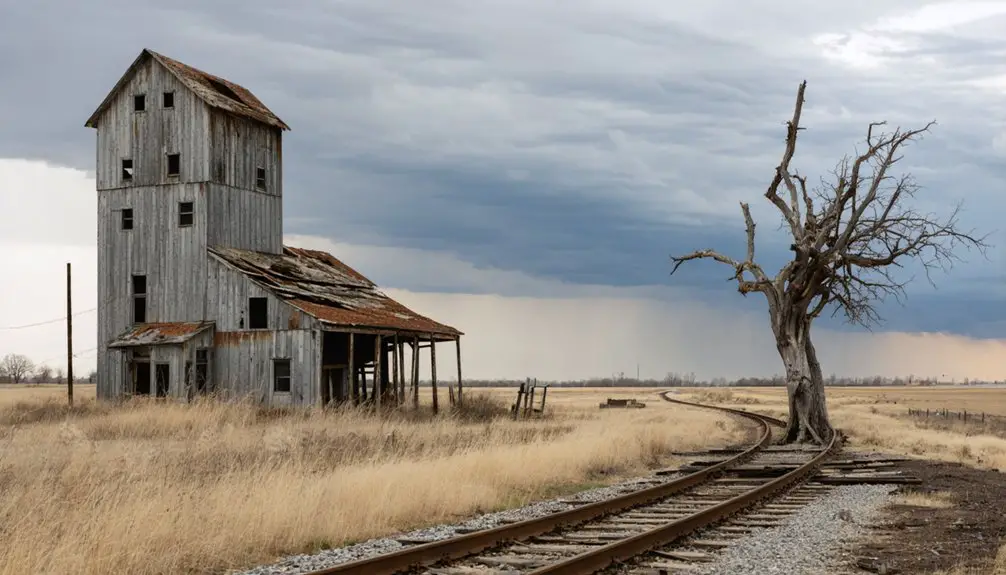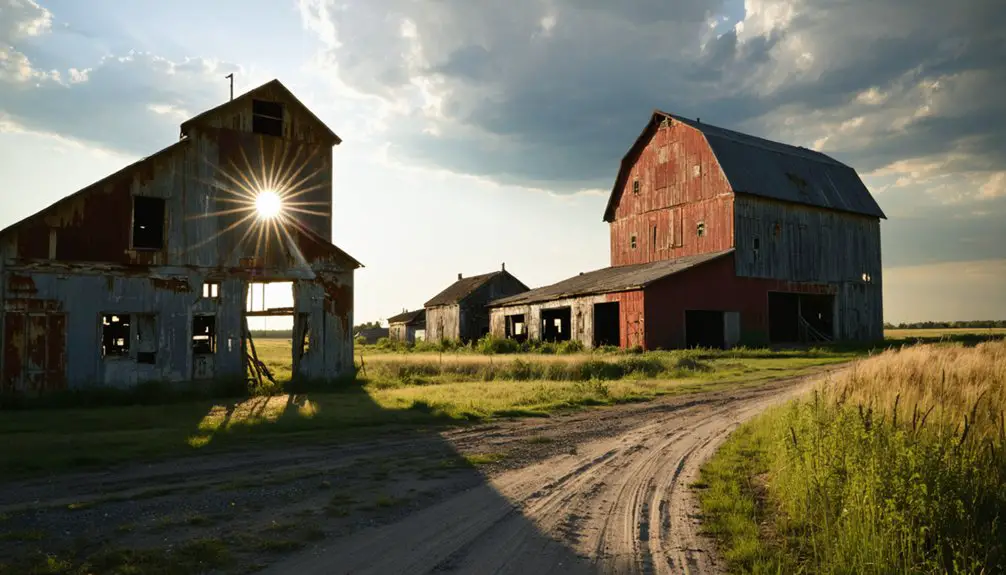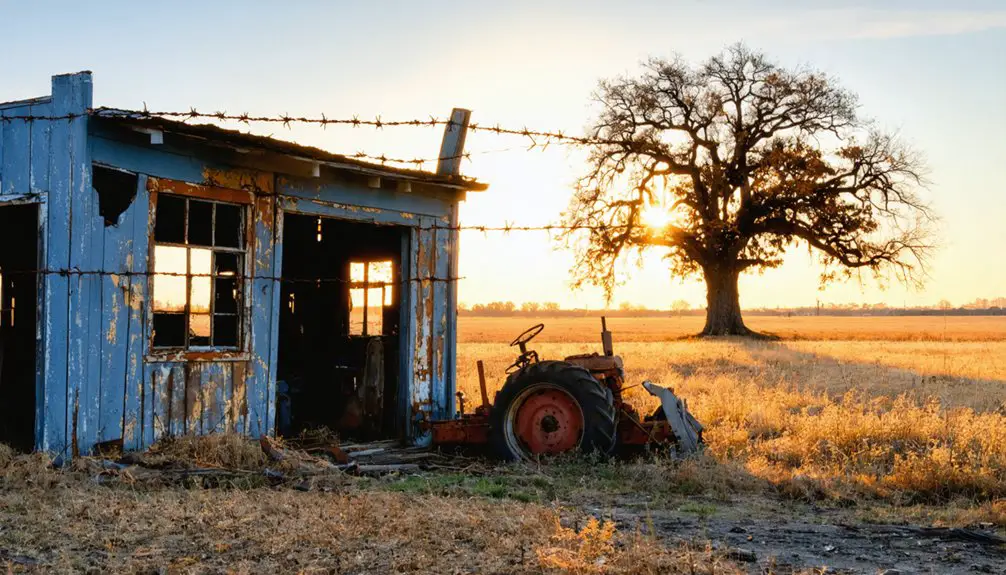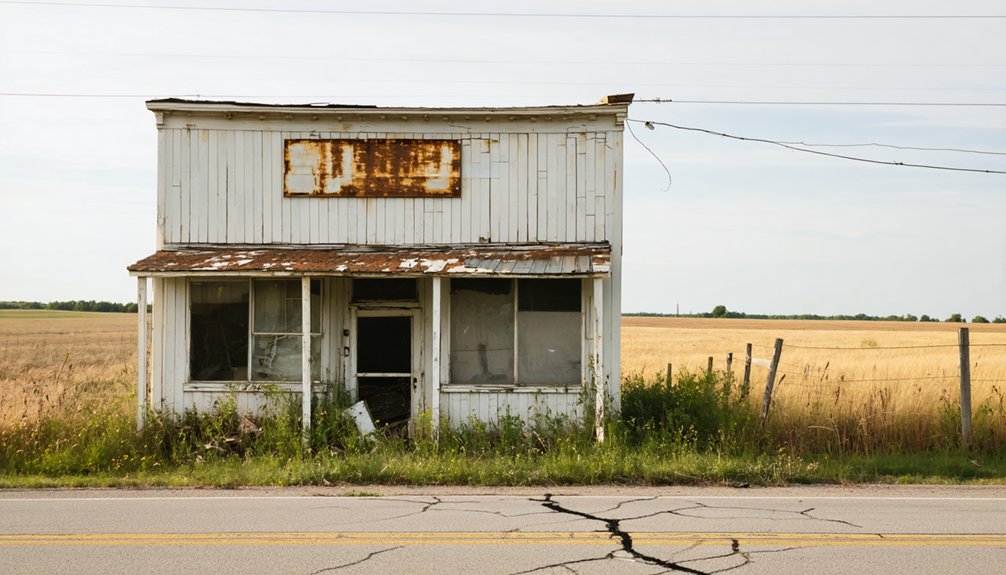
Planning a ghost town road trip to West Newton, Minnesota, puts you in the heart of Nicollet County, where a once-thriving frontier community has nearly vanished. You’ll find Harkin’s General Store, a converted hotel, and an old cemetery waiting to tell their stories. Visit in spring or fall for the best experience, wear sturdy shoes, and bring supplies since services are scarce. There’s far more to this forgotten town than you’d expect.
Key Takeaways
- West Newton sits in Nicollet County, Minnesota, near New Ulm along the Minnesota River, roughly halfway between Fort Ridgely and New Ulm.
- Three key landmarks remain: Harkin’s General Store, a converted hotel, and a cemetery, making it worth exploring on foot.
- Visit during spring or fall for the clearest views; wear sturdy shoes and bring water since no services are nearby.
- Combine your trip with nearby historic sites like Fort Ridgely and New Ulm for a fuller regional experience.
- Extend your road trip by visiting ghost towns Nininger and Forestville, which share similar frontier decline histories along Minnesota’s river corridors.
What Happened to West Newton, Minnesota?
Once a thriving frontier community, West Newton fell victim to a devastating one-two punch: locust plagues wiped out crops throughout the 1870s, and railroads bypassed the town entirely, cutting off its economic lifeline and sealing its fate.
West Newton’s fate was sealed by a devastating one-two punch: locust plagues and railroad bypass.
You’d hardly believe this quiet ghost town once bustled with a hotel, three saloons, a brewery, a sawmill, and two blacksmith shops. That historical economy supported real families who’d built something meaningful from scratch.
But community decline hit hard and fast when those twin forces collided.
Today, you’ll find only Harkin’s General Store, a converted hotel residence, and a cemetery marking what once stood here. The post office hung on until 1910, but the soul of the town had already vanished long before that final closure.
What’s Still Standing at West Newton Today?
Although little survived West Newton’s collapse, three remnants still anchor the site. When you visit, you’ll find yourself walking through layers of local legends and historic preservation efforts that kept these structures alive.
- Harkin’s General Store – Listed on the National Register of Historic Places, this landmark once served as the town’s commercial hub and post office until 1910.
- The Hotel – Now converted into a private residence, it’s a quiet reminder that real families once built lives here.
- The Cemetery – Perhaps the most evocative stop, where you’ll connect directly with the people who shaped this community.
Standing among these survivors, you’ll feel West Newton’s story rather than just read it. Bring your curiosity — this place rewards it.
How Do You Get to West Newton?
Now that you know what’s waiting for you at West Newton, getting there is straightforward. Head to Nicollet County in Minnesota and find section 30 of West Newton Township, positioned along the Minnesota River near New Ulm.
The site sits roughly halfway between Fort Ridgely and New Ulm, making it easy to combine stops along your route.
You’ll want to explore both historical landmarks while you’re in the area, since Fort Ridgely and New Ulm each carry their own local legends worth discovering.
The old ferry crossing site adds extra character to your arrival.
Drive along the Minnesota River valley, keep your eyes open for Harkin’s General Store, and you’ve found your destination.
Pack a map and hit the road on your own terms.
When Should You Visit West Newton and What Should You Bring?
Timing your visit to West Newton makes a real difference in what you’ll experience at the site. Spring and fall offer the clearest views of the landscape without harsh weather slowing you down. To make the most of your historical preservation journey and uncover local legends tied to this forgotten community, come prepared:
Timing your visit right unlocks the best of West Newton — spring and fall reveal the landscape at its finest.
- Wear sturdy walking shoes — the terrain around the old townsite is uneven and rural.
- Bring a camera — Harkin’s General Store and the remaining cemetery deserve detailed documentation.
- Pack water and snacks — there are no services nearby, so you’re completely self-sufficient out there.
Visiting during daylight hours gives you maximum exploration time. The site rewards curious, independent travelers who don’t need hand-holding to appreciate history.
Which Minnesota Ghost Towns Are Worth the Drive From West Newton?
Once you’ve explored West Newton, the surrounding region opens up into a broader network of forgotten Minnesota communities worth chasing down. Head toward Nininger, a once-booming Mississippi River town that died when railroads rerouted commerce elsewhere. Its local ghost stories echo West Newton’s own story of ambition cut short.
Travel north to Forestville, where historical preservation efforts have kept the original townsite intact as a state park, complete with restored buildings you can actually walk through. Brown County’s rural backroads hide several more collapsed settlements worth investigating.
Each stop rewards you with a deeper understanding of how fragile frontier economies really were. Bring your map, fuel up before leaving New Ulm, and treat the entire river corridor as one continuous open-air museum waiting for you to explore.
Frequently Asked Questions
Who Was James Newton and Where Did He Originally Come From?
You’ll find that James Newton’s historical origins trace back to Kentucky, where he once called home. Local legends say he’s an early settler whose name helped shape West Newton’s identity forever.
How Long Did West Newton’s Post Office Operate Before Closing?
You’ll find that West Newton’s post office operated for 48 years, from 1862 to 1910. It’s a remarkable piece of historical postal services that contributed to ghost town preservation, connecting this vibrant frontier community before its eventual, haunting abandonment.
What Was the Steamboat West Newton and When Was It Built?
Like Twain’s mighty Mississippi tales, you’ll love this: the West Newton was an 1852 historic steamboat that mastered river transportation, boldly steering America’s waterways until it tragically sank near Alma, Wisconsin, in September 1853.
Who Was John Hubert Peschges and What Was His Religious Role?
You’ll find John Hubert Peschges woven into ghost town legends and religious history — he served as the second Bishop of the Diocese of Crookston, carrying a powerful Roman Catholic Church leadership role tied to this region.
What Was the Population of West Newton Township in 2000?
Like a river that’s thinned but still flows, West Newton Township’s historical population trends reveal 517 residents in 2000. You’ll find demographic changes shaped this land’s 38.2 square miles, where freedom once thrived.
References
- https://en.wikipedia.org/wiki/West_Newton
- https://npgallery.nps.gov/GetAsset/cd8b380f-5eb0-420f-9047-1ef1ab5c451a
- https://kids.kiddle.co/West_Newton
- https://en.wikipedia.org/wiki/West_Newton_Township
- https://en.wikipedia-on-ipfs.org/wiki/List_of_ghost_towns_in_Minnesota