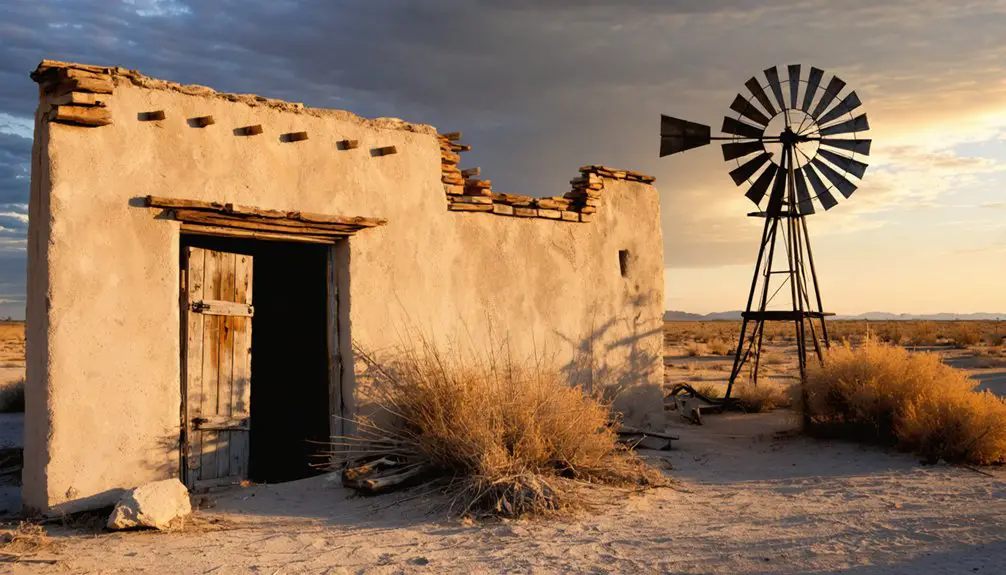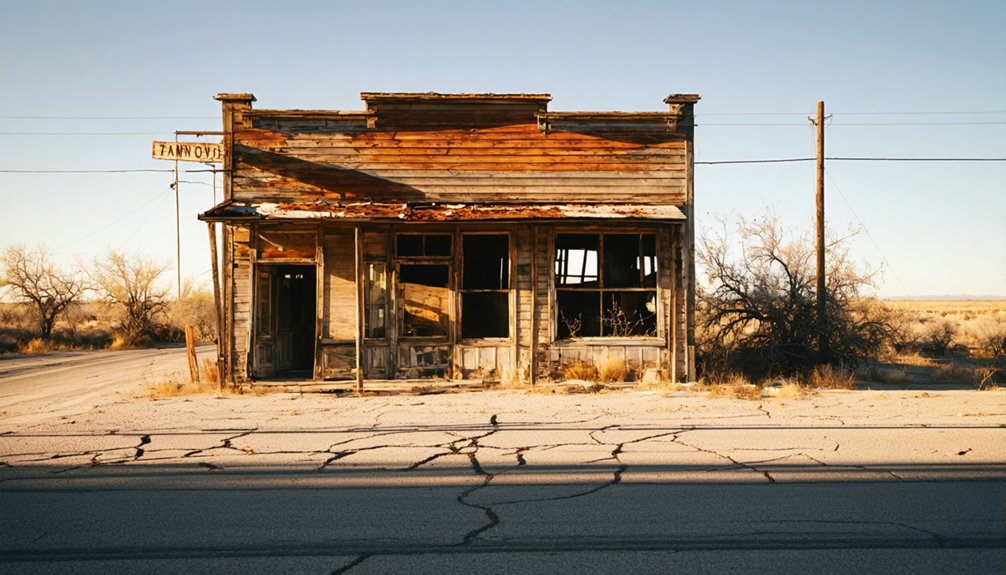
Planning a ghost town road trip to White City, Texas means chasing the echoes of a rowdy oil boomtown that vanished almost as fast as it appeared. You’ll want to fuel up in Seminole, pack extra water, and bring a paper map since cell signals fade fast out here. No markers or museums greet you — just open land, crumbling foundations, and local legends waiting to be uncovered. There’s far more to this story than the silence lets on.
Key Takeaways
- White City, located in northeastern Gaines County near Cedar Lake, Texas, is best accessed using a physical map and local knowledge.
- Fuel up and gather supplies in Seminole, the nearest town, before heading to this remote, unmarked ghost town site.
- Bring water, extra fuel, a charged phone, and photography gear, as cell signals fade and no services exist nearby.
- Visit during golden hour to capture dramatic West Texas light illuminating crumbling foundations and ruins at their most cinematic.
- No official markers or museums exist; research local legends beforehand to identify historically significant spots and enrich your exploration.
What Turned White City, Texas Into a Ghost Town?
Once a rowdy boomtown fueled by oil money and cold beer, White City collapsed almost as fast as it rose.
White City roared to life on oil money and cold beer — then collapsed just as fast.
When voters approved beer sales in 1939, businesses exploded overnight — bars, dance halls, a hotel, a lumberyard, and a barbershop all staked their claim. Oilfield workers kept the cash flowing and the dance floors packed.
Then the votes shifted. When locals rejected continued beer sales, the economic decline hit immediately. Bars shuttered, crowds vanished, and businesses followed.
The post office closed by the 1950s, leaving behind nothing but urban decay and empty West Texas wind.
Population numbers tell the brutal truth — only ten residents in 1943, twenty by 1948, then effectively zero. White City didn’t fade slowly; it simply stopped existing.
How Oil Money and Legal Beer Built White City Overnight
When you trace White City’s rapid rise, you’ll find two powerful forces working together: oil money and legal beer.
In 1939, local voters approved beer sales, and nearby oilfield workers suddenly had a place to spend their wages, triggering an almost overnight commercial explosion.
You’re looking at a town that went from nothing to boasting multiple bars, two dance halls, a hotel, and a lumberyard in just a few years.
Oil Boom Fuels Growth
Before the dust had a chance to settle, White City exploded into existence almost overnight. When nearby oilfields started booming in the late 1930s, money flooded into northeastern Gaines County, and workers needed somewhere to spend it.
You can almost picture the scene — roughnecks rolling into town after long shifts, ready to unwind in a place that felt alive with possibility. The oil industry didn’t just fuel engines; it fueled an entire community.
Historic landmarks like the two-story hotel and bustling dance halls rose quickly from flat West Texas soil. Local legends still echo through Gaines County about how fast White City grew.
If you love chasing raw, unfiltered American history, this short-lived boomtown tells a story that’s impossible to ignore.
Beer Sales Drive Commerce
The oil money flowing into White City needed somewhere to go, and a 1939 vote to legalize beer sales gave it a destination. Almost overnight, entrepreneurs arrived and built a commercial district that reflected the bold local customs of West Texas boomtown culture.
Bars, dance halls, a lumberyard, a hotel, and a café rose from the flat Gaines County landscape faster than you’d expect. Four or five bars and two dance halls became the historic landmarks defining White City’s brief but vivid identity.
You’re fundamentally walking through the ghost of a town that built itself on legal beer and oil wages. When voters later reversed that beer decision, the economic engine stalled, and White City’s businesses quietly disappeared into the West Texas dust.
What’s Actually Left to See at White City Today?
When you arrive at White City today, you won’t find much standing from its brief boom — the bars, dance halls, hotel, and post office are long gone, leaving only the quiet rural landscape of northeastern Gaines County.
Cedar Lake anchors the surrounding area and gives the site its geographic identity, offering a peaceful natural backdrop that contrasts sharply with the rowdy oil-boom settlement that once thrived here.
You’re fundamentally visiting a place where history lives in the land itself, so bring Gaines County research and a sharp eye for context rather than expecting visible ruins.
Ghost Town Remnants Today
Although White City once buzzed with bars, dance halls, and a two-story hotel, you’ll find little more than open land and rural silence when you visit today. Abandoned structures have long surrendered to West Texas weather, leaving behind a landscape that speaks through absence rather than architecture.
Local legends still circulate about the wild nights this short-lived boomtown produced during its oil-fueled peak, giving the site an atmosphere that rewards curious, imaginative visitors.
You’ll want to explore the area near Cedar Lake with that historical context firmly in mind. Bring your own research, drive the surrounding rural roads, and let the flat horizon tell its story.
White City offers no museum or marker, just raw land and the freedom to piece together a forgotten past.
Cedar Lake Surroundings
Stretching beyond the ghost town’s silent footprint, Cedar Lake and its surrounding landscape give you something tangible to anchor your visit. The flat, open terrain of northeastern Gaines County rewards curious travelers willing to explore beyond paved roads.
Rural legends tied to oil booms and prohibition-era drinking halls still echo across this landscape if you know what shaped it. While White City’s mining history remains modest compared to other Texas boomtowns, the oilfield heritage embedded in the surrounding land tells a compelling story.
Cedar Lake itself offers a quiet natural contrast to the town’s chaotic past. You’ll find wide skies, open rangeland, and the kind of unfiltered West Texas solitude that makes ghost-town road trips worth taking.
Bring water, fuel up early, and embrace the emptiness.
Visiting Historical Context
What remains of White City today amounts to little more than a memory pressed into the West Texas soil. You won’t find museums, markers, or formal historical preservation efforts greeting you here.
What you’ll find is open land near Cedar Lake, quiet roads, and the invisible weight of a town that burned bright and vanished fast.
Local legends describe the dance halls and bars that once pulled oilfield workers in from miles around. You’re fundamentally reading the land itself, piecing together a boomtown that rose in 1939 and collapsed before the 1960s arrived.
Bring your curiosity and a solid map. White City rewards visitors who appreciate raw history over polished attractions, making it a genuinely authentic stop on any Texas ghost town road trip.
Where Is White City in Gaines County: and How Do You Get There?

Tucked into the northeastern corner of Gaines County, White City sits near Cedar Lake in the heart of rural West Texas — and getting there means committing to open roads and wide skies. No GPS will dramatically announce your arrival, but that’s part of the freedom. You’re chasing local legends and abandoned structures across flat, honest terrain.
Pack your road atlas and plan around these navigation essentials:
- Seminole, Texas serves as your nearest sizable hub for fuel and supplies
- Cedar Lake acts as your primary geographic landmark heading northeast
- Farm-to-market roads connect the rural grid surrounding the site
- Gaines County historical resources help you pinpoint exact coordinates before departing
Arrive with curiosity. White City won’t greet you with signs — it rewards the prepared explorer.
Which Other Ghost Towns Pair Well With a White City Trip?
Once you’ve committed to hunting down White City’s ghost, it makes sense to stretch that same road-trip energy across more of West Texas’s forgotten settlements. Gaines County sits within reach of several abandoned communities where ghost town architecture still whispers about boom-and-bust cycles.
Slide over to Lamesa and explore its surrounding rural corridors, or push toward Lubbock County’s outskirts, where local legends about oil-era settlements reward curious travelers willing to leave paved comfort behind. Each stop adds historical texture that White City alone can’t fully deliver.
You’re already out here, already dusty, already chasing stories that mainstream tourism ignores. Keep moving west or south, consult Gaines County historical records before you leave, and let each crumbling foundation deepen your understanding of what West Texas once gambled on building.
What Should You Know Before Visiting Remote West Texas Ghost Towns?
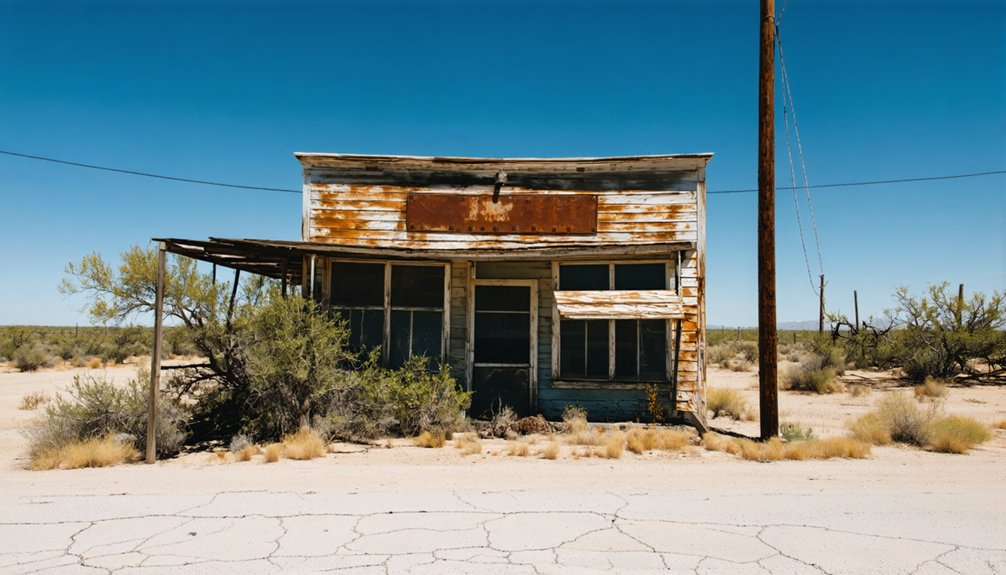
Before you chase White City‘s ghost across Gaines County‘s back roads, pack smarter than the town’s original residents planned their future. Remote West Texas demands preparation, and ghost towns reward those who arrive ready.
- Fuel up in Seminole before heading toward Cedar Lake; stations disappear fast in Gaines County.
- Bring water, a paper map, and a charged phone since cell coverage fades without warning.
- Apply photography tips early: shoot during golden hour when flat West Texas light turns dramatic ruins cinematic.
- Research local legends beforehand so you recognize historically significant spots rather than passing them unknowingly.
The land won’t explain itself. White City rose fast, collapsed faster, and left few signs behind. Your curiosity and preparation determine how much this ghost town actually reveals.
Frequently Asked Questions
Was White City Ever Officially Incorporated as a Texas Municipality?
White City never achieved official incorporation as a Texas municipality. You won’t find formal historical infrastructure here — just local legends of a wild, freedom-fueled boomtown that rose fast and vanished into West Texas dust.
Are There Any Photographs of White City During Its Boomtown Years?
No confirmed historical photographs of White City’s boomtown imagery have surfaced yet, but you’ll want to dig into Gaines County archives and Texas historical collections — that’s where hidden visual treasures often await adventurous researchers like you.
Is Cedar Lake Visible or Accessible When Visiting the White City Site?
You’ll find Cedar Lake accessibility depends on surrounding private land, but White City visibility near the lake’s edge rewards your adventurous spirit — scan the horizon, explore open roads, and embrace West Texas’s raw, untamed freedom.
What County Records Document White City’s Original Business Licenses?
You won’t find specific business license records in the available sources, but you can explore Gaines County’s historical property deeds and business license records at the county courthouse to uncover White City’s fascinating, freedom-fueled commercial past!
Did White City Have a School or Church During Its Active Years?
Like a flame that burns fast and bright, the records don’t show a school or church—White City’s ghost town preservation reveals a community history built purely on bars, dance halls, and oil-boom commerce.
References
- https://en.wikipedia.org/wiki/White_City
- https://www.tshaonline.org/handbook/entries/white-city-tx-gaines-county
- https://www.texasalmanac.com/places/white-city
- https://www.reddit.com/r/texas/comments/xwa7fv/white_settlement_tx_is_a_real_place_what_other/
- https://en.wikipedia.org/wiki/List_of_ghost_towns_in_Texas
- https://authentictexas.com/texas-ghost-towns/
- https://texashistory.unt.edu/ark:/67531/metapth61101/m1/168/
- https://www.ghosttowns.com/states/tx/tx_ghst_twns_sect1345.doc
- https://www.txgenwebcounties.net/gaines/Communities_and_Towns/white_city.htm