Planning a ghost town road trip to Winter Quarters means heading into Carbon County’s mountains, where coal mining history runs deep and tragedy runs deeper. You’ll find the site off a dirt road near Scofield, best visited between late spring and early fall when roads are passable. The Wasatch Store walls and scattered foundations are visible from the road, though the property is posted. There’s far more to this haunting destination than meets the eye.
Key Takeaways
- Winter Quarters, Utah, is a historic coal mining ghost town carved out by the Pleasant Valley Coal Company starting in 1875.
- On May 1, 1900, a mine explosion killed approximately 200 miners, making it one of the deadliest disasters in U.S. history.
- The site is on private property, but remnants like the Wasatch Store walls can be viewed safely from the road.
- Visit between late spring and early fall, as winter roads are hazardous and often impassable from November through March.
- Nearby ghost towns like Castle Gate, Scofield, and Clear Creek offer additional stops for exploring Carbon County’s coal mining history.
Why Ghost Town Hunters Seek Out Winter Quarters
Winter Quarters pulls ghost town hunters in for reasons that go beyond crumbling walls and overgrown foundations. You’re stepping into a place layered with mining legends, where the Pleasant Valley Coal Company carved an entire community out of a Utah canyon starting in 1875. The weight of history here is undeniable.
On May 1, 1900, an explosion killed roughly 200 miners, making it one of America’s deadliest mining disasters. Ghost stories naturally follow a place carrying that kind of grief.
You’ll find grass-covered foundations, remnants of the Wasatch Store, and a blacksmith shop that still hints at daily life once lived here. For those who chase forgotten places and demand raw, unfiltered history, Winter Quarters delivers exactly that kind of haunting reward.
How Coal Mining Built and Buried Winter Quarters, Utah
When you explore the history of Winter Quarters, you’ll find that coal discovery in 1875 set everything in motion, drawing the Pleasant Valley Coal Company into the canyon and sparking rapid growth.
The Utah & Pleasant Valley Railroad arrived in 1879, replacing slow wagon roads and making large-scale mining operations economically viable for the first time.
Yet the same industry that built the town ultimately buried it, culminating in a catastrophic 1900 explosion that killed nearly 200 miners.
Before exhausted seams and a new mine at Castle Gate finally closed Winter Quarters for good by 1928.
Coal Discovery Sparks Growth
Coal found its way into the history books of Carbon County, Utah, in 1875, when the Pleasant Valley Coal Company staked its claim and began pulling fuel from the earth. That single discovery set off a chain reaction — miners arrived, a town took shape, and Winter Quarters became the anchor of the broader Pleasant Valley coal-mining district.
The cultural significance of this moment ran deep, as immigrant communities, including Finnish miners, built lives around the work. But growth always carries a cost. The environmental impact of large-scale extraction reshaped the canyon’s landscape permanently.
Railroad Transforms Mining Operations
By 1879, the Utah & Pleasant Valley Railroad had punched through Spanish Fork Canyon, replacing the wagon road built just three years earlier and fundamentally changing what Winter Quarters could produce. Rail access meant miners could finally move serious tonnage out of those underground tunnels without depending on slow, expensive wagons. The transformation was immediate and dramatic.
The railroad opened up three critical advantages:
- Heavy mining equipment could arrive efficiently, expanding what workers could extract.
- Output skyrocketed, with Winter Quarters and nearby Clear Creek eventually producing roughly 2,000 tons of coal daily.
- Economic scale shifted entirely, making large operations viable where only small ones existed before.
You’re looking at a site that briefly ran at full industrial power before economics and exhausted seams quietly ended everything.
Disaster And Eventual Decline
That industrial peak you’re picturing came with a brutal cost. On May 1, 1900, an explosion tore through Winter Quarters Number Four mine, killing roughly 200 miners — over 60 of Finnish descent. Investigators later pointed to dry coal dust, faulty blasting supplies, and poor ventilation. It remains one of America’s worst mining disasters, and the urban legends and folklore stories surrounding that day still circulate among descendants of survivors.
Mining limped forward for decades afterward. When Castle Gate opened in 1922, Winter Quarters lost its edge. The mine ran dry by the mid-1920s, officially closing in 1928.
The 1900 Mine Explosion That Killed 200 Men
On May 1, 1900, an explosion tore through the Winter Quarters Number Four mine, killing roughly 200 men in what stands as one of the worst mining disasters in U.S. history. Investigators pointed to three critical failures in mining technology and practice:
- Dry coal dust igniting beyond control
- Unreliable blasting supplies used by miners
- Faulty air circulation throughout the tunnels
More than 60 of the dead were of Finnish extraction, a detail woven deeply into community legends that still echo through Carbon County history. The disaster reshaped how Utah approached mine safety regulations.
When you visit the site today, you’re standing near ground where 200 men never walked out — a sobering reminder of the human cost behind every ton of coal extracted.
Is Winter Quarters Posted for Trespassing?
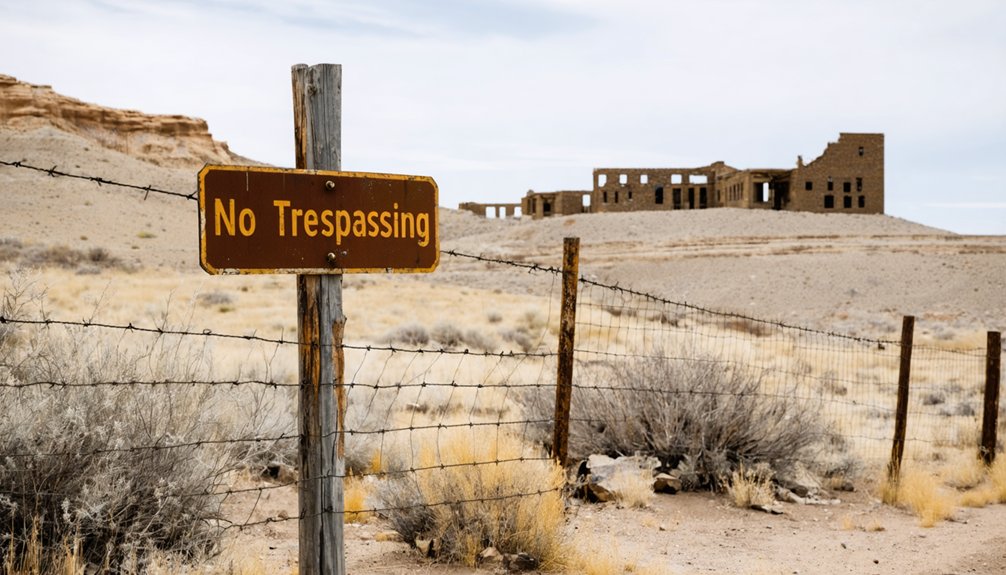
Before you pack the car and head out to walk those grass-covered foundations, there’s one hard reality you need to know: Winter Quarters sits on private property, and it’s posted for trespassing. That trespassing warning isn’t decorative — it carries legal weight, and ignoring it puts your road trip in jeopardy before it starts.
You can still experience the site from the road, where the walls of the Wasatch Store remain visible without stepping onto restricted land. The old railroad bed now runs as a dirt road toward Tucker, giving you legitimate access to the broader landscape.
Respecting private property keeps you free to explore another day. Do your research beforehand, and you’ll find the journey remains worthwhile — even from a respectful distance.
What’s Left at the Winter Quarters Site Today
What remains at Winter Quarters today is modest but evocative. Modern preservation efforts haven’t transformed this place into a polished attraction, and that rawness is part of its appeal. The archaeological remains speak quietly but honestly about lives once lived here.
What remains is modest but evocative — raw, unpolished, and honest about the lives once lived here.
From the road, you’ll spot:
- The walls of the Wasatch Store, still visible as you approach the site
- Grass-covered foundations scattered across the ground, outlining where structures once stood
- A blacksmith shop’s remnants, hinting at the industrial heartbeat of the old camp
The former railroad bed now doubles as a dirt road leading toward Tucker. You won’t find interpretive signs or parking lots here — just fragments of a vanished world waiting for those curious enough to look closely.
How to Reach Winter Quarters in Carbon County
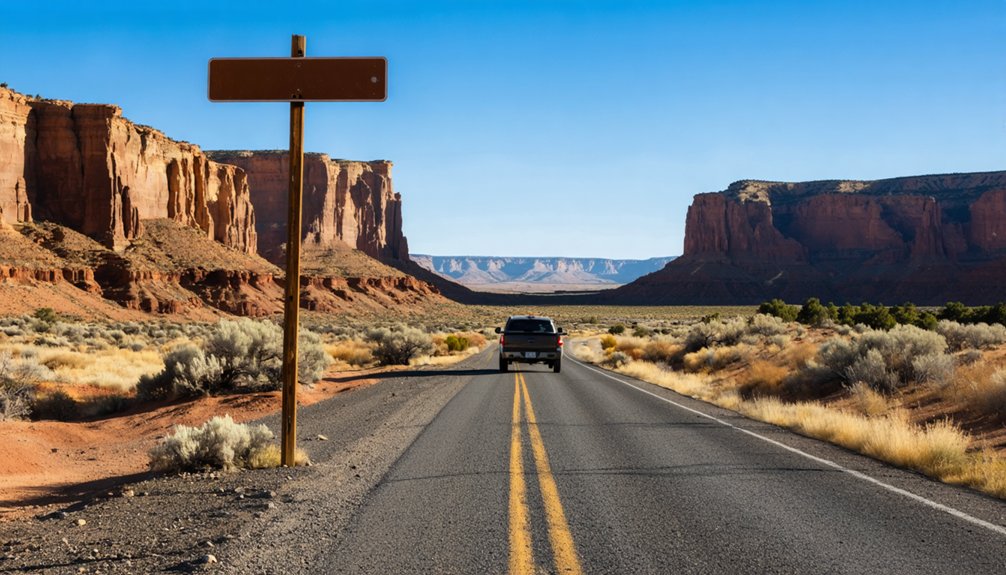
Getting to Winter Quarters means traversing the quiet back roads of Carbon County, Utah, where the site sits roughly one mile west of Scofield near Winter Quarters Canyon.
Follow the road into the canyon, and you’ll spot the walls of the old Wasatch Store rising from the landscape before you even arrive.
The route you’re driving roughly traces the corridor once carved out by the Utah & Pleasant Valley Railroad, which reached this mining hub in 1879, replacing an earlier wagon road.
That railroad history transformed Winter Quarters into a full-scale operation, making advanced mining technology economically viable.
Keep in mind that the site sits on private property and is posted against trespassing, so respect those boundaries as you explore the area from the road.
The Best Time to Visit Winter Quarters
Late spring through early fall gives you the best window to visit Winter Quarters, when mild temperatures and dry roads make the canyon approach manageable.
You’ll want to avoid winter months, when snow and ice can make the dirt road treacherous and obscure the foundations and remnants you came to see.
Summer offers the clearest views of the Wasatch Store walls and surrounding landscape, though you should always check local road conditions before heading out.
Ideal Visiting Seasons
Since Winter Quarters sits in the mountains of Carbon County near Scofield, Utah, the seasons dictate when you can realistically get there and what you’ll find when you do. Snow closes roads early and lingers late, so plan accordingly.
- Late Spring (May–June): Melting snow reveals grass-covered foundations and historical artifacts without the summer crowds.
- Summer (July–August): The most accessible window — roads are clear, lighting is ideal, and preservation efforts around remaining structures are easier to observe.
- Early Fall (September): Cooler temperatures and dramatic light make this a rewarding visit before winter cuts off access again.
Avoid winter entirely unless you’re equipped for mountain conditions. You’ll want clear roads and dry ground to move freely around the site.
Weather And Road Conditions
Weather shapes your entire experience at Winter Quarters, and knowing what to expect before you leave home can mean the difference between a memorable road trip and a wasted drive.
Carbon County’s high elevation means winters hit hard and early. Snow can render the dirt roads impassable from November through March, and seasonal closures sometimes cut off access entirely.
Summer offers your clearest window, though afternoon thunderstorms can turn unpaved approaches into muddy obstacles fast.
Spring thaw creates soft, rutted roads that’ll swallow a low-clearance vehicle without warning.
Weather safety isn’t optional here — you’re heading into remote terrain with no services nearby. Check road conditions before departing, carry water, and tell someone your plans.
The canyon doesn’t forgive careless preparation.
Nearby Ghost Towns Worth Adding to Your Route

While you’re already making the drive out to Winter Quarters, the surrounding Carbon County region offers several ghost towns that make easy additions to your route.
- Castle Gate – This former mining settlement carries historical artifacts and local legends tied directly to Utah’s coal era. It sits conveniently along your path.
- Scofield – Though partially inhabited, its cemetery and surrounding structures tell stories of the same communities that worked Winter Quarters’ mines.
- Clear Creek – Once producing thousands of coal tons daily alongside Winter Quarters, its remnants reward curious explorers willing to seek them out.
Each stop deepens your understanding of Carbon County’s industrial past.
Together, they transform a single-destination trip into a fuller, richer journey through Utah’s forgotten mining landscape.
Frequently Asked Questions
Were Any Miners Ever Rescued Alive After the 1900 Explosion?
Ironically, despite all mine safety measures, you won’t find tales of rescue efforts saving survivors — the 1900 explosion claimed roughly 200 lives instantly, leaving no miners to pull alive from Winter Quarters’ devastating depths.
Did the Pleasant Valley Coal Company Face Legal Consequences After the Disaster?
The knowledge doesn’t show the Pleasant Valley Coal Company facing legal repercussions or corporate accountability after the disaster. You’ll find the state investigation focused on technical causes, leaving justice frustratingly out of reach for the victims’ families.
Are There Any Museums Nearby Dedicated to the Winter Quarters Mining History?
You won’t find a dedicated museum, but nearby Carbon County holds mining equipment displays and local legends that’ll pull you deeper into Winter Quarters’ haunting past than you ever expected.
Was Winter Quarters Ever Considered for Historical Landmark or Preservation Status?
The knowledge doesn’t confirm any official landmark designation or historical preservation status for Winter Quarters, but you’ll find its 1900 disaster legacy keeps its memory alive, drawing freedom-seeking explorers curious about Utah’s raw coal-mining past.
Did the Finnish Mining Community Leave Any Cultural Legacy in Carbon County?
Like roots beneath ash, Finnish heritage didn’t vanish with the 1900 disaster — it shaped Carbon County’s cultural impact. You’ll find their spirit woven into local history, community memory, and the coal mining legacy they helped build.
References
- https://en.wikipedia.org/wiki/Winter_Quarters
- https://www.facebook.com/groups/864060180303556/posts/7613190832057090/
- https://www.legendsofamerica.com/ut-winterquarter/
- https://utahrails.net/utahcoal/winter-quarters.html
- https://en.wikipedia.org/wiki/List_of_ghost_towns_in_Utah
- https://collections.lib.utah.edu/details?id=434173&facet_relation_t=”Classified+Photo+Collection
- http://eugenehalverson.blogspot.com/2012/07/winter-quarters-by-debbie.html
- https://www.facebook.com/utahstatearchives/posts/123-years-ago-today-an-explosion-in-the-winter-quarters-mine-killed-over-200-coa/638025428354547/
- https://www.deseret.com/lifestyle/2024/10/21/haunted-sites-in-utah-to-visit/