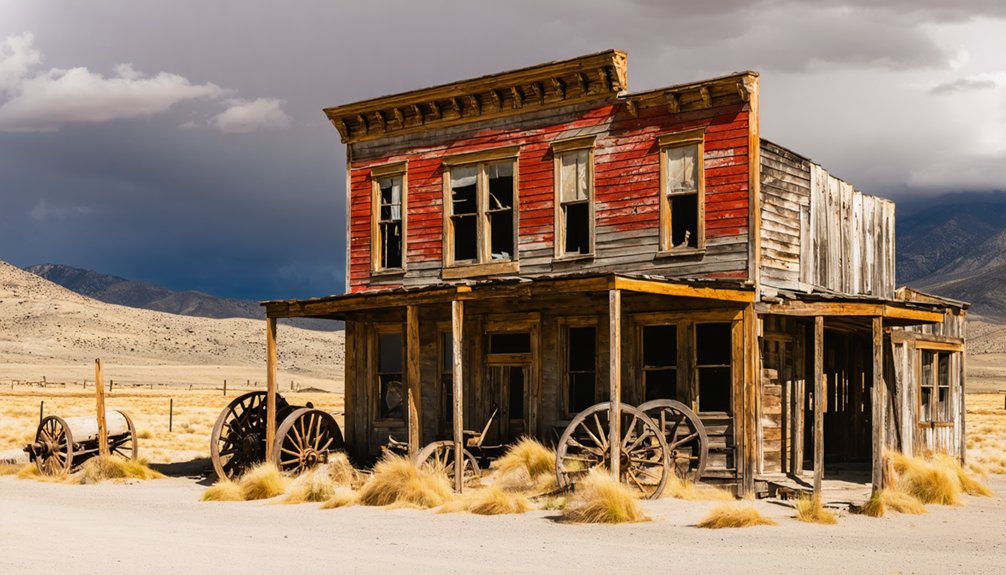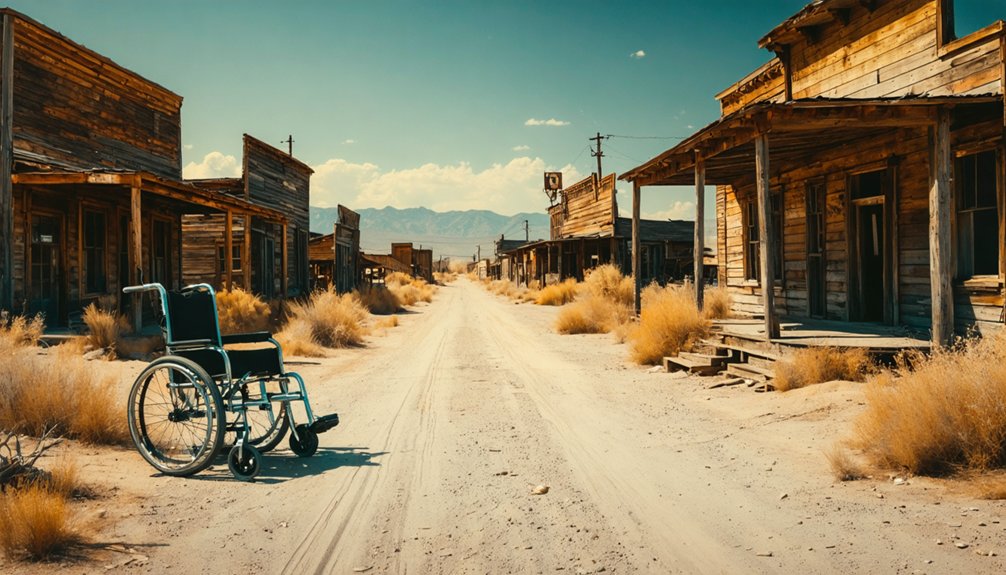
You can explore ghost towns in a wheelchair—more sites than you’d expect offer paved paths, loaner chairs, and level terrain. Goldfield in Arizona features smooth, compact paths, while Tombstone has wheelchair-friendly sidewalks. Bodie in California provides free high-flotation wheelchairs for rough terrain, and Garnet in Montana offers a relatively flat town center. Planning ahead makes all the difference, and there’s plenty more to discover about making these historic sites work for you.
Key Takeaways
- Goldfield Ghost Town in Arizona features smooth, compact paths, accessible parking, restrooms, and mobility-friendly museum and dining areas.
- Bodie State Historic Park offers two free loaner high-flotation wheelchairs suitable for navigating its rough terrain.
- Tombstone’s main corridor has wheelchair-friendly sidewalks, with fully accessible attractions including OK Corral and mostly accessible Boot Hill Cemetery.
- Garnet in Montana provides a flat town center and level parking, though steeper sections near some structures remain challenging.
- Always contact ghost town sites in advance to confirm wheelchair availability, parking locations, and current accessibility conditions.
What Makes a Ghost Town Wheelchair Accessible?
Because ghost towns were never built with modern visitors in mind, what makes one wheelchair accessible often comes down to a handful of practical features that have been retrofitted or preserved by chance.
Ghost towns weren’t built for modern visitors, so wheelchair accessibility usually comes down to retrofits or lucky preservation.
When you’re planning a visit, look for paved or compacted paths, level parking near the main area, accessible restrooms, and adapted equipment like high-flotation wheelchairs.
Historic preservation efforts sometimes work in your favor—towns that maintained compact core areas are easier to navigate than sprawling sites with rocky terrain.
Visitor safety matters too, since uneven ground and steep slopes create real risks.
Most accessible ghost towns offer partial rather than universal access, so contacting the site in advance helps you understand exactly where you can go and what support’s available.
Best Wheelchair Accessible Ghost Towns by State
Accessibility varies quite a bit from state to state, so knowing what each site actually offers helps you plan a realistic trip rather than an unexpected disappointment.
In California, Bodie offers two free high-flotation wheelchairs for its uneven terrain, while Calico’s paved main road works for wheelchairs, though the uphill grade is real.
In Arizona, Goldfield’s smooth compact paths and Tombstone’s wheelchair-friendly sidewalks reflect stronger accessibility regulations within their historic preservation frameworks. The OK Corral is fully accessible, and Boot Hill is mostly manageable.
In Montana, Garnet’s lower parking lot and flat main-street buildings give you a workable entry point, though steeper sections remain challenging.
Each state balances preservation with access differently, so contacting sites directly before visiting helps you understand exactly what’s currently available.
Goldfield Ghost Town: Smooth Accessible Paths Through Arizona History
Among Arizona’s accessible historic stops, Goldfield Ghost Town stands out for how smoothly it works in practice. You’ll find a compact main street with smooth paths that accommodate both wheelchairs and scooters, making historical preservation feel genuinely welcoming rather than performative.
You can roll through the museum, grab a seat in the saloon’s accessible dining area, and explore the core of town without constantly worrying about terrain.
Visitor amenities include accessible parking and restroom facilities, so the basics are covered before you even start exploring.
Goldfield isn’t a rugged backcountry experience — it’s a mobility-friendly historic stop designed to let you engage with Arizona’s mining past on your own terms. If you value independence while traveling, this one earns a serious look.
Tombstone: Which Historic Sites Are Actually Wheelchair Accessible?
Tombstone carries a reputation as one of the West’s most iconic frontier towns, but if you’re a wheelchair user, the real question is which parts of that history you can actually reach. The good news is that historical preservation here hasn’t completely shut you out. The OK Corral is fully accessible, giving you genuine visitor engagement with one of America’s most legendary sites.
Boot Hill Cemetery is mostly accessible, so you can explore it with reasonable ease. Wheelchair-friendly sidewalks run through the main tourist corridor, making movement between key stops manageable. However, don’t expect every preserved structure to welcome you equally — some historic surfaces and older buildings remain challenging.
Focus your time on the main corridor, and you’ll experience a meaningful slice of Tombstone‘s frontier story.
Bodie State Historic Park: Loaner Wheelchairs for Rough Terrain
If you’re planning a visit to Bodie State Historic Park, you’ll be glad to know the park offers two high-flotation loaner wheelchairs at no charge, specifically designed to handle rough, uneven ground.
You’ll still want a companion nearby, since the terrain and high altitude can make pushing a challenge even with the adapted chairs.
Because only two units are available, you should contact the park in advance to confirm availability before your trip.
High-Flotation Wheelchair Availability
Bodie State Historic Park stands out among ghost-town destinations because it offers two high-flotation loaner wheelchairs at no charge, specifically designed to handle the site’s uneven, unpaved terrain. These chairs aren’t powered, so you’ll likely need a pushing companion on rougher stretches, especially given the site’s elevation.
Still, they’re a meaningful visitor amenity that expands access to genuine historic preservation without added cost.
Because only two units are available, you’ll want to contact the park before your visit to confirm availability.
The core historic area offers the strongest access, where Bodie’s compact layout keeps distances manageable.
Securing a chair in advance lets you move through this remarkably preserved ghost town on your own terms, experiencing its atmosphere without terrain becoming an insurmountable barrier.
Navigating Uneven Historic Terrain
Having those loaner chairs available is only part of the equation—knowing how to navigate Bodie’s terrain once you’re in one makes a real difference. Bodie’s historical preservation means pathways stay intentionally uneven, so you’ll want to plan your route through the core historic area where the ground is most manageable.
Keep these practical tips in mind:
- Bring a pushing companion—altitude and rough ground make self-propelling genuinely difficult
- Stick to the compact town center first, where visitor amenities and flatter routes concentrate
- Ask staff about current conditions before heading out, since terrain shifts seasonally
You’re not getting a manicured theme park here—you’re getting an authentic ghost town. Knowing that upfront helps you move through it confidently and on your own terms.
Calico Ghost Town: Accessible Main Road, Inaccessible Side Streets
At Calico Ghost Town in California, you’ll find the main road is paved, giving you a workable route past the primary buildings. Keep in mind, though, that the road climbs a fairly steep uphill slope, so you’ll want to pace yourself or bring someone to assist.
Once you stray off that main road, rocky terrain, hills, and steps make the side streets largely inaccessible for wheelchair users.
Paved Main Road Access
Calico Ghost Town offers a paved main road that’s navigable by wheelchair, making the core historic area reachable without too much difficulty.
Historical preservation here means you’ll experience genuine frontier character while still moving through the main corridor with reasonable ease.
Visitor amenities include limited handicapped parking, with some spots available near the top during busier periods.
Keep these practical points in mind before you go:
- The main road climbs a fairly steep uphill grade, so plan your energy accordingly.
- Buildings along the main road are accessible, letting you explore key structures firsthand.
- The parking lot sits in the canyon below the plateau, meaning you’ll need to navigate that elevation change.
Knowing this upfront helps you make the most of your visit confidently.
Rocky Side Street Barriers
Beyond the main road, Calico’s side streets become a different story entirely. Once you leave the paved route, you’ll encounter uneven surfaces — rocky terrain, sudden elevation changes, and steps that make barrier navigation genuinely difficult or impossible for most wheelchair users.
These off-road areas aren’t just inconvenient; they’re largely inaccessible. Hills and loose ground create real obstacles that no amount of determination easily overcomes. If you’re visiting with a manual chair, you’ll likely need to stay within the main road corridor to explore comfortably and safely.
Knowing this in advance helps you plan realistically. You can focus your energy on what’s actually reachable rather than struggling through terrain that wasn’t designed with you in mind.
Calico offers partial access — and understanding its limits lets you enjoy it fully.
Garnet Ghost Town: What Wheelchair Users Can Realistically Access
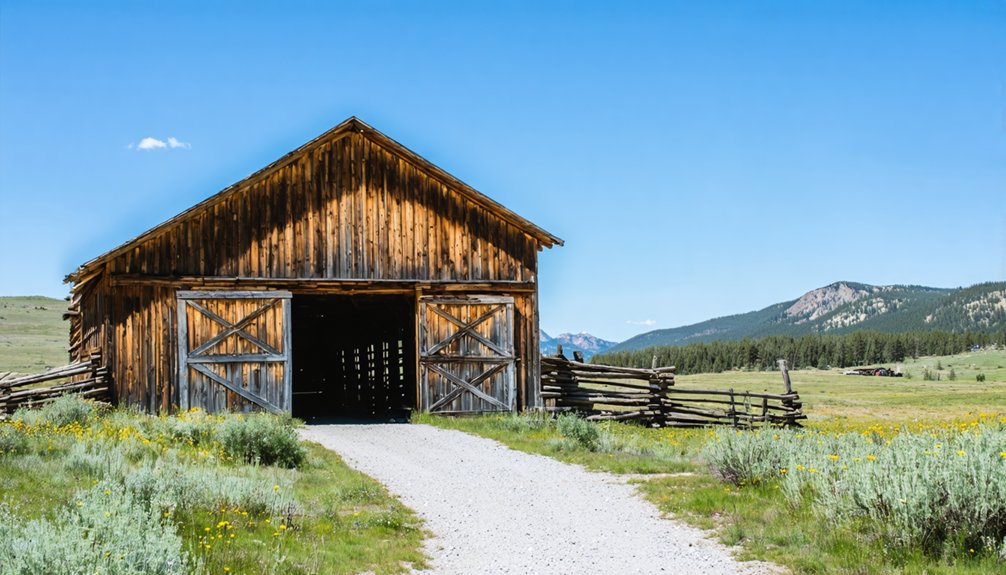
Garnet Ghost Town in Montana offers partial but meaningful access if you’re a wheelchair user planning a visit. A dedicated parking lot at town level supports visitor engagement without forcing you up steep grades. The main street buildings reflect strong historical preservation efforts, keeping several structures within reach.
Garnet Ghost Town offers wheelchair users genuine access — dedicated parking and reachable main-street buildings make exploration possible.
Here’s what you can realistically expect:
- Main-street buildings are wheelchair accessible and worth exploring
- The town-level parking lot is specifically designated for handicapped visitors
- Steeper slopes near some buildings will require extra pushing assistance or a companion
Access isn’t universal here, but the flatter town center gives you genuine freedom to explore. Plan around the inclines, bring support if needed, and you’ll find Garnet delivers an authentic ghost-town experience.
Accessible Haunted Historic Sites Beyond Ghost Towns
If ghost towns aren’t your only interest, several haunted historic sites offer strong wheelchair accessibility across their key spaces. The Ohio State Reformatory lets you roll through cellblocks and guard rooms on an accessible tour, keeping historical preservation meaningful without excluding you.
The Trans-Allegheny Asylum goes further, offering fully accessible first-floor and criminally insane ward tours that maximize visitor engagement for wheelchair users.
Aboard the Queen Mary, wheelchair accommodations support your exploration of one of history’s most storied vessels.
The Driskill Hotel also appears on accessible haunted destination lists.
Across these sites, you’ll notice a consistent pattern: paved paths, level parking, accessible restrooms, and adapted tours form the foundation of what works. Partial access remains common, so contacting each site in advance helps you plan confidently.
Terrain, Altitude, and Gear: Planning Your Accessible Ghost Town Visit
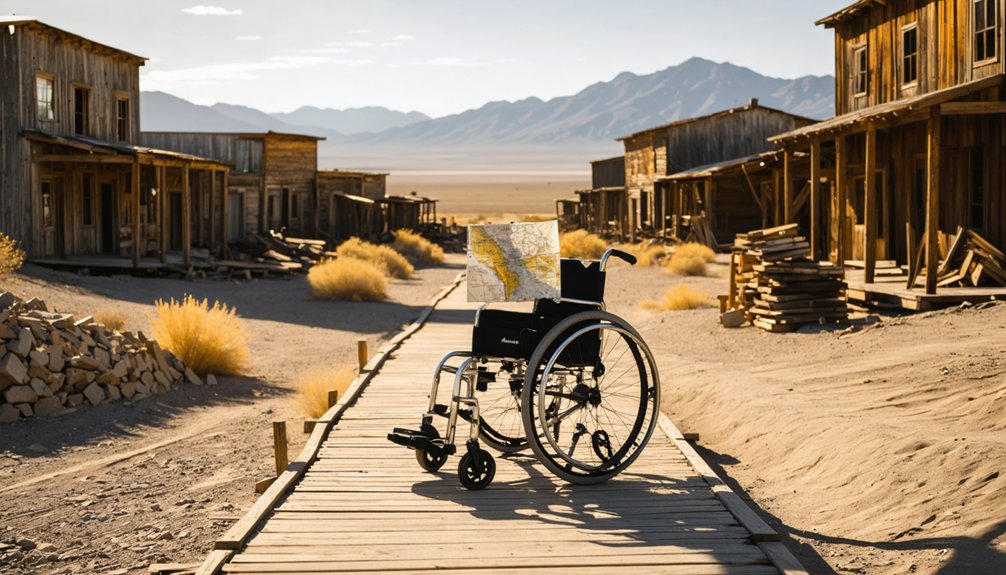
Before you head out, know that places like Bodie sit at high elevation, where thin air and uneven ground can make pushing a manual wheelchair genuinely exhausting.
Sites like Bodie even offer high-flotation loaner wheelchairs at no charge, designed specifically to handle rough, unpaved terrain.
Matching your mobility gear to the specific conditions of each site—whether that’s a high-flotation chair for rocky ground or a scooter for Goldfield’s smoother paths—can make the difference between a frustrating visit and a memorable one.
Navigating Altitude and Uneven Ground
Visiting a ghost town in a wheelchair means terrain and altitude can make or break your experience before you’ve even reached the first historic building. Sites like Bodie sit at high elevation, where thinner air adds fatigue faster than you’d expect. Uneven ground compounds the challenge, so knowing what you’re facing helps you plan smarter and stay engaged with the historical preservation around you.
Here’s what to keep in mind:
- Bring a companion — pushing assistance matters on rocky or sloped surfaces
- Check elevation ahead — high-altitude sites drain energy quickly, even for experienced travelers
- Ask about adapted equipment — Bodie offers two high-flotation wheelchairs at no charge
Strong visitor engagement starts with honest preparation, not guesswork.
Choosing the Right Mobility Gear
Choosing the right mobility gear can determine how much of a ghost town you actually get to explore. Standard wheelchairs often struggle on gravel, packed dirt, and uneven historic surfaces where historical preservation takes priority over pavement.
High-flotation wheelchairs, like those available free of charge at Bodie State Historic Park, handle rough terrain far better than conventional frames.
If you’re bringing your own chair, consider wider tires and a sturdy frame rated for outdoor use.
Power chairs can help at lower elevations, but altitude affects battery performance, so plan accordingly.
Before arriving, check each site’s visitor amenities—some locations offer loaner equipment, accessible parking, or attendant assistance.
Knowing what’s available lets you pack smart and spend more time experiencing history than orienteering obstacles.
Parking, Loaner Chairs, and Surface Conditions: What to Confirm Before Visiting
Planning ahead can make or break a ghost town visit when mobility is part of the equation. Before you load up and head toward vintage mining landscapes and historic signage, confirm these three essentials:
- Parking location: At Calico, the main lot sits below the plateau, so ask whether upper handicapped parking is available that day.
- Loaner chairs: Bodie offers two free high-flotation wheelchairs, but they go fast—call ahead to reserve one.
- Surface conditions: Smooth paths at Goldfield differ dramatically from Bodie’s uneven terrain or Calico’s steep paved road.
Don’t assume accessibility matches the brochure. A quick phone call saves you from arriving unprepared. You deserve the freedom to explore on your terms, so verify before you go.
Frequently Asked Questions
Are Ghost Town Accessible Tours Available for Visitors Who Are Deaf?
The knowledge doesn’t confirm deaf-specific tours, but you’ll want to contact each site directly about sign language interpreters or tactile maps — they’re your best advocates for ensuring an inclusive, fulfilling ghost town experience.
Can Electric Scooters Be Rented Near Wheelchair-Accessible Ghost Town Sites?
You’ll find that electric scooter rentals aren’t confirmed near most sites, but Goldfield’s wheelchair-friendly paths suit personal scooters well. We’d recommend calling ahead to explore local rental options before your visit!
Are Service Animals Permitted Inside Ghost Town Historic Buildings?
You’ll find that service animal regulations grant you virtually unstoppable access! Historic building access typically welcomes your service animal everywhere you go, though you should always confirm site-specific rules directly with each ghost town before visiting.
Do Accessible Ghost Towns Offer Sensory-Friendly Visiting Hours or Experiences?
You won’t typically find formal sensory-friendly environments or scheduled quiet hours at accessible ghost towns, but you can contact sites directly to ask about accessible transportation options and low-crowd visiting times that suit your needs.
Are Discounted Admission Fees Available for Disabled Visitors at Ghost Towns?
Discounted tickets aren’t universally guaranteed, but you’ll find some ghost towns, like Bodie, don’t charge for adaptive wheelchair loans. Always call ahead—you may uncover fee waivers, accessible parking perks, and other accommodations tailored just for you.
References
- https://www.tripadvisor.com/ShowUserReviews-g32110-d102532-r451356196-Bodie_State_Historic_Park-Bridgeport_California.html
- https://www.tripadvisor.com/ShowUserReviews-g45277-d7208472-r767354703-Garnet_Ghost_Town-Missoula_Montana.html
- https://www.tripadvisor.com/ShowUserReviews-g31295-d10801088-r741982834-Oatman_Ghost_Town-Oatman_Arizona.html
- https://wheelchairtraveling.com/most-unique-usa-destinations-and-wheelchair-travel/
- https://www.reddit.com/r/KnottsBerryFarm/comments/vz2the/best_shows_and_stuff_to_do_for_someone_in_a/
- https://bromeliadliving.accesstravel.com/fr-FR/Story/Index/4875
- https://rollinginarv-wheelchairtraveling.blogspot.com/2015/03/calico-ghost-town-and-campground.html
- https://www.disabled-world.com/travel/usa/themed-towns.php
- https://www.mobilityworks.com/blog/8-accessible-haunted-locations-in-the-united-states/
- https://wheelchairtraveling.com/25-strangest-wheelchair-accessible-attractions-on-earth/