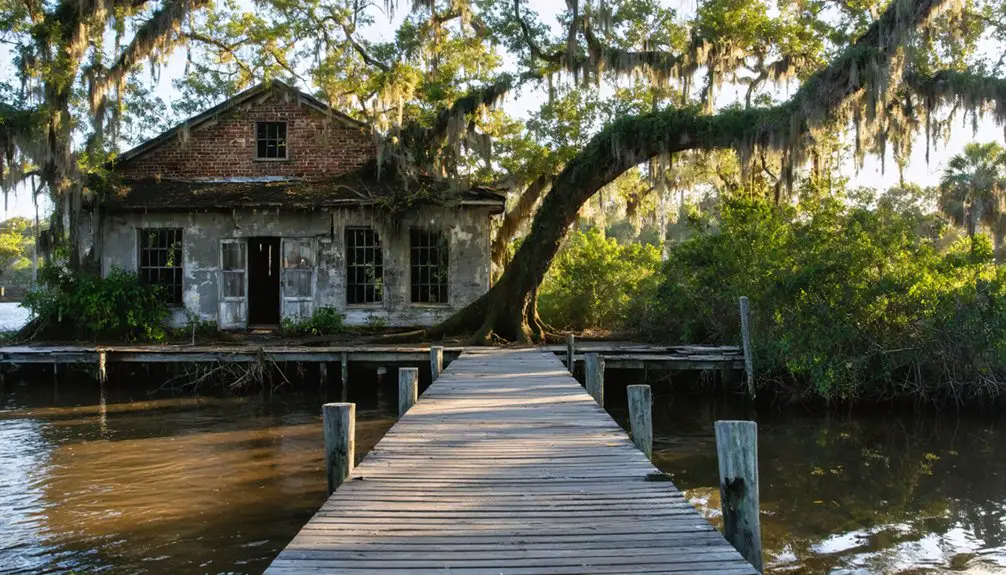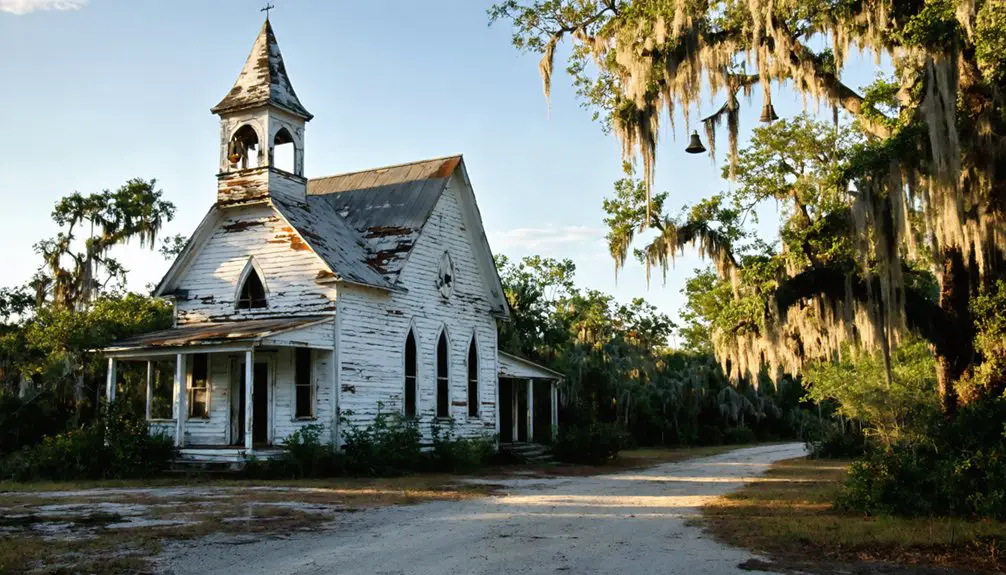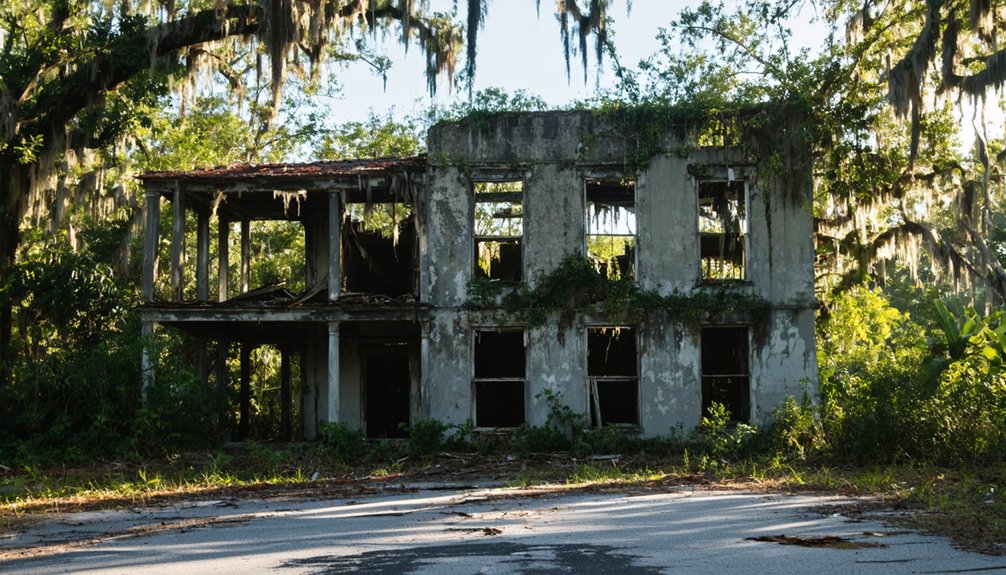
Planning a ghost town road trip from Wisconsin to Florida puts you on an 1,200-to-1,400-mile journey through two of America’s most haunting abandoned landscapes. You’ll explore Wisconsin’s vanished mill towns, cursed crossroads, and legendary haunted highways before heading south toward Florida’s forgotten corridors along State Road 70. Break the drive into three manageable days, with overnight stops in Nashville, Chattanooga, and Savannah. There’s far more to uncover about every eerie mile ahead.
Key Takeaways
- The Wisconsin-to-Florida road trip spans 1,200–1,400 miles, best divided into three days with daily segments of 400–500 miles.
- Key Wisconsin ghost towns feature legends like the Ridgeway Ghost, haunted highways, and Summerwind Mansion ruins.
- Florida ghost town highlights include Pine Level, Tocoi, Fort Dade, Rollestown, and Eldora along State Road 70.
- Overnight stops in Nashville, Chattanooga, Savannah, and Ocala provide practical rest points with regional cultural experiences.
- Essential gear includes sturdy shoes, offline maps, paper backups, bug spray, first-aid kits, and portable battery packs.
Wisconsin Ghost Towns That Disappeared Almost Without a Trace
Wisconsin has a knack for swallowing its own history whole — dozens of settlements that once held post offices, sawmills, and rail depots have since vanished so completely that even longtime locals can’t point to where they stood.
Economic collapse, shifting rail lines, and resource depletion erased these communities faster than historical preservation efforts could document them. You’ll sometimes find a single weathered building standing alone in a field, the last evidence that hundreds of people once built lives there.
Local folklore fills the gaps where records don’t, with stories of phantom figures and cursed crossroads haunting the spaces where towns once thrived. When you explore these sites, you’re not just chasing ruins — you’re reclaiming forgotten freedom that mainstream history conveniently left off the map.
The Best Ghost Towns to Visit on a Wisconsin-to-Florida Road Trip
Stretching from the upper Midwest all the way down to Florida’s sun-baked corridors, this road trip lets you layer two distinct ghost-town traditions into a single unforgettable drive.
From the upper Midwest to Florida’s sun-baked corridors, two ghost-town traditions collide in one unforgettable drive.
In Wisconsin, you’ll pass through settlements that vanished after rail lines shifted and resources dried up, leaving behind single structures and quiet fields that sometimes host wildflower festivals each spring. These stops double as historic landmarks worth photographing before you head south.
Once you cross into Florida, anchor your route along State Road 70, moving through Myakka City, Pine Level, and Arcadia. Pine Level stands out as a clearly documented ghost town that once thrived more than a century ago.
Stack these stops efficiently, and you’ll cover two states of forgotten history without wasting a mile.
How State Road 70 Runs Through Florida’s Most Forgotten Towns
State Road 70 cuts across Florida like a time capsule on asphalt, connecting Bradenton on the Gulf Coast to Fort Pierce on the Atlantic while threading through towns that history quietly left behind. You’ll pass through Myakka City, Pine Level, Arcadia, Lake Placid, and Okeechobee — each carrying remnants of a wilder Florida.
Pine Level once thrived as a county seat before emptying out completely. Along the way, you’ll spot ghost town architecture frozen mid-decay: weathered storefronts, collapsed rooflines, and crumbling foundations reclaimed by subtropical growth.
Some stops hint at abandoned mining operations that once drove local economies before the resources dried up. Keep your map handy, slow down through small corridors, and let SR 70 reveal the forgotten communities most travelers speed right past.
Florida Ghost Towns Worth Pinning to Your Map
Before you hit the road, drop these Florida ghost towns into your GPS and let the coordinates do the storytelling. Each stop blends historical preservation with raw, forgotten Americana that no polished tourist attractions can replicate.
- Pine Level – Once a booming county seat, now a quiet ghost town with deep Southern roots.
- Tocoi – A former St. Johns River landing swallowed by time and overgrowth.
- Rollestown – An 18th-century settlement that vanished almost without a trace.
- Fort Dade – A military ghost town sitting on Egmont Key, accessible only by boat.
- Eldora – A St. Johns River community frozen in the 1800s.
Pin these spots, plan your route, and let Florida’s erased history speak directly to your sense of adventure.
Why Pine Level Is the Best First Ghost Town Stop in Florida
Once a thriving county seat in DeSoto County, Pine Level now sits quietly off the beaten path as one of Florida’s most accessible and historically rich ghost towns. You’ll find it more than a century removed from its peak, yet its story still echoes through the landscape. It’s the perfect first stop because it eases you into Florida’s ghost-town culture without overwhelming you.
Pine Level rewards your curiosity with tangible evidence of historical preservation efforts and traces of abandoned architecture that survived time’s slow erasure. You don’t need a guided tour or special access — just a reliable map and a willingness to explore.
Starting here sets the right tone for every ghost town you’ll visit after, grounding your road trip in real history from the very first mile.
How Long Does the Wisconsin-to-Florida Ghost Town Drive Actually Take?
You’re looking at roughly 1,200 to 1,400 miles depending on your Wisconsin starting point, which translates to about 18 to 22 hours of pure drive time spread across at least two or three days.
Breaking that into manageable daily segments of 400 to 500 miles keeps fatigue from turning your ghost-town adventure into a grind.
Remember to add 30 minutes per day for each passenger who’ll need regular rest stops, since those bathroom breaks and stretch sessions add up fast on a multi-day haul.
Total Drive Time Estimate
Three days of solid driving separates Wisconsin from Florida’s ghost-town corridors, but that number shifts fast once you factor in stops, sleep, and the inevitable detour down a county road that looks too interesting to skip.
Local legends and historical architecture demand time you won’t regret spending.
Realistic checkpoints to build your estimate around:
- Base drive: roughly 18–22 hours of pure wheel time
- Daily cap: most drivers handle 6–8 hours comfortably before fatigue hits
- Ghost-town stops: budget 30–60 minutes per site
- Bladder math: add 30 minutes per day per passenger
- Overnight splits: plan at least two overnight stops to stay sharp
Treat the timeline as a living document — adjust it freely as better stops reveal themselves along the route.
Daily Mileage Breakdown
Splitting the drive into three manageable days keeps fatigue from turning a fun ghost-town hunt into a grinding endurance test. Aim for roughly 400 miles on day one, pushing south through the Midwest and clearing Indiana or Kentucky.
Day two covers another 380–420 miles, dropping you into Georgia or northern Florida by evening.
Day three finishes the final 200–250 miles, delivering you to Florida’s ghost-town corridors with energy to spare.
Spacing your miles this way also creates natural detour windows. You’ll spot abandoned architecture along secondary highways that interstate sprinting would erase entirely.
Those crumbling storefronts and forgotten depots matter — they’re living examples of historical preservation hiding in plain sight. Shorter daily targets mean you actually stop, look, and absorb what remains.
Rest Stop Planning Tips
Mileage targets only tell half the story — the other half lives in every pit stop, gas fill-up, and roadside stretch you’ll need along the way. Smart rest stop planning keeps your ghost town road trip moving without burning you out before you reach Florida’s abandoned corridors.
Use these stops strategically:
- Add 30 minutes per traveler to each driving day for realistic timing
- Fuel up near ghost town sites to double your stops with historical preservation value
- Research local legends at small-town diners — locals often share the best stories
- Schedule stretch breaks every two hours to stay sharp on long interstate segments
- Keep a flexible buffer day built into your itinerary for unexpected detours worth exploring
Best Overnight Stops Along the Ghost Town Route
Because this route stretches from Wisconsin all the way down to Florida’s Atlantic coast, you’ll want to break the drive into manageable overnight chunks rather than grinding through marathon sessions behind the wheel.
From Wisconsin to Florida’s Atlantic coast, pace yourself—this route rewards patience far more than it punishes slowness.
Consider stopping in Nashville or Chattanooga, where historical preservation efforts have kept downtown districts rich with cultural significance and easy walkability.
Crossing into Georgia, Savannah offers another strong overnight anchor with its haunted history and coastal atmosphere.
Once you’re in Florida, Ocala sits at a practical midpoint before you push toward the ghost-town corridor along State Road 70.
Each overnight stop isn’t just a rest—it’s a chance to absorb regional character, refuel your curiosity, and arrive at each abandoned settlement with fresh eyes rather than road-weary ones.
What to Pack for a Ghost Town Road Trip
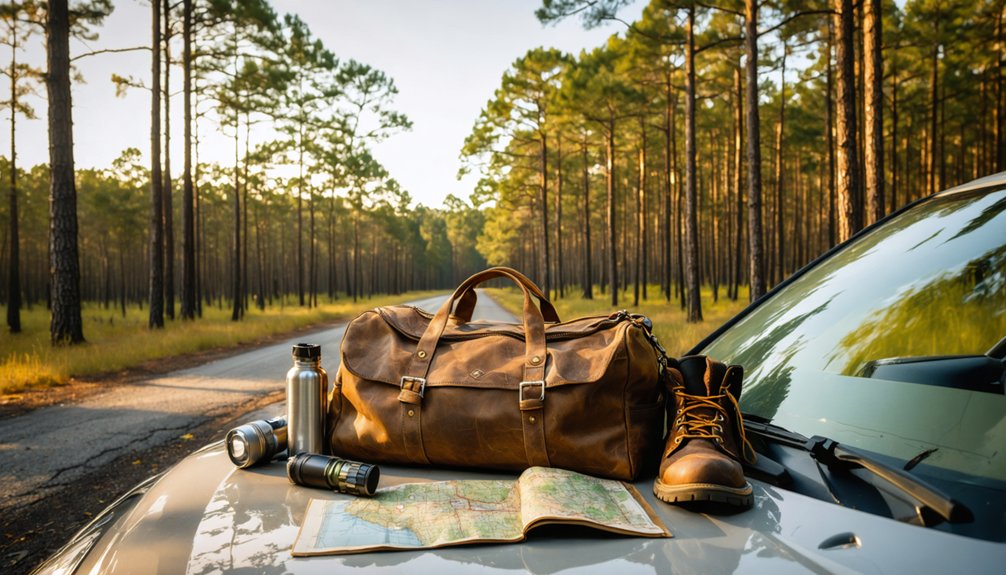
You’ll want to pack smart for a ghost town road trip, since many of these sites sit far from the nearest town or service station. Toss in sturdy walking shoes, a flashlight, bug spray, and a first-aid kit before you hit the road.
Pair that gear with a reliable GPS device and a paper backup map, because cell service along remote Florida corridors like State Road 70 or deep in rural Wisconsin can disappear without warning.
Essential Gear To Pack
Packing smart makes the difference between a memorable ghost-town adventure and a miserable one. You’re chasing local folklore and historic preservation across open roads, so travel light but travel ready.
Throw these essentials into your bag before you leave:
- Offline maps and GPS coordinates — cell service vanishes near abandoned sites
- Sturdy walking shoes — crumbling foundations and uneven terrain demand solid footing
- First-aid kit — remote locations mean slow emergency response
- Camera or charged phone — document surviving structures before they disappear forever
- Water and snacks — ghost towns rarely sit near convenience stores
Keep your gear minimal but purposeful. Every item should earn its spot. The road rewards the prepared traveler, and nothing kills freedom faster than being stranded without the basics.
Navigation And Safety Tools
Knowing where you’re when cell towers disappear is what separates a great ghost-town detour from a genuine emergency. Download offline maps before leaving Wi-Fi range, and carry a dedicated GPS unit as backup. Paper maps still earn their place in your bag, especially along rural Wisconsin corridors and Florida’s State Road 70, where signals drop without warning.
For visitor safety, pack a basic first-aid kit, a flashlight with extra batteries, and an emergency whistle. Many historical preservation sites sit on unstable ground, so sturdy boots protect you from debris and uneven surfaces.
Share your planned route with someone at home before you leave. A charged portable battery pack keeps your devices alive when you’re deep inside a forgotten town with no outlet in sight.
Haunted Ghost Town Roads and the Legends That Still Linger
Some ghost towns don’t just sit in silence — they carry stories that locals have passed down for generations, and Wisconsin’s abandoned roads are full of them. Urban legends and folklore stories turn these forgotten stretches into something you’ll actually feel as you drive through.
Watch for these legendary spots along your route:
- Haunted Highway 12 — phantom hitchhikers reportedly appear near abandoned crossroads
- The Ridgeway Ghost — Wisconsin’s oldest urban legend tied to a vanished settlement
- Blood Bride Road — a tragic folklore story locals still warn travelers about
- Witch Road in Stoughton — flickering lights and unexplained figures near old ruins
- Summerwind Mansion ruins — Wisconsin’s most infamous haunted estate site
These legends don’t just entertain — they connect you directly to the human history behind every crumbling foundation.
Frequently Asked Questions
Are Ghost Town Sites on Private Property Requiring Special Permission to Visit?
Many ghost town sites sit on private property, so you’ll need to research permission requirements before you visit. Always contact landowners ahead of time — you’ll avoid trespassing issues and enjoy your freedom-fueled adventure responsibly.
What Is the Best Time of Year to Visit Florida Ghost Towns?
Florida sees 40 million tourists annually, so you’ll want to visit ghost towns in winter (November–March). You’ll dodge summer heat, enjoy cooler exploration weather, and find these historical preservation sites less crowded than typical tourist attractions.
Can Children Safely Explore Abandoned Ghost Town Structures and Sites?
You can let kids explore ghost towns safely if you take proper safety precautions—stay outside crumbling structures, respect historical preservation efforts, and supervise closely. These adventures spark curiosity while teaching children about America’s fascinating, forgotten past!
Are There Any Guided Ghost Town Tours Available Along This Route?
You’ll find guided ghost town tours along this route that blend haunted legends with incredible photography opportunities. Local historians and tour companies lead immersive experiences, giving you the freedom to explore safely while uncovering each abandoned settlement’s mysterious, enthralling past.
Do Any Florida Ghost Towns Charge Admission or Parking Fees?
Most Florida ghost towns won’t ask you to part with your dollars—they’re freely accessible. You’ll find wonderful photography opportunities and historical preservation efforts at these sites without fees restricting your explorative spirit.
References
- https://www.facebook.com/groups/703560661832796/posts/966687035520156/
- https://www.honeytrek.com/wisconsin-road-trip/
- https://www.wisconsinfrights.com/haunted-roads-in-wisconsin/
- https://www.tchdailynews.com/2019/09/13/take-a-haunted-road-trip-to-visit-some-of-the-spookiest-places-in-wisconsin/
- https://postcardnarrative.com/florida-roadtrip/
- https://www.youtube.com/watch?v=kG-k_9O1OTE
- https://www.florida-backroads-travel.com/old-florida-towns-on-sr-70.html
- https://www.florida-backroads-travel.com/florida-ghost-towns.html
- https://en.wikipedia.org/wiki/List_of_ghost_towns_in_Wisconsin