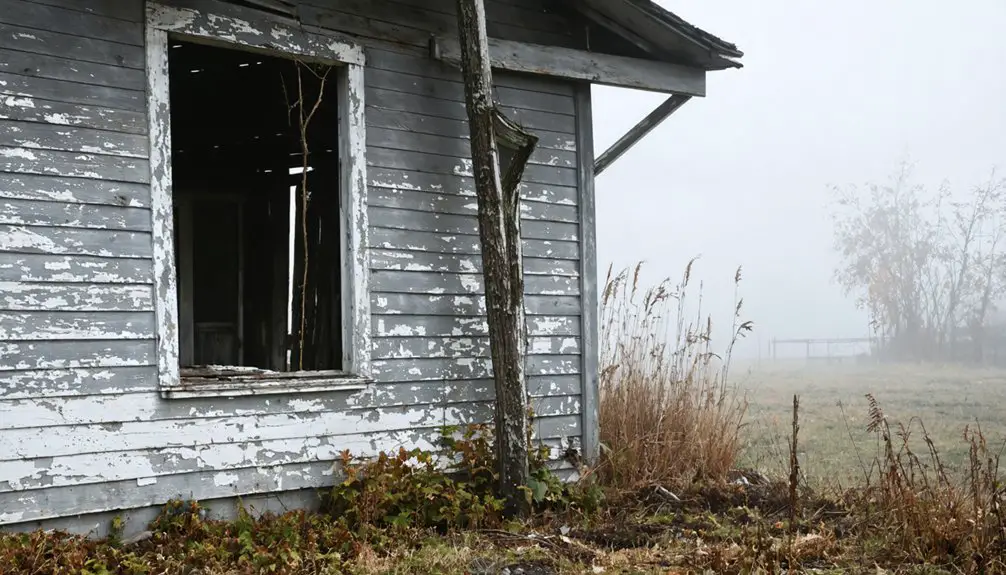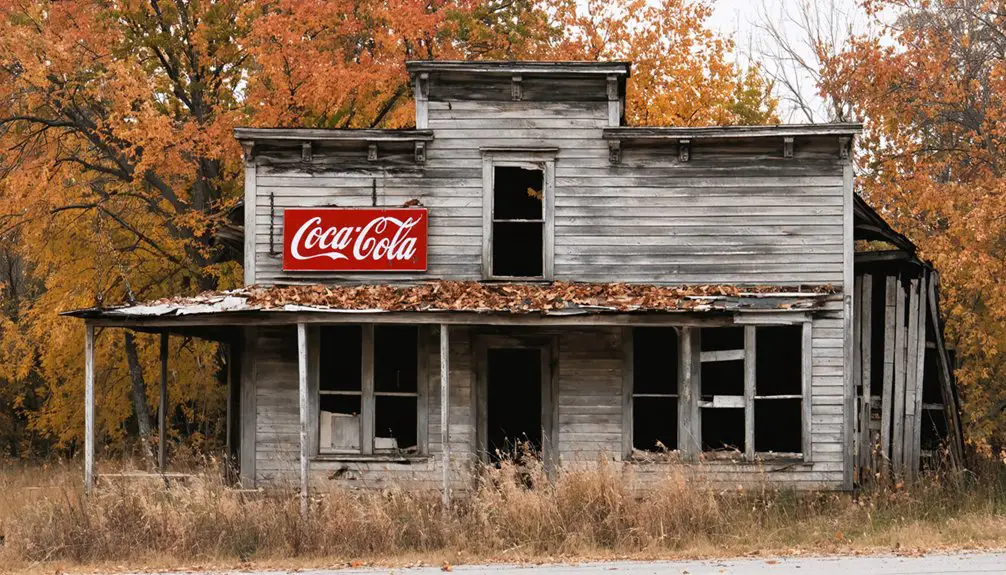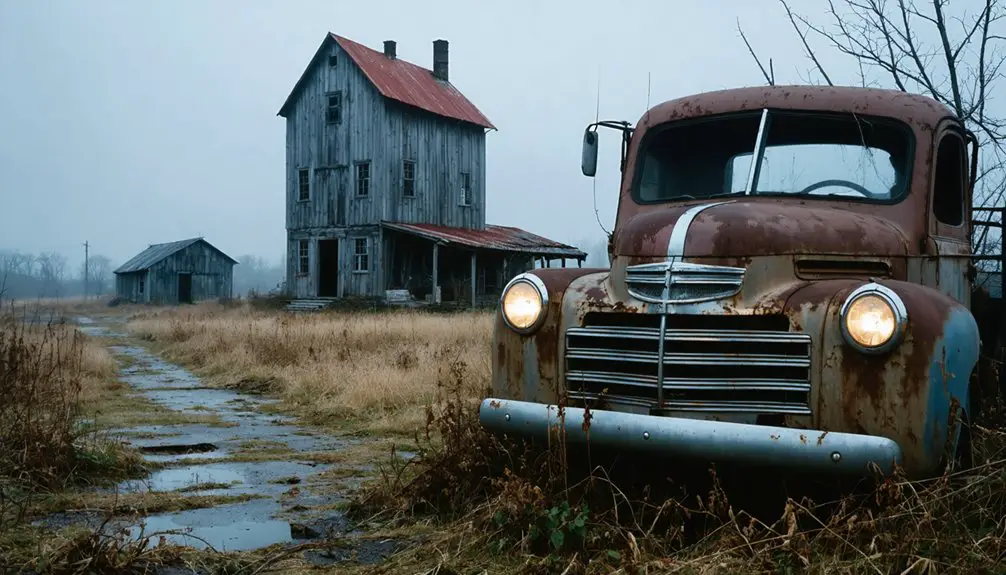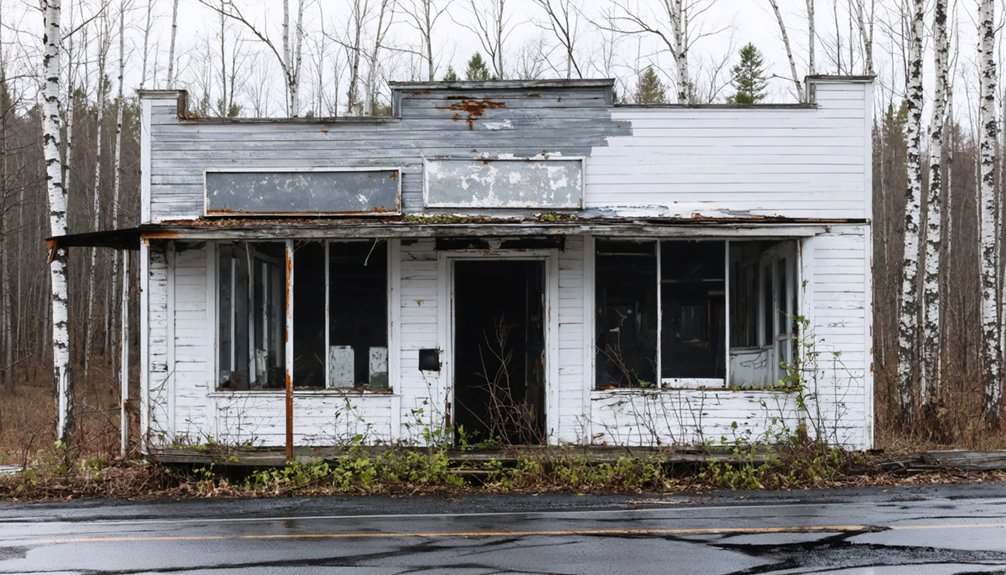
Planning a ghost town road trip to Atkinson, Michigan means heading nine miles northwest of Iron River into the heart of Ottawa National Forest. Founded in 1915, this once-thriving sawmill town burned in 1921 and completely collapsed within six years. Today, you’ll find old sawmill pilings in the Paint River and partial dam remnants — quiet echoes of a forgotten boomtown. Stick around, and you’ll uncover everything you need to explore Atkinson like a pro.
Key Takeaways
- Atkinson, Michigan, is located 9 miles northwest of Iron River, accessible via standard 2WD roads with coordinates 46°13′33″N 88°42′02″W.
- Visit between late spring and early fall for optimal exploration, offering wildflowers, long daylight hours, and stunning fall foliage.
- Pack essential gear including sturdy boots, GPS, topographic maps, water, and a first aid kit for safe exploration.
- Explore remnants like old sawmill pilings in the Paint River and partial remains of the original Atkinson dam.
- Nearby ghost towns, including Brownstone and Mineral Hills, make Atkinson a perfect starting point for a regional road trip.
How Atkinson Went From Boomtown to Ghost Town in Six Years
When R.F. Gibbs built his sawmill here in 1915, he transformed a forgotten settlement into a thriving community almost overnight. You’d have found over 200 residents living and working alongside the Paint River, all depending on that single mill for their livelihoods.
The sawmill history of this small Upper Peninsula town reads like a classic American boom story — until it isn’t.
Then, in 1921, fire destroyed everything. Within six years of its revival, the town collapsed just as rapidly as it had grown. Residents scattered, businesses shuttered, and nature quietly reclaimed what people had built.
What’s Actually Left to See at Atkinson Today
So what does a town look like after fire, abandonment, and a century of forest growth have had their way with it? At Atkinson, you’ll find nature firmly in charge.
No buildings survived the 1966 controlled burn, but the site still rewards curious explorers. Scattered metal fragments and wood scraps carry genuine ghost town artifacts and historical significance back to the lumber era.
Wade toward the Paint River and you’ll spot old sawmill pilings still standing in the current. The partial remains of the original Atkinson dam are visible too. You’re basically reading the town’s biography through debris and river structures.
The forest has reclaimed everything else, blending what little remains into the Ottawa National Forest landscape — a hauntingly beautiful reward for anyone willing to explore it.
Where Exactly Is Atkinson Located?
Tucked into Iron County’s Iron River Township in Michigan’s Upper Peninsula, Atkinson sits about 9 miles northwest of Iron River within the Ottawa National Forest, at coordinates 46°13′33″N 88°42′02″W.
The Paint River runs alongside the old townsite, and you’ll still spot weathered dam remnants along its banks — quiet physical proof of Atkinson history that most travelers never discover.
The Paint River still carries Atkinson’s secrets, its weathered dam remnants whispering stories most travelers never stop to hear.
You’ll reach the area via accessible 2WD roads, making it an easy detour for anyone chasing ghost town legends across Michigan’s wild Upper Peninsula.
The surrounding Ottawa National Forest swallows what little remains, blending ruins into dense woodland.
Knowing the exact location matters here — without it, you’d drive right past one of the region’s most forgotten lumber-era stories without ever realizing it.
The Best Time of Year to Visit Atkinson
Knowing where Atkinson sits is only half the battle — you’ll also want to time your visit right. Late spring through early fall offers the best conditions for exploring this remote ghost town. Winters bring heavy snow and brutal cold, making access difficult.
Plan your trip around these seasonal advantages:
- Late spring: Wildflowers bloom, trails dry out, and wildlife observations become rewarding as animals emerge.
- Summer: Long daylight hours maximize your exploration time for seasonal activities like hiking surrounding Ottawa National Forest trails.
- Early fall: Crisp air, stunning foliage, and quieter roads create ideal ghost town atmosphere.
- Avoid winter: Deep snow buries artifacts and blocks 2WD road access entirely.
Pack sturdy boots, bring water, and embrace the freedom of wandering Michigan’s Upper Peninsula on your own terms.
Getting to Atkinson From Iron River
From Iron River, you’ll head northwest roughly 9 miles to reach the ghost town of Atkinson, tucked within Ottawa National Forest.
The roads are accessible by standard 2WD vehicles, so you won’t need specialized equipment for the trip.
Once you spot the Paint River and the surrounding forest landscape, you’re closing in on what remains of this long-abandoned lumber town.
Starting Point: Iron River
Before heading out to Atkinson, you’ll want to set your starting point in Iron River, a small city in Iron County that sits roughly 9 miles southeast of the ghost town.
Iron River gives you a solid base for exploring this remnant of ghost town history tied directly to the lumber industry decline of the early 1900s.
Stock up here before venturing out:
- Fuel – No services exist near Atkinson
- Supplies – Pack water, snacks, and navigation tools
- Local knowledge – Stop at Iron County Historical Museum for context
- Weather check – Conditions change quickly in the Upper Peninsula
Iron River keeps you grounded while Atkinson pulls you into Michigan’s forgotten past, just minutes away through Ottawa National Forest.
The drive northwest from Iron River to Atkinson covers roughly 9 miles through Ottawa National Forest, and you’ll handle it comfortably on 2WD roads.
This road trip rewards you with dense forest scenery and glimpses of the Paint River winding alongside the route. Follow the scenic routes carefully, watching for unmarked side roads that branch into the woods.
As you approach the former townsite, slow down and scan your surroundings. The forest gradually swallows what was once a bustling lumber community, so subtle details matter.
You’ll notice the landscape shift near the old dam remnants along the Paint River. Respect any private driveways you encounter — a few residents still live in the surrounding countryside.
Keep your eyes open, and Atkinson will reveal itself quietly through the trees.
Arriving At Ottawa Forest
Driving northwest out of Iron River, you’ll cover about 9 miles before Ottawa National Forest begins swallowing the roadside scenery whole. The shift happens gradually, then suddenly — pavement gives way to gravel, and civilization fades into dense canopy.
Once inside Ottawa’s boundaries, you’re operating on the forest’s terms. Keep your eyes open for:
- Ottawa wildlife crossing unpaved side roads, including deer and black bear
- Scenic trails branching off main corridors toward the Paint River corridor
- Unmarked turnoffs leading toward Gibbs City’s former footprint
- Private driveways scattered among the trees deserving careful respect
Your 2WD vehicle handles these roads fine in dry conditions. The forest fundamentally absorbed Atkinson decades ago, making the surrounding wilderness as much the destination as the ghost town itself.
Sawmill Pilings, Dam Remnants, and What Else Survives at Atkinson
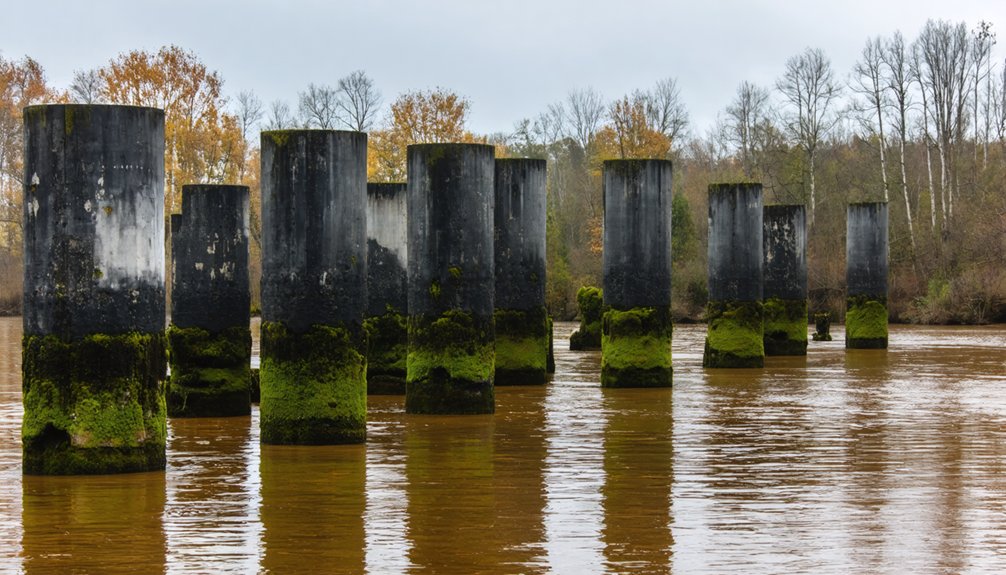
Standing at the edge of the Paint River, you’ll notice the old sawmill pilings still jutting from the water — weathered, dark, and surprisingly intact given everything else that’s vanished here.
These silent remnants anchor Atkinson’s sawmill history to the present, giving you something tangible to connect with amid the silence.
These silent remnants bridge past and present, offering something real to hold onto where so little else remains.
Nearby, part of the original Atkinson dam still holds its position along the riverbank. It’s one of the few structural survivors worth seeking out.
Beyond the water, scattered ghost town artifacts turn up throughout the surrounding woods — twisted metal pieces, wood scraps, and occasional debris hiding beneath the undergrowth.
You won’t find standing buildings; a 1966 controlled burn eliminated those. What remains demands patience and a sharp eye, but the reward feels genuinely earned.
Other Ghost Towns Near Atkinson in Iron County
Iron County holds more ghost town stories than most visitors expect, and Atkinson is just one chapter.
Once you’ve explored the Paint River corridor, you’ll find nearby attractions worth adding to your road trip itinerary.
Several other ghost towns dot the surrounding landscape:
- Brownstone – another lumber-era settlement swallowed by Ottawa National Forest
- Mineral Hills – once active with iron mining operations, now silent
- Prickett – a small vanished community tied to early railroad expansion
- Stambaugh Township ruins – scattered remnants reflecting Iron County’s industrial past
Each site tells a raw, honest story of boom-and-bust cycles that shaped Michigan’s Upper Peninsula.
Exploring these ghost towns together gives you a fuller picture of the region’s forgotten history and rewards curious, independent travelers willing to venture off the main road.
What to Bring When Visiting Atkinson
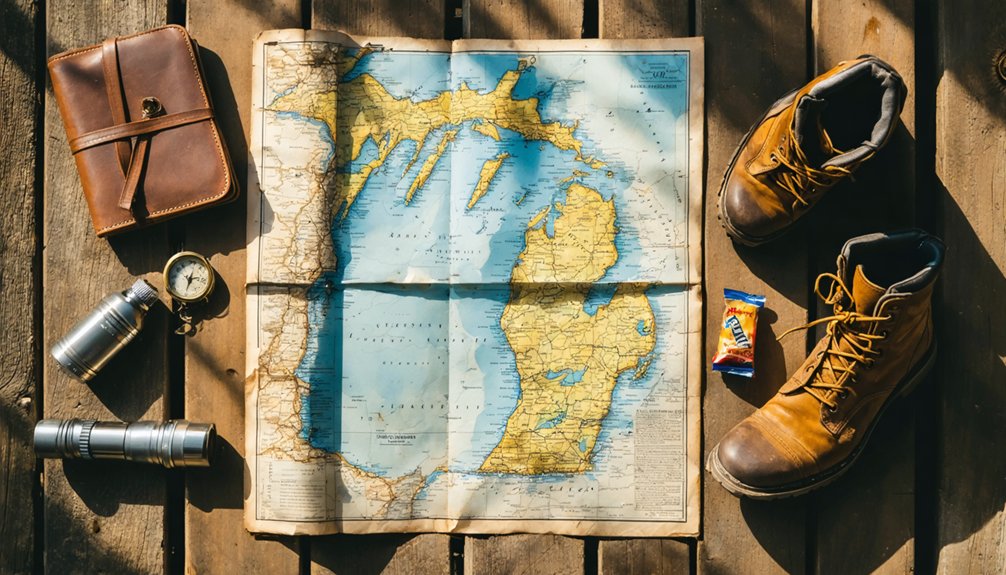
When you head out to Atkinson, you’ll want to pack smart since this remote Ottawa National Forest site offers no services or shelters.
Bring sturdy boots, water, and a metal detector to uncover the scattered artifacts hiding beneath decades of forest growth.
You’ll also need a reliable GPS, a detailed trail map, and a compass, since cell service is spotty and the old town boundaries blend seamlessly into the surrounding woodlands.
Essential Exploration Gear
Exploring a ghost town like Atkinson means trading sidewalks for forest floors, so packing smart makes the difference between a rewarding trip and a frustrating one.
Your ghost town gear should balance practicality with readiness for uneven terrain and unpredictable weather. These exploration essentials will keep you moving freely through the Ottawa National Forest landscape:
- Sturdy waterproof boots for traversing muddy riverbanks near Paint River’s old sawmill pilings
- Layered clothing to handle cool Upper Peninsula summers and unexpected temperature drops
- A detailed trail map or GPS device since forest roads can disorient even experienced explorers
- A small backpack with water and snacks so you stay energized during thorough artifact searches
Pack light but pack right, and Atkinson’s hidden remnants will reward your curiosity.
Maneuvering the forested back roads around Atkinson demands more than a good sense of direction—you’ll want reliable tools that keep you oriented and prepared for the unexpected.
Download offline navigation apps like onX Maps or Gaia GPS before you leave cell range, since signal drops fast inside Ottawa National Forest. Carry a printed topographic map as backup.
Safety tips worth following include packing a first aid kit, a fully charged portable battery, and a whistle. Wear sturdy boots since you’ll be stepping over debris, old pilings, and uneven riverbanks along the Paint River.
Let someone know your route and expected return time. These simple precautions give you the freedom to explore confidently without turning an adventure into an emergency.
Frequently Asked Questions
Was Atkinson Ever Known by Any Other Names Before Gibbs City?
Yes, you’ll find that Atkinson carried its original “birth name” before embracing Historic Name Changes. Local Legends tell us it started as simply Atkinson, centered around a sawmill, until R.F. Gibbs transformed it into Gibbs City in 1915.
Are There Any Museums Where I Can Learn More About Atkinson?
You’ll find local history and museum exhibits about Atkinson at the Beaumier Center and Iron County Historical Museum. They’re perfect stops for exploring the town’s fascinating sawmill legacy and ghost town story!
Is It Legal to Take Artifacts I Find at Atkinson?
Over 90% of U.S. ghost towns sit on protected land. At Atkinson, you’ll face serious legal implications around artifact preservation — it’s within Ottawa National Forest, so you can’t legally remove anything you find there.
Did Anyone Famous Ever Live in Atkinson or Gibbs City?
The knowledge doesn’t reveal any famous residents or local legends tied to Atkinson or Gibbs City. You’re exploring a rugged lumber-era ghost town where ordinary workers and mill operators shaped its brief, fascinating history.
How Was Atkinson’s History Documented, and by Whom?
You’d think historical records of Atkinson were lost forever, but local archives, historical societies, and Walter Romig’s *Michigan Place Names* preserved its story. Prominent families and the Iron County Historical Museum actively documented this forgotten lumber town’s fascinating rise and fall.
References
- https://en.wikipedia.org/wiki/Gibbs_City
- https://www.ghosttowns.com/states/mi/gibbscity-atkinson.html
- https://99wfmk.com/gibbs-city-michigan/
- https://www.youtube.com/watch?v=d_vMU5E1JpI
- https://www.youtube.com/watch?v=yyYu9j1naDA
- https://beaumier.nmu.edu/ghosttowns/
- https://www.oocities.org/lukefisk.geo/ghost_towns.html