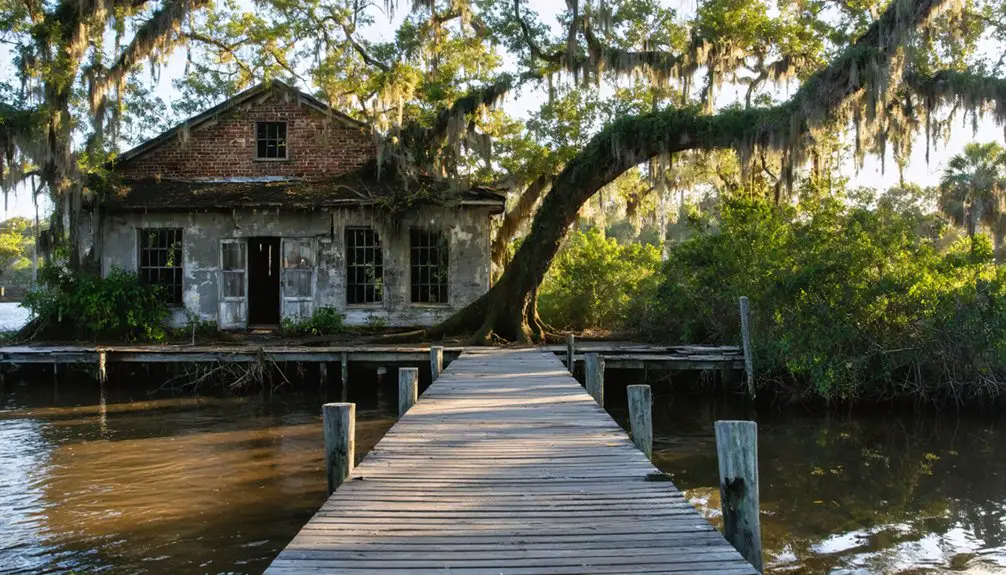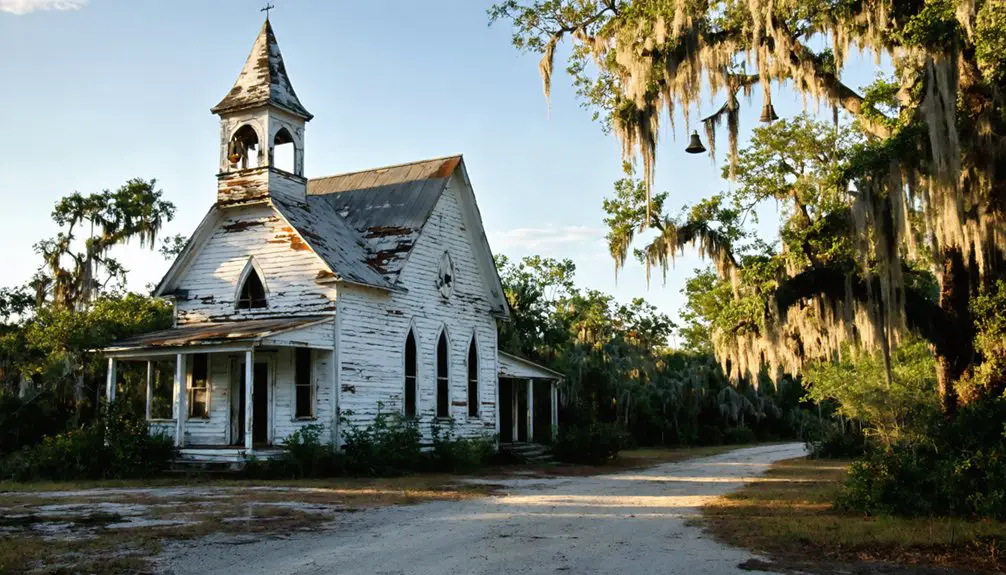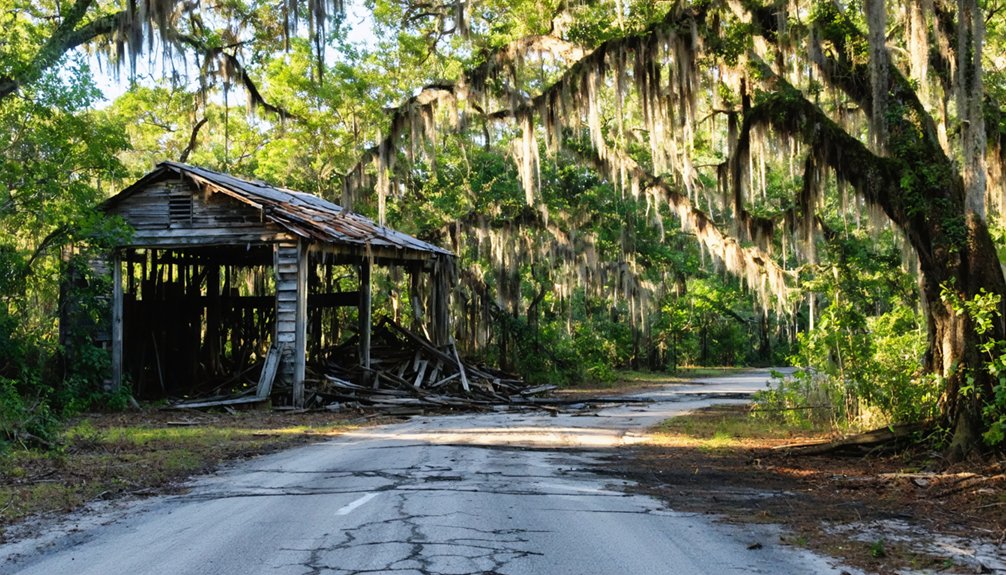
Planning a ghost town road trip to Linden, Florida means heading to Sumter County, where SR 50 meets CR 719. This forgotten citrus settlement was established in 1842 but didn’t survive the devastating Great Freeze of 1894-95, which wiped out crops and pushed nearly every resident out for good. Today, Linden Cemetery stands as the most significant surviving landmark, quietly preserving pioneer stories. Stick around — there’s much more to uncover about Linden’s haunting past.
Key Takeaways
- Linden Ghost Town is located in Sumter County, accessible via the SR 50 and CR 719 intersection, marking the heart of old Linden.
- The Linden Cemetery is the most significant surviving landmark, preserving stories of early settlers and their 19th-century pioneer legacy.
- Nearby ghost towns Bamboo, Tarrytown, and Center Hill can be explored via SR 44 and CR 468 to enrich your road trip.
- Visitors should expect minimal physical remnants, respect historical markers, and stay alert for subtle signs of abandoned landmarks.
- Annual descendant gatherings at Mabel’s Cemetery Picnic Grounds, active since 1897, connect present-day visitors to Linden’s rich pioneer history.
Linden, Florida: A Citrus Town Built on Seminole War Land in 1842
Tucked into the heart of Sumter County, Florida, Linden stands as a quiet reminder of what the post-Second Seminole War frontier once looked like.
The Morgan family claimed this land around 1842, shortly before the war’s end, planting roots that would define the region’s Pioneer Heritage for decades.
The Morgan family staked their claim in 1842, planting roots that would shape Linden’s pioneer identity for generations.
By 1851, George Washington Gideons arrived from Telfair County, Georgia, strengthening the settlement’s foundation.
First postmaster W. H. Hood named the town after his New Jersey hometown, honoring the linden tree.
When the post office opened in 1888, Linden had already carved out a modest Citrus Legacy, supporting roughly 100 residents who farmed the fertile Florida soil.
You’re stepping into a place where freedom-seeking pioneers built something real from untamed wilderness — and nearly everything they created still echoes through the land.
How the Great Freeze of 1894 Turned Linden Into a Ghost Town
When you picture Linden at its peak in the 1880s, you see a modest but thriving citrus community of around 100 residents.
Then the Great Freeze of 1894-95 hits, wiping out crops across the region and devastating towns that had built their livelihoods around citrus farming.
Freeze Devastates Citrus Crops
The Great Freeze of 1894–95 didn’t just damage Linden’s citrus history — it erased it entirely. Temperatures plummeted across Central Florida, killing trees that farmers had spent years cultivating. For Linden’s small agricultural community, the agricultural impact was catastrophic and immediate.
You have to understand what citrus meant to these settlers. It wasn’t just income — it was their entire economic identity. Orange and lemon groves represented years of backbreaking labor and future prosperity.
When the freeze hit, it stripped that future away overnight. Groves that once produced abundant harvests became fields of dead wood. Families who’d built their lives around those trees faced an impossible choice — rebuild from nothing or leave.
Most left. Linden’s population collapsed, and the town never recovered.
Linden’s Rapid Abandonment
What the Great Freeze started, abandonment finished. By 1895, Linden’s population decline had become irreversible. Residents who’d invested everything into citrus groves faced complete financial ruin with no viable path forward.
The abandonment factors came fast and hit hard. Unlike larger towns with diversified economies, Linden had built its identity almost entirely around farming and citrus. When those industries collapsed overnight, there was simply nothing left worth staying for.
Families packed up and moved on, seeking fresh opportunities elsewhere. The post office kept operating until 1955, but the living, breathing community practically vanished around 1895.
You’re now visiting a place where determination met its match against nature’s fury — and nature won decisively, leaving only memories buried in Linden Cemetery.
How to Reach the Linden Ghost Town Site Today
To reach the Linden ghost town site, you’ll want to head to Sumter County and follow SR 50 until you hit the CR 719 intersection, which marks the heart of where this once-thriving community stood.
Along the way, you’ll pass through landscapes shaped by Florida’s logging, turpentine, and citrus history, giving you a vivid sense of the world these early settlers knew.
Once you reach the CR 719 crossing, keep your eyes open for the Linden Cemetery, the site’s most significant surviving landmark and your clearest sign that you’ve arrived.
Starting Your Route Today
If you’re heading to the Linden ghost town site, you’ll find it in Sumter County, Florida, where CR 719 crosses SR 50. This intersection marks the heart of what was once a bustling citrus community with a rich ghost town history.
Take SR 50 east or west depending on your starting point, keeping your eyes open for CR 719’s turnoff.
The area’s abandoned landmarks don’t announce themselves loudly, so stay alert. The Linden Cemetery serves as your primary navigation marker and the most significant surviving remnant of this forgotten settlement.
Nearby, you’ll connect to other ghost towns like Bamboo via SR 44 and CR 468, making this an ideal launching point for a broader road trip through Florida’s fascinating, frost-battered past.
Key Landmarks Along The Way
As you leave the CR 719 and SR 50 intersection behind, a few key landmarks will help you orient yourself in this otherwise unmarked stretch of Sumter County.
These touchstones connect you directly to Linden Heritage and Pioneer Traditions still alive today.
- Linden Cemetery – Your primary destination, preserving the stories of early settlers who built this community before the Great Freeze erased it.
- George P. and Rosa Parish Store Site – Once the heartbeat of local commerce around 1915, now a quiet reminder of resilience.
- Mabel’s Annual Cemetery Picnic Grounds – Dating to 1897, this gathering spot honors pioneer descendants who’ve never forgotten their roots.
Each landmark tells a chapter.
Together, they reveal a vanished world worth exploring.
Getting to Linden’s ghost town site takes just a few key turns through Sumter County’s quiet back roads.
You’ll want to follow SR 50 until you reach the CR 719 intersection, where the old town once thrived. Road conditions here can vary seasonally, so check ahead if you’re visiting after heavy rains.
As you cruise along CR 719, slow down and scan the roadside — local wildlife frequently crosses these rural stretches, including deer and wild turkey.
The intersection itself feels unremarkable today, yet it marks ground where a bustling farming and citrus community once stood.
Keep your eyes open for the Linden Cemetery signage nearby, since that cemetery remains your clearest physical connection to this forgotten Florida frontier town.
What You’ll Actually Find at Linden When You Arrive
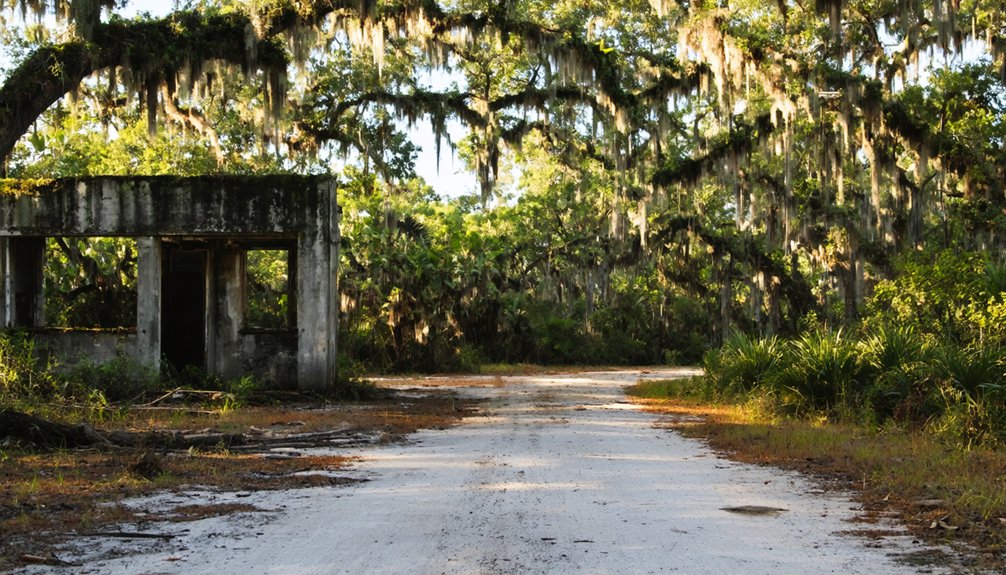
When you pull off SR 50 at the CR 719 crossing in Sumter County, don’t expect a dramatic scene of crumbling buildings or rusted relics — Linden has all but vanished.
What remains tells a quieter, more personal story rooted in cemetery history and community memory. Here’s what you’ll actually encounter:
- Linden Cemetery – The town’s most significant survivor, connecting pioneer reunions to the present day.
- Open countryside – Flat, rural landscape where farmsteads and citrus groves once thrived before the Great Freeze erased them.
- Road intersection – The CR 719 and SR 50 crossing marks the approximate heart of old Linden.
You’re fundamentally reading a landscape that’s been reclaimed by nature, and honestly, that freedom feels fitting for a place this forgotten.
Linden Cemetery: What to Know Before You Visit
Tucked into the rural landscape near the CR 719 and SR 50 crossing, Linden Cemetery stands as the town’s most tangible connection to its 19th-century roots.
You’ll find headstones marking pioneer families who carved lives from Florida’s wilderness before the Great Freeze of 1894-95 erased nearly everything else. Its historical significance extends beyond mere burial grounds — it’s living documentation of a community that thrived, struggled, and ultimately disappeared.
Before visiting, observe proper cemetery etiquette: walk carefully between markers, avoid touching weathered stones, and leave everything exactly as you found it.
Descendants of original settlers still gather here annually for the Linden Cemetery Picnic, a tradition dating to 1897.
Respect that this place carries real meaning for real families connected to Linden’s forgotten story.
Ghost Towns Near Linden Worth the Detour
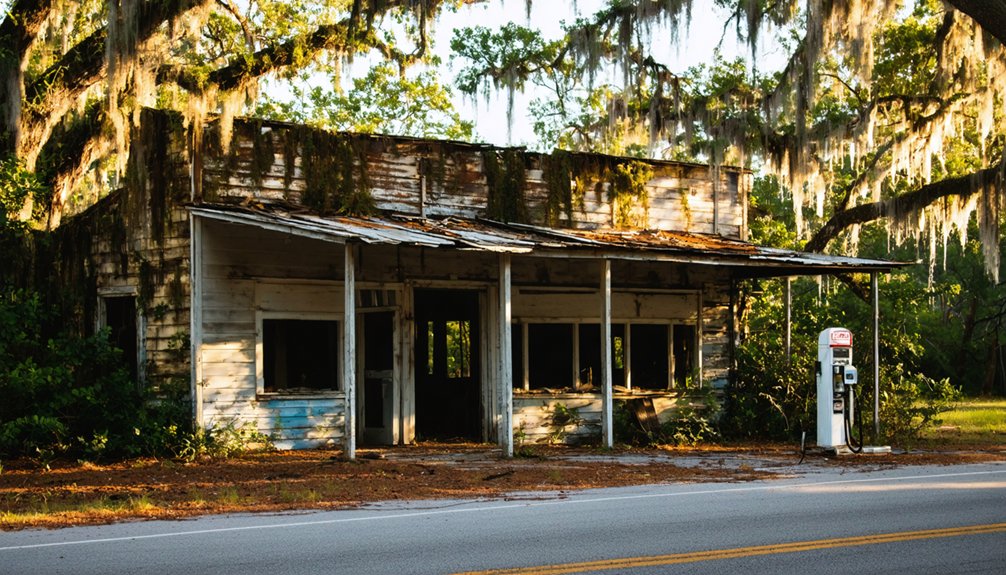
While Linden deserves its time in the spotlight, several ghost towns nearby reward curious travelers willing to extend their road trip. The region surrounding Sumter County holds fascinating ghost town legends waiting to be discovered.
- Bamboo – Decimated by the Great Freeze of 1894-95, its population dropped to just 30 survivors. Follow SR 44 to explore what remains.
- Tarrytown – A late 1800s sawmill community surrounded by abandoned structures and forgotten citrus farms, accessible along connecting county roads.
- Center Hill – Established in 1842, this former “Green Bean Capitol of the World” offers rich agricultural history worth exploring.
Each stop adds another layer to your adventure, painting a vivid picture of Florida’s resilient pioneering spirit and the communities time quietly erased.
Frequently Asked Questions
Can You Camp Overnight Near the Linden Ghost Town Site?
The knowledge doesn’t confirm official camping spots near Linden’s ghost town site. You’ll want to explore nearby state parks for camping tips, as ghost town amenities are minimal—just a cemetery and nature’s freedom await you!
Are There Guided Ghost Town Tours Available in Sumter County?
Guided ghost town tours aren’t formally offered in Sumter County, but you can explore Linden’s haunted history and local legends independently, discovering abandoned sites, roaming the cemetery, and uncovering pioneer stories on your own adventurous terms.
Is the Linden Cemetery Picnic Open to Non-Descendants?
You’re welcome to attend the Linden Cemetery Picnic, even if you’re not a descendant! It’s a living piece of Linden history where you’ll discover pioneer stories, embrace Cemetery etiquette, and connect with this fascinating community’s enduring spirit.
What Is the Best Season to Visit Linden, Florida?
Imagine exploring Linden’s cemetery in crisp November air — fall’s your best bet! You’ll enjoy ideal weather considerations and seasonal activities, avoiding summer’s brutal heat and humidity while freely wandering this hauntingly beautiful ghost town’s peaceful, historic grounds.
Are There Any Entry Fees to Access the Linden Cemetery?
You won’t encounter any entry fees at Linden Cemetery! It’s freely accessible, honoring its rich cemetery history and pioneer roots. Follow entry regulations respectfully, and you’ll enjoy exploring this remarkable, open landmark of Florida’s fascinating past.
References
- https://www.outbackfamilyhistoryblog.com/linden-ghost-town/
- https://www.ocalastyle.com/ghost-towns-of-lake-sumter/
- https://beyond.nvexpeditions.com/florida/linden.php
- https://www.youtube.com/watch?v=0kzAaaal1X0
- http://franmuse.com/sumter/History.htm
- https://www.ghosttowns.com/states/fl/tarrytown.html