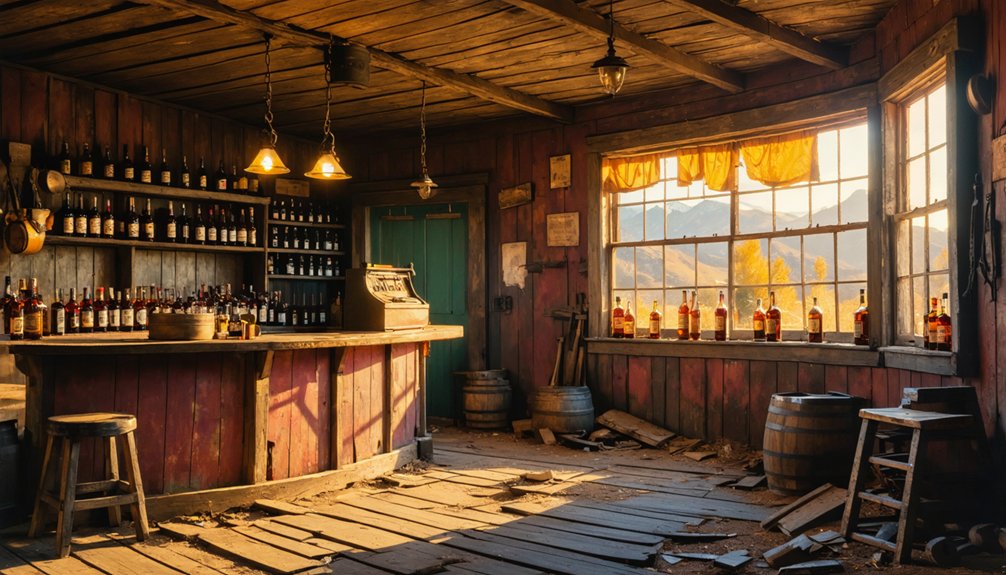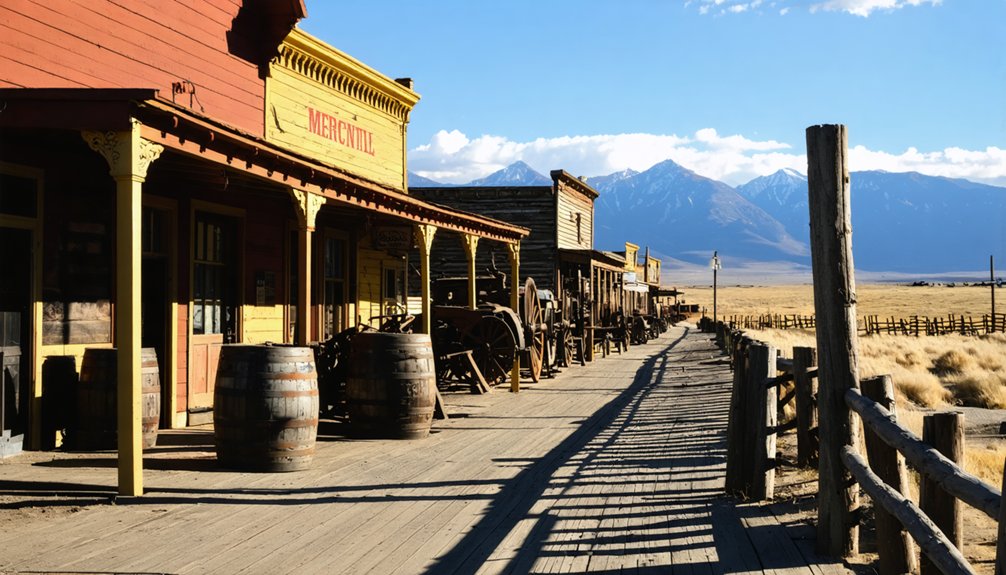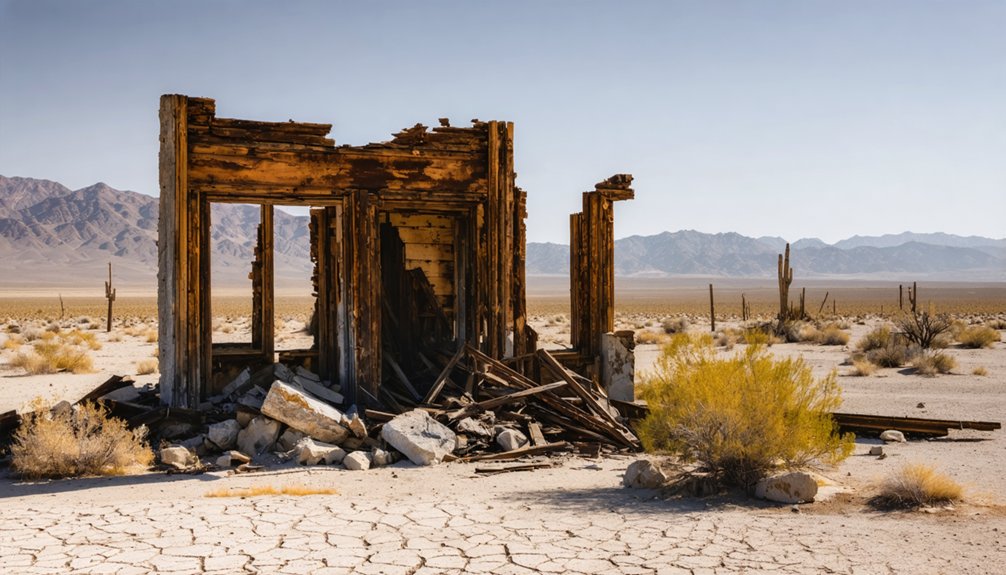
You’ll find Barnes Settlement, California waiting for you the way all ghost towns wait — quietly, patiently, and with more history buried in its dust than most living cities carry in their archives. Start your route near Tres Pinos, pack a paper map, and leave GPS dependency behind. Bring emergency supplies, embrace the silence of one-lane roads, and respect the ruins you’ll encounter. There’s far more to uncover about exploring this forgotten landscape safely and unforgettably.
Key Takeaways
- Barnes Settlement is a California ghost town best visited in late spring or early fall for optimal road and weather conditions.
- Pack essential supplies including a paper map, compass, first-aid kit, water, and tire repair kit, as cell service will be unreliable.
- Use a satellite messenger like Garmin inReach or handheld CB radio instead of relying on cell towers for emergency communication.
- Watch for hazards like unstable structures and potentially toxic environmental contamination common across California’s abandoned ghost town sites.
- Capture compelling photography during golden hour, shooting at low angles in RAW format to emphasize decay and abandoned details.
What Are California’s Best Ghost Towns to Road Trip?
Where do you even begin when California’s ghost towns stretch across every corner of the state, each one whispering a different chapter of the Wild West?
You’ve got Bodie frozen in arrested decay high in the Sierra Nevada, its 10,000 former residents seemingly vanished overnight.
There’s toxic New Idria, where rust-red water still bleeds mercury through canyon creeks.
Shasta City crumbled the moment a railroad bypassed it in 1872.
Each site carries its own ghost town myths — tales of haunted inns, cursed ground, and lives abandoned mid-sentence.
Barnes Settlement draws you deeper into that mystery, pulling you off the main roads and into something rawer.
These aren’t museum pieces. They’re open wounds in California’s landscape, and you’re free to explore every one.
How the Wild West Built and Abandoned These Towns
You’re stepping back into an era when fortune-seekers flooded California between 1850 and 1900, hammering together boomtowns almost overnight after gold strikes like the 1875 Bodie mine cave-in that launched one of the West’s wildest settlements.
Once the ore ran thin or the timber stripped bare, those same towns emptied just as fast, leaving behind rusted tools and hollow storefronts.
Then the railroads finished the job, bypassing towns like Shasta City in 1872 and rerouting prosperity straight to Redding, stripping away any last reason to stay.
Gold Rush Town Origins
When gold fever swept through California in the mid-1800s, entire towns erupted overnight from raw dirt and ambition — saloons, brothels, assay offices, and all. Fortune-seekers abandoned farms, families, and futures chasing rumors of surface-level gold.
They built fast, lived hard, and left faster once the veins ran dry. You can still feel that desperate energy embedded in the abandoned architecture these towns left behind — warped timber, rusted hinges, collapsed storefronts frozen mid-sentence.
Ghost town legends grew from those sudden silences: towns thriving one decade, completely emptied the next. What drove the exodus? Mines caved. Railroads rerouted. Resources vanished.
The Wild West didn’t romanticize failure — it simply moved on, leaving ghost towns as honest monuments to unchecked human hunger.
Resource Depletion Drives Abandonment
Once the ore ran out, the towns simply stopped breathing. You can almost feel it walking these empty streets — that sudden silence after decades of relentless industry.
Poor resource management accelerated what geology had already decided: the gold, silver, and mercury were finite, and when they vanished, so did everything else.
Economic decline didn’t creep in slowly. It crashed. Merchants packed wagons overnight. Families disappeared by dawn.
Buildings stood mid-conversation, chairs still pulled out from tables, clocks stopped at forgotten hours.
Bodie’s mines exhausted themselves. New Idria poisoned its own future through reckless extraction.
These weren’t failures of ambition — they were consequences of burning too bright, too fast. The West handed men everything, then quietly reclaimed it.
Railroad Reroutes Kill Towns
The railroad giveth, and the railroad taketh away. In 1872, Shasta City learned this brutal railroad history lesson firsthand when trains bypassed it for Redding. Overnight, merchants packed wagons, families vanished, and ambitions crumbled into silence.
You’ll walk streets where ghost town myths whisper between abandoned storefronts — tales of prosperity stripped away by a single engineer’s decision. It wasn’t drought or lawlessness that killed these towns. It was a line on a map.
Consider what a railroad reroute actually meant:
- Merchants lost customers within weeks
- Families abandoned homes they’d built with their own hands
- County seats relocated, erasing civic identity entirely
Freedom once meant following opportunity. Out here, opportunity simply boarded another train and never returned.
Why Bodie, New Idria, and Shasta City Are Worth the Drive
Each of these three ghost towns earns its place on your itinerary for reasons that go far beyond simple curiosity.
Bodie history alone justifies the mountain drive — 10,000 souls once crowded these streets, chasing gold, brawling, surviving brutal winters. Today, 150 buildings stand exactly as they were left, frozen mid-life.
Shasta legends linger in haunted inns where pipe smoke drifts from empty rooms and a boy’s red ball rolls uninvited.
New Idria hits differently — rust-red water, bullet-holed walls, and mercury toxins soaking the earth beneath your boots.
Each site carries a distinct, unfiltered honesty about ambition, collapse, and consequence.
You’re not visiting museum replicas. You’re standing inside actual ruins, breathing real history, and feeling the specific weight of lives that simply stopped.
Plan Your Route From Silicon Valley Through Ghost Town Country
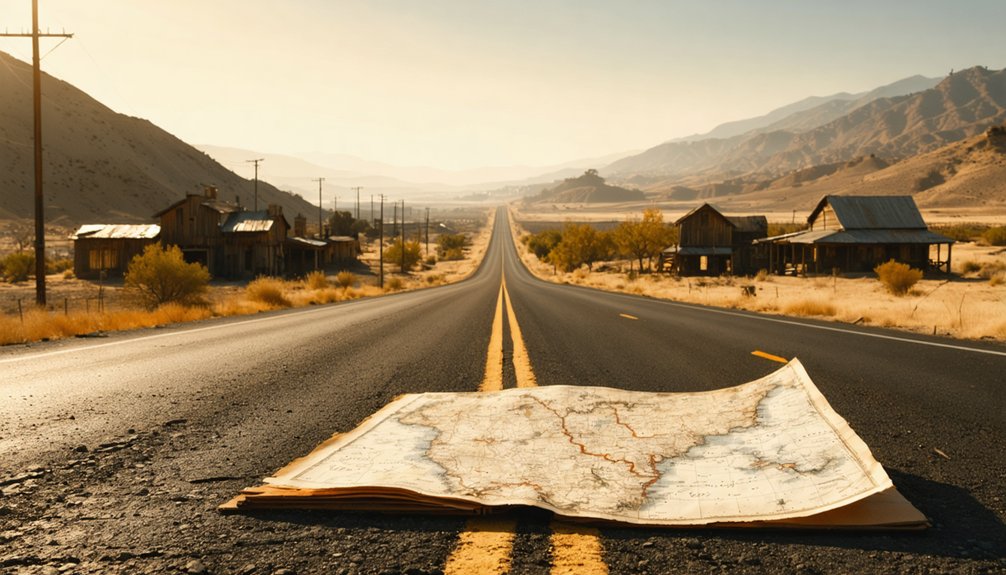
Three ghost towns, one unforgettable drive — your route out of Silicon Valley drops you almost immediately into a different California.
You’ll trade congested freeways for farmland, then one-lane canyon roads where cell service quietly disappears.
Start in Tres Pinos, your last real town before the wilderness swallows you whole.
Tres Pinos — blink and you’ve already left civilization behind, trading pavement for pure wilderness.
From there, ghost town myths come alive around every bend:
- New Idria — rust-red water, bullet-holed walls, toxic silence
- Shasta City — abandoned when the railroad simply looked away
- Bodie — howling Sierra winds through 150 standing buildings
Barnes Settlement haunts the edges of this journey like a rumor nobody can confirm.
You’re not just chasing history — you’re chasing the raw, unchained California that corporate maps forgot to document.
When to Go and What Season Changes Everything
Timing your visit changes everything about what you’ll find waiting for you.
Spring opens the roads after winter’s grip, wildflowers softening the abandoned landscapes into something almost tender.
Summer bakes the high desert relentlessly, but golden-hour light rewards your seasonal photography with long shadows cutting across collapsed doorways and rusted machinery.
Fall strips everything bare, letting ghostly legends breathe more freely through the cooling air — locals swear the spirits grow restless when the temperature drops.
Winter closes many routes entirely, transforming accessible sites into isolated, unreachable memories.
You’ll want late spring or early fall for the sweet spot: passable roads, dramatic skies, and a particular loneliness that makes these places feel genuinely forgotten.
Choose your season deliberately — it decides what version of history greets you.
What to Pack When There’s No Cell Signal and No Help Coming

Once you’ve lost cell signal on those potholed canyon roads, you’re genuinely on your own, so your pack needs to work harder than any app ever could.
Stuff it with a paper map, a first-aid kit, a hand-crank emergency radio, and enough water for two days beyond what you think you’ll need.
A satellite communicator like a Garmin inReach isn’t nostalgia — it’s the difference between a story you’ll tell later and one someone else tells about you.
Essential Gear To Pack
When you’re heading into terrain where cell towers are a distant memory and the nearest help is an hour of rough road behind you, your gear list stops being optional and starts being survival arithmetic.
The ghost town legends and abandoned architecture out here don’t care about your comfort.
Pack with intention:
- Navigation tools: Paper maps and a compass, because GPS dies before the pavement does
- Emergency supplies: Water, first aid, and a tire repair kit — the road takes more than it gives
- Light sources: Headlamps with spare batteries for exploring darkened interiors after dusk swallows everything
You chose the unpaved path specifically because it leads somewhere forgotten.
Honor that choice by arriving prepared, not desperate.
Emergency Communication Alternatives
Gear handles the physical reality of isolation, but silence is its own kind of emergency. Those one-lane canyon roads to Barnes Settlement swallow cell signals whole, leaving you genuinely unreachable. Your emergency plans need to account for that gap.
Pack communication devices that don’t rely on towers: a satellite messenger like a Garmin inReach lets you send coordinates and distress signals from anywhere. A handheld CB radio connects you to passing truckers on distant highways.
Carry a physical USGS topo map and compass — old tools that never lose reception.
Tell someone exactly where you’re going and when to call for help if you don’t return. That human anchor back home becomes your most reliable communication device when everything else goes dark and the wind picks up.
One-Lane Roads, Potholes, and Two Hours Without Reception
Leaving Tres Pinos behind, you’ll trade smooth asphalt for a jarring, one-lane ribbon of road that winds through sun-baked canyons. Each pothole rattles your fillings loose and tests your suspension’s resolve.
Cell service vanishes within two hours, severing you from the noise of modern life. Out here, eerie landscapes swallow everything familiar, leaving only wind, dust, and the silhouettes of abandoned structures against a bleached sky.
Embrace that disconnection — it’s exactly what you came for:
- Silence that feels earned, not imposed
- Freedom measured in unmarked miles, not notifications
- Discovery waiting beyond every blind curve
This road doesn’t accommodate hesitation. It rewards those willing to surrender comfort for something rawer, realer, and worth every bone-jarring mile.
Hazards and Safety Warnings at Each Site
That bone-jarring isolation isn’t just atmospheric — it’s a preview of the real risks waiting at each stop.
New Idria’s abandoned architecture hides asbestos-laced soil, rust-red toxic water, and mercury-contaminated air that lingers invisibly. Don’t touch anything.
At Bodie, ghost town legends fuel curiosity, but exposed Sierra winds, unstable floorboards, and strict preservation rules demand respect. Pocketing souvenirs reportedly carries a curse — rangers document returned items annually.
Shasta City’s crumbling walls shift without warning. Bullet holes scar structures across multiple sites, reminding you these roads still attract unpredictable visitors.
Carry water, a paper map, and a first-aid kit. Tell someone your exact route before losing signal. Freedom means calculated risk — not ignorance. Know the difference before you roll out.
Ghost Towns to Stack Onto the Same Road Trip
Once you’ve mapped out New Idria, Bodie, and Shasta City, it’s worth stacking a few more ghost towns onto the same route rather than burning a separate tank of gas.
California’s backroads hide layered historical myths at every elevation shift, and Barnes Settlement fits naturally into a longer loop that rewards curiosity over comfort.
Consider adding these stops:
- Amboy — a desert relic swallowed by silence after dieselization killed its purpose
- Tres Pinos — your last civilized breath before canyons erase cell service entirely
- Bodie’s surrounding basin — where wind-stripped buildings whisper stories no guidebook captures
Each site compounds the last.
You’re not just driving; you’re stitching together a vanished California, mile by haunted mile.
How to Photograph a Ghost Town
After you’ve mapped the route and committed to the drive, your camera becomes as important as your fuel gauge.
Ghost town photography rewards patience and timing — arrive at golden hour when long shadows stretch across warped floorboards and rust-eaten storefronts glow amber. Shoot low angles to emphasize decay. Let peeling paint, cracked glass, and weathered timber fill the frame.
Capturing history means resisting the urge to clean up the shot. Leave the debris, the bullet holes, the encroaching weeds. That disorder *is* the story.
Resist the urge to tidy the frame. The rust, the rubble, the ruin — that’s the photograph worth taking.
Shoot in RAW format for maximum editing flexibility in shifting desert light.
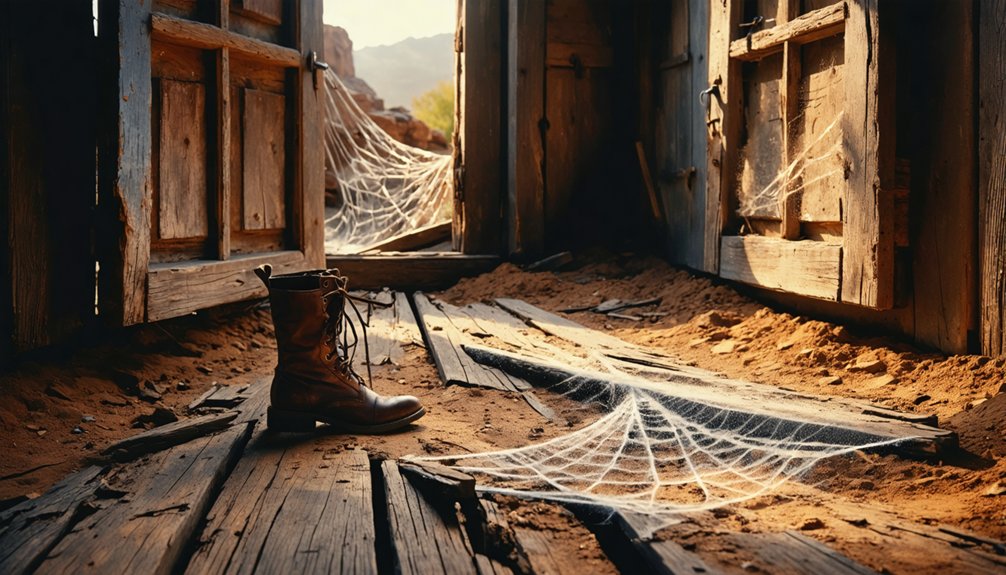
Move slowly through each structure. Notice what remains — a boot, a calendar, a broken chair.
These details carry the weight of abandoned lives and make images hauntingly unforgettable.
Frequently Asked Questions
Is Barnes Settlement a Real Ghost Town in California?
You won’t find Barnes Settlement among California’s confirmed abandoned places or ghost town legends. No records verify its existence there, so you’d be chasing echoes of a town that never left its mark on California’s storied, forgotten landscapes.
What Is the History Behind the Name Barnes Settlement?
No confirmed records tie Barnes Settlement’s name to California’s history. You’ll find Barnes Origins rooted in Canada’s folklore, where Settlement Legends surround Jane Barnes, a seventh daughter seer — a hauntingly mysterious figure born across an ocean away.
Are There Any Confirmed Barnes Family Settlements in California History?
You won’t find confirmed Barnes family settlements in California pioneers’ recorded history. Yet countless forgotten homesteads whisper untold stories across sun-baked valleys, where determined families carved fleeting lives into wild, unforgiving land before vanishing completely.
Is Barnes Settlement Connected to Any Canadian Historical Figures or Locations?
You’ll find Canadian connections in Jane Barnes, the mystical “Witch of Plum Hollow,” whose historical significance echoes from Ontario’s misty hollows — a seventh daughter’s prophetic legacy, far removed from California’s sun-scorched ghost town trails you’re chasing.
Has Barnes Settlement Ever Appeared on Official California Historical Registers?
Like a name carved in soft wood that fades with time, Barnes Settlement hasn’t made it onto official California historical registers — its ghost town folklore and historical significance remain unverified, leaving you free to chase the mystery yourself.
References
- https://sunset.com/travel/wild-lands/one-california-ghost-towns-is-lost-for-good-reason
- https://www.parks.ca.gov/?page_id=26330
- https://www.rideaulakes.ca/experience/about/stories/the-witch-of-plum-hollow
- https://www.altaonline.com/dispatches/a62686535/ghost-towns-california-haunted-places-lauren-markham/
- https://linguapress.com/advanced/bodie
- https://en.wikipedia.org/wiki/Ghost_town