Planning your ghost town road trip to Stittsville, Michigan means heading deep into Missaukee County, where Norwich Township holds the quiet bones of an 1878 logging settlement. You’ll explore abandoned foundations, crumbling chimneys, and a settler’s cemetery where sawdust ambition once built a thriving community. Pair it with nearby Jennings for a fuller picture of Northern Michigan’s vanished timber era. There’s far more to this forgotten landscape than first meets the eye.
Key Takeaways
- Stittsville, a ghost town in Missaukee County, Michigan, was established in 1878 and shaped by the logging industry.
- Explore abandoned structures, foundations, chimneys, and a historic cemetery reflecting the town’s vibrant lumber-era past.
- Combine your visit with nearby Jennings, which shares a similar logging heritage and offers complementary ghost town exploration.
- Use a detailed Michigan ghost town map covering 70+ sites to efficiently plan your route including both locations.
- Wear sturdy shoes, fill your gas tank, and always respect private property when exploring these remote historical sites.
How to Find Stittsville in Northern Michigan Today
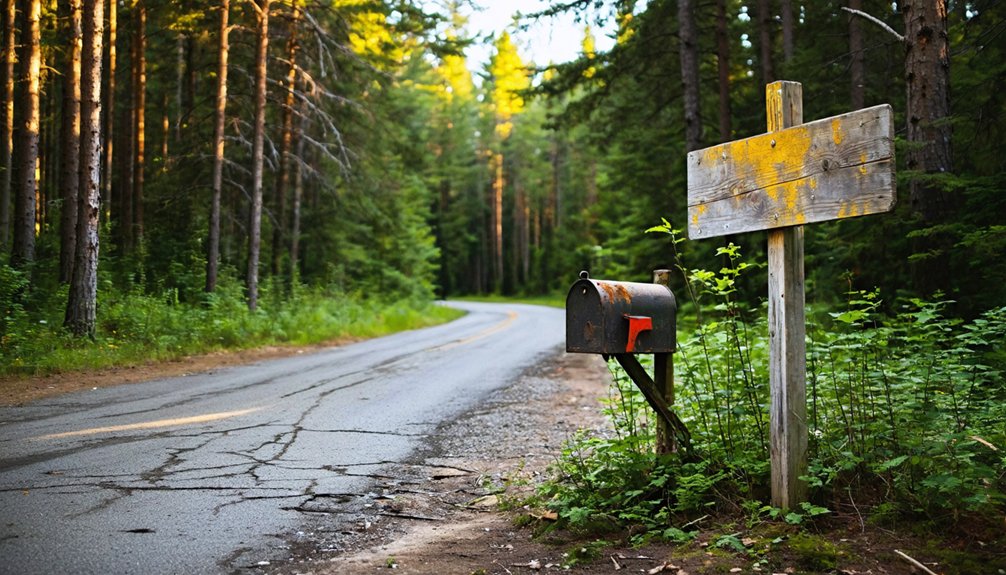
Where exactly do you go when searching for a town that barely exists anymore? Stittsville sits in Norwich Township, Missaukee County, tucked into Northern Michigan’s old logging country.
Stittsville barely exists anymore — a ghost of Norwich Township, lost in Northern Michigan’s forgotten logging country.
You won’t find it on modern maps, but that’s part of its pull — it’s one of those hidden landmarks that rewards the curious traveler willing to dig deeper.
Head toward M-55 near Jennings, another ghost town steeped in local folklore, and you’ll find yourself driving through what remains of Stittsville.
There’s no signpost announcing your arrival, no welcome center greeting you. Just quiet land holding its secrets.
Drive slowly, keep your eyes open, and let the landscape tell you what history books barely mention.
Freedom means finding places the crowds have forgotten.
What Made Stittsville a Booming Logging Town?
When the Stitt family arrived from Canada in 1878, they didn’t find a town — they found timber, and that distinction made all the difference.
Northern Michigan’s forests represented raw freedom and fortune, fueling a logging industry that transformed wilderness into commerce almost overnight.
Stittsville’s timber resources weren’t just trees — they were economic factors that attracted barbers, blacksmiths, saloon keepers, and merchants, each building lives around lumber’s relentless rhythm.
Community dynamics formed quickly here, shaped by sawdust, sweat, and shared ambition.
The planing mill hummed, the sawmill roared, and the post office connected this small township to a wider world.
You can almost hear it today — that industrious energy that turned raw land into something briefly, brilliantly alive.
What’s Left to See at This Missaukee County Ghost Town?
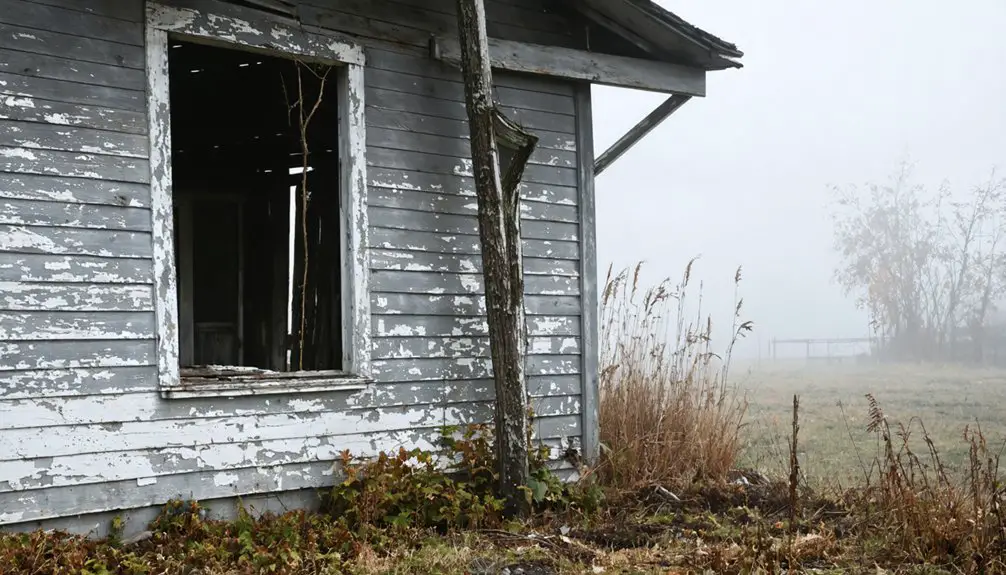
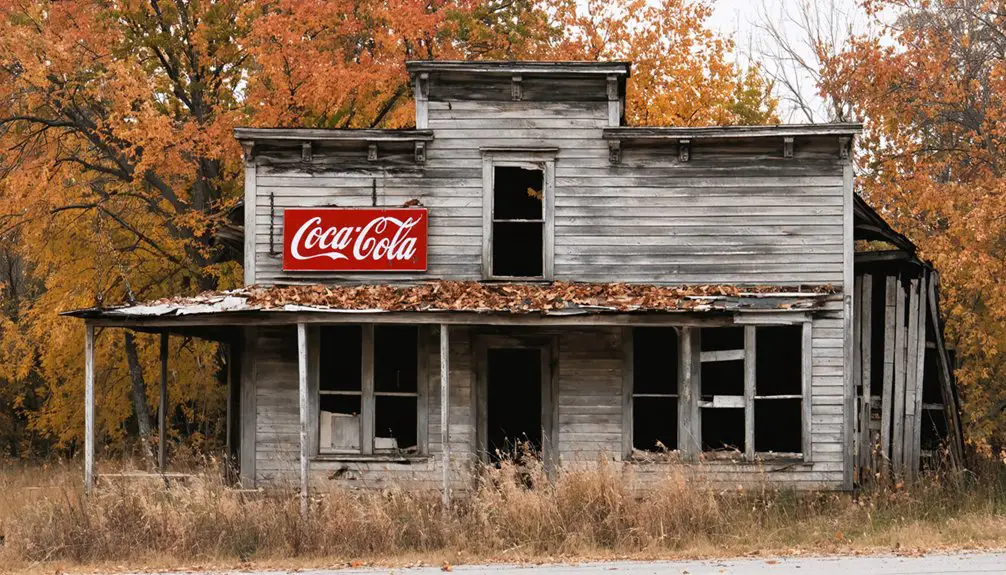
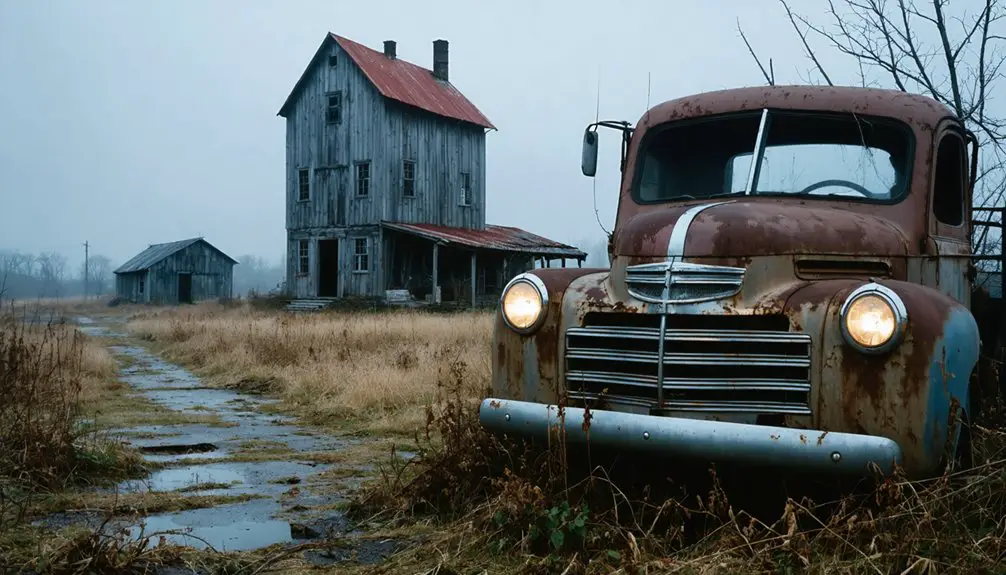
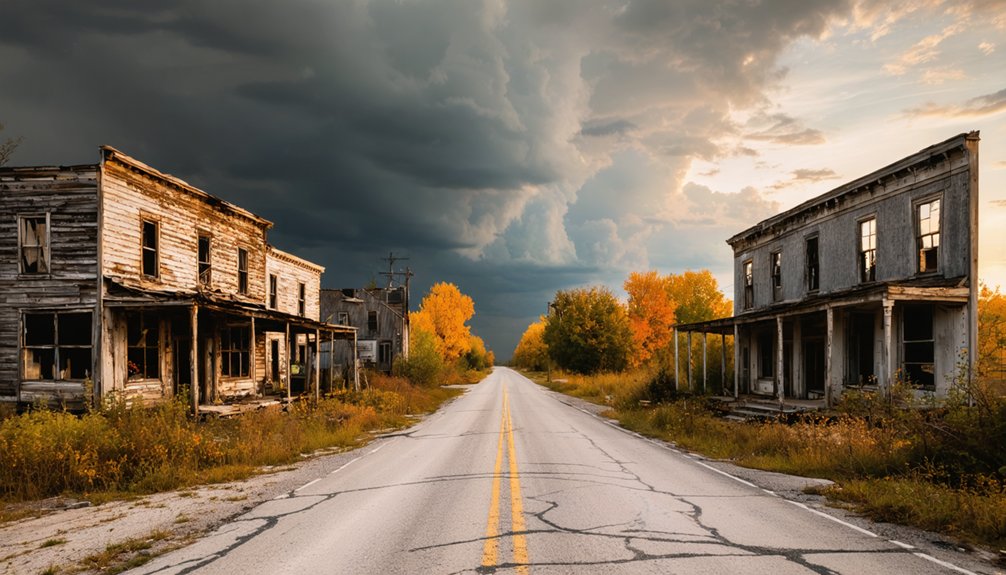
Silence has replaced the sawmill’s roar in Stittsville, but the land still holds fragments worth seeking out. When you drive through, you’ll notice abandoned structures scattered across the township — weathered remnants of a community that once buzzed with commerce and ambition.
The church and schoolhouse are gone, claimed by fire and time, but you can still find historical remnants like foundations and chimneys pushing through the earth, quietly narrating what was. A few residents remain, and a cemetery still marks the ground where the town’s early settlers rest.
There’s no post office, no active business — just open land carrying echoes of the lumber era. It’s a raw, honest slice of Michigan’s past, and it rewards those willing to look closely.
Why Jennings Makes a Perfect Companion to Stittsville
Just a short drive from Stittsville along M-55, Jennings offers a ghost town experience that deepens everything you’ve already felt wandering through Norwich Township.
Jennings history mirrors Stittsville’s arc — built on logging heritage, then quietly abandoned when the timber vanished. The Mitchell brothers once shaped this community, moving assets elsewhere as the town faded.
What remains pulls you in: a weathered church, a cemetery holding names that outlasted every building around them, and a ruined bridge that once carried workers and commerce through the wilderness.
You’re standing where industry and ambition met their limits. Pairing both towns in one afternoon gives you the full picture of northern Michigan’s rise and fall — two forgotten places that together tell one honest, unhurried story.
How to Road Trip Northern Michigan Ghost Towns Near Stittsville
Northern Michigan’s ghost town circuit rewards the curious traveler who comes prepared. Grab a detailed Michigan ghost town map covering 70+ sites, then plot your route around Stittsville and Jennings for maximum historical significance.
You’ll want sturdy shoes, a full tank, and respect for private property — foundations and chimneys crumble unexpectedly. Drive M-55 west toward Jennings after wandering Stittsville’s quiet remnants, pausing at the old church, cemetery, and ruined bridge.
Ghost town exploration here isn’t just sightseeing; it’s standing where loggers once filled saloons and sawmills screamed through virgin timber. These towns didn’t simply fade — they burned, were dismantled, and were swallowed by second-growth forest.
Come with curiosity, leave nothing disturbed, and you’ll carry something genuine home.
Frequently Asked Questions
Who Were the Specific Stitt Family Members Stittsville Was Named After?
You’ll find Stittsville’s legacy rooted in Reverend William J. Stitt, James Stitt, and John T. Stitt—the Canadian Stitt family history that shaped this once-thriving Northern Michigan logging town you’re now free to explore.
What Year Did Stittsville’s Post Office Permanently Close Its Operations?
Over 100 Michigan post offices vanished with the lumber boom. Unfortunately, the exact year Stittsville’s post office history ended isn’t recorded here, but its closure deeply shaped the Stittsville legacy you’re now free to discover and explore.
How Did Fires Contribute to Stittsville’s Physical Disappearance Over Time?
Fires accelerated Stittsville’s town decline, erasing buildings you’d have once wandered through. That fire impact consumed structures tied to logging’s golden era, leaving you only foundations, chimneys, and whispered memories of a once-thriving, free-spirited community.
What Type of Chemical Plant Operated in Such a Small Logging Town?
The records don’t specify what chemical production occurred there, but you’d likely find it tied directly to logging operations — think turpentine, charcoal, or wood byproducts that once fueled an era of raw, untamed industrial freedom.
Did Any Stittsville Residents Relocate Together to Nearby Towns After Abandonment?
The records don’t confirm coordinated community bonds or specific relocation patterns, but you’d expect tight-knit logging families to’ve sought greener pastures together, carrying shared memories as timber’s decline quietly reshaped their lives toward neighboring towns.
References
- https://99wfmk.com/stittsvillemi/
- https://www.youtube.com/watch?v=aCFmBsgJfAM
- https://www.nailhed.com/2017/10/the-ghost-town-that-moved.html
- https://www.youtube.com/watch?v=7-vjuqiGWJU
- https://en.wikipedia.org/wiki/List_of_ghost_towns_in_Michigan
- https://beaumier.nmu.edu/ghosttowns/
- https://wgrd.com/michigan-ghost-town-map/
- https://www.visitkeweenaw.com/things-to-do/museums-history/ghost-towns/?alpha=J&categorySearch=&citySearch=®ionSearch=&textSearch=