Planning a ghost town road trip to Blackburn, Oklahoma means stepping into a place where whiskey money and land rush ambition once collided. Founded during the 1893 Cherokee Outlet land run, Blackburn boomed as a border-town saloon hub before statehood, railroads, and the Great Depression quietly erased it. Today, you’ll find weathered remnants, eerie silence, and a church on the National Register of Historic Places. Stick around — there’s far more to this forgotten town’s story than meets the eye.
Key Takeaways
- Blackburn, founded during the 1893 Cherokee Outlet land run, offers visitors a fascinating glimpse into Oklahoma’s boom-and-bust frontier history.
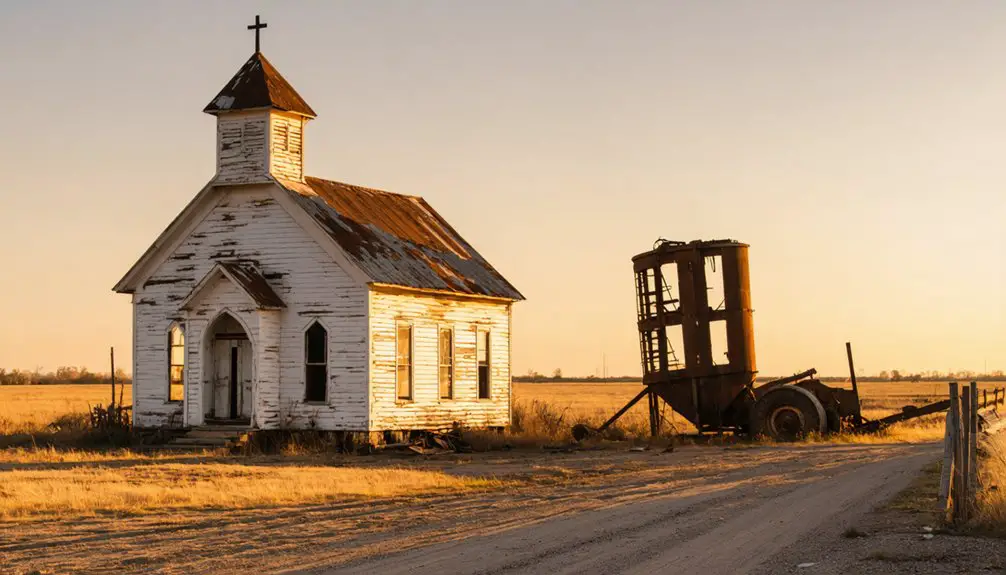
- The historic Blackburn Methodist Church, listed on the National Register of Historic Places, serves as the town’s most significant surviving landmark.
- Pair your visit with a stop in nearby Skedee, which mirrors Blackburn’s history and is accessible from Pawnee in roughly 15 minutes.
- Spring and fall offer the most comfortable visiting conditions, as summer heat is punishing and winter roads can become treacherous.
- Before departing, check Oklahoma Department of Transportation road conditions, pack emergency supplies, and keep your fuel tank at least half full.
What’s Left to See in Blackburn, Oklahoma?
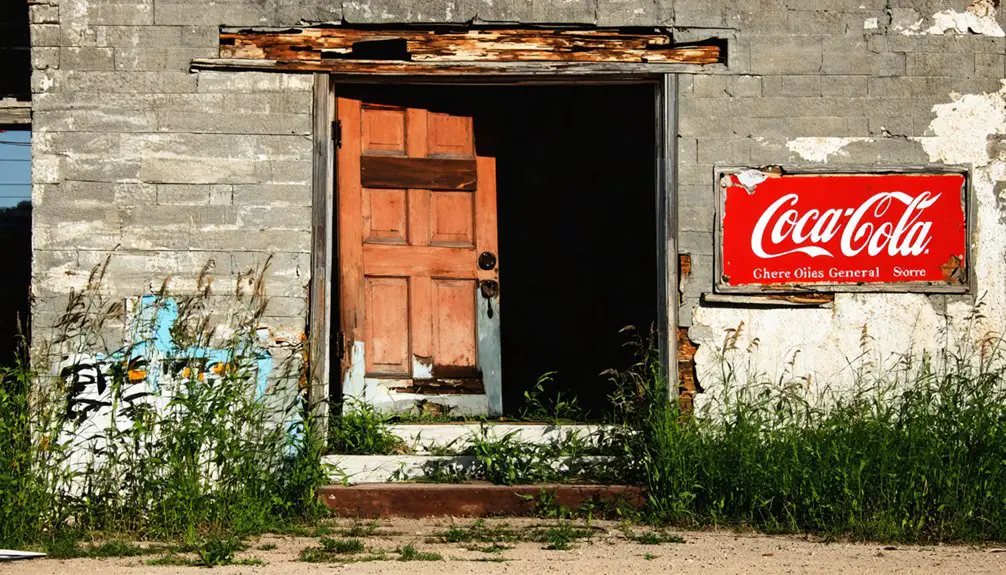
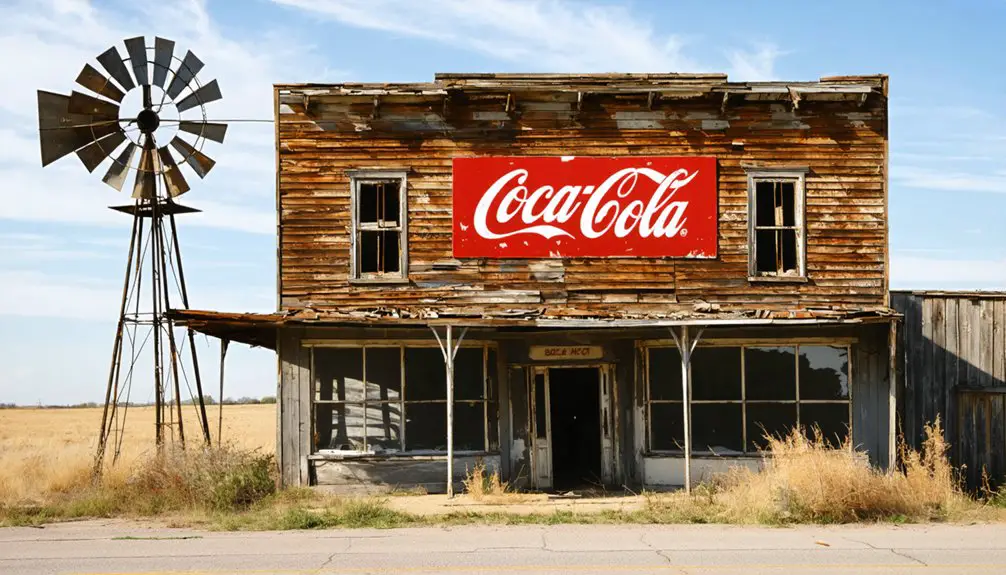
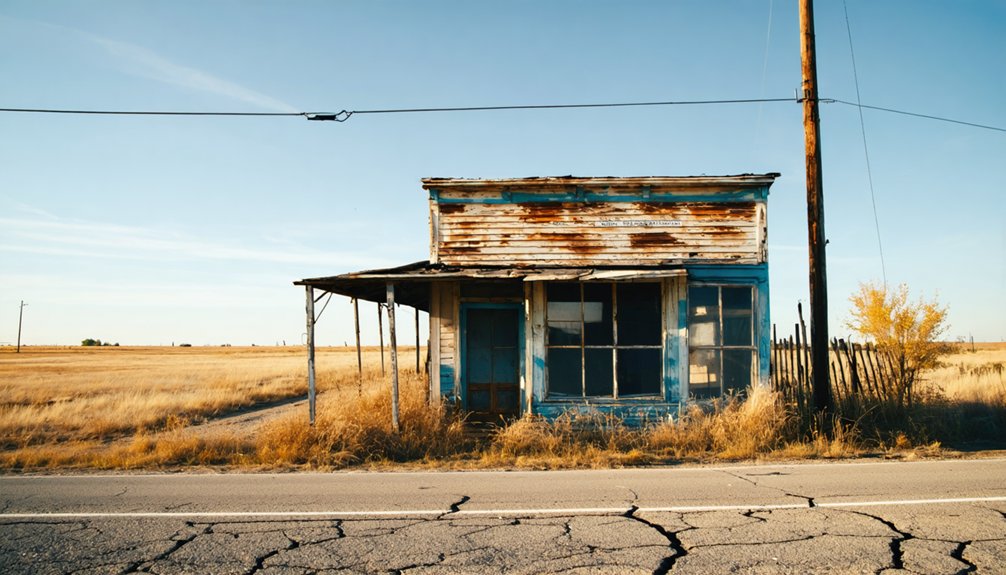
Everything that remains in Blackburn tells a quiet story of a town that never quite made it. You’ll find shells of the old business district standing silently, their abandoned structures hinting at busier days when traders, travelers, and whiskey seekers crossed the Arkansas River ford.
A few churches still anchor the community, including the historic Blackburn Methodist Church, listed on the National Register of Historic Places. Local legends echo through these weathered walls — stories of river crossings, border-town saloons, and families who held on long after the railroad and highways bypassed them.
Small homes dot the landscape, occupied by commuters who’ve chosen rural quiet over city noise. Explore freely here; Blackburn rewards curious travelers who appreciate raw, unpolished history without the tourist crowds.
The Wild History That Made Blackburn Worth Visiting
Few towns in Oklahoma packed as much frontier chaos into their early years as Blackburn did. Founded during the 1893 Cherokee Outlet land run, it quickly earned its reputation as a whiskey town, sitting just across the border from dry Indian Territory.
Thirsty settlers crossed the Arkansas River ford specifically to drink here, keeping saloons busy and cash flowing freely. You can almost feel that raw, rebellious energy when you walk the quiet streets today.
But once Oklahoma achieved statehood in 1907, Blackburn lost its edge. Without a railroad or highway connection, economic decline hit hard and fast.
Population shrank steadily, banks closed, newspapers folded. What remains is a compelling snapshot of a town that burned bright, then quietly faded.
Why the Blackburn Methodist Church Has National Landmark Status
Standing quietly amid Blackburn’s abandoned business district, the Blackburn Methodist Church carries a distinction that surprises most visitors: it’s listed on the National Register of Historic Places under listing number NR 84003398.
Its historic significance connects you directly to Oklahoma’s frontier roots. When you visit, you’ll notice:
- Enduring Construction – Built to outlast Blackburn’s boom-and-bust cycle
- Architectural Features – Preserving period craftsmanship rare in rural Oklahoma ghost towns
- Community Resilience – Representing a congregation that survived the Great Depression and Dust Bowl
- Cultural Anchor – Functioning as a landmark when banks failed and residents scattered
You’re standing inside living history when you walk through its doors.
Don’t rush past it — this church earned its recognition.
How Railroads, Highways, and the Depression Erased Blackburn
That church you just walked through survived everything Blackburn couldn’t — and understanding why takes you straight to the town’s fatal weaknesses.
No railroad ever reached Blackburn. That single fact strangled growth before it started, leaving merchants without efficient shipping and residents without reliable connections to larger markets.
Then came the highway bypass, rerouting traffic away from Blackburn’s core and cutting off the foot traffic that kept small businesses breathing.
The Great Depression delivered the finishing blow. Falling agricultural prices gutted farm families throughout Pawnee County, and the Dust Bowl destroyed what little remained.
The Great Depression didn’t just wound Blackburn — it buried it, with the Dust Bowl shoveling the final dirt.
The Blackburn State Bank fled to Skedee in 1929, then failed completely in 1932. By 1940, population had collapsed to 198.
Blackburn never recovered its footing after losing all three battles simultaneously.
What Skedee Adds to a Blackburn Day Trip
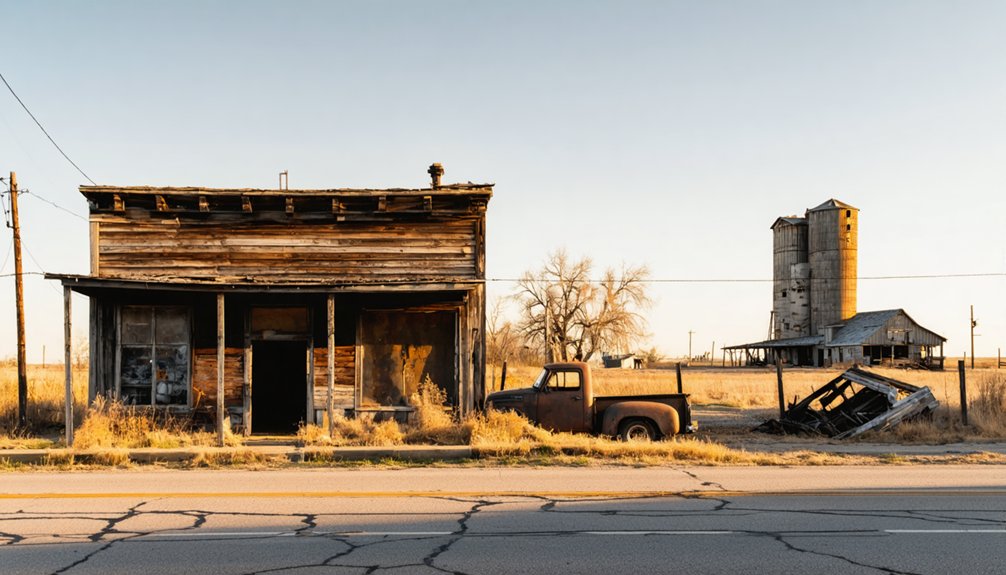
Just a few miles from Blackburn, Skedee offers a natural second stop that rounds out your understanding of how this corner of Pawnee County lived and declined together.
Skedee history mirrors Blackburn’s arc — railroad access briefly gave it an edge, yet decline followed. With a 2020 population of just 62, it’s raw and real.
When you visit, look for:
- Old railroad remnants — the flood-damaged line that accelerated regional decline
- Blackburn State Bank’s ghost — it relocated here in 1929, then collapsed in 1932
- Historic structures — weathered buildings frozen in time
- The last consolidated newspaper office — Skedee absorbed Blackburn’s press in the late 1920s
Together, these Skedee attractions complete the story Blackburn starts.
How to Reach Blackburn From Pawnee
Reaching Blackburn from Pawnee takes roughly 15 minutes along rural two-lane roads that wind south toward the Arkansas River.
Head southwest out of Pawnee and follow the county roads toward the river bottomlands. Blackburn accessibility isn’t complicated, but you’ll want a reliable map or GPS since signage stays minimal out here.
The drive itself rewards you — open prairie stretches wide, cattle graze unfenced pastures, and the landscape shifts subtly as you near the Arkansas River valley.
These scenic routes give you breathing room that interstates never offer. You’re not fighting traffic or steering through crowded exits. You’re simply rolling through Oklahoma countryside at your own pace, arriving at a place most people have never heard of — and that’s exactly the point.
Best Time of Year to Visit Blackburn?
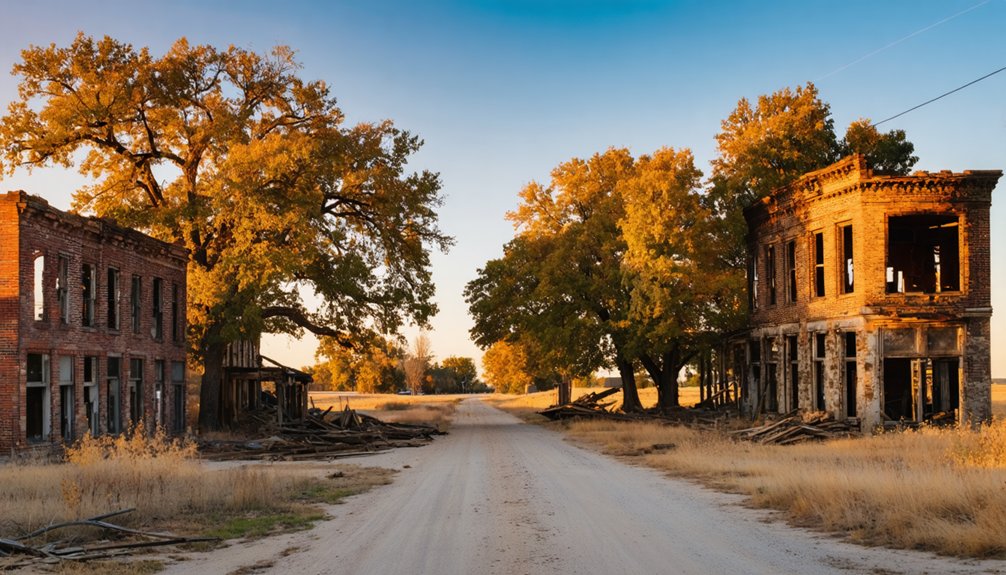
You’ll find spring and fall offer the most comfortable conditions for exploring Blackburn’s abandoned structures and historic Methodist church, with mild temperatures and decent light for photography.
If you visit in summer, pack water and expect punishing heat that makes wandering an exposed, shadeless ghost town genuinely exhausting.
Winter trips aren’t impossible, but rural Pawnee County roads can turn treacherous after ice or snow, so check conditions before you head out.
Spring And Fall Visits
When planning your ghost town road trip to Blackburn, spring and fall offer the most rewarding conditions for exploring its abandoned business district, historic Methodist church, and quiet residential streets.
Spring blooms soften the weathered structures, while fall foliage frames the Arkansas River landscape in striking color. Both seasons deliver comfortable temperatures for unhurried outdoor exploration.
Here’s why these seasons work best:
- Mild temperatures keep walking conditions comfortable without summer’s oppressive heat.
- Spring wildflowers contrast beautifully against crumbling brick facades.
- Fall foliage along the Arkansas River creates dramatic photography opportunities.
- Reduced crowds mean you’ll experience Blackburn’s eerie stillness authentically.
You’ll move freely through the remnants of this once-thriving whiskey town, absorbing its layered history without distraction.
Summer Heat Considerations
While spring and fall make for ideal visits, summer in Blackburn brings a different kind of challenge worth understanding before you pack the car. Oklahoma summers are relentless, with temperatures routinely climbing past 100°F across Pawnee County’s open terrain. There’s little shade among the abandoned business district’s shells or along the Arkansas River bottomland.
For summer activities like exploring the historic Methodist church or photographing crumbling storefronts, start early. You’ll want to arrive before 9 a.m. and wrap up by midday.
Heat precautions aren’t optional here — carry more water than you think you’ll need, wear a wide-brimmed hat, and keep your vehicle’s air conditioning ready. The freedom to roam this forgotten town depends entirely on respecting what Oklahoma’s summer sun can do.
Winter Road Conditions
Winter transforms Pawnee County’s rural roads into something unpredictable, and reaching Blackburn requires more preparation than most ghost town trips demand. Ice and mud make the unpaved access routes genuinely treacherous, threatening your freedom to explore on your own schedule.
Prioritize these winter preparation and road safety essentials:
- Check Oklahoma Department of Transportation road conditions before departing—closures happen fast.
- Carry tire chains or all-terrain tires—gravel roads near the Arkansas River bottom freeze unevenly.
- Pack emergency supplies—blankets, water, jumper cables—since cell service remains unreliable around Blackburn.
- Arrive midday—morning frost and late-afternoon refreeze create the most dangerous windows.
Winter visits reward the bold with stark, atmospheric beauty, but only if you’ve planned smartly enough to actually get there.
Frequently Asked Questions
Was Blackburn Ever Considered for County Seat Status?
There’s no record that Blackburn ever held county seat status, but its Blackburn significance shaped Pawnee County’s early county seat history as a thriving river trade hub you’d have found remarkably essential.
Are There Any Annual Events or Gatherings Held in Blackburn Today?
Like a fading ember, Blackburn holds no known annual festivals or major community gatherings today. You’ll find it’s a quiet ghost town, but its historic churches and abandoned streets still draw curious, freedom-seeking explorers.
Can Visitors Legally Enter the Abandoned Buildings in Blackburn?
You’ll want to avoid abandoned exploration in Blackburn’s derelict buildings, as trespassing carries serious legal implications. Always respect private property, get permission from owners first, and stick to publicly accessible areas like the historic Methodist church.
Did Blackburn Have Any Notable Crimes During Its Whiskey Town Era?
Like a wild river current, whiskey smuggling flowed freely through Blackburn’s borders. You’ll find ghost stories of bootleggers dodging dry Indian Territory laws, making this town a notorious haven for illegal liquor trade before Oklahoma’s 1907 statehood.
Are There Any Descendants of Founder John Skinner Still in Oklahoma?
The records don’t confirm Skinner legacy descendants still in Oklahoma, but you’d find his historical significance endures through Blackburn’s founding story. Explore local genealogy records—you might uncover living connections to this pioneering spirit!
References
- https://www.youtube.com/watch?v=f4Bzi5_v2uY
- https://pocketsights.com/tours/place/Blackburn-22581:2749
- https://www.youtube.com/watch?v=wEoEZKBUsvs
- https://abandonedok.com/blackburn-oklahoma/
- https://en.wikipedia.org/wiki/List_of_ghost_towns_in_Oklahoma