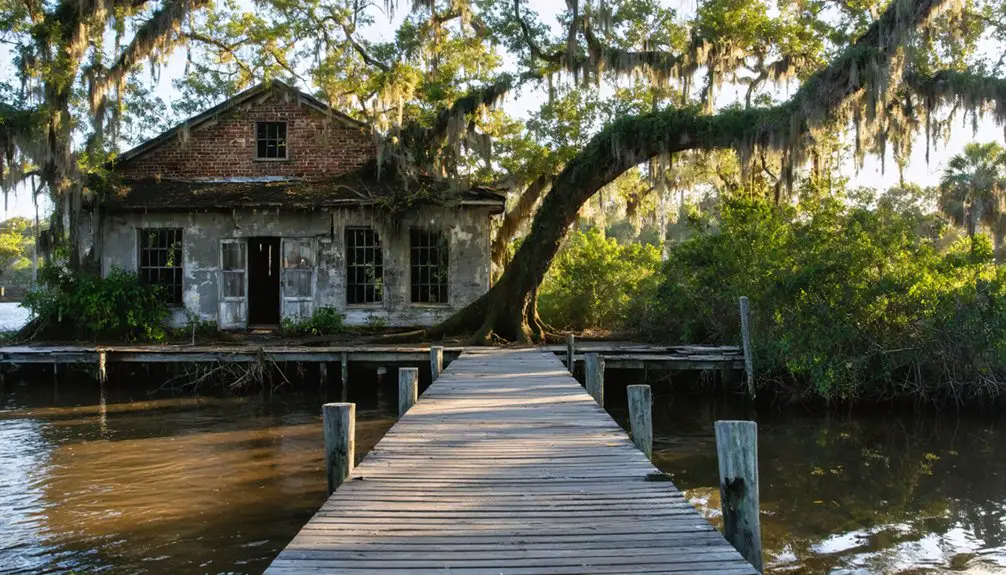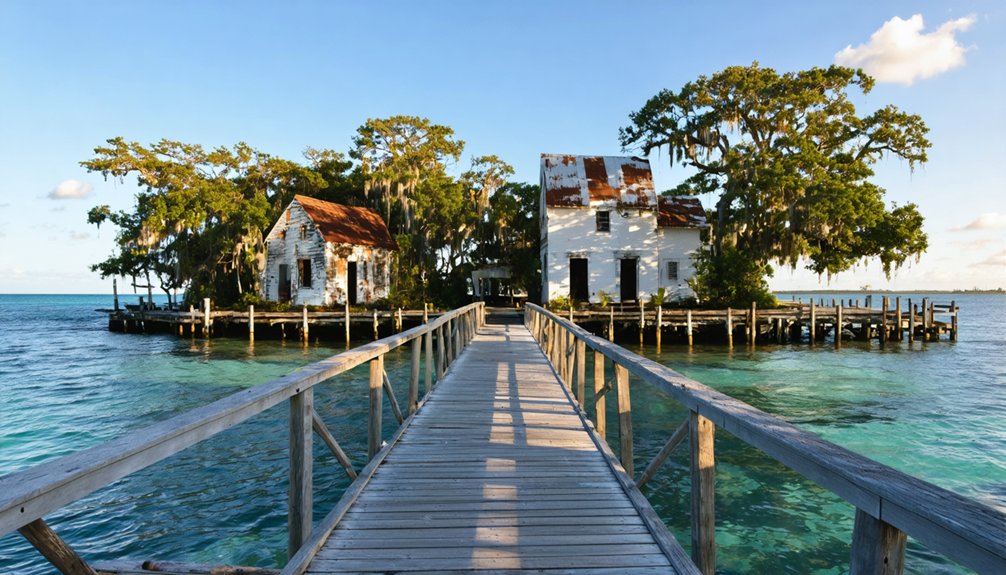
To plan your ghost town road trip to Pigeon Key, Florida, head to Marathon and access this five-acre historic island by tram, ferry, or a 2.2-mile walk across the Old Seven Mile Bridge. You’ll explore preserved worker cottages from Flagler’s 1908 Overseas Railroad, snorkel crystal waters, and tour a fascinating museum. Visit between November and April for the best weather. Everything you need to make the most of this unforgettable stop is just ahead.
Key Takeaways
- Pigeon Key, a five-acre historic island in Florida, served as a base camp for 400 railroad workers between 1908 and 1912.
- Access the island via tram, ferry, or by walking/biking 2.2 miles across the iconic Old Seven Mile Bridge.
- Admission ranges from $5 to $30, including free snorkel gear, beach access, and optional guided tours with shark feedings.
- Visit between November and April for cooler temperatures of 65–80°F, lower humidity, clearer skies, and fewer crowds.
- Pack reef-safe sunscreen, water, a hat, and UV-blocking sunglasses, as no stores are available on the island.
What Makes Pigeon Key Unlike Any Other Stop in the Florida Keys
Five acres of living history sit in the middle of the Florida Keys, and Pigeon Key delivers something most roadside stops simply can’t — a genuine ghost town you can walk through, swim beside, and learn from all in a single afternoon.
Its historical significance runs deep: 400 railroad workers once called this island home while building Henry Flagler’s legendary Overseas Railroad between 1908 and 1912.
You’re not just reading about history here — you’re standing inside it.
The unique experiences stack up fast: snorkeling clear shallows, picnicking beside century-old worker cottages, and exploring a museum that still lists the names of the men who built this impossible railroad across open ocean.
The Railroad History That Turned Pigeon Key Into a Ghost Town
When you set foot on Pigeon Key, you’re walking ground that once buzzed with the labor of 400 railroad workers building Henry Flagler’s legendary Overseas Railroad between 1908 and 1912. The island served as their base camp, and the preserved work camp buildings still standing today connect you directly to that era of extraordinary engineering ambition.
Then, in September 1935, one of history’s most powerful hurricanes tore through the Florida Keys, killing most of the island’s inhabitants and effectively turning this once-thriving outpost into the ghost town you’re exploring now.
Flagler’s Overseas Railroad Legacy
Perched in the middle of the Old Seven Mile Bridge, Pigeon Key holds a story that begins not with tourists or ghost hunters, but with 400 railroad workers who carved Henry Flagler’s Overseas Railroad out of open ocean between 1908 and 1912.
Flagler’s vision was audacious — connecting mainland Florida to Key West across miles of open water. Railroad construction transformed this tiny 5-acre island into a bustling base camp where workers ate, slept, and labored through brutal heat and relentless storms.
Today, the museum’s register still lists their names and home countries, reminding you that real people sacrificed enormously to build something extraordinary.
Walking those grounds, you’re standing inside one of America’s most ambitious engineering achievements, frozen in time.
The 1935 Hurricane Aftermath
Labor Day, 1935, didn’t just end the railroad era on Pigeon Key — it erased it almost entirely. The hurricane’s impact was catastrophic, killing most of the island’s inhabitants and stripping away decades of human effort overnight.
The historical significance of what survived tells the real story:
- The storm struck with winds exceeding 200 mph, the most intense Atlantic hurricane ever recorded.
- Most Pigeon Key residents perished in the surge.
- Flagler’s railroad never recovered, forcing its permanent abandonment.
- The infrastructure sat ghostly and silent for decades afterward.
- Preserved buildings today stand as direct witnesses to that devastating night.
Walking these grounds, you’re stepping through a graveyard of ambition. The hurricane didn’t just kill people — it killed an entire way of life permanently.
How to Get to Pigeon Key From the Overseas Highway?
Reaching Pigeon Key from the Overseas Highway gives you three distinct ways to make the journey.
Park at 1090 Overseas Highway in Marathon and catch the tram — your smoothest Pigeon Key access option, departing at 10am, 11:30am, 1pm, and 2:30pm daily. Reserve your spot ahead, since space fills fast.
Prefer moving under your own power? Walk or bike 2.2 miles each way across the historic bridge between 9am and 4pm.
Dogs are welcome, and the open-water views reward every step. Park your bike for just $5.
The third option is the ferry, departing three times daily from the Visitor Center at mile marker 47.5 on Vaca Key.
Whichever route you choose, the island opens between 9am and 4pm year-round.
Tram, Ferry, or Old Bridge: Which Access Option Is Best?
Each access option carries its own personality, so the best pick depends on what kind of traveler you are.
Access comparisons reveal distinct advantages worth considering before you commit:
- Tram Experience: Effortless, guided, ideal for families or those avoiding the 2.2-mile walk
- Bridge Walks: Raw, open-air freedom stretching across open water — bring a bike or walk at your own pace between 9am–4pm
- Ferry Advantages: Scenic water-level views beneath both bridges, perfect for photography enthusiasts
- Budget travelers: $5 bike parking beats the $25 tram fare considerably
- Time-conscious visitors: Tram reservations lock in your schedule; bridge access stays flexible
Choose the bridge if you crave independence.
Choose the tram if you want structure.
Choose the ferry if you want perspective.
Pigeon Key Tour Options and What Each One Actually Includes
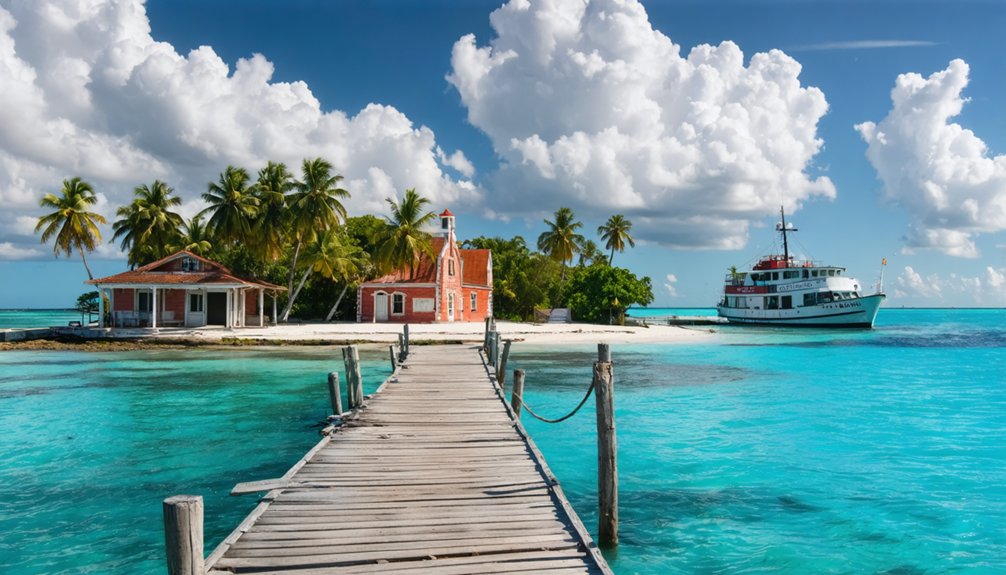
Once you set foot on Pigeon Key, you’ll find two distinct ways to experience it: a guided tour or self-guided exploration.
The guided option runs about an hour and includes a narrated walk, an in-depth look into the island’s railroad history, and a museum visit. Certain tour times — 11:30am and 1pm — even feature shark feedings, making those slots worth grabbing.
After your guided tour, you get an extra hour to wander freely. That’s your window for snorkeling with complimentary gear, fishing, or beachfront picnicking.
For a broader tour experience, the boat ride adds sweeping views beneath both bridges while granting additional building access.
These Pigeon Key activities give you genuine flexibility — structure when you want it, freedom when you need it.
How Much Does It Cost to Visit Pigeon Key?
Visiting Pigeon Key won’t break the bank, but you’ll want to know exactly what you’re paying for before you show up.
A tram tour runs $25 per adult, while some ticket packages bump that to $30 for adults and $25 for kids 12 and under, covering your ride from the parking area.
If you’d rather bike or walk the 2.2-mile stretch of Old Seven Mile Bridge on your own, you’ll pay just $5 to park your bike and explore the island freely.
Ticket Pricing Breakdown
Whether you’re arriving by tram, bike, or ferry, Pigeon Key’s admission structure keeps things straightforward without sacrificing options.
Ticket pricing suits different travel styles, so you’ll find admission details that match your budget and pace:
- Tram tour: $25 per adult, includes the ride from the parking area
- Ferry with guided tour: $30 adults, $25 for kids 12 and under
- Bike or walk access: $5 to park your bike and explore the island freely
- Boat ride upgrade: $15 adds unique views beneath both bridges plus extra building access
- Extras included: Free snorkel gear, beach access, and picnic privileges come with admission
Every option reveals the island’s full museum and grounds, giving you flexibility without hidden costs.
Bikes And Walking Fees
Biking or walking to Pigeon Key costs just $5, making it the most budget-friendly way to reach the island. That fee grants you full access to the island’s museum and grounds, letting you explore entirely on your own terms.
You’ll travel 2.2 miles each way along the Old Seven Mile Bridge, a paved path that delivers sweeping ocean views in both directions. The bridge welcomes dogs too, so nobody gets left behind.
If you didn’t bring your own wheels, check local bike rentals in Marathon before heading out. The walking trails on the island itself wind through preserved historic structures, giving you a genuine sense of the railroad workers’ lives.
Just arrive early — the small parking lot fills up fast.
What to Do at Pigeon Key Beyond the Guided Tour?
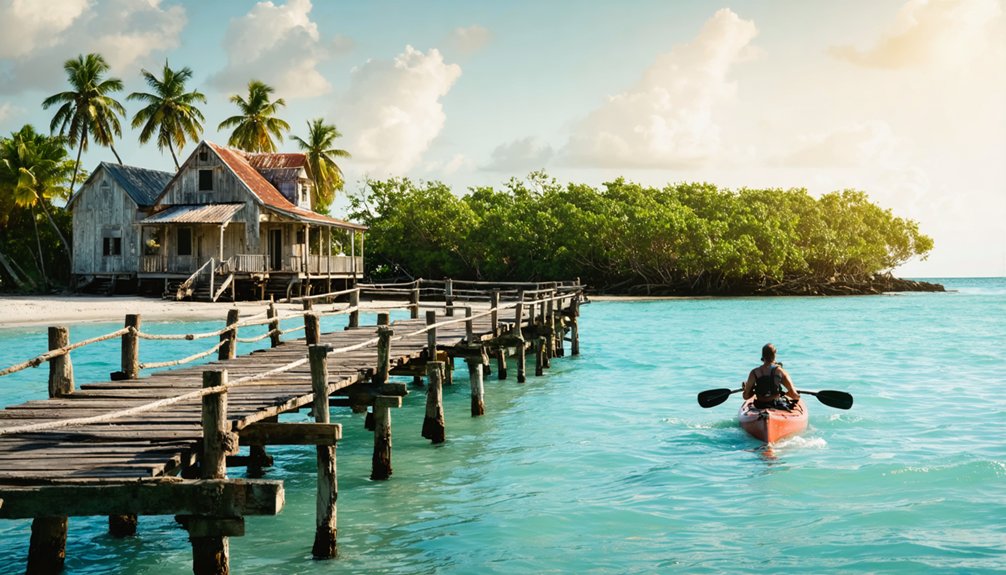
Once the guided tour wraps up, you’ve still got a full extra hour to roam Pigeon Key at your own pace.
Free snorkel equipment means snorkeling adventures start the moment you hit the shoreline, while the island’s shaded spots invite historic picnics with views only a handful of people ever experience.
Here’s what you can explore independently:
- Snorkel the shallow, crystal-clear waters teeming with sea life
- Fish along the bridge using your own gear
- Picnic beachside surrounded by century-old architecture
- Wander through preserved work camp homes at your leisure
- Watch sharks during the 11:30am or 1pm feeding sessions
This island rewards the curious.
Every corner carries a story worth discovering on your own terms.
Best Time of Year to Visit Pigeon Key Without the Heat
If you want to experience Pigeon Key without sweating through every step, aim for the cooler months between November and April, when temperatures sit comfortably in the mid-60s to low 80s.
You’ll find the humidity far more manageable, the ocean breeze actually invigorating, and the island’s open grounds genuinely pleasant to explore at a relaxed pace.
Skipping the brutal summer months isn’t just about comfort — it also means thinner crowds, clearer skies, and a ghost town atmosphere that feels far more immersive when you’re not racing back to the shade.
Ideal Season For Visiting
Florida’s scorching summers can make an outdoor adventure feel more like an endurance test, so you’ll want to time your Pigeon Key visit carefully. The best visiting months fall between November and April, when cooler temperatures make walking, snorkeling, and exploring genuinely enjoyable.
Seasonal activities peak during this window, drawing travelers who crave comfort alongside discovery.
- November–April offers mild temperatures between 65–80°F
- December–February brings the least humidity and clearest skies
- Spring delivers calm waters ideal for snorkeling and fishing
- Weekday visits mean smaller crowds and easier parking
- Early morning arrivals let you beat both heat and tour groups
Pack light layers for January evenings and bring sunscreen regardless of the season.
Cooler Months To Explore
When the humidity finally loosens its grip on the Florida Keys, Pigeon Key transforms from a sweaty endurance test into a genuinely rewarding destination.
Cooler weather between November and March keeps temperatures in the mid-70s, making the 2.2-mile walk across Old Seven Mile Bridge genuinely enjoyable rather than punishing.
You’ll appreciate those scenic views of turquoise water stretching endlessly in both directions without heat exhaustion clouding the experience.
The winter months also bring fewer crowds, meaning you’re not competing for space on the narrow bridge path or rushing through the museum.
Pack a light jacket for morning ferry departures, since ocean breezes cut sharper in January than most visitors expect.
This is simply the smartest window to experience Pigeon Key’s century-old story without surrendering to the climate.
Avoiding Summer Humidity
Summer humidity in the Florida Keys doesn’t just make you uncomfortable — it makes every step across Old Seven Mile Bridge feel like wading through warm soup.
Smart humidity tips mean timing your visit outside June through September. If summer activities are unavoidable, arrive early and leave before afternoon heat peaks.
Beat the sweat with these strategies:
- Visit October through April for cooler, drier conditions
- Book the 10am ferry before midday heat builds
- Bring reef-safe sunscreen and a reusable water bottle
- Wear breathable, lightweight clothing for bridge walking
- Plan snorkeling early — water stays invigorating before afternoon sun intensifies
You’ll explore Pigeon Key’s ghost town history far more comfortably when the Florida Keys aren’t trying to slow-roast you alive.
What to Pack for Sun, Water, and a Half-Mile Island With No Stores?
Pigeon Key has no gift shop, no vending machines, and no shade tent waiting to rescue you from the Florida sun — so pack like you mean it.
Bring serious sun protection: reef-safe sunscreen, a wide-brimmed hat, and UV-blocking sunglasses. Water essentials matter here — carry more than you think you’ll need. Free snorkel equipment is included with admission, but you’ll want your own fins for a better fit.
Pack picnic supplies since beach activities stretch your visit well beyond the guided tour. Wear comfortable hiking gear for the 2.2-mile bridge walk if you’re arriving on foot.
Tuck in a waterproof camera for photography tips worth executing — the views beneath both bridges are stunning. A notebook for historical research rounds out everything you’ll actually use.
Where Pigeon Key Fits When Planning a Florida Keys Road Trip
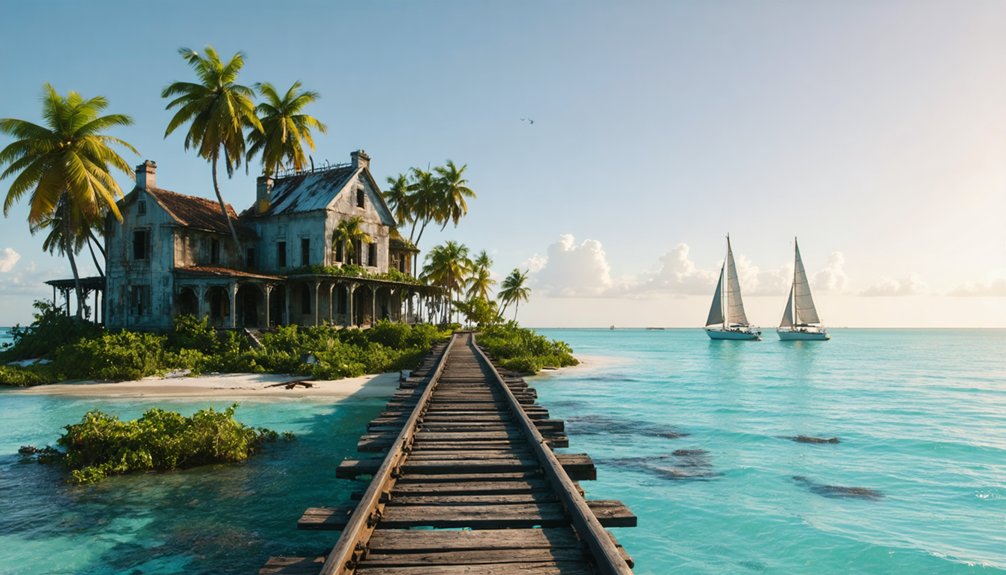
Planning a Florida Keys road trip means deciding which stops deserve your real attention — and Pigeon Key earns a full half-day without question. This ghost town sits at mile marker 47.5, making it a natural midpoint anchor between Key Largo and Key West.
Build your itinerary around it:
- Drive southbound, hitting John Pennekamp before reaching Marathon
- Arrive by 10am to catch the first ferry departure
- Reserve tram tickets in advance — that small parking lot fills fast
- Pair it with Bahia Honda State Park, just 12 miles south
- Continue to Key West for sunset after exploring this ghost town
Pigeon Key rewards travelers who slow down, step off the highway, and actually touch Florida Keys history.
Frequently Asked Questions
Can Visitors Research Their Ancestors Who Built the Overseas Railroad?
Like names etched in stone, you can trace your family history through the museum’s register, which lists bridge builders’ names and home countries, connecting you directly to your ancestors’ railroad heritage.
Are There Restrooms and Shade Available on the 5-Acre Island?
The knowledge doesn’t specifically confirm restroom facilities or shade options on the island. You’ll want to call 305-743-5999 directly to get accurate details before you pack up and hit the open road to Pigeon Key.
Is Pigeon Key Accessible for Visitors With Mobility Limitations or Wheelchairs?
The knowledge doesn’t confirm full wheelchair accessibility, but you’ll find the tram offers accessible transportation from the parking lot, sparing you the 2.2-mile walk. Call 305-743-5999 to confirm mobility aids accommodation before your adventure.
Can Visitors Swim in the Ocean Waters Surrounding Pigeon Key?
Like a siren’s call, Pigeon Key’s waters beckon you! You can enjoy snorkeling opportunities with free equipment included in admission. Always prioritize ocean safety while you explore the stunning, shallow sea life surrounding this breathtaking historic island.
Does Pigeon Key Ever Host Special Events, Weddings, or Private Gatherings?
You’ll find Pigeon Key’s historical significance makes it an unforgettable venue for event planning, including weddings and private gatherings. Contact them at 305-743-5999 to explore hosting your special occasion on this hauntingly beautiful, freedom-inspiring island.
References
- https://pigeonkey.net
- https://thekeysexplored.com/visiting-pigeon-key/
- https://changinglanesrv.com/haunted-paradise/
- https://www.youtube.com/watch?v=GU5nIZeUzLw
- https://pigeonkey.net/discover/guided-tours/
- https://wanderthemap.com/2013/11/walking-old-7-mile-bridge-pigeon-key/
- https://www.atlasobscura.com/places/pigeon-key
- https://www.youtube.com/watch?v=KDktu4qnZns
- https://www.tripadvisor.com/Attraction_Review-g34347-d143352-Reviews-Pigeon_Key-Marathon_Florida_Keys_Florida.html