To plan your ghost town road trip to Butternut, Michigan, head north on Butternut Road in Montcalm County, where a once-thriving railroad boomtown peaked at 275 residents in 1897. You’ll find crumbling storefronts, a renovated hotel, and a standing church frozen in time. Bring water, sturdy boots, and written permission before stepping onto private property. Butternut’s streets still hold stories — and there’s far more to uncover about what built this town and what brought it down.
Key Takeaways
- Butternut is accessible via North Butternut Road, where visitors can explore remnants of the former downtown area and an old granary.
- A few original storefronts, a renovated Eagle Hotel, and an intact church remain as fascinating historical landmarks worth visiting.
- Nearby ghost towns like Six Lakes, Edmore, and Coral can enhance your road trip with additional historical exploration opportunities.
- Always obtain written permission from property owners before entering structures, as trespassing in Montcalm County can result in misdemeanor charges.
- Wear sturdy boots, bring water, and stay alert to hazards like unstable floors and collapsing walls inside deteriorating buildings.
How Butternut, Michigan Went From Boomtown to Ghost Town
When the Toledo, Saginaw & Muskegon Railroad laid its tracks through Bloomer Township in the late 1800s, Butternut, Michigan transformed almost overnight into a thriving hub of commerce.
The railroad impact was immediate and profound — lumber, minerals, and grain moved freely, fueling a peak population of 275 by 1897. You’d have found blacksmiths, druggists, hotels, a bank, and a cheese factory all operating within this small community.
Then the railroad abandoned its line in the early 1900s, and community decline followed swiftly. Without reliable transport, businesses shuttered one by one.
How the Railroad Built: and Killed: Butternut
Then the railroad left.
That departure triggered the classic ghost town evolution: businesses closed, workers relocated, and the post office finally shut its doors in 1955.
The last train rolled through in 1983, and crews ripped up the rails shortly after.
The final train passed through in 1983, and the tracks were torn away soon after, erasing the last trace of connection.
What remains today — a granary, a few storefronts, a quiet dead-end road — stands as proof that when you build a town around a single economic artery, you’re gambling on its permanence.
What Did Butternut Look Like at Its Peak?
At its peak in 1897, Butternut wasn’t just a dot on a railroad map — it was a functioning, self-sufficient community of roughly 275 people with everything a small Michigan town needed to thrive.
That peak population supported a blacksmith, grocer, druggist, sawmill, cheese maker, hardware store, watch repairer, hotel, dry goods shop, depot, schoolhouse, and a Congregational church.
Butternut architecture reflected the confidence of a town that expected to last — storefronts lined a proper downtown, the Eagle Hotel welcomed travelers, and a grain elevator employed nine workers.
You could’ve lived your entire life here without leaving.
Walking the old streets today, that self-sufficiency feels almost impossible to imagine, but the remaining structures remind you this wasn’t a settlement — it was a real town.
What’s Left to See in Butternut Today?
When you pull down North Butternut Road to its dead end, you’ll find a handful of weathered survivors standing where a bustling 19th-century community once thrived.
A few original storefronts from the former downtown still exist, along with a church and what may be the renovated Eagle Hotel.
Follow the old railroad grade and you’ll spot the aging granary, a quiet reminder of the grain trade that once kept Butternut alive after the lumber era faded.
Surviving Historic Structures
Though Butternut’s glory days are long gone, a handful of structures still stand as quiet reminders of the village’s bustling past.
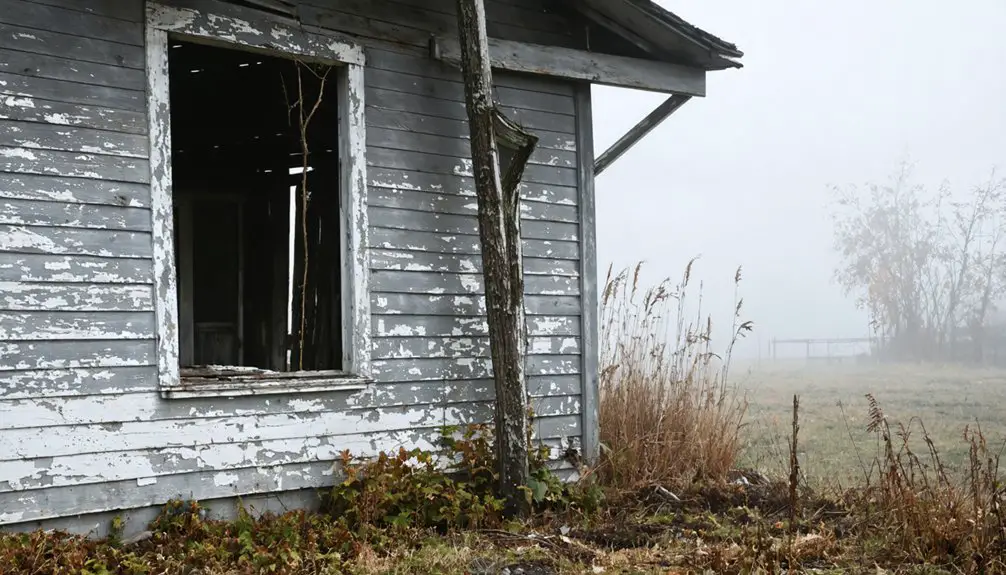
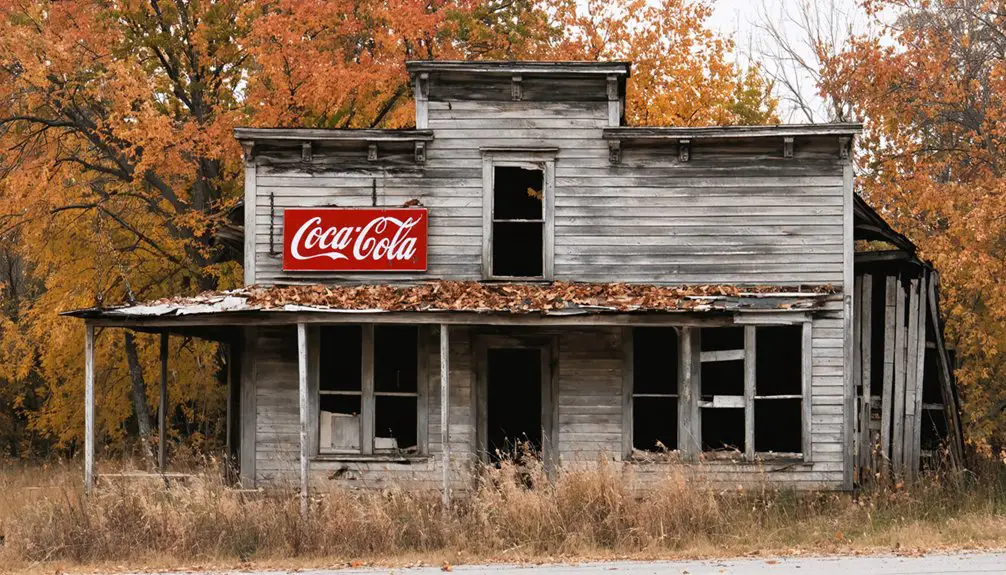
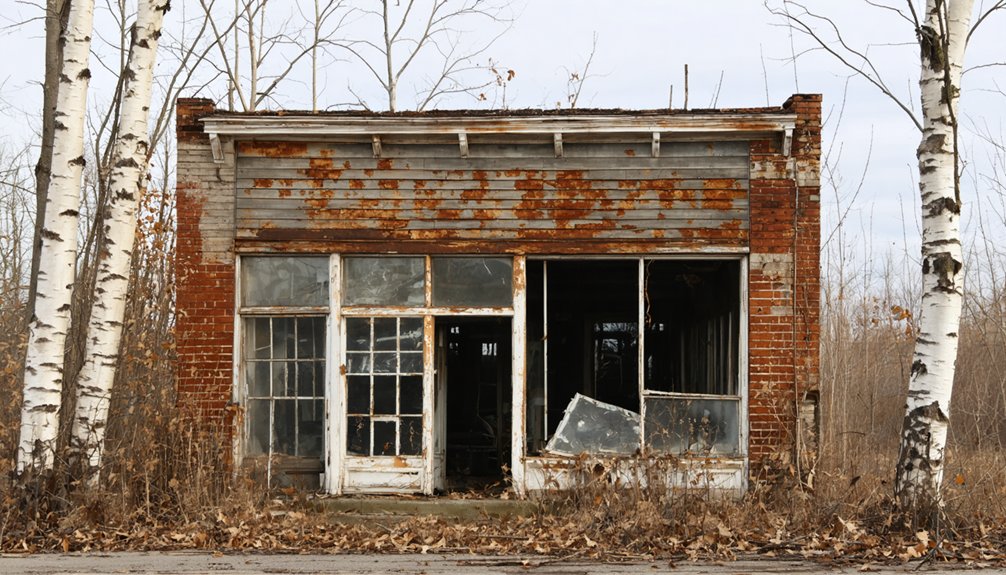
You’ll spot a couple of original storefronts downtown, their abandoned architecture hinting at the commerce that once thrived here. The former Eagle Hotel still exists, reportedly renovated into private residences. A church remains standing, remarkably intact given the town’s century-long decline.
Head toward the dead-end on North Butternut Road, and you’ll find an old granary sitting alongside the former railroad grade — a structure of genuine historical significance that connects you directly to Butternut’s lumber and grain shipping era.
A few houses and outbuildings round out what’s left. Visit soon, because each passing season brings these survivors closer to disappearing permanently.
Former Downtown Remnants
Walking Butternut’s remaining downtown block feels like stepping into a photograph that time forgot to develop. You’ll spot a couple of original storefronts still anchoring what was once a thriving commercial strip, their weathered facades quietly broadcasting their historical significance.
The former Eagle Hotel stands nearby, possibly repurposed into residential use, while the church remains one of the better-preserved examples of the town’s varied architectural styles.
Head down the dead-end stretch of North Butternut Road and you’ll reach the old granary sitting alongside the ghost of the former railroad grade. These structures won’t last forever — deterioration moves faster than preservation funding.
Visit now, respect private property, and get permission before exploring. What remains is fragile, honest, and worth your time.
Old Granary Location
Follow North Butternut Road to its dead end and you’ll find the old granary standing beside the ghost of the former railroad grade — one of Butternut’s most tangible connections to its commercial peak.
This structure embodies the town’s granary history, reminding you that Butternut once moved grain, lumber, and minerals outward through the Toledo, Saginaw & Muskegon Railroad.
Its agricultural significance ran deep — by 1920, the grain elevator company employed nine workers, sustaining families and fueling local commerce.
When the railroad disappeared, so did that economic lifeline.
Today, you’re standing where freight cars once rolled and workers once labored.
The granary’s persistence is quietly remarkable.
Visit it while you can — structures like this don’t survive indefinitely, and this one tells Butternut’s story better than any written record.
How to Get to Butternut From Carson City
Getting to Butternut from Carson City takes just a few straightforward steps. Head west on M-57, and you’ll cover the four miles quickly.
Once you’re there, turn onto North Butternut Road and follow it to its dead end.
That dead-end road tells its own story of ghost town history. You’re tracing the same path that once connected a thriving community to the outside world. The railroad impact shaped everything here — when the Toledo, Saginaw & Muskegon Railroad abandoned its route in the early 1900s, Butternut’s fate was sealed.
Look for the old granary standing near the former railroad grade. It’s one of the few remaining structures still marking where a bustling town once stood.
Explore freely, but respect private property.
What to Pack for Your Butternut Ghost Town Visit

Before you set foot on North Butternut Road, pack with purpose. Butternut’s ghost town legends deserve respect, and you’ll want sturdy boots for uneven terrain around the old granary and storefronts.
Bring a camera — the remaining structures carry real historical significance, from the former Eagle Hotel to the church that outlasted everything around it.
Pack water, since you’re four miles from Carson City with little nearby. Carry a notebook to record details you’ll want to remember later.
Sunscreen matters in open fields where the railroad grade once ran. Don’t forget a fully charged phone for navigation and photos.
Most importantly, bring a mindset of curiosity over entitlement — some structures are privately owned, so always get permission before stepping onto abandoned property.
What Are the Rules Before Exploring Abandoned Buildings?
Before you step foot inside any of Butternut’s crumbling storefronts or the old granary near the former railroad grade, you’ll need to track down the property owner and get explicit permission.
Trespassing laws in Michigan carry real legal consequences, so research Montcalm County regulations before your visit.
Your safety’s non-negotiable too—these structures have been deteriorating since the town’s ghost town status solidified in the 1930s, making unstable floors and collapsing walls a genuine hazard.
Always Get Owner Permission
Whether you’re peeking through a crumbling storefront or stepping inside Butternut’s old granary, you’ll need the property owner’s permission first.
These abandoned structures aren’t public property, even if they’ve sat untouched for decades. Someone still holds the deed.
Respecting that boundary keeps you legally protected and preserves your freedom to explore Michigan’s ghost towns long-term. Trespassing charges can end your road trip permanently.
Local legends about Butternut’s bustling 1890s peak make every weathered plank feel significant, but curiosity doesn’t override ownership rights.
Before you cross any threshold, track down the property owner, introduce yourself, and ask directly.
Most owners appreciate genuine historical interest and may even share stories you won’t find anywhere else. Permission transforms a cautious visit into a meaningful, unrestricted experience.
Know Local Trespassing Laws
Getting permission is only half the equation—Michigan’s trespassing laws add another layer you can’t afford to ignore. Before wandering Butternut’s forgotten storefronts or granary ruins, know exactly where you stand legally.
- Research Michigan trespassing laws: Entering abandoned property without consent can trigger misdemeanor charges, even in ghost towns.
- Check Montcalm County’s local regulations: Township ordinances sometimes impose stricter rules than state law, affecting access to structures along North Butternut Road.
- Carry documentation: If an owner granted permission, bring written proof—it protects your freedom if authorities question your presence.
Butternut’s history deserves respectful exploration. Understanding the legal boundaries doesn’t limit your adventure; it preserves your right to keep having them.
Prioritize Personal Safety
Stepping into Butternut’s crumbling storefronts or weathered granary means stepping into a structure that nobody has maintained since the railroad died.
Decades of Michigan winters have weakened floors, rotted beams, and destabilized walls. Urban exploration carries real consequences here.
Before you cross any threshold, take these safety precautions seriously:
- Wear sturdy boots to protect against nails, broken glass, and uneven surfaces.
- Bring a companion — solo exploration in remote Bloomer Township is genuinely dangerous.
- Test every floor before committing your full weight.
- Skip upper floors entirely unless you’re certain the structure is sound.
- Tell someone your plans and expected return time.
Butternut’s history deserves your curiosity.
But you can’t share what you discover if a collapsed ceiling ends the trip early.
Which Michigan Ghost Towns Near Butternut Are Worth the Detour?
Once you’ve wandered Butternut’s quiet streets and peered into its weathered storefronts, why stop there?
Central Michigan hides dozens of forgotten communities carrying their own haunted history and local legends. Pack curiosity alongside your road map.
Three ghost towns worth your detour:
- Six Lakes – A small Montcalm County community with remnants reflecting Michigan’s agricultural past and quiet rural character.
- Edmore – Once a thriving railroad hub nearby, its faded commercial district echoes Butternut’s own rise and decline.
- Coral – Tucked in western Montcalm County, this near-ghost town retains original structures that reward patient explorers.
Each stop deepens your understanding of Michigan’s vanished communities.
Travel freely, explore responsibly, and let these overlooked places tell their stories on your terms.
Frequently Asked Questions
Is Butternut, Michigan an Officially Recognized Ghost Town by the State?
You won’t find Butternut on Michigan’s official ghost town registry, but its historical significance is undeniable. Ghost town legends live in its abandoned storefronts and silent railroad grades, waiting for you to explore them firsthand.
Are There Any Guided Tours Available Specifically for Butternut Ghost Town?
No official ghost town tours exist for Butternut, but you’ll find historical insights through self-guided exploration. Grab a map, drive North Butternut Road, and you’re free to uncover Michigan’s forgotten past on your own terms.
What Is the Best Time of Year to Visit Butternut?
Like a ghost whispering secrets, spring and fall are your best bets! You’ll enjoy mild weather considerations and rich seasonal activities—autumn’s golden hues perfectly frame Butternut’s haunting remnants, while spring’s clarity reveals the town’s forgotten bones beautifully.
Has Butternut Ever Been Featured in Movies or Television Shows?
The available records don’t confirm Butternut’s film locations or cultural significance on screen. You’d uncover no documented movie or TV appearances, but its hauntingly preserved ruins make it a compelling, freedom-calling destination worthy of your own personal documentary.
Are There Any Local Historians or Contacts for Butternut Research?
You’ll want to connect with Montcalm County’s local archives and historical societies for Butternut research. They’re your gateway to uncovering forgotten stories, preserving your freedom to explore this vanished community’s rich, independent past independently.
References
- https://lostinmichigan.net/butternut/
- https://99wfmk.com/butternut-michigan-2020/
- https://99wfmk.com/butternutghosttown2018/
- https://www.nailhed.com/2015/03/ebb-and-flow.html
- https://www.youtube.com/watch?v=zFa8wx2yUpk
- https://www.youtube.com/watch?v=6S7V9N3EoAY