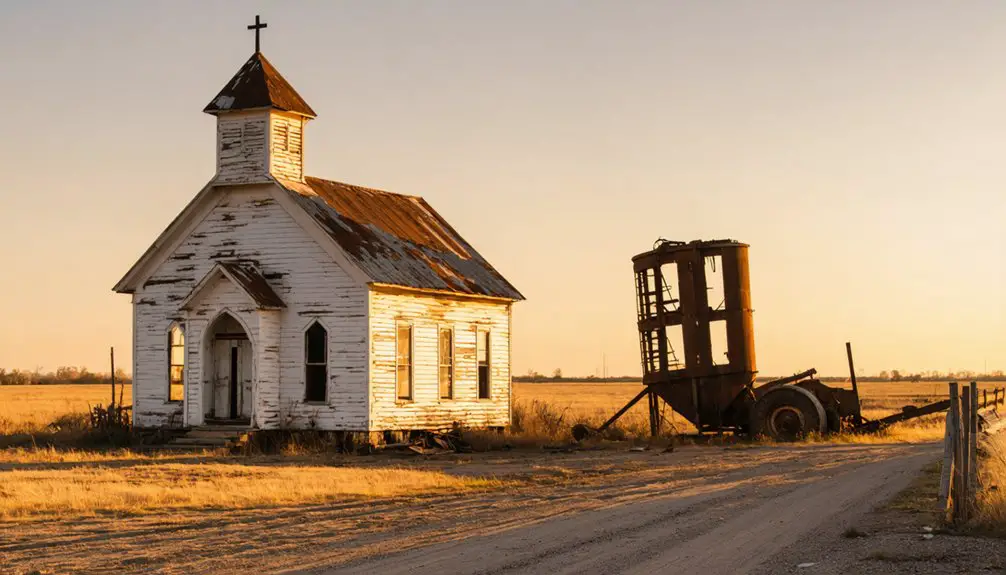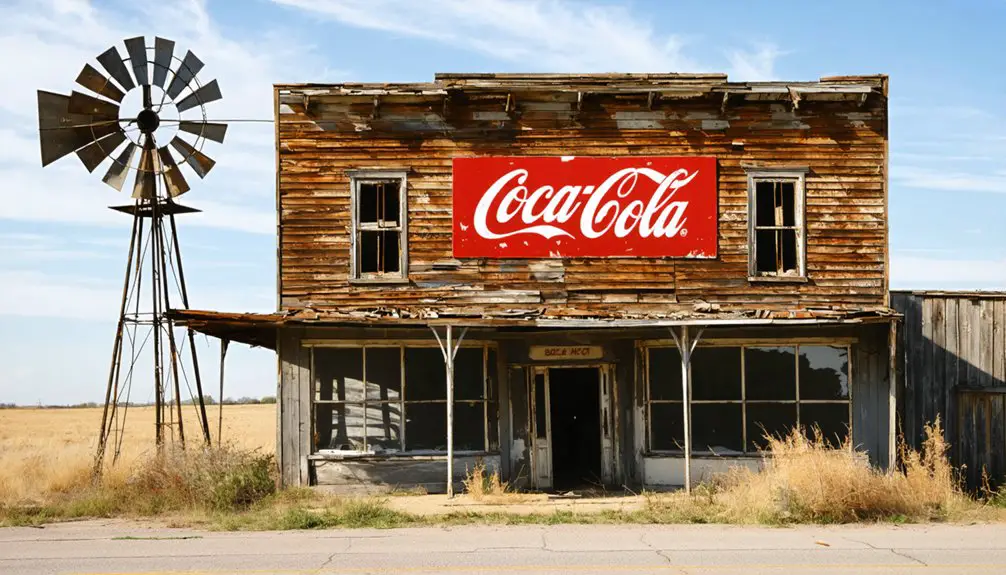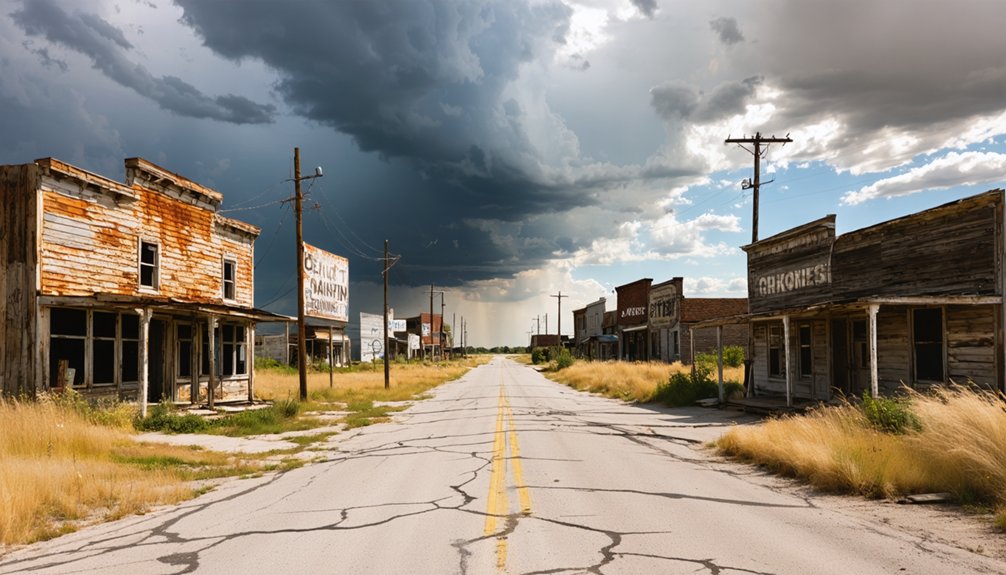
Grand, Oklahoma once thrived as Ellis County’s seat before fading into obscurity after 1908. You’ll find crumbling foundations and weathered remnants scattered across the site, offering a raw, unpolished glimpse into Oklahoma’s settler history. Visit during late spring or early fall to avoid extreme heat and flash floods. Pack sturdy boots, plenty of water, and a paper map since cell service is unreliable. There’s far more to discover about making this ghost town road trip unforgettable.
Key Takeaways
- Grand, Oklahoma, once a thriving Ellis County seat, declined after 1908, leaving scattered ruins that make it a compelling ghost town destination.
- Visit during late spring or early fall to avoid extreme summer heat and unpredictable winter road conditions when exploring Grand.
- Before visiting, research Oklahoma Historical Society archives, review county maps, and understand private property boundaries to ensure legal exploration.
- Grand pairs well with nearby ghost towns like Picher and Lugert, forming a 150-mile circuit along Highway 50 through Oklahoma.
- Safety essentials include sturdy boots, water, weather monitoring for flash floods, and informing someone of your plans before exploring.
What Was Grand, Oklahoma?
Once a thriving county seat in Ellis County, Grand, Oklahoma rose to prominence around 1892 before fading into obscurity by 1908. You’d find it hard to believe this quiet stretch of northwest Oklahoma once buzzed with civic energy and ambition.
Grand history tells a story of settler families who built businesses, established infrastructure, and created a genuine community from raw frontier land.
Determined settler families transformed raw frontier land into a thriving community, building businesses and infrastructure from nothing.
When Grand lost its county seat status, the town’s decline was swift and unforgiving. Those settler families who’d invested everything watched their hard work slowly return to the earth.
Today, you’ll discover only scattered ruins and overgrown remnants where a vibrant settlement once stood. C.A. Squire captured this fading legacy in a 1950 Chronicles of Oklahoma article, preserving what time nearly erased.
How Grand Lost Its County Seat and Disappeared
When Grand surrendered its county seat status, the town’s fate was fundamentally sealed. Losing that designation stripped away its historical significance almost overnight.
Government functions, businesses, and residents followed the economic power elsewhere, leaving Grand hollowed out by 1908.
You’ll notice this pattern repeating across Oklahoma’s ghost town landscape — once a county seat relocates, the original settlement collapses like a house of cards.
Grand couldn’t sustain itself without that institutional anchor driving commerce and population growth.
What remained reverted slowly back to agricultural land, with scattered structures standing as silent witnesses to a community that once thrived.
Today, you’re fundamentally walking through an open-air archive. The absence of any preserved downtown reinforces just how decisively Grand disappeared once it lost its governing purpose.
What’s Left to See at the Grand Ghost Town Site?
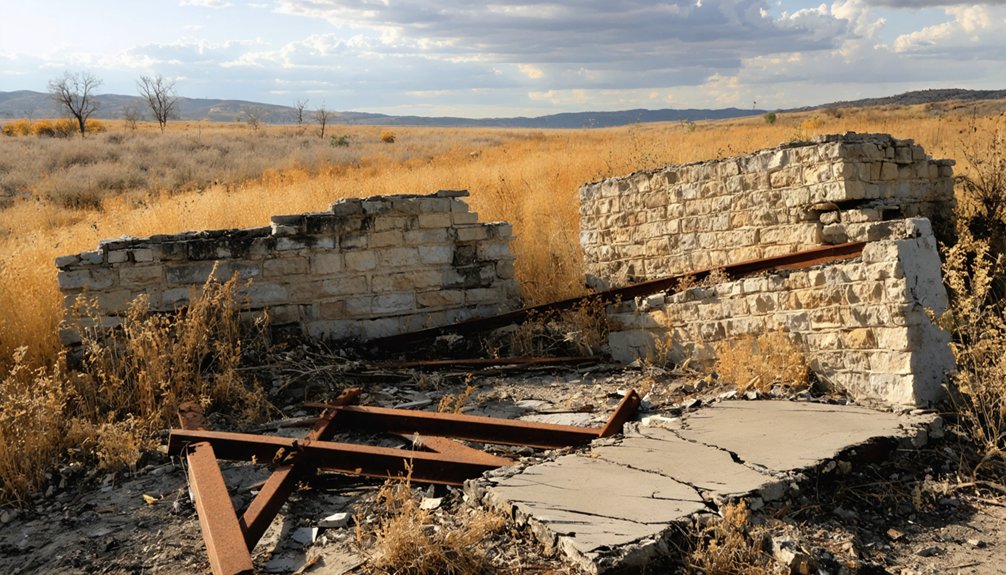
Though Grand has largely dissolved back into the Oklahoma prairie, you’ll still find abandoned structures and remnant landscaping scattered across the Ellis County site.
These ghostly fragments carry real ghost town architecture worth examining up close — crumbling foundations, weathered walls, and overgrown lots that once buzzed with county seat activity.
Walking the grounds connects you directly to Grand’s historical significance as Ellis County’s former governmental hub.
You’re fundamentally reading history through ruins rather than textbooks.
Don’t expect polished preservation here.
Grand rewards curious, independent explorers willing to piece together a story from physical clues.
Bring your camera, study the terrain carefully, and cross-reference what you discover with Oklahoma Historical Society archives.
The site’s rawness is precisely what makes it authentic and worth the detour.
What to Look Up Before You Drive Out to Grand
Before you load up the car and head toward Ellis County, do some homework that’ll save you frustration in the field. Start with the Oklahoma Historical Society’s online archives, where C.A. Squire’s 1950 Chronicles of Oklahoma article reveals Grand’s historical significance as a former county seat that thrived and collapsed within two decades.
Cross-reference county road maps with GPS coordinates, since no signs mark the remnants. Search local legends tied to early settler families who built businesses there around 1892, giving you context when you’re standing among the ruins.
Ellis County historical records may surface land ownership details that clarify which areas are private property. Knowing boundaries before arrival keeps your exploration legal and respectful, letting you focus entirely on uncovering Grand’s forgotten story.
The Best Time of Year to Visit Grand Ghost Town
You’ll want to plan your trip to Grand during late spring or early fall, when mild temperatures make exploring the uneven terrain far more comfortable.
Summer heat in northwest Oklahoma can be brutal, and winter roads in rural Ellis County turn unpredictable after storms.
Dry conditions are essential, since flash floods can quickly make low-lying ghost town valleys both dangerous and inaccessible.
Ideal Seasonal Visiting Windows
When you’re planning a visit to Grand, Oklahoma, timing matters more than you might expect.
Spring and fall offer the sweetest seasonal windows for exploring this Ellis County ghost town. Mild temperatures make hiking through uneven terrain comfortable, and you’ll encounter local wildlife like deer and migratory birds that add unexpected life to abandoned surroundings.
Avoid summer months, when brutal Oklahoma heat drains your energy fast and flash floods threaten low-lying valley areas.
Winter visits bring harsh northwest winds that make outdoor exploration miserable.
Late April through early June or September through October give you cooler days, drier ground, and better visibility through sparse vegetation.
You’ll move freely across the landscape, photograph remnants clearly, and engage in seasonal activities without battling extreme conditions.
Weather And Road Conditions
Seasonal timing connects directly to a bigger picture—what the weather actually does to the roads leading into Grand.
Ellis County’s unpaved county roads shift dramatically with weather patterns, making preparation non-negotiable.
- Spring: Rain saturates clay-heavy roads, creating deep ruts and dangerous mud slides—avoid this window.
- Summer: Dry heat firms the ground, but afternoon storms appear suddenly, triggering flash floods in low-lying areas.
- Fall: The clearest window—stable weather patterns and minimal precipitation make road maintenance less critical to your access.
- Winter: Ice and frozen ground complicate rural navigation, especially without road maintenance crews prioritizing remote county routes.
You’re chasing freedom out here, so don’t let preventable road conditions trap you miles from help.
Fall wins every time.
How to Get to Grand, Oklahoma From Any Direction
Reaching Grand, Oklahoma takes a little planning since it sits in the remote northwest corner of Ellis County, roughly 150 miles northwest of Oklahoma City.
From Oklahoma City, head northwest on US-270 toward Woodward, then take State Highway 50 west into Ellis County.
From Amarillo, drive east on US-60 until you reach the county’s western edge, then navigate north using local county roads.
From Wichita, head southwest on US-283 through Liberal, Kansas, crossing into the Oklahoma panhandle region before angling southeast.
GPS helps, but don’t rely solely on it since signal drops in rural areas.
Printed maps or offline navigation apps keep you on track when you’re chasing ghost town legends and diving deep into urban exploration without interruption.
Pack extra fuel since stations are sparse out here.
Water, Boots, and No Cell Signal: What to Pack for Grand
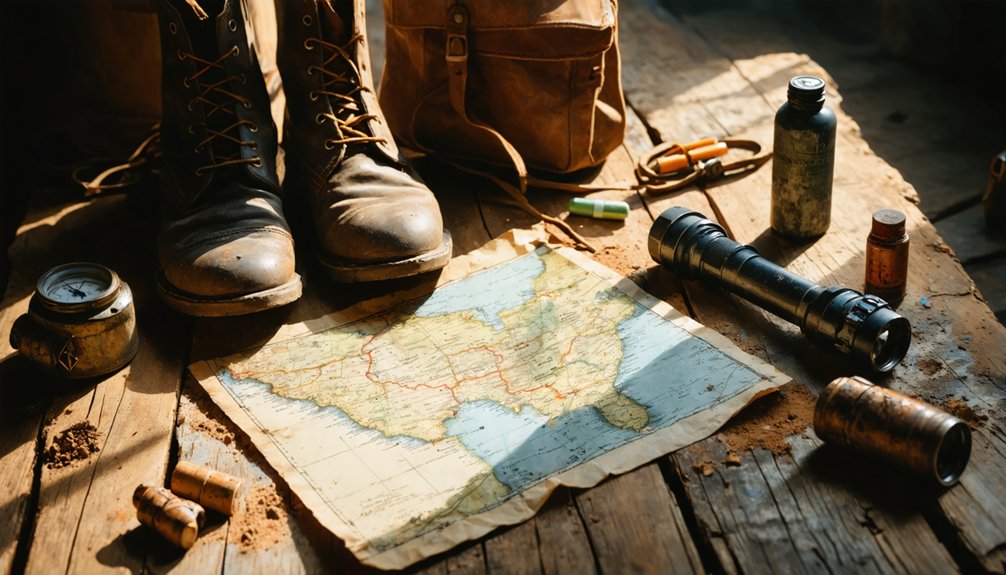
Packing smart makes the difference between a memorable ghost town adventure and a miserable retreat back to civilization. Grand’s abandoned architecture and rugged Ellis County terrain demand preparation.
Cell service disappears fast out here, so plan accordingly.
Bring these four essentials:
- Water – Pack more than you think you’ll need; no facilities exist on-site.
- Sturdy boots – Uneven ground around crumbling structures punishes weak footwear.
- Offline maps or GPS downloads – Unmarked remnants won’t guide themselves.
- Printed research – Oklahoma Historical Society archives and local folklore notes help you interpret what you’re actually seeing.
Respect private land boundaries throughout your exploration.
Flash floods threaten low-lying valleys seasonally, so check forecasts before leaving.
Freedom tastes best when you’re genuinely prepared for it.
Ghost Towns Within Striking Distance of Grand, Oklahoma
Once you’ve thoroughly explored Grand, the surrounding region rewards curious road-trippers with additional ghost towns worth the detour.
Picher, roughly 250 miles east near the Kansas border, stands as America’s largest ghost town, overflowing with ghost town legends and striking abandoned architecture from its mining era.
Picher’s crumbling mining-era bones make it America’s largest ghost town — and one of its most haunting.
Head 200 miles south to find Lugert, a submerged settlement beneath Altus-Lugert Lake — its remnants surface during droughts, creating an eerie, unforgettable sight.
If you’re craving elevation, Black Mesa sits 130 miles west, offering Oklahoma’s highest point alongside fascinating historical layers.
Each destination carries its own gritty character, connecting you to Oklahoma’s cycles of boom and bust.
Map your route strategically, combining stops for a fuller picture of the state’s forgotten communities.
How to Turn Grand Into a Full Northwest Oklahoma Ghost Town Route
Grand makes an ideal anchor for a full northwest Oklahoma ghost town circuit, and with a bit of strategic planning, you can string together a route that covers serious ground without backtracking.
Start in Ellis County, then expand outward using these four stops:
- Grand – Begin exploring architecture and absorbing the historical significance of a lost county seat.
- Arnett – Ellis County’s current seat offers context for Grand’s decline.
- Woodward – Refuel and resupply before pushing deeper northwest.
- Black Mesa corridor – Follow Highway 50 west toward Oklahoma’s high plains, connecting additional faded settlements along the way.
You’ll cover roughly 150 miles of raw Oklahoma landscape, moving freely through history without doubling back unnecessarily.
Flash Floods, Unstable Structures, and Private Land: Staying Safe at Grand
Although Grand rewards curiosity, it demands respect—flash floods, crumbling structures, and unmarked private property turn careless visits into dangerous ones.
Ellis County valleys channel rainfall fast, so flood preparedness isn’t optional; check weather forecasts before leaving and avoid low-lying areas after rain. Structural safety matters equally here. Abandoned buildings deteriorate silently, and weakened floors or collapsing walls won’t announce themselves. Don’t enter anything standing.
Wear sturdy boots, watch where you step, and keep your footing deliberate across uneven ground. Private land boundaries rarely appear on signs in rural Oklahoma, so research property lines beforehand using county records. Trespassing risks confrontation and legal trouble.
Pack water, tell someone your plans, and carry a paper map since cell service drops unexpectedly. Grand’s history is worth discovering—just discover it responsibly.
Frequently Asked Questions
Are There Any Guided Tours Available at the Grand Ghost Town Site?
No official guided tours exist at Grand, but you’ll uncover rich ghost town history through self-guided exploration. Immerse yourself in guided experiences via Oklahoma Historical Society archives online before hitting the remote Ellis County site independently.
Can You Legally Collect Artifacts or Souvenirs Found at Grand?
History’s breadcrumbs aren’t yours to pocket. You shouldn’t collect artifacts at Grand, as ethical collecting means leaving remnants for others. Artifact preservation laws protect these sites, so you’ll want to respect private land boundaries and legal restrictions.
Is Grand, Oklahoma Listed on Any Official Historical Preservation Registries?
You’ll find Grand, Oklahoma’s historic landmarks documented through the Oklahoma Historical Society’s records, but it’s not prominently featured on major preservation efforts like the National Register. Check their archives to uncover its forgotten frontier legacy yourself!
Were Any Famous or Notable Historical Figures Associated With Grand?
You won’t find famous residents tied to Grand’s historical events, but you’ll discover early settler families who shaped the town’s brief rise as Ellis County’s seat before its fascinating decline after 1908.
Are There Any Local Museums Nearby Dedicated to Ellis County History?
“Knowledge is power!” You’ll find Ellis County history and historical artifacts at the Arnett-area local museum. It’s your gateway to uncovering Grand’s forgotten past, connecting you with the freedom of authentic historical exploration.
References
- https://gateway.okhistory.org/ark:/67531/metadc2123396/
- https://z94.com/underwater-oklahoma-ghost-town/
- https://kids.kiddle.co/Grand
- https://en.wikipedia.org/wiki/List_of_ghost_towns_in_Oklahoma
- https://www.youtube.com/watch?v=xg8SpCG-wDg