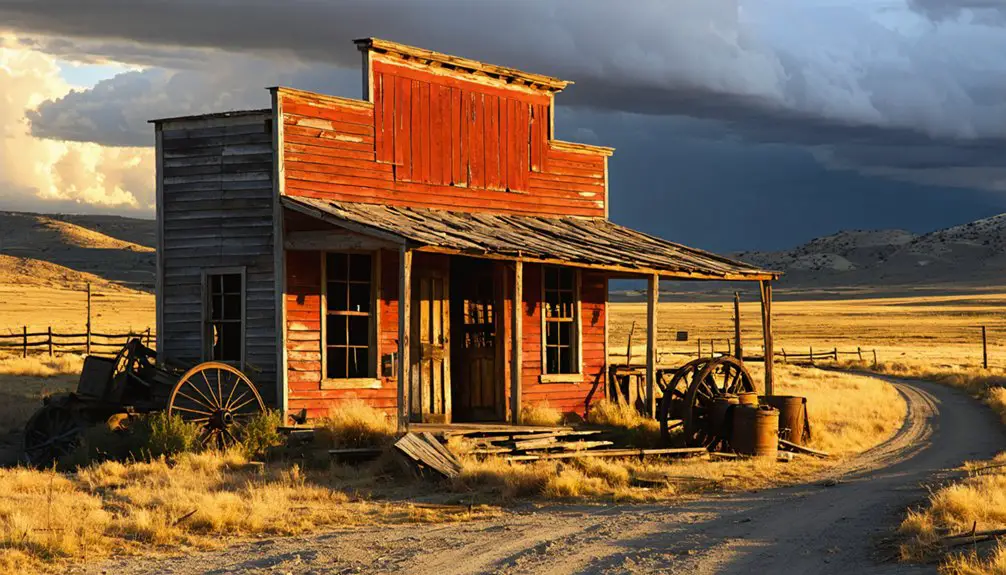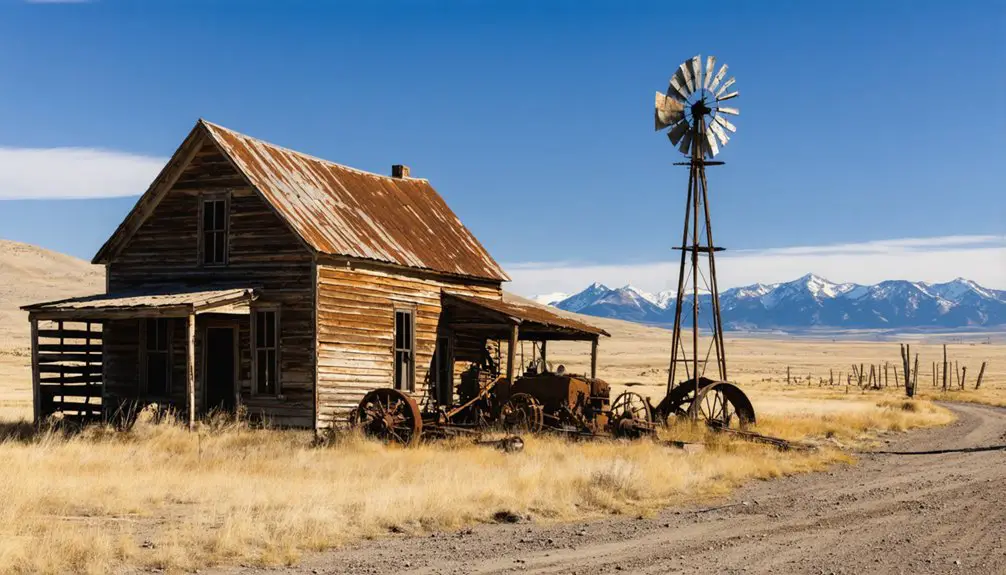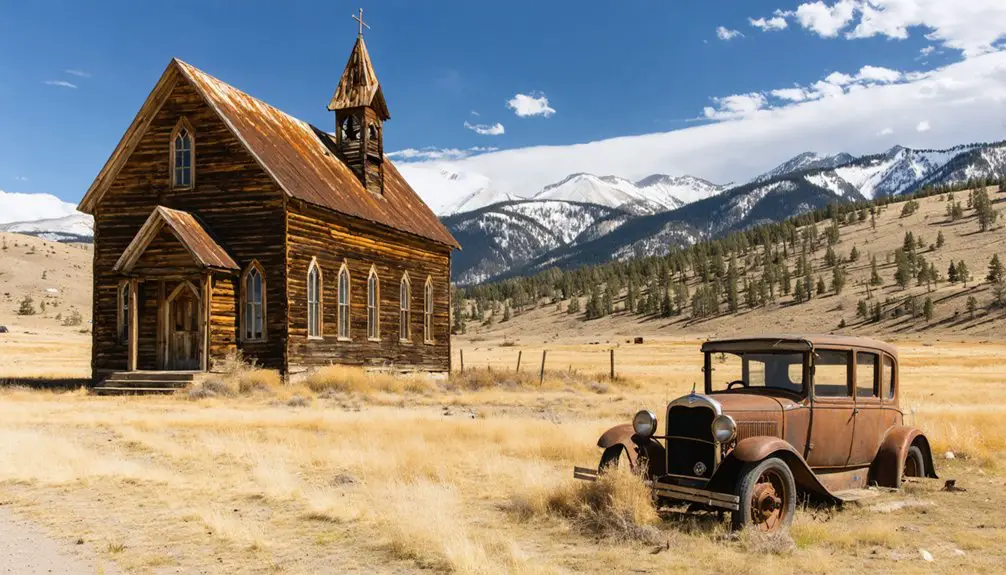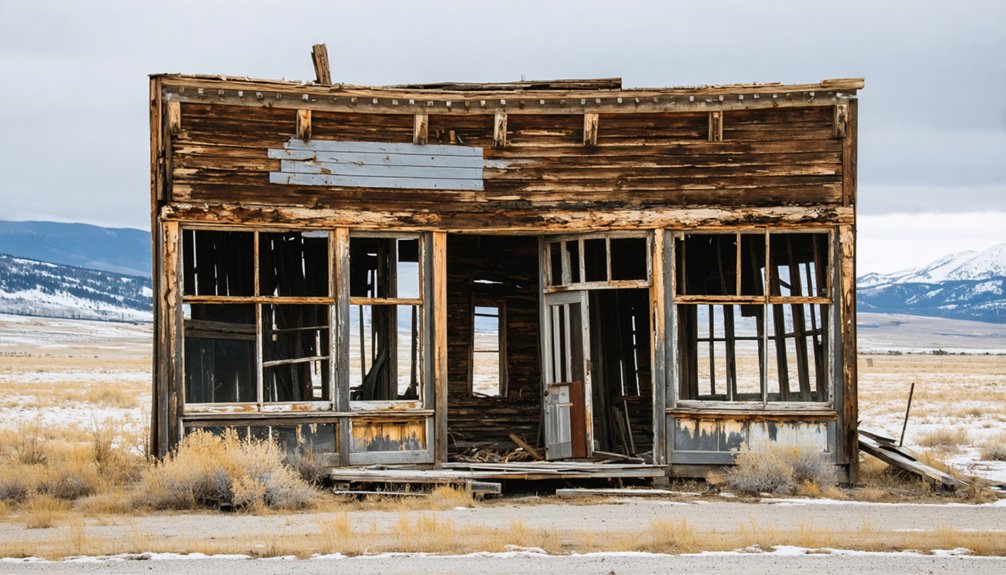
Planning a ghost town road trip to Carbon Timber Town means stepping into Wyoming’s forgotten past. Founded in 1868 as a Union Pacific coal stop, this remote site once housed nearly 1,000 residents before fire, coal depletion, and railroad relocation erased it from the map. Today, stone foundations and 239 marked graves are all that remain. Fill your tank, grab offline maps, and pack extra water — there’s far more to this haunting landscape than first meets the eye.
Key Takeaways
- Carbon Ghost Town sits in Carbon County’s Shirley Basin, requiring offline maps, a full fuel tank, and extra water before departing.
- Founded in 1868 by Union Pacific Railroad, Carbon reached nearly 1,000 residents before fire, coal depletion, and railroad relocation caused its decline.
- Visitors can explore stone foundations, scattered historic remnants, and a cemetery containing 239 marked and 98 unmarked graves.
- Pack sun protection, sturdy footwear, and navigation tools, as the open terrain offers little shade and unreliable cell coverage.
- Nearby ghost towns Hanna, Elk Mountain, and Medicine Bow can be efficiently combined into a single regional road trip itinerary.
What Was Carbon Timber Town, Wyoming?
Carbon Timber Town sits in the wind-scoured sagebrush of Carbon County, Wyoming, a quiet remnant of a community that once hummed with immigrant miners, locomotive smoke, and the raw ambition of the American West.
Carbon’s history begins in 1868, when the Union Pacific Railroad founded the settlement as a coal fueling stop for steam locomotives.
At its peak, nearly 1,000 people called it home. Welsh, Finnish, and Scottish immigrants built their lives here, shaping a full economy of saloons, churches, schools, and storefronts.
The town’s mining heritage defined every structure, every relationship, and every ambition within its borders.
Then the coal dried up, the railroad moved on, and a devastating 1890 fire finished what decline had started.
How Do You Get to Carbon Ghost Town?
Getting to Carbon Ghost Town requires embracing the kind of travel the place itself once demanded — remote, self-reliant, and stripped of convenience.
Located in Carbon County’s Shirley Basin area, the site sits along county roads cutting through open sagebrush country, far from major highways. Your directions overview starts with accepting that GPS signals and cell coverage are unreliable here, so download offline maps before you leave civilization behind.
Carbon County’s Shirley Basin doesn’t coddle visitors. Download offline maps. Cell service here is a rumor.
These travel tips aren’t optional — they’re essential. Fill your tank before heading out, pack extra water, and carry a paper map as backup.
The road delivers you through wind-swept, exposed terrain that feels genuinely untouched. That isolation isn’t a flaw in your plan. It’s the whole point.
What You’ll Actually See at Carbon Ghost Town
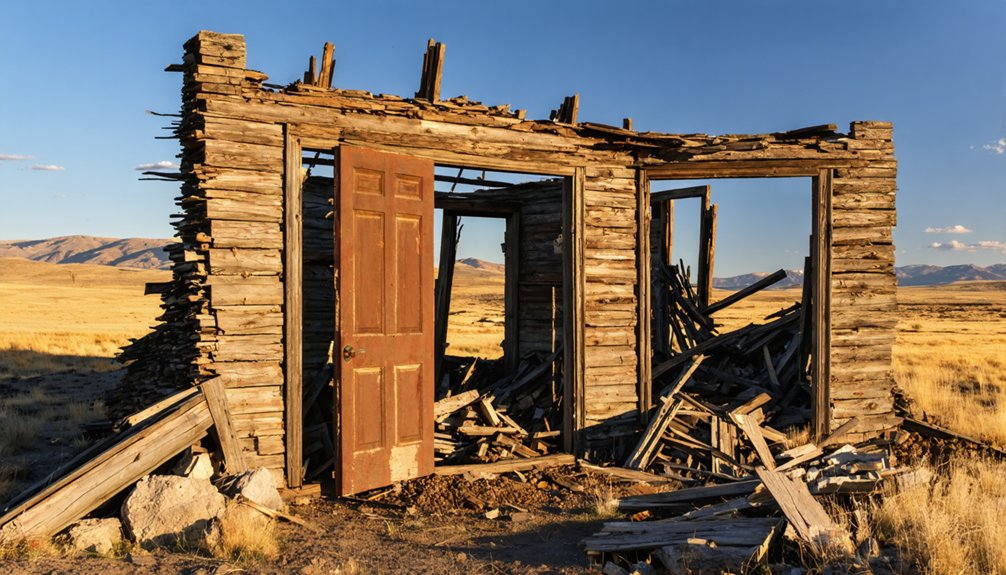
Once you arrive, the landscape does the talking. You won’t find restored buildings or interpretive kiosks here — just honest historic remnants scattered across open sagebrush.
Stone foundations emerge from the earth like half-forgotten sentences, hinting at the saloons, homes, and businesses that once anchored a population of nearly 1,000.
The cemetery carries the heaviest community stories. Walk among 239 marked graves and 98 unmarked ones, some topped with traditional headstones, others with rock cairns or weathered metal markers.
Finnish, Welsh, and Scottish names appear alongside those of miners whose identities time has nearly erased.
Carbon doesn’t perform for visitors. It simply exists — windswept, quiet, and stubbornly honest about what frontier life demanded and what it eventually took away.
Which Ghost Towns Pair Well With a Carbon Timber Town Visit?
Why stop at one ghost town when Carbon County and its surrounding Wyoming basin country hold enough abandoned history to fill an entire weekend loop?
Build your travel itineraries around Carbon and fold in nearby stops like Hanna, with its coal-mining scars still visible, or Elk Mountain’s windswept remnants along the old Lincoln Highway corridor.
Medicine Bow carries its own ghost town history through weathered storefronts and Owen Wister’s literary shadow.
Each site adds a distinct layer to the region’s boom-and-bust story without requiring backtracking. You’re moving through open country anyway, so connecting these stops costs little extra time.
Together, they form a coherent portrait of Wyoming’s industrial past that no single ruin can deliver alone.
What to Pack for a Day at a Remote Wyoming Ghost Town
Five essentials separate a comfortable ghost town visit from a miserable one, and at a remote Wyoming site like Carbon Timber Town, you’ll feel their absence immediately if you forget them.
Your packing essentials start with water—bring more than you think you need. The open sagebrush terrain offers zero shade, so sun protection ranks equally critical for travel safety.
Bring more water than seems reasonable. The open sagebrush offers no shade, and the sun collects its toll quickly.
Sturdy footwear handles uneven foundations, loose gravel, and wind-scoured ground that’ll twist an ankle without warning.
Navigation tools matter because cell coverage disappears well before you arrive.
Finally, pack enough fuel by filling your tank before leaving any sizable town.
Carbon’s residents once survived harsh Wyoming conditions with remarkable ingenuity—you’re just passing through, but the landscape demands the same honest respect they gave it daily.
Frequently Asked Questions
Is Carbon Timber Town on Private Land or Publicly Accessible?
You’ll find Carbon Timber Town publicly accessible via county road, where its historical significance calls you toward weathered stone and quiet graves. Respect preservation efforts as you roam this untamed, wind-swept relic of Wyoming’s forgotten frontier.
Are Pets Allowed When Visiting the Carbon Ghost Town Cemetery?
Like a wandering soul through forgotten plains, you’ll find no official pet policies posted here. Practice cemetery etiquette — keep pets leashed, respectful, and quiet among Carbon’s 239 marked graves honoring those free spirits who built the West.
What Is the Best Time of Year to Visit Carbon?
You’ll find late spring or early fall ideal for exploring Carbon’s historical significance and uncovering local legends. You’ll avoid brutal winter isolation and summer’s scorching winds, connecting freely with Wyoming’s raw, nostalgic ghost town spirit on your own terms.
Is Overnight Camping Permitted Near the Carbon Ghost Town Site?
Like a lone wolf roaming free, you’ll find no official camping regulations or ghost town amenities here. Plan ahead, secure nearby Bureau of Land Management sites, and embrace Wyoming’s wild, untamed spirit responsibly.
How Long Does a Typical Visit to Carbon Timber Town Take?
You’ll typically spend one to two hours exploring Carbon Timber Town’s haunting remnants. Wander the cemetery, absorb its historical significance, and chase local legends drifting across Wyoming’s open sagebrush—where freedom-seekers and forgotten miners once carved their restless, nostalgic stories into stone.
References
- https://en.wikipedia.org/wiki/Carbon_Cemetery
- https://www.wyomingcarboncounty.com/things-to-do/?id=123:5-ghost-towns-to-explore
- https://historicwyoming.org/profiles/carbon/
- https://www.youtube.com/watch?v=ErvYfYCW0qk
- https://wakeupwyo.com/gelogist-explors-what-is-left-of-carbon-wyoming/
- https://nickswartz.substack.com/p/towns-that-went-boom-2-carbon-wy
- https://www.facebook.com/groups/704889582866623/permalink/1349390175083224/
- https://www.facebook.com/groups/704889582866623/posts/6582131018475754/
- https://www.hannahistory.com/1868—1892-town-of-carbon-aka-old-carbon-and-carbon-city.html
- https://caspercollege.cvlcollections.org/items/show/9922