Planning a ghost town road trip to Centennial City means embracing the thrill of finding a place that’s fundamentally invisible. No markers, no ruins — just a barren creek valley in Lawrence County where gold-hungry settlers once built a thriving community during the 1876 Black Hills boom. You’ll need historical maps, a high-clearance vehicle, and solid navigation skills. The best time to visit is late June through early September. Stick around, and you’ll uncover everything you need to make this trip unforgettable.
Key Takeaways
- Centennial City, South Dakota, is a ghost town from the 1876 Black Hills gold rush with no physical remnants, only a barren creek valley remaining.
- Use historical maps, GPS, and offline topographic maps to locate the site, starting near Cook City and heading 2.5 miles up the creek valley.
- Visit between late June and early September for best road accessibility, and bring a high-clearance vehicle for remote terrain.
- Nearby ghost towns Galena, Maitland, and Carbonate can be strategically combined into one comprehensive historical road trip itinerary.
- Pack essential supplies including water, food, an emergency kit, and navigation tools, while staying alert to wildlife and local regulations.
What’s Left of Centennial City Today?
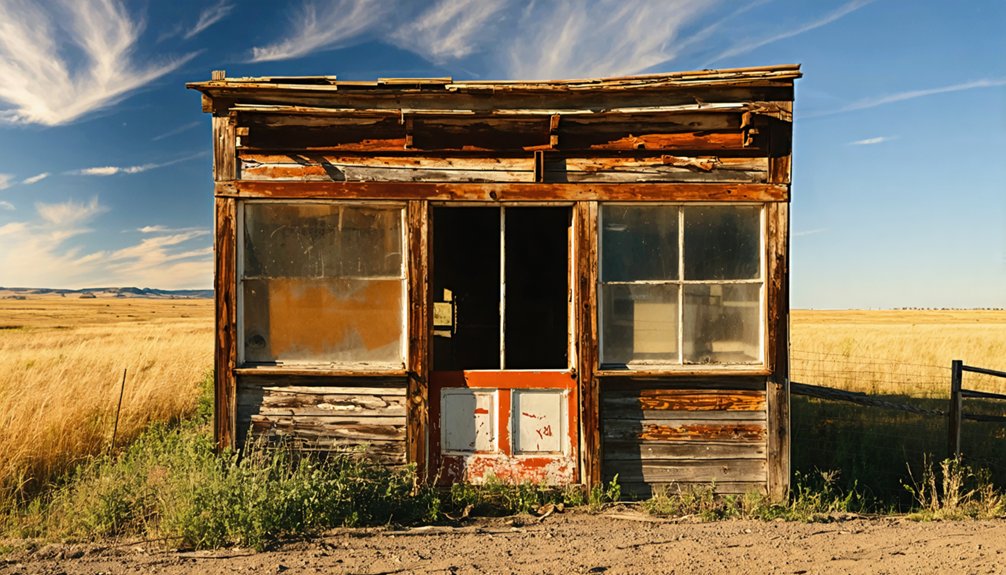
Nothing remains of Centennial City today — no crumbling foundations, no rusted mining equipment, no weathered signposts hinting at what once stood here. The land has reclaimed everything, leaving a barren creek valley that shows no trace of the grocery store, restaurant, or miners’ cabins that once defined this small community.
For remnants exploration enthusiasts, that absence itself tells a powerful story. You’re standing where ambitious people chased gold during the 1876 Black Hills boom, only to pack up and move on when profits vanished.
Ghost town photography here means capturing landscape rather than ruins — sweeping shots of untouched terrain where a frontier settlement once breathed. Early historical maps confirm Centennial City existed, but the ground keeps no visible record.
You’ll need to bring your imagination.
How to Find Centennial City in Lawrence County
Finding Centennial City requires some detective work, since no roadside markers or visible ruins will guide you to the spot.
You’ll need to rely on historical maps and your own navigation skills to pinpoint this ghost town location in Lawrence County.
Start by positioning yourself near Cook City, then head approximately 2.5 miles up the creek valley.
Begin at Cook City, then follow the creek valley roughly 2.5 miles upstream to locate the site.
The Centennial City location sits within a barren, open landscape that reveals nothing of its former self.
Ghost town navigation here means cross-referencing old survey maps against current terrain, since modern infrastructure won’t acknowledge this settlement ever existed.
Bring a reliable GPS device, download offline topographic maps, and study early Black Hills cartography before you go.
The creek valley geography remains your most dependable physical landmark for zeroing in on this vanished frontier community.
Why Centennial City Boomed in 1876 and Vanished Just as Fast
When you trace Centennial City’s brief life, you find a story that mirrors dozens of other Black Hills settlements that flared up during the 1876 gold rush and burned out just as quickly.
Miners flooded the creek valley chasing placer gold, and entrepreneurs rushed in behind them, throwing up a grocery store, a restaurant, and a handful of cabins to capture their dollars.
But once the ore yields dropped and the profits dried up, there wasn’t enough holding anyone there, and the whole community simply walked away.
Black Hills Gold Rush
The Black Hills gold rush didn’t just reshape South Dakota’s frontier landscape — it built entire towns overnight and erased them just as fast.
When prospectors flooded Lawrence County in the mid-1870s, they weren’t just chasing gold mining dreams — they were carving out raw frontier life from scratch. Settlements like Centennial City exploded into existence almost instantly, fueled entirely by ore yields and opportunity.
You can imagine the energy — grocers, cooks, and miners all converging on a creek valley, betting everything on what the ground might surrender.
But when the gold played out, that energy evaporated just as quickly. Nobody stayed for sentiment. They packed up and followed the next strike, leaving Centennial City behind as little more than a mark on an early map.
Mining Camp Growth
Centennial City didn’t grow — it erupted. When gold fever swept Lawrence County in 1876, prospectors, merchants, and laborers descended on this creek valley almost overnight. That’s how mining camp dynamics worked on the frontier — opportunity appeared, and people chased it without hesitation.
Within months, a grocery store, restaurant, and several miners’ cabins defined this raw frontier settlement. You’d have found a functioning little economy operating 2.5 miles up the creek from Cook City, sustained entirely by placer mining ambitions.
But Centennial City lived and died by its ore yields. When the gold stopped paying, the people stopped staying. Businesses shuttered, cabins emptied, and the town dissolved as quickly as it materialized.
Freedom meant moving on — and that’s exactly what everyone did.
Economic Collapse Triggers
Placer mining looked like easy money in 1876, but it operated on borrowed time. Once miners skimmed the accessible gold from creek beds, yields dropped fast. You couldn’t sustain a grocery store, restaurant, or those three or four modest cabins when the ore stopped paying out.
Mining failures triggered swift economic downturns that left Centennial City with nothing to offer workers or entrepreneurs. There was no fallback industry, no agricultural land worth farming, and no reason to stay. When profits vanished, people followed immediately behind them.
You’ll find this pattern repeated across Lawrence County’s ghost town landscape. The boom-and-bust cycle wasn’t unique to Centennial City, but the settlement disappeared so completely that today only early historical maps confirm it ever existed at all.
Other Ghost Towns Near Centennial City Worth the Detour
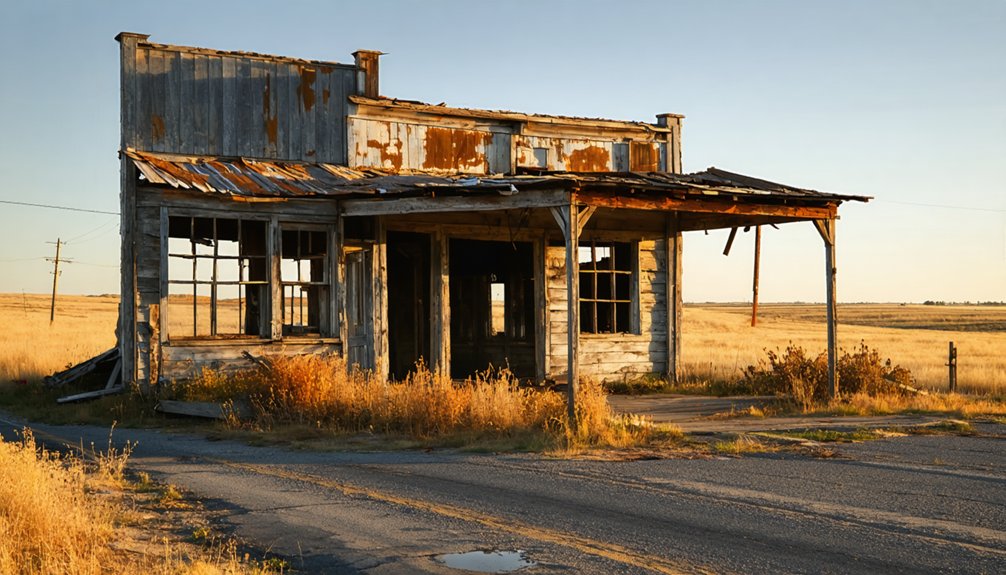
While you’re exploring the Lawrence County region, several ghost towns nearby make Centennial City an easy addition to a broader Black Hills ghost town circuit.
These ghost town attractions carry deep historical significance and reward curious travelers who crave open roads and forgotten history.
- Galena — Once a thriving silver mining hub, its crumbling structures tell a vivid boom-and-bust story.
- Maitland — A quietly abandoned settlement offering raw, unfiltered glimpses into 1870s frontier life.
- Carbonate — A short detour revealing remnants of ambitious mining dreams that ultimately dissolved.
Each stop adds texture to your journey, connecting you to South Dakota’s restless past.
Stack these destinations strategically onto your route, and you’ll experience the Black Hills’ forgotten legacy in a single unforgettable drive.
When Centennial City and Nearby Ghost Town Roads Are Actually Passable
Timing your visit to Centennial City and its neighboring ghost towns can make or break the entire trip. Seasonal accessibility peaks between late June and early September, when road conditions through Lawrence County’s creek valleys become reliably navigable.
Spring snowmelt turns dirt tracks into muddy traps, and early winter storms can strand you without warning. You’ll want a high-clearance vehicle regardless of season, since these remote roads weren’t designed for modern traffic.
Check South Dakota’s Department of Transportation updates before heading out, especially after recent rainfall. Fall offers arguably the best window — cooler temperatures, drier ground, and stunning foliage framing the barren ghost town landscapes.
Avoid holiday weekends if solitude matters to you, since even remote sites draw curious travelers during peak summer months.
What to Bring When Visiting Remote Sites Like Centennial City
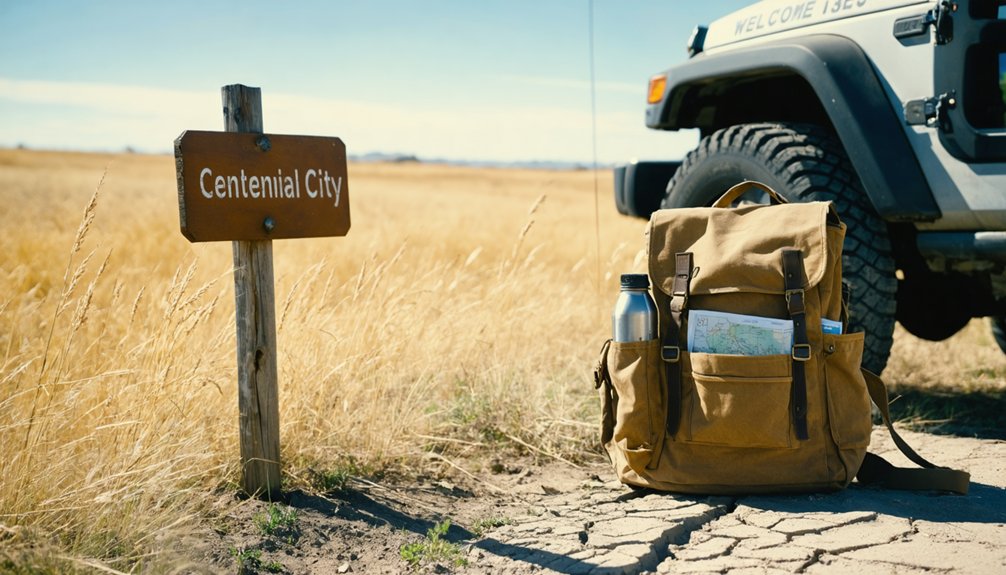
Packing smart separates a successful ghost town excursion from a miserable one. Centennial City’s remote creek valley location demands serious preparation before you hit the trail.
Essential supplies and solid safety precautions aren’t optional extras — they’re your lifeline out there.
Don’t leave without these three essentials:
- Navigation tools — Download offline maps and carry a paper backup since cell service disappears fast in Lawrence County’s backcountry.
- Water and food — Pack more than you think you’ll need; dehydration sneaks up quickly during active exploration.
- Emergency kit — Include a first aid kit, emergency blanket, and flashlight for unexpected delays.
You’re venturing into genuine frontier territory where nobody’s coming to rescue you quickly.
Prepare accordingly, and you’ll own the experience completely.
Frequently Asked Questions
Is a Permit Required to Visit Centennial City’s Historical Site?
Don’t let paperwork worries stop you! You don’t need a permit to explore Centennial City’s historical significance. Simply respect visitor guidelines, tread lightly on this barren frontier landscape, and you’re free to discover history.
Are There Guided Ghost Town Tours Available in Lawrence County?
You’ll find guided ghost town tours available in Lawrence County, where knowledgeable guides bring historical significance to life. These tours let you explore fascinating ghost towns, uncovering the freedom-filled stories of South Dakota’s wild mining frontier.
Can You Metal Detect or Collect Artifacts at Centennial City?
Before you metal detect or collect artifacts at Centennial City, you’ll want to check local regulations carefully. Following metal detecting tips and artifact preservation guidelines guarantees you’re respecting history while enjoying your freedom to explore this fascinating ghost town.
Is Centennial City Located on Private or Public Land?
The land ownership details for Centennial City aren’t documented in available records, but you’ll want to research ghost town history and local legends before visiting, as ownership determines your freedom to explore this forgotten frontier settlement.
What Is the Closest Town With Gas Stations Near Centennial City?
Deadwood’s your best bet for gas station options and nearby amenities! It’s the closest full-service town, sitting just a short drive away, offering you the freedom to fuel up before exploring Centennial City’s rugged, historic terrain.
References
- https://en.wikipedia.org/wiki/List_of_ghost_towns_in_South_Dakota
- https://www.tripadvisor.com/Attraction_Review-g54799-d22999414-Reviews-Scenic_Ghost_Town-Scenic_South_Dakota.html
- https://www.youtube.com/watch?v=_0WNYsFLSLA
- https://kids.kiddle.co/List_of_ghost_towns_in_South_Dakota
- https://myxoadventures.com/the-ghost-town-of-spokane-south-dakota/
- https://www.powderhouselodge.com/black-hills-attractions/fun-attractions/ghost-towns-of-western-south-dakota/