Centralia, Oklahoma was once a thriving prairie town with 750 residents, two banks, and three hotels — now it’s a haunting stretch of crumbling brick and windswept silence in Craig County. You’ll need to navigate nine miles of unpaved roads, pack your own water, and leave digital navigation behind. Spring and early fall offer the best conditions for the drive. Keep going, and you’ll find everything you need to make this ghost town trip unforgettable.
Key Takeaways
- Centralia, Oklahoma, founded in 1898 in Craig County, was once a thriving prairie town with 750 residents, two banks, and three hotels.
- Reaching Centralia requires navigating approximately nine miles of unpaved roads, so bring a full tank of gas, water, and offline maps.
- Key remnants include crumbling brick storefronts, rusted farm implements, and the historically significant Hilltop Cemetery with headstones of original settlers.
- Visit in spring or early fall, avoiding post-rain travel, as summer heat is punishing and winter mud can make roads impassable.
- Pack water, snacks, sturdy shoes, and a camera, as no modern amenities exist within the isolated, crowd-free ghost town site.
What Makes Centralia, Oklahoma a True Ghost Town?
When you stand at the edge of Centralia, Oklahoma, the silence tells the story before the crumbling buildings do. Founded in 1898, this prairie settlement once thrived with 750 residents, two banks, three hotels, and a bustling town square — the only one of its kind in Craig County.
But ghost town origins often hide darker chapters. Two devastating fires, in 1907 and 1917, gutted the business district. Both banks collapsed by 1929.
The railroads never came. Community decline accelerated through the Great Depression, World War II, and steady migration away from its remote isolation.
The Rise and Fall of Centralia’s Forgotten Community
Though it rose from the Oklahoma prairie with remarkable ambition, Centralia’s story reads like a tribute to both human resilience and cruel circumstance. Founded in 1898, it grew into a thriving hub of 750 people by 1915, complete with hotels, banks, churches, and a one-of-a-kind town square.
But freedom from hardship wasn’t guaranteed. Two devastating fires, in 1907 and 1917, gutted the business district. Both banks collapsed by 1929. The promised railroad never arrived.
Economic decline accelerated through the Great Depression and World War II, bleeding the population dry.
What remains is a powerful community legacy — a cemetery, crumbling buildings, and stubborn memories etched into the prairie. Centralia didn’t surrender easily; circumstances simply outran its people’s determination.
How to Actually Get to Centralia, Oklahoma
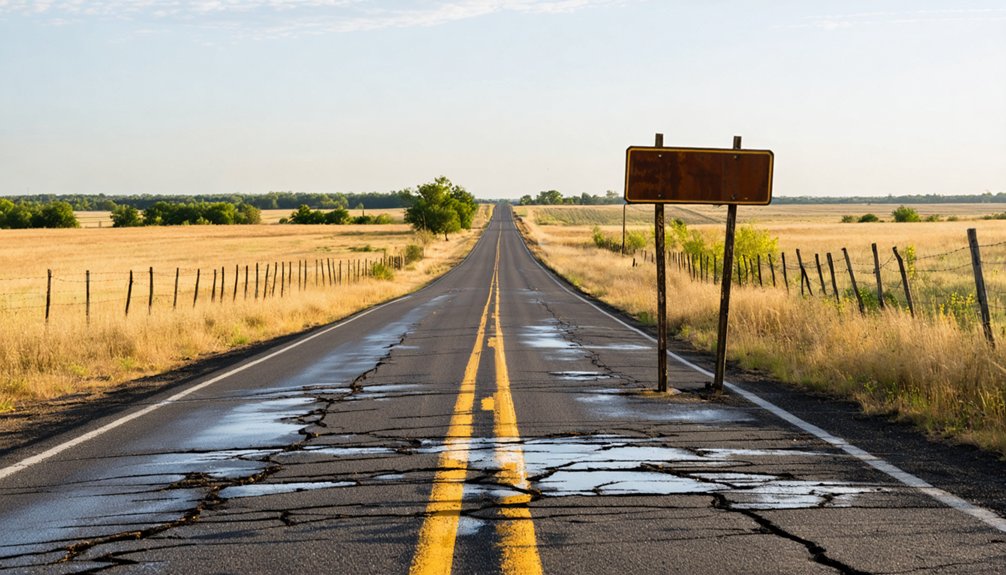
Getting to Centralia means committing to the journey before you ever leave home. This road trip demands real preparation because the nearest paved road sits roughly 9 miles away, and Centralia itself lies 27 miles from the county seat of Vinita by era roads.
Pack your navigation tips alongside your sense of adventure — digital maps sometimes fail in Craig County’s remote prairie stretches. You’re heading into land surrounded by Blue Mound, Potato Hill, and Leforce Mounds, where the silence feels earned.
Drive northeast Oklahoma with a downloaded offline map, a full tank, and extra water. Centralia doesn’t meet you halfway. It never did. That’s exactly what makes arriving there feel like discovering something the modern world forgot to reclaim.
What’s Still Standing at the Centralia Town Site?
Silence greets you at the Centralia town site, but it’s not entirely empty silence — fragments of the past still push through the prairie grass.
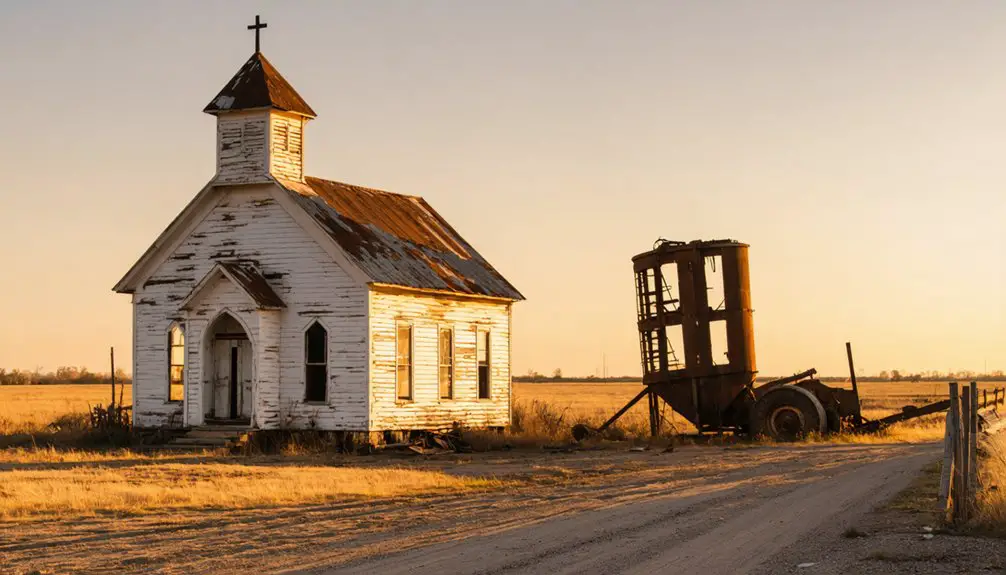
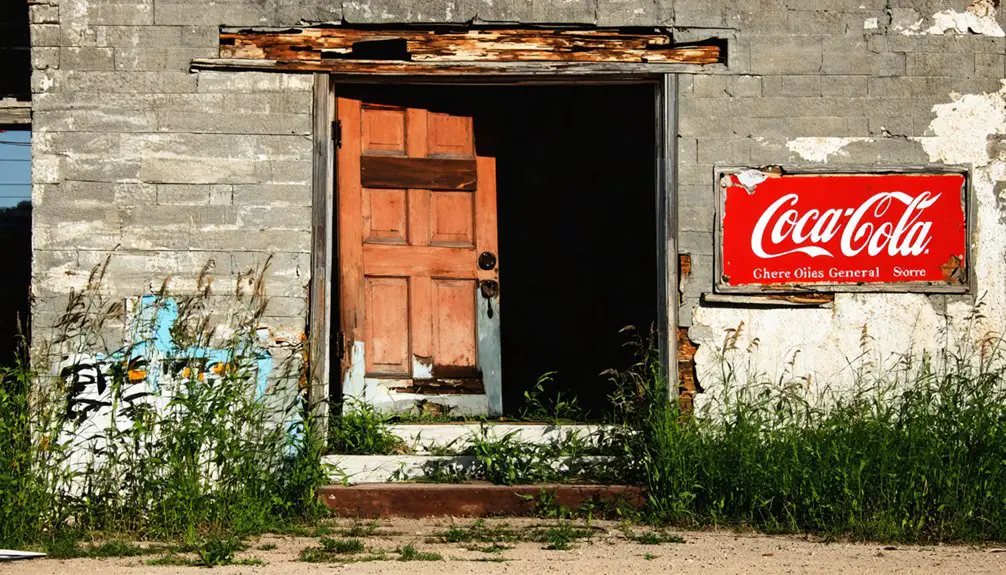
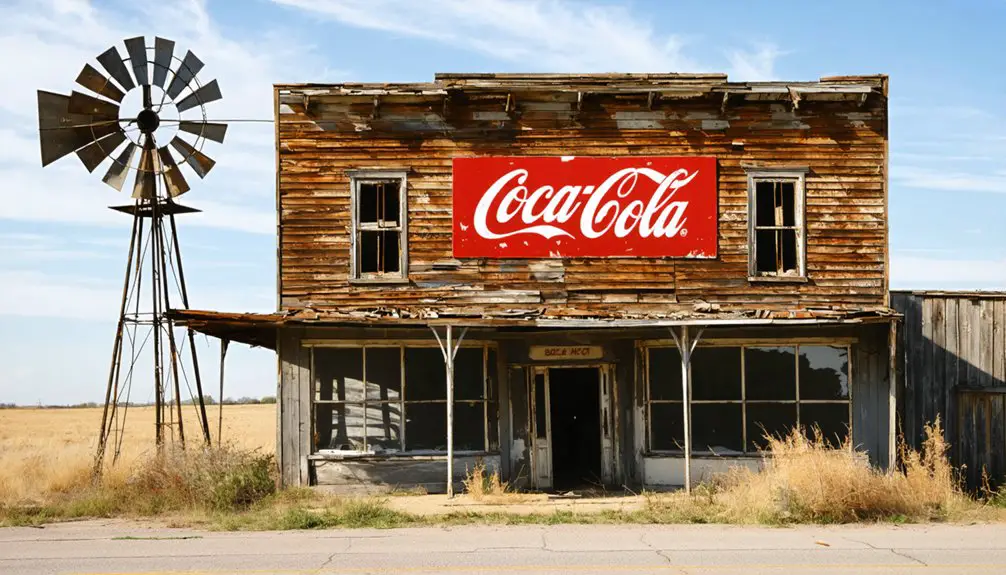
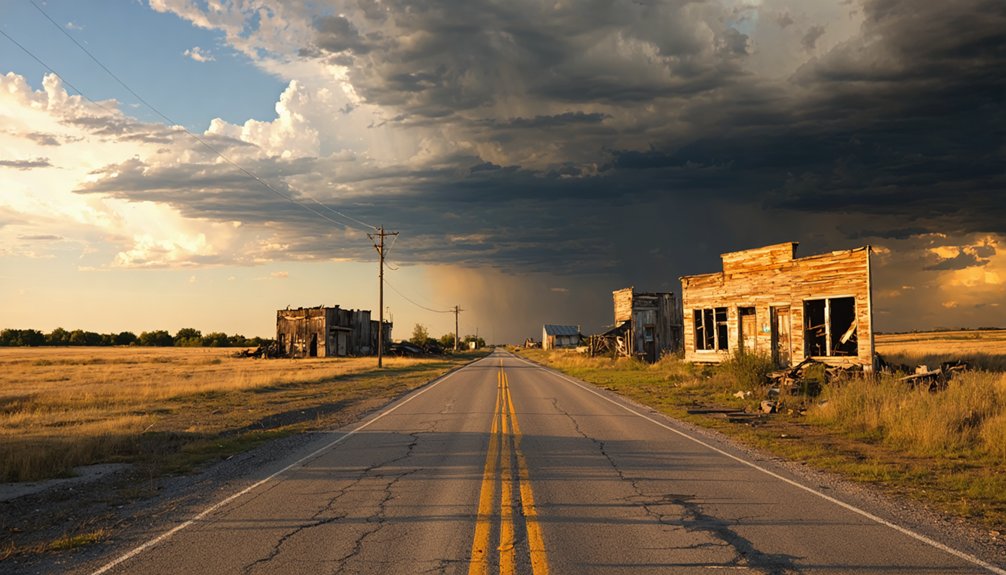
Crumbling brick and stone buildings rise unexpectedly from the landscape, survivors of the post-1907 reconstruction that followed the town’s devastating first fire. You’ll notice old farm implements scattered across the abandoned grounds, each one whispering ghost stories about the ranchers and families who once depended on this thriving community.
The hilltop cemetery stands accessible and worth exploring, its weathered markers carrying local legends etched in stone.
What remains isn’t manicured or curated — it’s raw, honest, and quietly powerful. You’re walking through a place that refused to vanish completely, even as the modern world moved on without it.
What Hill Top Cemetery Still Tells You About the Town
Hilltop Cemetery holds what the town itself can no longer say. Walk among the headstones and you’ll read the names of families who built Centralia from open prairie — merchants, ranchers, and settlers who believed this remote Oklahoma landscape was worth planting roots in.
That’s the cemetery’s historical significance: it’s a living record when the buildings have gone silent.
The cemetery symbolism runs deep here. Each marker represents someone who arrived with ambition and stayed through hardship — the fires, the failed banks, the Depression.
You’re standing on ground that absorbed a community’s entire arc.
Bring water, wear sturdy shoes, and take your time. These stones deserve more than a passing glance.
They’re the last voices Centralia has left, and they’re still speaking clearly.
When Should You Actually Make the Drive?
Spring and early fall are your best windows for making the 27-mile trek from Vinita, when Oklahoma’s prairie roads dry out and the surrounding mounds glow with seasonal color.
Summer heat and winter mud can turn that final 9-mile stretch of unpaved road into a punishing obstacle, stranding you far from any modern help.
You’ll want to time your visit for a clear weekday in April or October, when the light falls long across the old town square and the isolation feels romantic rather than reckless.
Best Seasons To Visit
Because Centralia sits on open Oklahoma prairie with no paved road within nine miles, the season you choose to visit matters more than it would for most destinations. Each season delivers distinct seasonal experiences shaped by the land’s raw, unfiltered character:
- Spring brings wildflowers threading through abandoned lots, softening crumbling brick with local flora in bloom.
- Summer offers long daylight hours but punishing heat across exposed prairie with zero shade.
- Fall echoes the town’s legendary harvest festivals, crisp air sharpening the nostalgia of empty streets.
- Winter strips everything bare, revealing the skeleton of what Centralia once was with stark, unforgiving clarity.
Avoid visiting after heavy rain — those nine unpaved miles turn treacherous fast, and nobody’s coming to pull you out.
Weather And Road Conditions
Knowing the best season is only half the equation — getting there’s the other half. Centralia sits nearly 9 miles from the nearest paved road, meaning weather patterns directly control your access.
Spring rains turn Oklahoma clay into a stubborn, wheel-swallowing mess. Summer bakes the ground solid and reliable, but afternoon thunderstorms can roll in fast. Fall offers your best combination of firm ground and clear skies. Winter brings ice that makes those unpaved stretches genuinely dangerous.
Road safety here isn’t a suggestion — it’s the difference between reaching those crumbling brick buildings and sitting stranded where no one passes.
Check local forecasts before you leave, carry water, and tell someone your route. This land rewards the prepared traveler.
What to Pack Before Driving Out to Centralia
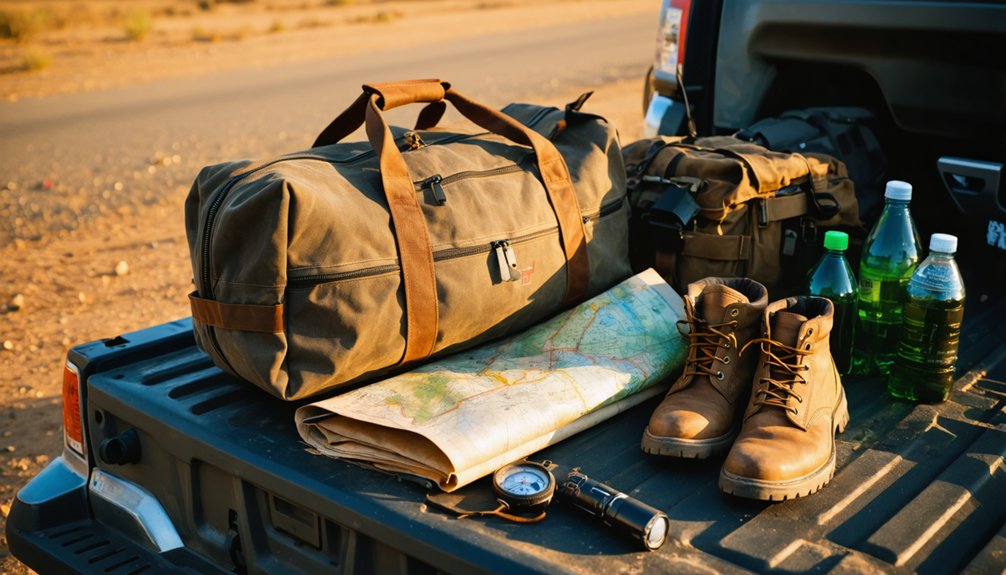
Before you point your car toward Centralia’s crumbling square and forgotten streets, there are a few packing essentials you’ll want to throw in the trunk.
This road trip demands self-sufficiency — the nearest paved road sits 9 miles out, and modern amenities simply don’t exist here anymore.
- Water and snacks — no stores remain to resupply you
- Paper maps or downloaded offline GPS — cell service is unreliable this deep into Craig County prairie
- Sturdy walking shoes — uneven terrain surrounds the old town square and Hilltop Cemetery
- Camera and extra batteries — crumbling brick buildings and rusted farm implements deserve documentation
Pack light, pack smart, and embrace the freedom of wandering somewhere most people will never find.
Nearby Craig County Stops Worth Adding to Your Route
Since you’ve already made the trek out to Craig County’s forgotten corners, it’d be a shame to burn that drive without swinging through Vinita — the county seat sitting 27 miles from Centralia by era roads.
Vinita carries its own historical significance as one of Oklahoma’s oldest towns, with local attractions that reward curious travelers willing to roam freely.
Vinita rewards the curious — one of Oklahoma’s oldest towns, still holding its history close.
The Eastern Trails Museum captures the region’s layered past, from Cherokee Nation history to frontier settlement. Nearby landmarks like the Will Rogers Memorial corridor connect Craig County’s identity to broader Oklahoma heritage.
You’re already off the interstate and thinking independently — lean into it. These stops don’t demand much time, but they’ll deepen everything Centralia made you feel about what gets remembered and what gets left behind.
Is Centralia, Oklahoma Worth the Drive?
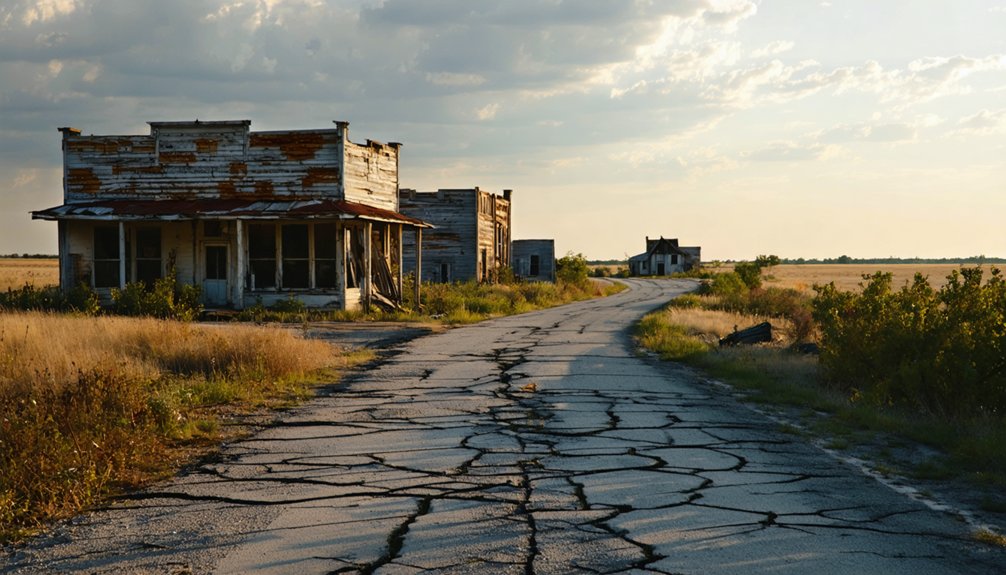
If you’re willing to navigate the unpaved roads stretching nearly nine miles from the nearest pavement, Centralia rewards your effort with crumbling brick storefronts, weathered farm implements, and the quiet dignity of Hilltop Cemetery — tangible remnants of a community that once bustled with 750 souls, two banks, and a carnival merry-go-round.
You won’t find modern amenities out here, so plan your fuel stops and supplies before you make the turn toward this forgotten prairie square.
The isolation that ultimately doomed Centralia now defines its haunting appeal, making the drive feel less like a detour and more like a deliberate step back into Oklahoma’s early settlement history.
Remote But Rewarding
Reaching Centralia means traversing roughly nine miles of unpaved road just to touch the edge of what was once a thriving prairie town of 750 souls — and that distance alone tells you something about why this place faded.
Yet that isolation is exactly what you’re chasing. No crowds, no guardrails — just open prairie and local legends whispering through abandoned structures.
What you’ll find rewards the effort:
- Hilltop Cemetery standing quietly above the surrounding flatlands
- Crumbling brick buildings rebuilt after devastating fires in 1907 and 1917
- Ghost stories rooted in real economic collapse and wartime exodus
- Rusted farm implements frozen mid-task across the abandoned townsite
You’re not just visiting a dot on a map — you’re reading the unfiltered story of American frontier ambition meeting hard reality.
Historical Remnants Worth Seeing
Centralia’s surviving remnants make the long dirt-road haul worthwhile.
You’ll walk beside crumbling brick and stone buildings reconstructed after the devastating 1907 fire, each weathered wall quietly whispering ghost stories of merchants, bankers, and families who once thrived here.
The old town square — Craig County’s only such square — still anchors the landscape, helping you visualize the bustling festivals and horse races that once drew hundreds.
Hill Top Cemetery rewards curious visitors with local legends etched into faded headstones, connecting you directly to Centralia’s pioneering souls.
Scattered farm implements rust beautifully against the Oklahoma prairie, framed by Blue Mound and Potato Hill.
These aren’t manicured historical sites — they’re raw, honest fragments of a vanished world, entirely yours to discover.
Practical Trip Considerations
Getting to Centralia demands genuine commitment — the nearest paved road sits roughly 9 miles out, and you’ll navigate dirt tracks through open Oklahoma prairie before the old town square even comes into view.
Plan accordingly:
- Fuel and supplies — no modern amenities exist; arrive self-sufficient
- Weather awareness — unpaved roads become impassable after heavy rain
- Ghost stories and local legends — talk to remaining residents; roughly 10 families carry living memory of this place
- Camera and patience — crumbling brick buildings, old farm implements, and Hilltop Cemetery reward those who linger
Centralia sits 27 miles from Vinita by era roads, forgotten by railroads that never came.
That isolation is exactly the point. If you crave roads that feel genuinely free, Centralia delivers something paved highways simply can’t.
Frequently Asked Questions
Did Centralia, Oklahoma Ever Have a Mayor or Elected Officials?
Dusty records don’t reveal a mayoral history for Centralia. Its local governance centered on community institutions like churches, schools, and businesses — you’d have found neighbors, not politicians, shaping this fiercely independent prairie town’s destiny.
What Railroad Companies Were Originally Planned to Serve Centralia?
The knowledge doesn’t name specific railroad companies in Centralia’s infrastructure history. You’d only know a proposed line between Vinita and Coffeyville was part of the railroad history that never reached this freedom-loving, isolated community.
Who Are the Founding Families Buried at Hill Top Cemetery?
The available records don’t reveal which founding families rest in Centralia’s cemetery history at Hill Top. You’ll uncover those weathered headstones yourself, tracing names that built a vanished world when you walk those sacred, forgotten grounds.
Does Centralia, Oklahoma Still Have an Active ZIP Code Today?
Like a heartbeat that refuses to stop, Centralia history lives on — yes, this Oklahoma ghost town still holds an active ZIP code today, quietly keeping you connected to its remarkable, nostalgic past.
Were Both of Centralia’s Banks Part of the Same Ownership?
The records don’t confirm whether both banks shared the same ownership. What’s certain is their bank ownership carries historical significance — both institutions failed by 1929, leaving you to imagine the freedom and prosperity that once thrived there.
References
- https://www.ghosttownsinoklahoma.com/post/centralia-oklahoma
- https://www.youtube.com/watch?v=jNy0LipK2S0
- https://www.youtube.com/watch?v=wEoEZKBUsvs
- https://www.youtube.com/watch?v=nVLtzsUWxNA
- https://abandonedok.com/centralia-ok/
- https://www.ghosttownsinoklahoma.com/all-news
- https://www.okhistory.org/publications/enc/entry?entry=CR001