Planning a ghost town road trip to Johnetta, Pennsylvania starts in Armstrong County’s Gilpin Township, where coal mining and brick production once defined this now-abandoned community. You’ll navigate rural roads off Route 28 near Kittanning to reach crumbling kilns and brick debris that tell Johnetta’s industrial story. Extend your route to include Yellow Dog Village and other forgotten Western Pennsylvania settlements for a fuller experience. Keep exploring to uncover everything you’ll need to make this road trip unforgettable.
Key Takeaways
- Johnetta, located in Armstrong County’s Gilpin Township, features ruins from coal mining and brick production industries that thrived in the late 19th century.
- Access Johnetta via Interstate 79 and Route 28, using Kittanning as a navigational base, and download offline maps for spotty cell service areas.
- Explore kiln structures, brick debris, and foundation outlines while respecting historical preservation by avoiding disturbance of any artifacts found onsite.
- Extend your road trip to nearby ghost towns like Yellow Dog Village, Edri, and Ferrier for a broader Western Pennsylvania abandoned settlement experience.
- Pack essential gear including sturdy boots, layered clothing, a flashlight, first aid kit, and a charged phone with offline navigation maps.
The Coal and Brick Works History Behind Johnetta
When you dig into Johnetta’s past, you’ll find a town shaped by two intertwined industries: coal mining and brick production. Nestled in Armstrong County’s Gilpin Township, this Western Pennsylvania settlement thrived during the late 19th to early 20th century, when demand for coal types like bituminous fuel drove entire communities into existence.
Miners extracted coal from the surrounding Allegheny hills while workers mastered brick techniques to manufacture the very materials that built regional infrastructure. These parallel operations made Johnetta more than a typical mining settlement — it was a self-sustaining industrial hub.
As both industries declined across Pennsylvania’s Rust Belt, Johnetta couldn’t survive the economic collapse.
Today, remnants of its brick works stand as quiet evidence of a community that once powered progress through raw labor and resource extraction.
Johnetta’s Place in Armstrong County’s Mining Past
Though Armstrong County holds dozens of forgotten settlements, Johnetta stands out as a defining example of the region’s industrial ambitions during the coal boom era.
Johnetta’s significance lies in its rare combination of coal extraction and brick production, making it more than a single-industry ghost town. You’re looking at a place that once fueled construction and energy demands across Western Pennsylvania simultaneously.
Gilpin Township’s rugged landscape shaped Johnetta’s mining heritage, drawing workers into an economy built on extraction and production.
When coal’s profitability collapsed, the town couldn’t survive the shift. What remains today tells an honest story of industrial rise and abrupt abandonment.
Exploring this site connects you directly to the economic forces that built, and ultimately broke, Armstrong County’s mountain communities.
How to Reach Johnetta in Gilpin Township
To reach Johnetta, you’ll want to head into Armstrong County via major Western Pennsylvania routes, with Interstate 79 and Route 28 serving as your primary corridors toward the region.
Once you’re in the county, Gilpin Township‘s rural roads will guide you closer to the site, though you should expect narrow, winding paths typical of Appalachian terrain.
Access to Johnetta’s remaining brick works remnants is limited, so come prepared with a detailed map and realistic expectations about what survives on the ground.
Getting To Armstrong County
Reaching Johnetta in Gilpin Township takes just a few key decisions about your starting point and preferred route through Armstrong County.
If you’re launching your ghost town road trip from Pittsburgh, head northeast on Route 28 along the Allegheny River — it’s your most direct corridor into Armstrong County. From there, navigate toward Kittanning, the county seat, which serves as your practical base.
Gilpin Township sits just outside Kittanning, making it easily accessible without complicated detours. If you’re combining this ghost town stop with Yellow Dog Village, you’re already in the right territory — both sites cluster conveniently within Armstrong County.
Pack a detailed Pennsylvania road map or load offline GPS data before departing, since rural signal coverage gets unpredictable once you’re deep in Appalachian township backroads.
Navigating Gilpin Township Roads
Once you’ve made it to Kittanning, a few winding backroads stand between you and Johnetta’s remnants in Gilpin Township. Road conditions vary seasonally, so prepare before heading out.
Keep these tips in mind:
- Check road conditions beforehand, especially after heavy rain or winter weather
- Drive slowly on narrow township roads where local wildlife frequently crosses
- Download offline maps since cell service gets spotty in rural Armstrong County
- Pack water and snacks in case you need to wait out unexpected road closures
- Note your mileage from Kittanning to avoid missing unmarked turnoffs
You’re traversing real back-country terrain here, not a manicured park. The isolation is part of the experience.
Embrace it, stay alert, and you’ll reach Johnetta’s brick works remnants on your own terms.
Accessing Johnetta’s Remaining Sites
Nestled deep in Gilpin Township, Johnetta’s brick works remnants reward visitors who come prepared with a plan.
You’ll want to approach via Armstrong County’s rural roads, keeping your GPS updated since signage remains sparse throughout the area. Ghost town exploration here means traversing unpaved paths and uneven terrain, so bring sturdy footwear and a detailed county map.
You’re responsible for your own safety since no formal tours currently exist for Johnetta.
Respect the site’s historical preservation by avoiding disturbing remaining structures or removing artifacts. The brick works foundations and industrial remnants tell a powerful story you shouldn’t interrupt.
Visit during daylight hours and travel with a companion when possible.
Photograph everything, touch little, and carry water — Johnetta’s isolation is exactly what makes your journey worthwhile.
The Ruins Still Standing at Johnetta’s Brick Works Site
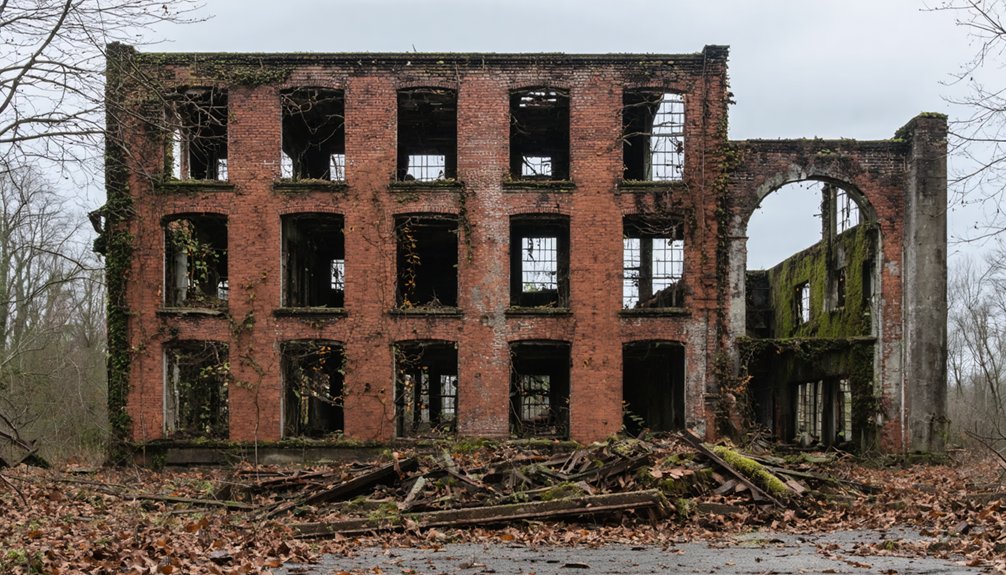
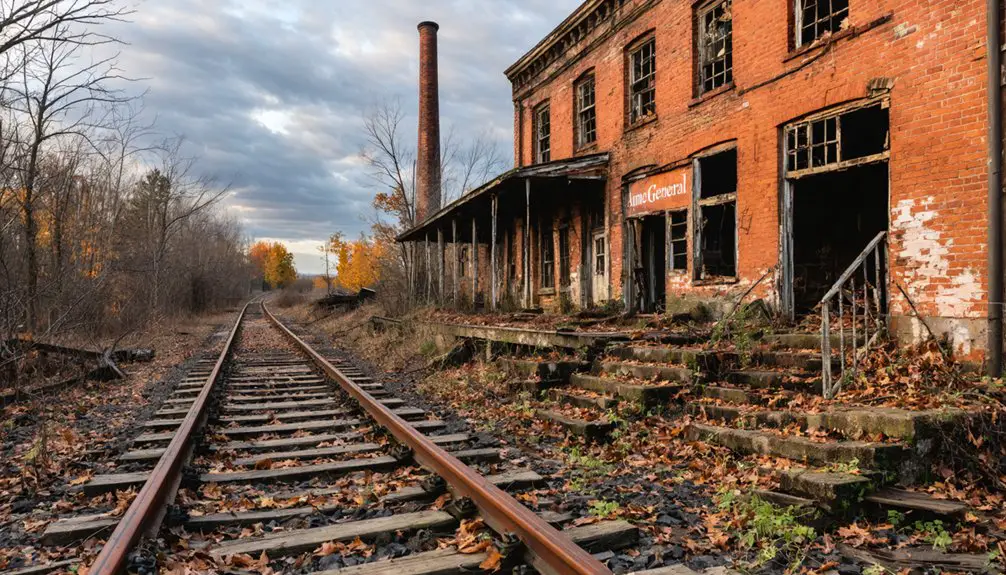
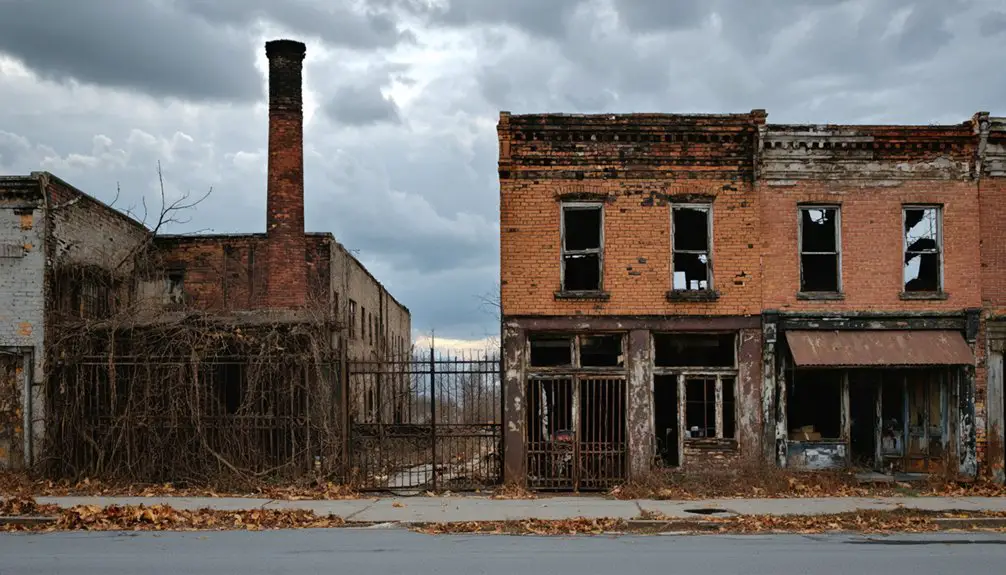
When you arrive at Johnetta’s brick works site, you’ll find crumbling remnants that tell the story of a once-thriving industrial operation tied to both brick production and coal extraction.
You can walk through the ruins and piece together how this small Gilpin Township settlement supported Western Pennsylvania’s booming 19th-century economy.
These standing structures preserve Johnetta’s industrial past in a way that makes the town’s sudden abandonment feel both tangible and haunting.
Brick Works Remnants Explored
Though nature has spent decades reclaiming what industry once built, the brick works remnants at Johnetta still push back against time. Industrial decay hasn’t erased every trace of brick production here — you’ll still find fragments worth exploring:
- Crumbling kiln structures hinting at intense heat and relentless labor
- Scattered brick debris embedded into overgrown hillsides
- Foundation outlines revealing the original facility’s footprint
- Rusted equipment remnants frozen mid-collapse
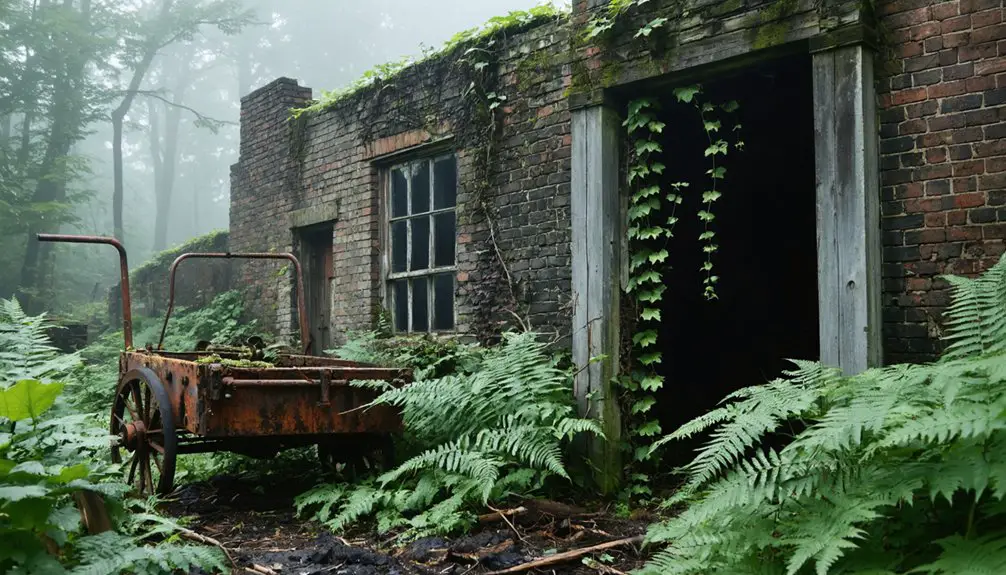
- Vegetation-wrapped walls that blur the line between nature and ruin
Walking through this site, you’re stepping into a raw, unfiltered moment in Pennsylvania’s industrial past.
No fences dictating your experience, no tour guides scripting your reaction. Johnetta hands you the freedom to read the landscape yourself and draw your own conclusions about what once thrived here.
Industrial Past Preserved
What the brick debris and crumbling foundations hint at, the ruins still standing at Johnetta’s brick works site confirm outright — this place held serious industrial weight.
You’re looking at preserved evidence of a dual-operation economy: brick production and coal extraction running simultaneously, fueling Armstrong County’s growth before the industry collapsed.
These structures aren’t just rubble. They’re physical records of labor, machinery, and commerce that shaped Western Pennsylvania’s Appalachian landscape.
Ghost town exploration here means reading those records firsthand, without a tour guide filtering the experience.
Johnetta’s industrial heritage stands accessible and unfiltered in Gilpin Township, letting you move through the remnants on your own terms.
You decide how long you stay, what you examine, and how deeply you connect with what this forgotten town once built.
Other Ghost Towns Near Johnetta Worth Visiting
While Johnetta makes for a fascinating stop, the surrounding region of Western Pennsylvania is dotted with ghost towns that’ll reward curious explorers willing to extend their road trip.
Each site carries its own abandoned structures and historical significance worth your time:
- Yellow Dog Village (Armstrong County) — Pennsylvania’s most complete ghost town, featuring original homes, crumbling streets, and moss-covered roofs.
- Edri (Indiana County) — a quiet coal mining remnant off the beaten path.
- Ferrier (Indiana County) — another coal ghost worth exploring.
- Kinzua (Warren County) — abandoned by 1963, rich with forgotten history.
- Eleanora — a preserved coal and coke company town showcasing early industrial life.
Yellow Dog Village offers guided tours at $30 per person, bookable through their Facebook page.
Why Yellow Dog Village Belongs on Your Ghost Town Route
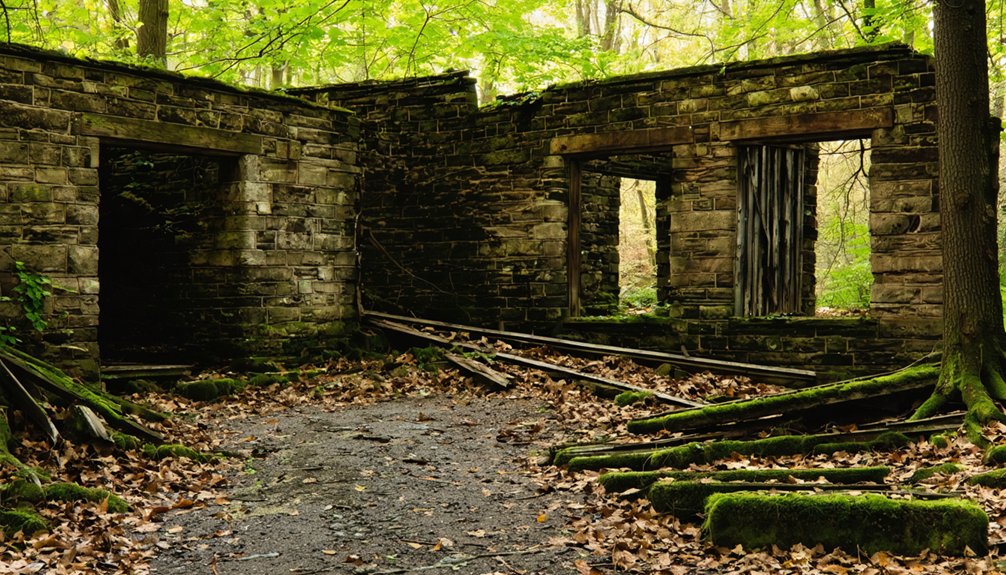
If you’re serious about ghost town exploration in Western Pennsylvania, Yellow Dog Village deserves a dedicated spot on your itinerary. Located near Kittanning in Armstrong County, this remarkably preserved early 1900s mining community stands as Pennsylvania’s most complete ghost town.
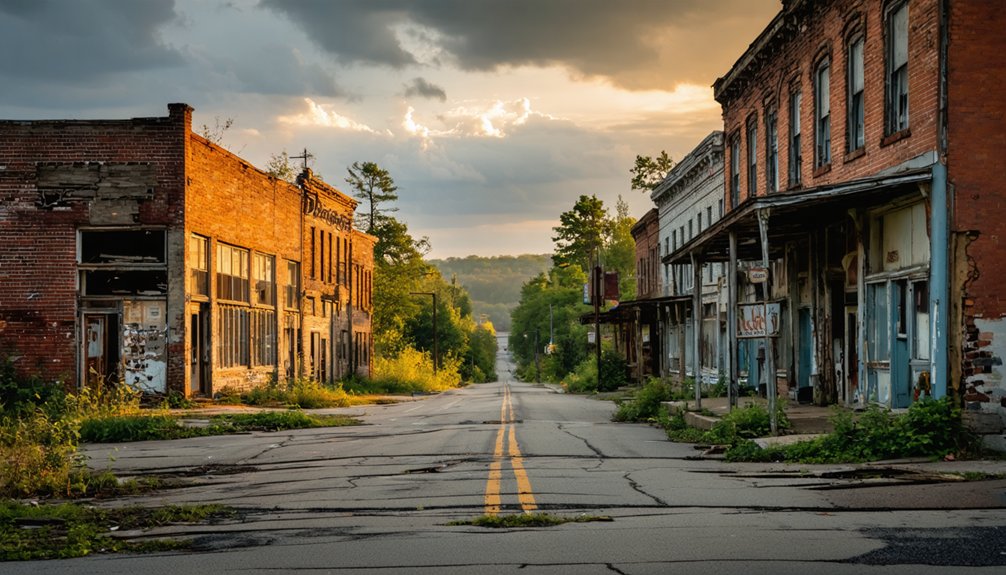
You’ll find original pantries, moss-covered rooftops, crumbling streets, and wild vegetation reclaiming every structure — a paradise for ghost town photography and urban exploration.
Unlike many abandoned sites, Yellow Dog Village offers structured tours booked through their Facebook page for $30 per person, requiring a signed waiver before entry.
Since Johnetta sits nearby in Gilpin Township, combining both stops creates an efficient, rewarding Armstrong County loop.
Don’t miss this opportunity — Yellow Dog Village delivers an unfiltered, immersive glimpse into Pennsylvania’s vanished industrial past.
How to Book a Yellow Dog Village Tour
Booking your Yellow Dog Village tour is straightforward — head to their official Facebook page, where you’ll find current tour schedules, availability, and contact details for reservations.
Tours run $30 per person, and you’ll sign a waiver before exploring. Whether you’re into urban exploration or ghost town photography, come prepared.
Here’s what to know before you go:
- Book early — seasonal tours fill quickly
- Sign the waiver — it’s required before entry
- Bring a camera — ghost town photography thrives among the moss-covered roofs and crumbling streets
- Wear sturdy footwear — terrain is uneven throughout
- Check Facebook regularly — schedules update seasonally
This isn’t a polished museum experience. It’s raw, atmospheric history you can walk through on your own terms.
How to Build Your Western Pennsylvania Ghost Town Road Trip
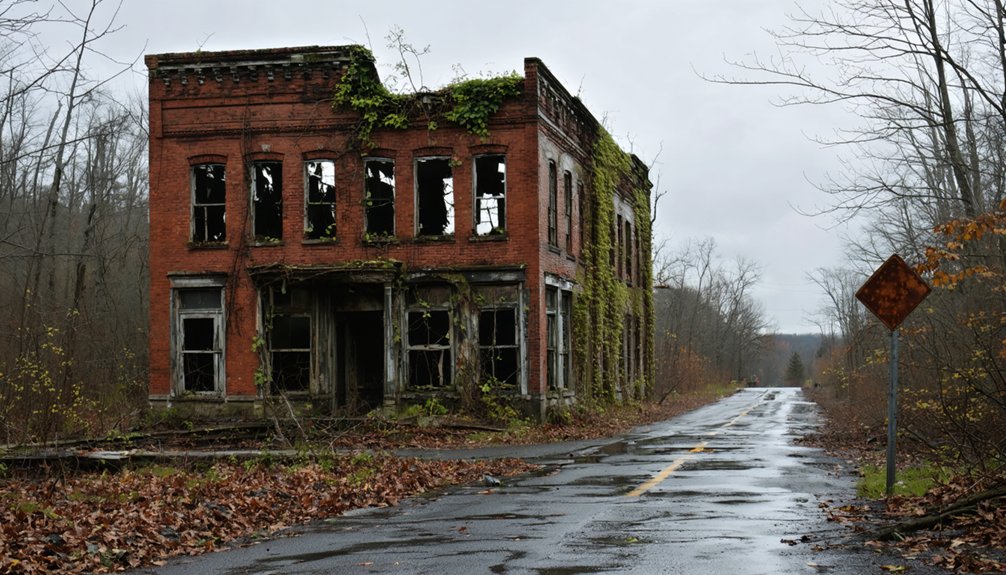
Once you’ve secured your Yellow Dog Village tour, it’s time to map out the full ghost town loop across Western Pennsylvania.
Start in Armstrong County, hitting Johnetta’s brick works remnants and Yellow Dog Village back-to-back for concentrated ghost town photography opportunities.
Then push into Indiana County to explore Edri and Ferrier, where coal mining infrastructure rewards serious industrial archaeology enthusiasts.
Indiana County’s Edri and Ferrier deliver raw coal mining infrastructure for those serious about industrial archaeology.
Extend your route into Elk and Jefferson counties to reach Ellmont and Blue Rock, adding depth to your journey.
Buffalo Creek corridors offer additional forgotten settlements worth documenting.
Plan seasonal visits since access conditions shift dramatically.
Each stop layers Pennsylvania’s industrial collapse into a cohesive narrative, giving you firsthand experience of the Rust Belt’s raw, abandoned edges without a guided hand holding you back.
Essential Gear and Seasonal Tips for Visiting Pennsylvania Ghost Towns
Exploring Pennsylvania’s ghost towns demands proper preparation, since crumbling foundations, overgrown terrain, and unpredictable structural hazards turn an underprepared visit into a genuine safety risk.
Seasonal weather dramatically shifts your ghost town exploration experience, so pack accordingly and plan smart.
Bring these essentials:
- Sturdy boots with ankle support for uneven, debris-covered ground
- Layered clothing to handle Pennsylvania’s unpredictable temperature swings
- Flashlight or headlamp for shadowed interiors and dim passages
- First aid kit for cuts, scrapes, and minor injuries
- Fully charged phone with offline maps downloaded before you lose signal
Spring and fall offer the best visibility and mild temperatures.
Summer brings dense overgrowth that obscures pathways, while winter ice makes ruins genuinely treacherous.
Choose your timing wisely.
Frequently Asked Questions
Are There Any Guided Tours Specifically Available for Johnetta Itself?
Over 90% of Pennsylvania’s ghost towns lack official ghost tours. Johnetta’s no exception—you won’t find guided ghost tours specifically there, but its brick works remnants carry remarkable historical significance you’re free to independently explore.
Is Johnetta Located on Private Property Requiring Special Permission to Visit?
Johnetta’s private property access isn’t fully detailed, but you’ll want to research visiting regulations before heading out. Explore Gilpin Township’s remnants responsibly, respecting any posted boundaries you encounter to keep your adventure both thrilling and lawful.
What Is the Exact Founding Year of Johnetta as a Company Town?
Like a mystery buried in time, Johnetta history doesn’t reveal an exact founding year for this company town. You’ll find records remain elusive, but its coal and brick works roots trace to the late 19th century.
Are There Any Local Historical Societies Preserving Johnetta’s Brick Works Legacy?
You won’t find confirmed historical societies specifically preserving Johnetta’s brick works legacy, but you can explore local archives in Armstrong County for historical preservation efforts that might uncover fascinating details about this forgotten industrial ghost town.
Can Children Safely Participate in Ghost Town Road Trips Through Armstrong County?
Yes, you can bring children on Armstrong County ghost town road trips! Prioritize safety measures like supervision at crumbling sites, and enjoy family activities such as Yellow Dog Village’s paid tours, where guides guarantee everyone’s protected while exploring history.
References
- https://www.onlyinyourstate.com/trip-ideas/pennsylvania/ghost-town-road-trip-pa
- https://pabucketlist.com/exploring-yellow-dog-village-pennsylvanias-best-ghost-town/
- https://en.wikipedia.org/wiki/List_of_ghost_towns_in_Pennsylvania
- https://www.atlasobscura.com/things-to-do/pennsylvania/ghost-towns
- https://uncoveringpa.com/ghost-towns-in-pa
- https://www.youtube.com/watch?v=2KA2U56jXfQ