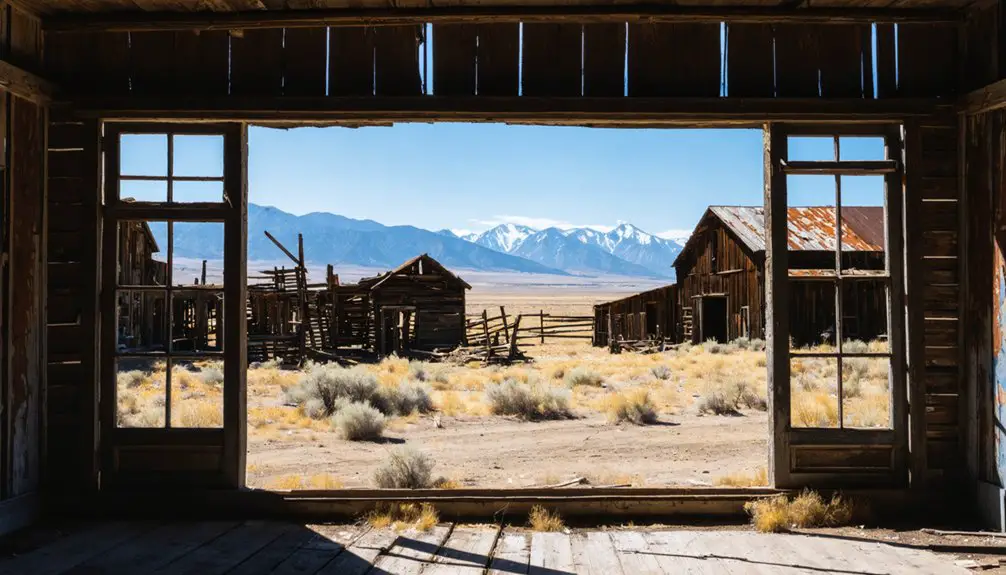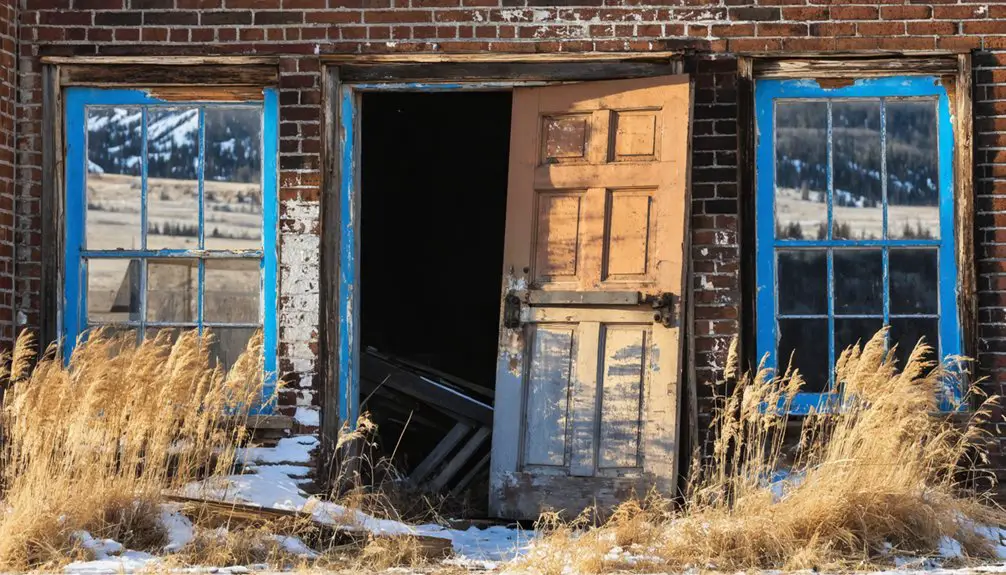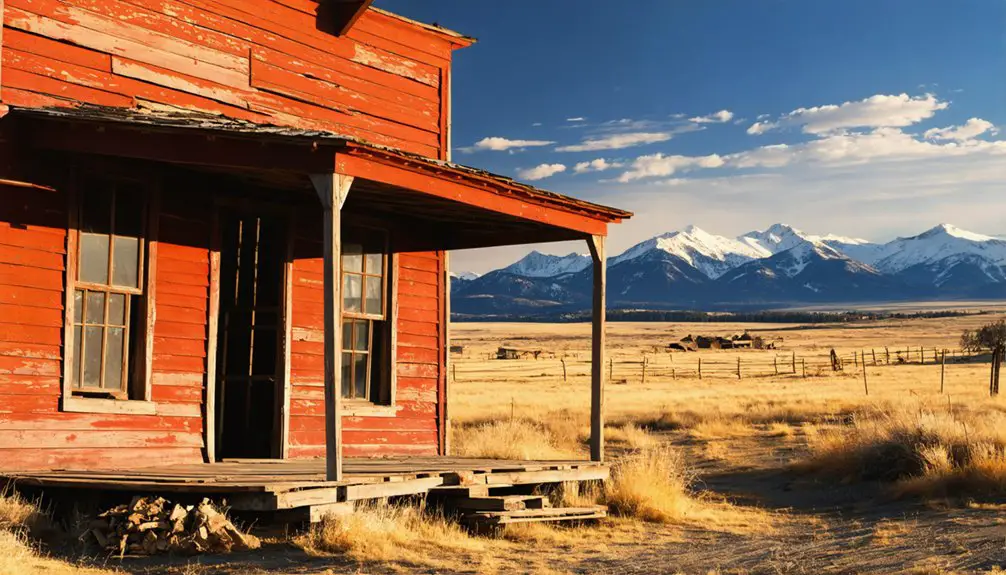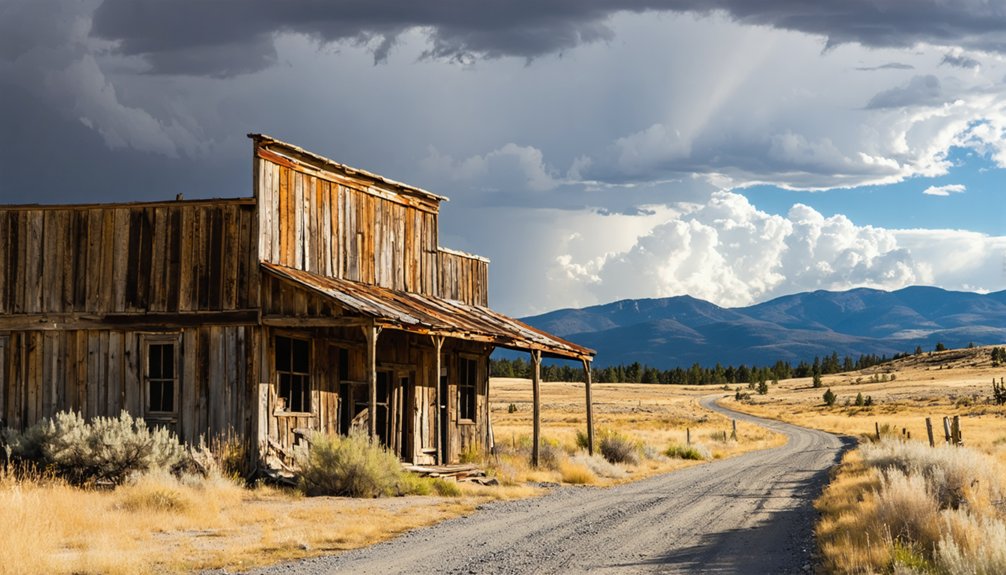
Coloma, Montana sits in the Garnet Range about 35 miles east of Missoula, just north of the famous Garnet Ghost Town along a rugged 26-mile back country byway. You’ll navigate rough gravel roads past crumbling cabins, forgotten mine shafts, and narrow-gauge railroad tracks slowly swallowed by earth. There’s no admission fee, no ranger stations, and almost no official history — locals won’t talk about it. Everything you need to plan your adventure is waiting just ahead.
Key Takeaways
- Coloma is located in southwestern Montana’s Garnet Range, accessible via Garnet Range Road off I-90, approximately 35 miles east of Missoula.
- Visit during summer or early fall, as snow and mud can make the poorly maintained gravel roads impassable during other seasons.
- Unlike nearby Garnet Ghost Town, Coloma charges no admission fee, though a capable vehicle is essential for navigating rough terrain.
- Explore remnants including partial cabins, mining shafts, rusting machinery, narrow-gauge railroad tracks, and an intact 1890s Stagecoach Rest Stop cabin.
- Budget three to four hours for the full 26-mile Garnet Back Country Byway drive, with roughly 30 minutes spent exploring Coloma itself.
Where Exactly Is Coloma, Montana?
Tucked into southwestern Montana’s Garnet Range, Coloma sits a couple of miles north of the better-known Garnet Ghost Town, accessible via the Garnet Range Road off I-90 between Drummond and Missoula.
You’ll find it at the end of a boulder-lined trail along the Garnet Back Country Byway, part of a rugged 26-mile scenic drive roughly 35 miles east of Missoula.
Getting here means traversing poorly maintained gravel roads, so budget three to four hours for the full drive and exploration.
If you prefer a smoother approach, a well-maintained dirt road from the north off Route 200 works well.
Either way, you’re steering yourself deep into Montana’s mining history, toward a place that time — and most people — have quietly forgotten.
How to Get to Coloma on the Garnet Back Country Byway?
Winding through Montana’s Garnet Range, the Garnet Back Country Byway stretches 26 miles of rugged, poorly maintained gravel that’ll test both your patience and your suspension.
This scenic drive sits approximately 35 miles east of Missoula, rewarding adventurous spirits willing to navigate its challenges.
Follow these steps to reach Coloma:
- Access the byway between Drummond and Missoula off I-90
- Alternatively, take the well-maintained dirt road from the north off Route 200
- Drive the Garnet Range Road heading a couple of miles north of Garnet Ghost Town
- Follow the boulder-lined trail to Coloma at the road’s end
Budget three to four hours for the full drive and exploration.
The isolation you’ll encounter makes every rough mile worthwhile.
Why Is Coloma Called the Mystery Camp?
Once you’ve navigated those boulder-lined roads and pulled into Coloma, you’ll notice something stranger than the rusting machinery or crumbling cabins—an almost deliberate silence surrounding the town’s past.
Despite documented activity in the 1890s, historical obscurity defines Coloma completely. Records are scarce, and nearby residents reportedly refuse to discuss the site entirely.
Coloma existed. Records confirm it. Beyond that, the town offers only silence and stubborn, deliberate forgetting.
That silence fuels two compelling mystery theories. Either the town’s mining failures were too embarrassing to acknowledge, or someone’s quietly protecting undiscovered deposits still buried beneath these hills.
Neither theory has been proven, leaving Coloma wearing its “Mystery Camp” nickname honestly.
Unlike neighboring Garnet, which enjoys active preservation and steady visitors, Coloma exists in a strange limbo—documented enough to find, forgotten enough to feel genuinely secret.
That tension makes exploring it feel like uncovering something the landscape itself tried to hide.
What Caused Coloma’s Rise and Sudden Collapse?
Coloma’s story follows a pattern you’ll recognize across Montana’s mining frontier—a gold rush sparks rapid settlement, then reality quietly dismantles the dream.
Gold Fever first struck the Garnet Range in 1865, pulling ambitious prospectors into these rugged hills. By 1897, lode discoveries accelerated everything.
Here’s how Coloma’s arc unfolded:
- 1865 – Initial gold fever draws the first wave of settlers
- 1897 – Lode deposit discoveries trigger rapid growth
- 1900s – The town hits its peak population and activity
- 1916 – Geological surveys confirm gold veins are too small to profit from
Mills were installed, then abandoned.
Like countless ghost towns before it, Coloma couldn’t outrun the math. The mountains kept their secrets, and the people quietly disappeared.
Cabins, Mine Shafts, and Ruins: What Survives at Coloma Today
When you step into Coloma, you’ll find a handful of partial cabins still standing, their walls insulated with old newspapers and mail-order catalogs from the 1920s and 1930s that now serve as fragile timestamps of frontier life.
Scattered across the landscape, mining shafts, rusting ventilation systems, pumping machines, and narrow-gauge railroad tracks tell the story of an operation that once buzzed with ambition.
You can wander freely through these remnants, piecing together the bones of a community that history nearly swallowed whole.
Surviving Cabins And Structures
Though time and Montana’s brutal winters have claimed most of what Coloma once was, a handful of partial cabins still stand as quiet witnesses to the town’s brief, restless life.
Their cabin architecture tells stories newspapers never captured. Look closely and you’ll find:
- Cabin walls insulated with 1920s and 1930s mail-order catalogs and newspapers, revealing everyday frontier life
- Mining shafts still punctuating the hillsides, flanked by rusting ventilation systems and pumping machines
- Narrow-gauge railroad tracks half-swallowed by earth, tracing routes ore once traveled
- A Stage Coach Rest Stop cabin from the 1890s, built as an emergency shelter, still standing
Each remnant carries historical significance, offering you raw, unfiltered glimpses into a community that vanished without explanation.
Visible Mining Remnants Today
Everything that survives at Coloma does so on borrowed time, yet the remnants still standing reward a sharp-eyed explorer.
Wander beyond the partial cabins and you’ll encounter raw evidence of the mining techniques that once drove this remote operation — rusting ventilation systems, sunken shafts, and narrow-gauge railroad tracks half-swallowed by Montana soil.
Pumping machines corrode quietly beside collapsed timber frames, each piece a physical record of ambition that ultimately fell short.
Ghost town exploration here demands patience and a careful eye, since nature reclaims ground aggressively at this elevation.
Unlike nearby Garnet’s curated experience, Coloma offers something rawer: unguarded ruins you can examine on your own terms, no entrance fee, no guided tour, just open country and the unanswered questions these rusting machines leave behind.
How Does Coloma Compare to Garnet, Montana’s Famous Ghost Town?
If you’ve already visited Garnet, Montana’s crown jewel of preserved ghost towns, Coloma will feel like its forgotten, wilder cousin — untamed, unpolished, and free to enter while Garnet charges $10 per person.
Garnet benefits from active preservation efforts and well-documented history, whereas Coloma’s past remains frustratingly sparse, earning it the nickname “Mystery Camp” among those who’ve tried to piece together its story.
You’ll find no ranger stations or guided tours here, just raw remnants and unanswered questions that make Coloma’s obscurity feel both thrilling and deliberately guarded.
Preservation Efforts Compared
When you stand in Coloma, the contrast with nearby Garnet couldn’t be more striking. Ghost town comparisons reveal two completely different preservation philosophies:
- Garnet receives active federal preservation funding and charges $10 admission.
- Coloma remains free, untouched, and largely forgotten by historians.
- Garnet features restored structures with interpretive signage guiding visitors.
- Coloma offers raw, unfiltered ruins where preservation challenges remain unsolved.
Garnet’s polished experience trades authenticity for accessibility. Coloma delivers something rawer — crumbling cabins, rusting machinery, and silence that feels genuinely earned. Nobody’s curated this experience for you.
That freedom cuts both ways. Without preservation efforts, Coloma continues deteriorating season by season.
What you’ll explore today may not exist tomorrow, making your visit feel urgent, personal, and irreplaceable.
Access And Entry Costs
Reaching Coloma costs you nothing — no admission booth, no fee envelope, no ranger collecting $10 at a gate. That freedom separates it sharply from nearby Garnet, where entry runs $10 per person.
Coloma hands you the frontier without a transaction.
But that freedom comes with real accessibility challenges. The gravel roads leading here suffer from poor road maintenance, demanding patience, a capable vehicle, and genuine respect for rough terrain.
You’re not cruising into a managed heritage site — you’re traversing Montana backcountry on your own terms.
Alternatively, approach from the north off Route 200, where a better-maintained dirt road eases the journey considerably.
Either way, budget three to four hours for driving and exploring. Coloma rewards those willing to earn the experience.
Historical Documentation Differences
While Garnet enjoys Montana’s most thorough ghost town preservation record — documented timelines, maintained structures, active historical stewardship — Coloma earned the nickname “Mystery Camp” precisely because its paper trail practically vanishes.
These historical discrepancies create a fascinating tension between the two sites. Here’s what the archival challenges actually reveal:
- Garnet maintains detailed records; Coloma’s history exists largely through cabin insulation — old newspapers and mail-order catalogs from the 1920s-30s.
- Geological Survey teams documented Coloma actively in 1896, yet explanations for its decline remain absent.
- Local residents reportedly refuse to discuss the site entirely.
- Two competing theories persist: embarrassing failures or concealed undiscovered deposits.
That silence makes Coloma’s exploration feel genuinely untamed — a rare, unscripted adventure waiting for you.
When Should You Visit Coloma and What’s the Road Like?
Getting to Coloma means committing to roughly three to four hours of rugged travel across poorly maintained gravel roads through Montana’s Garnet Range, so timing your visit wisely makes a real difference.
Seasonal weather dramatically shapes road conditions, making summer and early fall your best windows. Snow and mud can render these routes impassable during shoulder seasons, trapping unprepared travelers far from civilization.
Summer and early fall offer your best shot — shoulder seasons bring snow, mud, and roads that simply disappear.
You’ve got two access options: the rougher Garnet Range Road off I-90 between Drummond and Missoula, or a comparatively well-maintained dirt road approaching from the north off Route 200.
That northern route cuts through gentler terrain and spares your vehicle some punishment. Whichever path you choose, go slow, check forecasts beforehand, and embrace the rawness — reaching Coloma demands exactly that kind of deliberate, untamed freedom.
What Should You Know Before You Drive Out There?
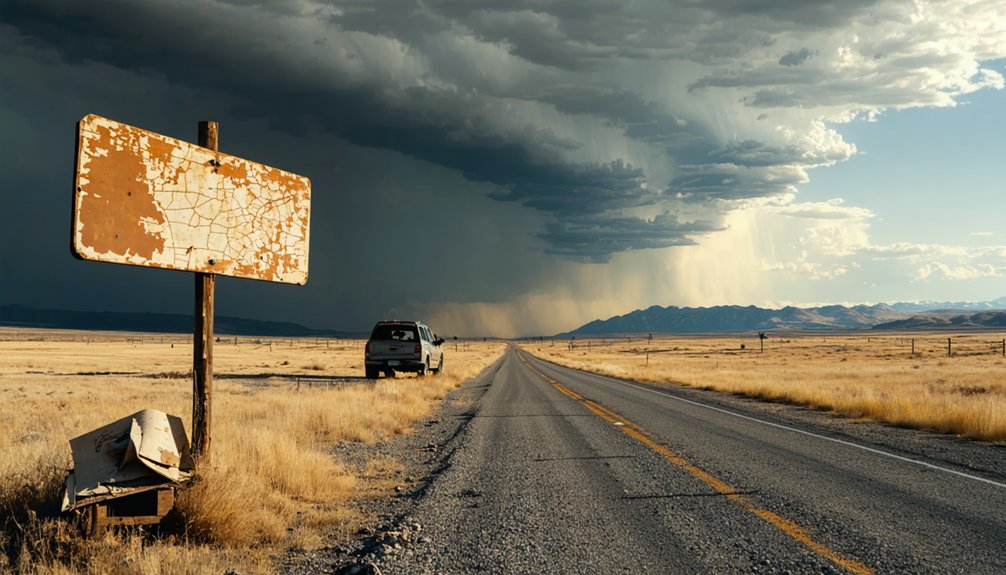
Before you point your truck toward Coloma, a few hard-won details can save you a genuine headache. Smart road trip tips make ghost town exploration far more rewarding.
- Skip the entrance fee. Unlike nearby Garnet’s $10-per-person charge, Coloma costs nothing.
- Choose your route wisely. A well-maintained dirt road off Route 200 from the north beats the punishing southern gravel approach.
- Budget your time realistically. The full Garnet Back Country Byway drive demands three to four hours, though Coloma itself takes roughly 30 minutes.
- Ask locals nothing. Nearby residents reportedly refuse to discuss the site entirely — save your breath.
Pack provisions, check your spare tire, and embrace the unknown. Coloma rewards the self-reliant traveler who arrives prepared.
Frequently Asked Questions
Are There Guided Tours Available at Coloma Ghost Town?
No guided tours are available, but you’ll discover Coloma’s historical significance independently. Embrace the freedom of self-guided exploration, uncovering guided experiences through remnants, mysterious cabins, and rusting mining relics that tell their own adventurous story.
Is Coloma Ghost Town Accessible for Visitors With Mobility Limitations?
Hitting the road to Coloma’s a rough ride—poorly maintained gravel roads and boulder-lined trails make mobility aids challenging. It lacks accessibility features, so you’ll navigate rugged frontier terrain demanding sturdy footing and adventurous determination to explore freely.
Can Visitors Camp Overnight Near Coloma Along the Byway?
The knowledge doesn’t confirm camping options along the byway, but you’re free to explore nearby attractions like Garnet Ghost Town. Check with local land management agencies—they’ll reveal the adventure you’re craving along this rugged, untamed route!
Are Pets Allowed When Visiting Coloma Ghost Town?
The knowledge doesn’t specify pet policies for Coloma, so check before you venture out! As you explore these rugged local attractions, you’ll crave the freedom of Montana’s wild, open terrain with your loyal companion by your side.
What Wildlife Might Visitors Encounter While Exploring Coloma?
While roaming Coloma’s rugged terrain, you’ll find wildlife spotting opportunities abound. Local fauna like deer, elk, and eagles freely roam these untamed Montana hills, breathing life into the ghost town’s silent, weathered ruins around you.
References
- https://avrextravel.com/montana-ghost-towns/
- https://www.beyondmycouch.com/2025/07/garnet-coloma.html
- https://www.tripadvisor.com/Attraction_Review-g45277-d7208472-Reviews-Garnet_Ghost_Town-Missoula_Montana.html
- https://crownofthecontinent.net/entries/coloma-ghost-town-montana/aec72829-c301-42a2-9a0a-f27d8b109eb6
- https://visitmt.com/listing/coloma-mystery-camp-of-garnet-range-6725
- https://www.youtube.com/watch?v=-h48VuZBH6g
- https://chaosandcoffeebeans.com/2021/07/05/road-trip-montana-garnet-ghost-town-ringing-rocks-missoula/
- https://www.distinctlymontana.com/montanas-scenic-ghost-town-byway
- https://www.youtube.com/watch?v=AOFxIWy8IYE