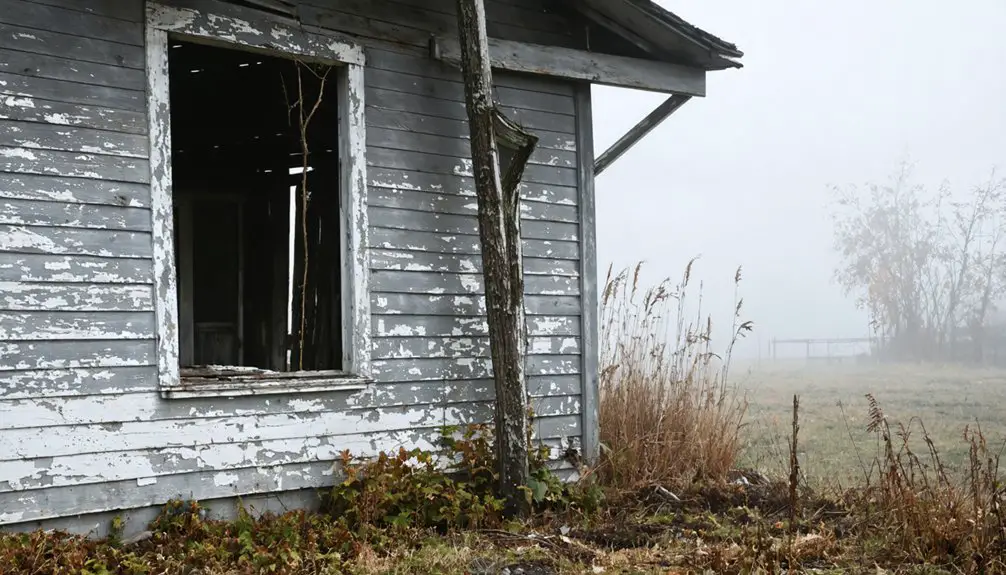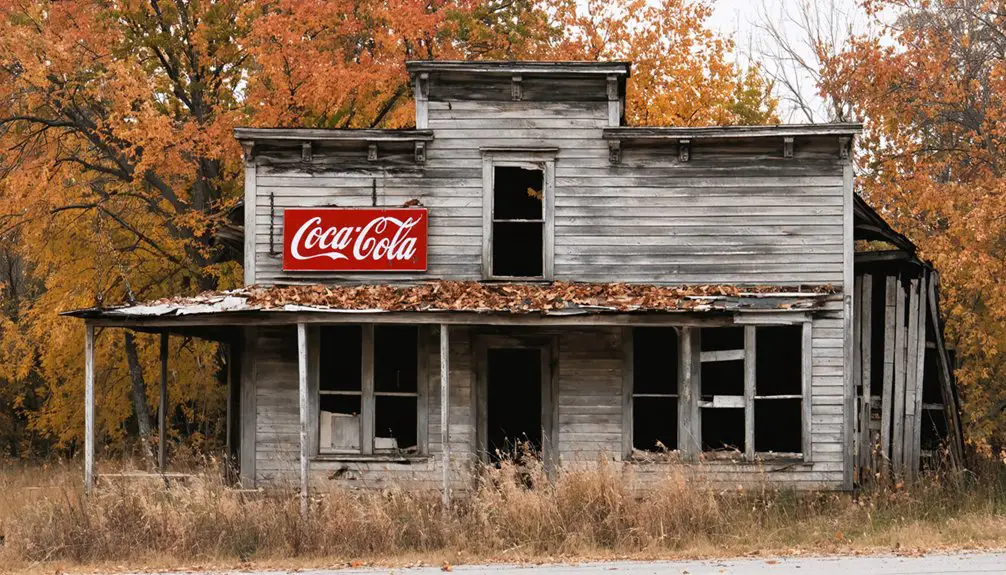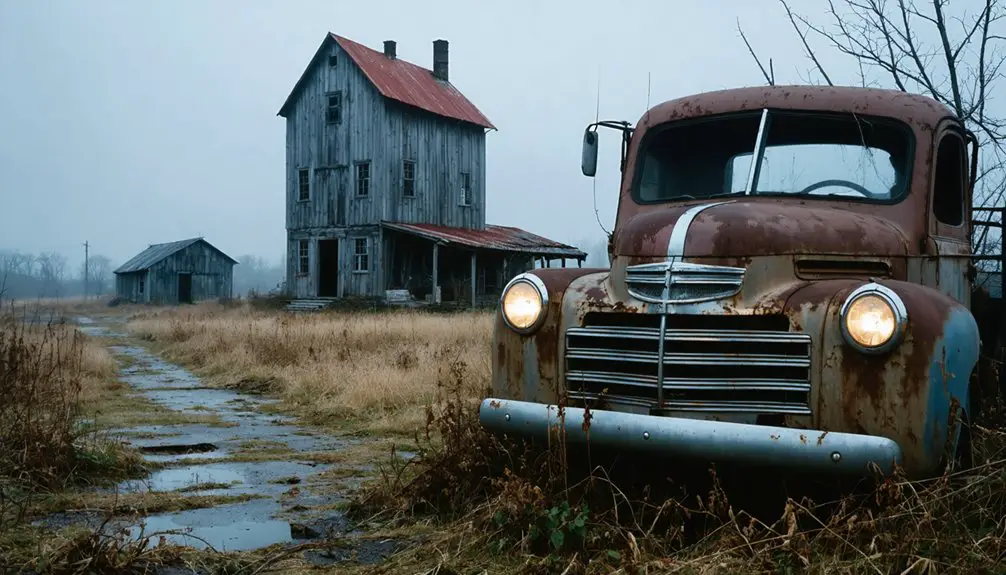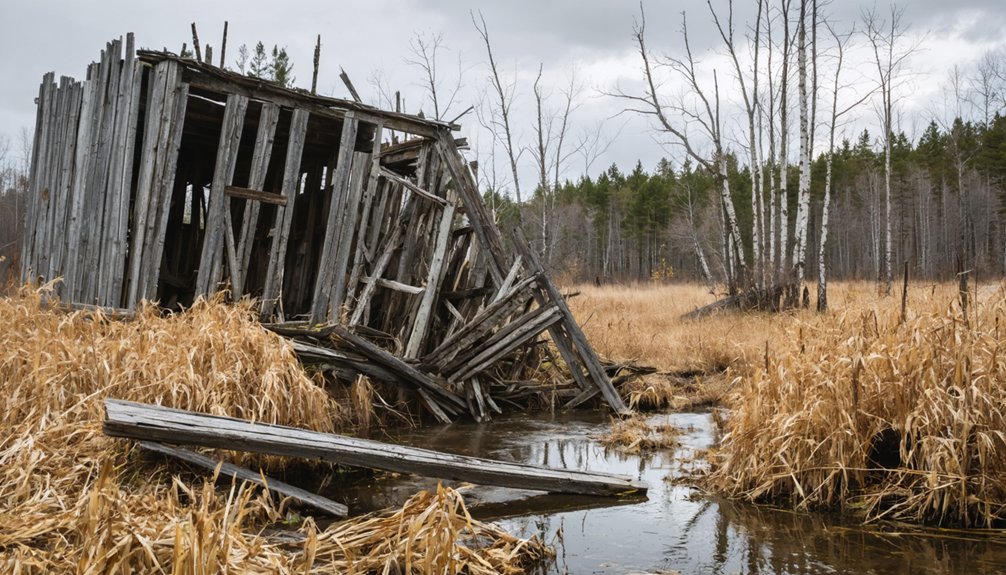
Planning a road trip to Deward, Michigan means stepping into one of the state’s most haunting logging-era ghost towns. Founded in 1900 by lumber baron David E. Ward, Deward once housed 800 residents before timber depletion wiped it off the map by 1932. Today, you’ll find concrete foundations, old dump sites, and the peaceful Manistee River where a bustling mill town once stood. Stick around, and you’ll uncover everything you need to explore Deward like a pro.
Key Takeaways
- Deward, Michigan, founded in 1900 by lumber baron David E. Ward, thrived briefly before timber depletion caused its complete disappearance by 1932.
- Only concrete foundations and accessible garbage pits remain, offering hands-on exploration of artifacts like old bottles, jars, and iron remnants.
- Navigate via County Road 612 north on Manistee River Road, following a two-track road marked by a green binoculars symbol to parking.
- Pack sturdy boots, water, a first aid kit, and navigation tools, as the remote site lacks amenities and has unreliable cell service.
- Visit in late summer to early fall for optimal conditions, avoiding muddy spring thaws and dense summer undergrowth for better exploration access.
The Rise and Fall of Deward, Michigan
Deep in the forests of Crawford County, Michigan, Deward rose and fell within a single generation—a company town born from the ambitions of lumber baron David E. Ward in 1900.
Named in his honor, this remote settlement sat halfway between Gaylord and Grayling, near the Manistee River, where virgin white pine still stood waiting to be harvested.
At its peak, Deward housed 800 residents and operated one of Michigan’s largest sawmills.
But by 1912, the timber was gone. Buildings were dismantled, land was sold off, and by 1932, the town had completely vanished.
Deward’s historical significance runs deep—it represents the final chapter of Michigan’s logging legacy, a boom-and-bust story that helped build a nation but left ghost towns scattered across the landscape.
What’s Left to See at Deward Today?
When you visit Deward today, you’ll find no standing buildings — only dozens of scattered concrete foundations and house footprints slowly being reclaimed by the forest floor.
Dig through the accessible garbage pits and you’ll uncover old bottles, jars, and iron remnants left behind by the town’s former residents and workers.
Oil pumps have also crept across the land in recent decades, adding an industrial layer to this already layered and haunting landscape.
Scattered Foundations And Ruins
Though Deward’s buildings were hauled away long ago, the land still holds plenty of evidence of the town’s former existence. As you explore the site, you’ll find dozens of building and house foundations scattered throughout the area, each one a quiet reminder of the town’s historical significance.
The concrete foundations of the original sawmill still stand, grounding you in the industrial scale of what once operated here.
Urban exploration here rewards the curious. Garbage pits dotting the property contain old bottles, jars, and iron remnants from machinery and everyday personal items.
Oil pumps have since crept onto the land, adding a layered contrast to the ruins beneath your feet. Every step through Deward connects you directly to Michigan’s raw, unfiltered logging past.
Garbage Pits And Relics
Beyond the concrete and crumbling foundations, Deward’s most hands-on historical experience lies in its garbage pits. Scattered across the site, these buried deposits hold old bottles, glass jars, and iron remnants from machinery and everyday personal items.
Garbage exploration here feels less like digging through trash and more like revealing a time capsule from Michigan’s logging era.
Relic hunting at Deward rewards patience and curiosity. You’ll encounter fragments that once belonged to real workers who built their lives around this mill town.
Metal detecting, however, presents serious challenges — the ground is saturated with old metal bits from collapsed buildings and discarded equipment.
Still, if you’re drawn to authentic historical discovery off the beaten path, Deward’s pits offer a genuinely raw and unfiltered connection to the past.
Oil Pumps And Land
Deward’s landscape today tells a quieter story than its industrial past. Oil pumps have moved in over the decades, adding unexpected oil history to land once dominated by sawdust and timber. These industrial remnants stand alongside nature’s quiet reclamation of the site.
Here’s what you’ll notice across Deward’s land today:
- Active oil pumps scattered across former residential and mill areas
- Concrete foundations emerging from forest undergrowth
- Overgrown clearings marking where buildings once stood
- Natural reforestation covering what loggers stripped bare
You’re walking through layered history here — timber boom, abandonment, oil extraction, and wilderness recovery all occupying the same ground.
It’s raw, unpolished, and completely worth exploring for anyone craving authentic, off-the-beaten-path experiences.
How to Find Deward on County Road 612
To reach Deward, you’ll start on County Road 612 and head north on Manistee River Road, passing West Cameron Bridge Road along the way.
About 1.5 miles past that intersection, you’ll spot a two-track road veering off to the west, marked by a green binoculars symbol that signals you’re on the right path.
Follow that two-track roughly 100 yards to a small parking area, which serves as your jumping-off point for exploring the ghost town’s scattered remains.
Starting Point On CR-612
Finding Deward requires traversing County Road 612, where your journey begins on Manistee River Road heading north. This route carries you through Crawford County’s dense forests, connecting you directly to ghost town legends buried within Michigan’s logging history.
Follow these four navigational steps:
- Head north on Manistee River Road from CR-612
- Pass West Cameron Bridge Road and continue 1.5 miles
- Watch for a two-track road heading west, marked with a green binoculars symbol
- Drive approximately 100 yards down the two-track to reach the parking area
You’re now standing at the threshold of what was once a thriving mill town. The surrounding forest conceals scattered foundations waiting for you to discover them.
Pack comfortable boots and curiosity — Deward rewards explorers who arrive prepared.
Locating The Two-Track Entrance
Once you’ve passed West Cameron Bridge Road, count off 1.5 miles of northbound road before your eyes start scanning the tree line for a two-track path cutting west into the forest.
Your landmark is a green binoculars symbol marking the entrance — easy to miss if you’re not watching closely. Follow the two-track roughly 100 yards to a small parking area where your exploration of Deward begins.
This remote access point sets the tone perfectly.
You’re not pulling into a manicured historic site — you’re pushing into territory where ghost town history lives quietly beneath the soil.
The logging industry that once fueled 800 residents and twelve mills left behind foundations, garbage pits, and scattered remnants waiting for curious travelers willing to venture off the paved road.
Gear and Supplies Worth Bringing to Deward
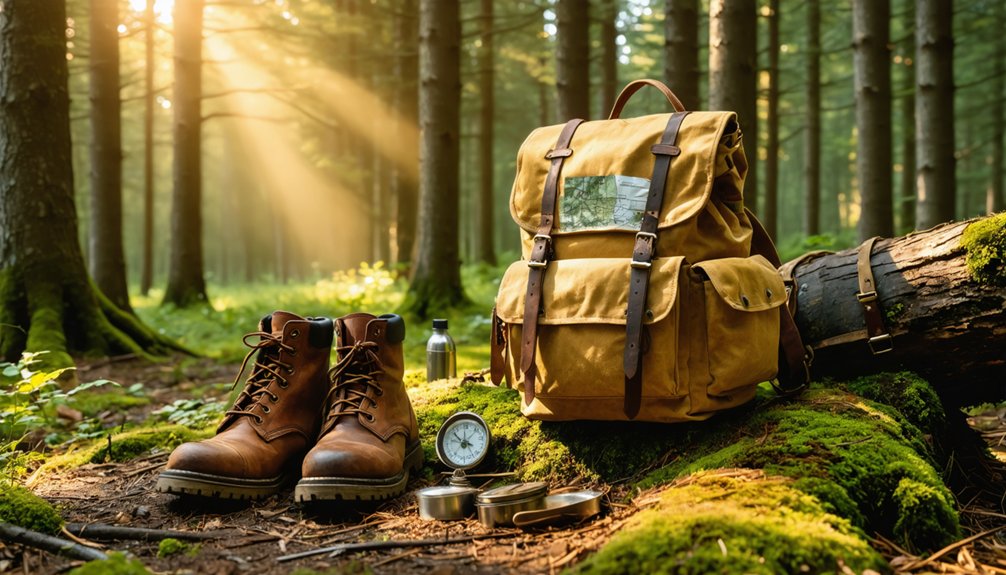
A few key items can make or break your visit to Deward, so pack smart before heading out. The remote location demands self-sufficiency, and exploration safety depends on having the right essential tools ready before you leave civilization behind.
- Navigation tools – Download offline maps since cell service is unreliable near the Manistee River headwaters.
- Sturdy boots – Uneven foundation remnants and overgrown terrain make ankle support critical.
- Metal detector – Garbage pits and scattered iron remnants reward patient searchers.
- Water and first aid kit – No amenities exist anywhere near this abandoned site.
Pack light but purposefully. Deward rewards the prepared explorer and punishes the careless one quickly.
Inside Deward’s Sawmill Foundations and Old Dump Sites
Scattered across Deward’s forest floor, the concrete foundations of what was once Michigan’s largest sawmill complex stand as the site’s most striking remnants. Your foundation exploration reveals the sheer scale of industrial ambition that once defined this place.
Walk the perimeters, and you’ll quickly grasp how massive the operation truly was. Nearby, garbage pits offer another dimension of sawmill history, holding old bottles, iron machinery fragments, and personal items left behind by workers who simply walked away.
Workers simply walked away, leaving behind bottles, iron fragments, and personal items now buried in forgotten garbage pits.
You’re free to poke around these dump sites, uncovering tangible pieces of Deward’s brief but intense existence. Fair warning though — metal detecting here proves frustrating since the soil is saturated with old metal bits.
Bring your eyes and curiosity instead; they’ll serve you better than any detector will.
Is Metal Detecting at Deward Worth Your Time?
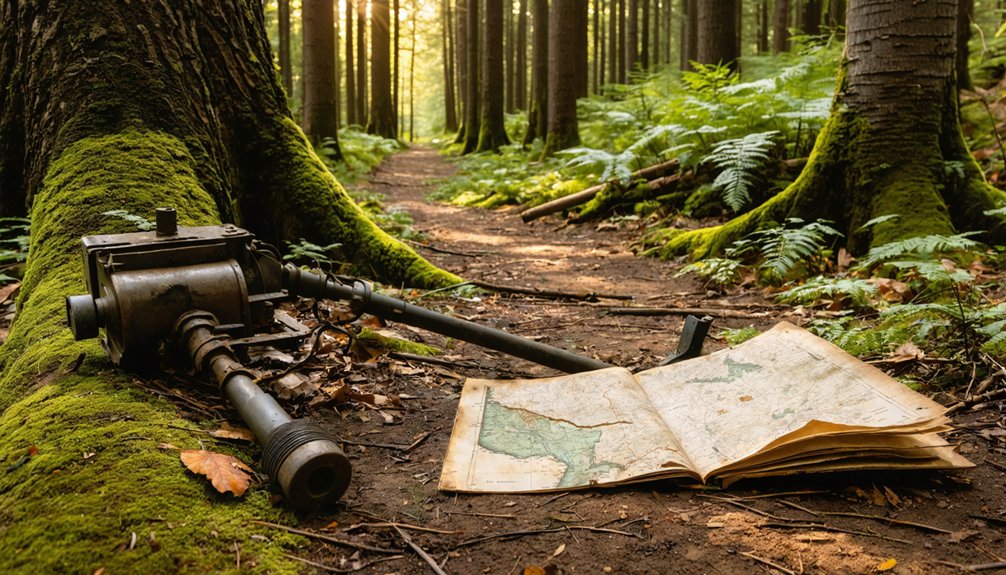
Why bother hauling metal detecting gear to Deward when the site’s soil is so saturated with old metal that your detector will scream constantly and tell you nothing useful?
Despite the challenge, you can still uncover historical artifacts if you follow smart metal detecting tips:
- Target the garbage pits first — they’re concentrated sources of bottles, jars, and iron remnants.
- Work slowly around house foundations where personal items were discarded or lost.
- Use discrimination settings to filter out overwhelming machinery scrap signals.
- Focus on edges of the sawmill’s concrete foundations rather than center areas.
You’ll need patience and persistence here.
Deward rewards deliberate, methodical explorers who respect the site’s history and understand they’re walking through Michigan’s final chapter of old-growth logging.
Best Time of Year to Visit Deward
Timing your visit to Deward can mean the difference between a rewarding exploration and a frustrating slog through mud, snow, or biting insects.
The best season to explore is late summer through early fall, when weather conditions are dry, the two-track road stays firm, and vegetation hasn’t buried the foundations completely.
Spring thaws turn the access road into a muddy mess, and Michigan’s notorious black flies make June miserable.
Summer heat brings dense undergrowth that obscures many ruins, though mornings remain manageable.
Fall strips the foliage back, revealing foundations and landscape features that summer hides.
Winter visits are possible but require snowshoes and serious preparation.
Plan for a September or October trip, pack boots regardless, and you’ll move freely through the site without fighting nature every step.
Ghost Towns Near Deward Worth Visiting the Same Day
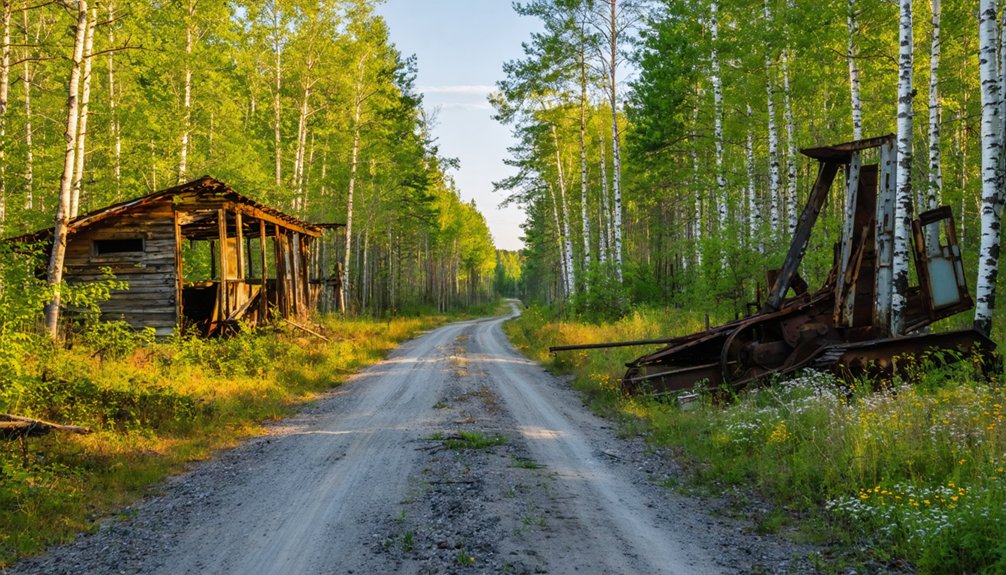
Deward doesn’t stand alone in Crawford County’s ghost town landscape, and if you’re already making the drive out to the Manistee River headwaters, you’d be foolish not to extend the trip to a few neighboring sites.
Michigan’s northern Lower Peninsula is loaded with ghost towns carrying their own local myths and forgotten histories.
Consider adding these stops to your route:
- Frederic – A nearby lumber settlement with remnants worth exploring.
- Gaylord area ruins – Scattered foundations from logging-era camps.
- Lovells Township sites – Quiet clearings hiding old homestead foundations.
- Alba – A small abandoned community wrapped in regional folklore.
Each site deepens your understanding of Michigan’s boom-and-bust timber era and rewards curious explorers willing to leave the pavement behind.
Frequently Asked Questions
Was Deward Ever Considered for Incorporation as an Official Michigan Municipality?
No records suggest Deward history included any incorporation attempts. It functioned purely as a company town, meaning Ward’s lumber operation controlled everything — you wouldn’t have found any independent municipal governance during its brief 12-year existence.
Did David E. Ward Live in Deward During Its Operational Years?
Like many puppet masters, he pulled strings from afar — the Deward history records don’t confirm David Ward lived there. He founded it, but you’d find this lumber baron directing operations remotely from Bay City-Saginaw.
Were Any Churches or Schools Ever Built Within Deward’s Town Limits?
The available records don’t confirm any church history or school legacy within Deward’s town limits. You’ll find the site contained practical infrastructure—mills, boarding houses, a company store—built purely to support lumber production.
How Many Workers Were Employed at Deward’s Sawmill During Peak Operation?
The records don’t specify exact worker numbers during Deward’s sawmill operations, but with 800 residents at peak, you can imagine the demanding worker conditions that kept one of Michigan’s largest mills running strong.
Did Any Former Deward Residents Document Their Experiences Living There?
The available knowledge doesn’t confirm whether former residents documented their personal stories. However, you’ll find curious explorers and historians have uncovered remarkable relics that vividly echo the lives once lived in this fascinating ghost town.
References
- https://lostinmichigan.net/the-lost-and-found-michigan-ghost-town-of-deward/
- https://99wfmk.com/deward-michigan-ghost-town2/
- https://random-times.com/2022/06/15/deward-the-ghost-town-still-on-the-maps-that-completely-vanished/
- https://forths.com/index.php/2022/05/29/ghost-town-of-deward-michigan/
- https://project.geo.msu.edu/geogmich/deward.html
- https://northcountryhistorywithrobburg.buzzsprout.com/2422296/episodes/16707726-deward-the-last-of-michigan-s-lumber-boomtowns
- https://www.nailhed.com/2016/09/pines-last-stand.html