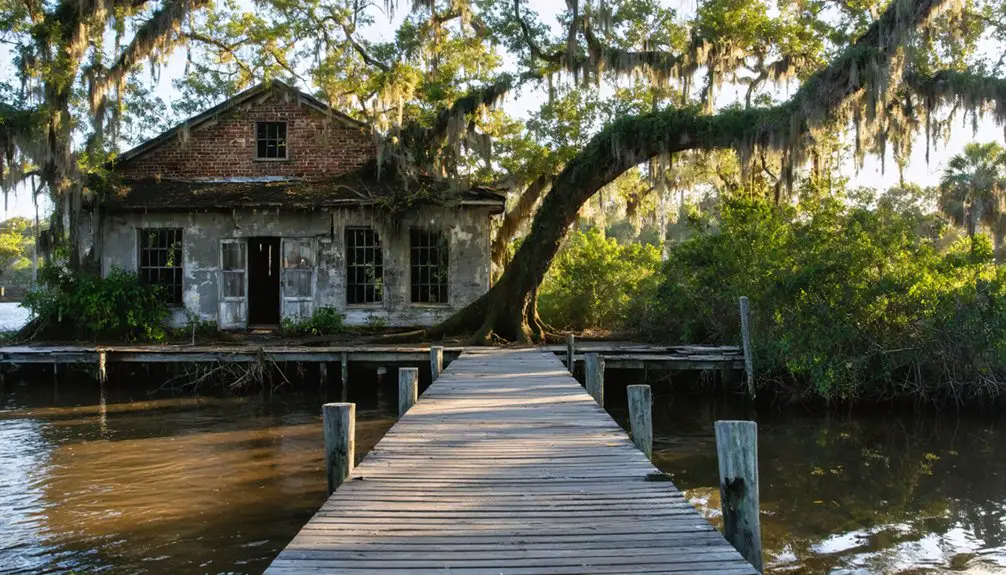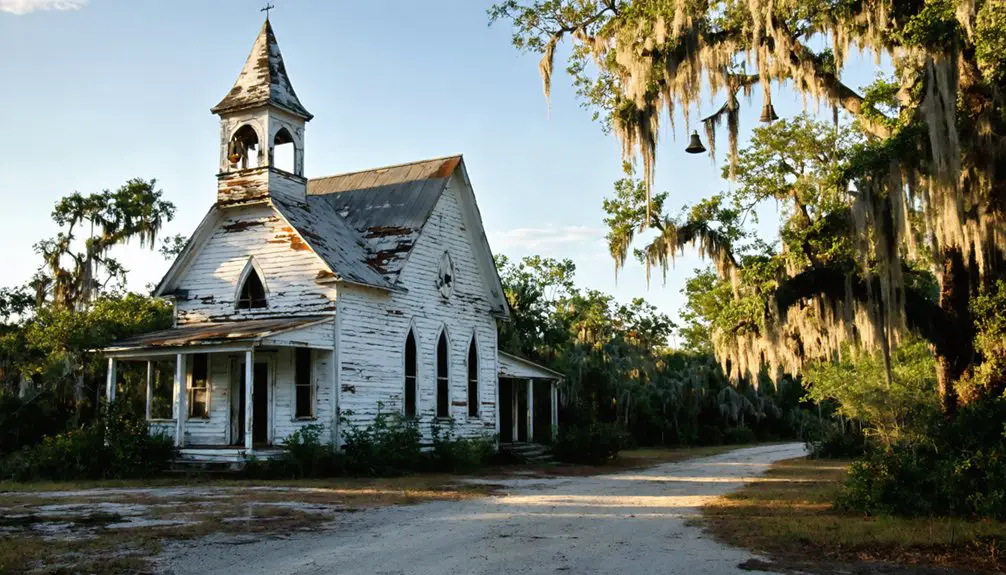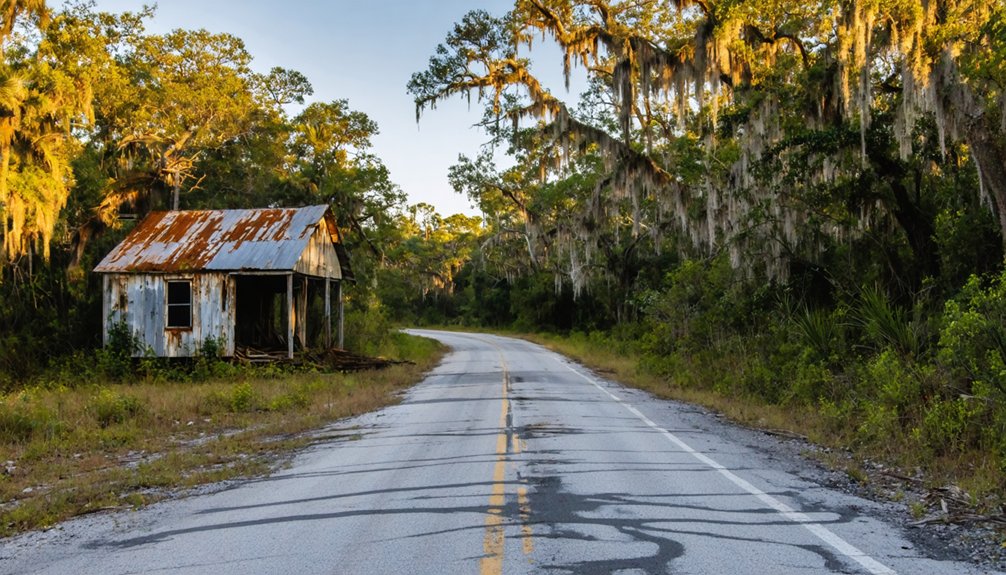
Planning a ghost town road trip to Torrey, Florida means heading into Hardee County’s back roads, southeast of Tampa, where crumbling brick streets and weathered buildings quietly mark what once was a thriving community. You’ll want to pack water, fuel up beforehand, and use coordinates 27°36.6’N, 81°49.5’W to navigate precisely. Torrey’s an inhabited ghost town, so sparse residents still linger among the ruins. There’s far more to this road trip than the coordinates suggest.
Key Takeaways
- Torrey Ghost Town in Hardee County, Florida, sits at coordinates 27°36.6’N, 81°49.5’W, southeast of Tampa amid cattle ranches and citrus groves.
- Access requires back roads through Wauchula; prepare by filling your gas tank, packing water, and anticipating rough road conditions.
- Key attractions include crumbling brick roads, historic buildings, ghost outlines of a bowling alley, movie theater, and local folklore.
- Pack a first aid kit, inform someone of your plans, and follow local regulations when exploring abandoned structures safely.
- Extend your road trip by visiting nearby ghost towns like Traxler, Troy, and Utopia across different Florida counties.
What Torrey Ghost Town Actually Is and What Remains
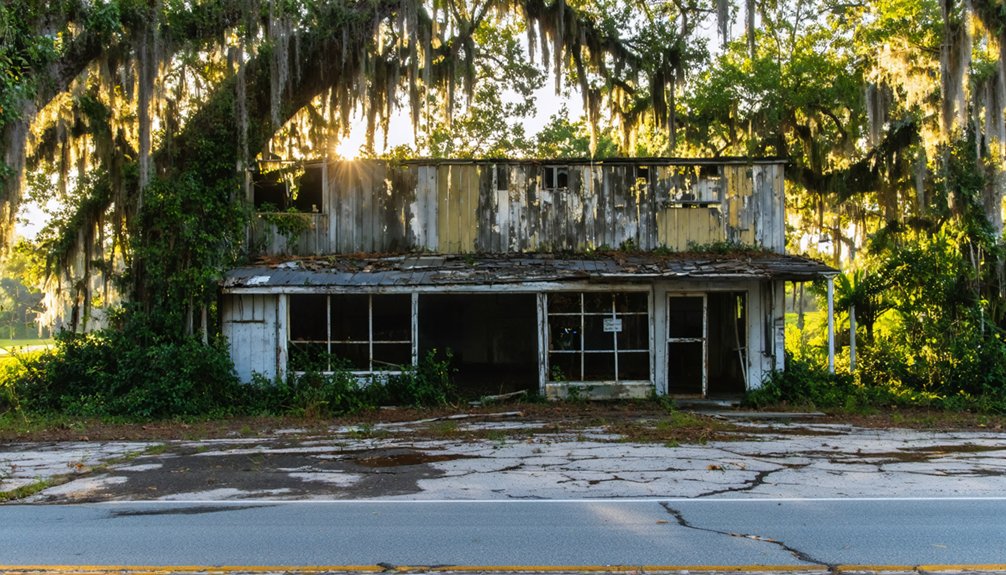
Torrey sits quietly in Hardee County at coordinates 27°36.6’N, 81°49.5’W — an “inhabited ghost town,” which means it hasn’t fully surrendered to abandonment but barely resembles a functioning community.
Torrey history traces back to Florida’s late 19th and early 20th-century boom, when small settlements sprouted across the state before freezes, railroad bypasses, and economic collapse gutted them.
What you’ll find today reflects that slow erosion — scattered residents, weathered structures, and a landscape that’s more memory than municipality.
Don’t expect Torrey landmarks to announce themselves with signage or fanfare. You’ll navigate local roads using those coordinates as your compass, piecing together what once existed through foundations, remnants, and the quiet that settles over places where ambition once lived but eventually walked away.
How To Get To Torrey in Hardee County
Getting to Torrey means trading major highways for the kind of back roads Florida’s ghost towns have always preferred. Hardee County sits in Central Florida’s interior, southeast of Tampa, where cattle ranches and citrus groves replace resort sprawl.
Use coordinates 27°36.6’N, 81°49.5’W to pinpoint your destination precisely.
Your access routes will likely funnel through Wauchula, Hardee County’s seat, then branch outward along rural county roads. No interstate drops you at Torrey’s doorstep, and that’s exactly the point.
You’re chasing Torrey history through landscapes that haven’t surrendered entirely to development. GPS helps, but paper maps give you the fuller picture of what surrounds these forgotten coordinates.
Fill your tank before leaving Wauchula, pack water, and expect roads that reward patience over speed.
Fort Dade on Egmont Key: What To See and How To Get There
While Torrey rewards patience on back roads, Fort Dade demands you trade pavement for water entirely. Catch the ferry from Fort DeSoto Park, and you’ll land on Egmont Key, where Florida’s creepiest ghost town waits.
Fort Dade once supported 300 residents, a movie theater, a bowling alley, and full electrical service.
Today, crumbling brick roads disappear into jungle, staircases climb toward abandoned military batteries, and 70 buildings exist only as ruins. The silence hits differently when you remember families actually lived here until 1923.
The lighthouse still operates, grounding the strangeness with something functional.
Bring water, wear sturdy shoes, and check ferry schedules before you commit. Egmont Key rewards explorers who move freely on their own terms.
What Survives at Both Sites and What’s Long Gone
Both sites leave you confronting the same brutal math: time takes more than it gives back.
At Fort Dade and Torrey, surviving structures and historical remnants tell incomplete stories, forcing you to imagine what thrived here.
Fort Dade still offers:
- Deteriorating brick roads cutting through overgrowth
- Military battery staircases descending into silence
- An operational lighthouse standing defiant
- Crumbling foundations where 70 buildings once stood
- Ghost outlines of a bowling alley and movie theater
Torrey’s historical remnants are subtler — an inhabited ghost town where modern life layers awkwardly over a forgotten past.
You won’t find dramatic ruins, but the coordinates lead you somewhere that exists between living and lost.
Both destinations reward travelers who embrace ambiguity and read landscapes like abandoned manuscripts.
Three More Florida Ghost Towns Close Enough To Add
If you’re already making the trip to Torrey in Hardee County, you might as well stretch the route to hit a few more vanished Florida communities.
Traxler in Alachua County sits at 29°52.2’N, 82°32.3’W, while Troy in Lafayette County waits at 30°0.2’N, 82°59.9’W, and Utopia rounds out the cluster over in Okeechobee.
Each adds a distinct layer to Florida’s forgotten history without demanding a major detour from your existing path.
Nearby Ghost Towns Worth Visiting
Since you’re already making the trek out to Torrey in Hardee County, you’d be foolish not to swing by a few other ghost towns scattered close enough to justify the detour.
Each site adds another layer of ghost town history and abandoned architecture worth exploring on your own terms.
- Traxler – Alachua County at 29°52.2’N, 82°32.3’W
- Troy – Lafayette County at 30°0.2’N, 82°59.9’W
- Utopia – Okeechobee County, another forgotten settlement
- Fort Dade – Egmont Key, accessible by ferry from Fort DeSoto Park
- Central Florida sites – Clustered near Walt Disney World, surprisingly easy detours
Pack your coordinates, trust your instincts, and chart your own route through Florida’s forgotten corners.
Planning Your Extended Route
Once you’ve marked Torrey on your map, extending the route to three more forgotten Florida settlements barely adds mileage but multiplies the reward.
Smart route optimization connects Torrey in Hardee County northward to Traxler in Alachua County, sitting at 29°52.2’N, 82°32.3’W. Continue northwest toward Troy in Lafayette County at 30°0.2’N, 82°59.9’W before looping south toward Utopia in Okeechobee.
These four stops form a logical arc across Central Florida, keeping backtracking minimal.
Essential travel tips: load coordinates directly into your GPS, verify road conditions before departure, and pack supplies since these sites offer nothing commercial.
You’re moving through erased history, not curated attractions. Each location rewards curiosity with raw, unfiltered remnants that no tourist brochure bothers mentioning.
Best Time To Visit Florida Ghost Towns
Florida’s ghost towns reveal themselves best during the cooler, drier months of November through March, when temperatures hover between 60–75°F and you’re not battling the brutal summer humidity that makes trekking through overgrown ruins genuinely miserable.
These best seasons offer perfect weather for exploring Fort Dade’s deteriorating brick roads and Torrey’s forgotten foundations without overheating.
Plan your visits around these conditions:
- November–March: Lowest humidity, comfortable temperatures
- Weekdays: Fewer crowds at ferry departures from Fort DeSoto
- Early mornings: Prime lighting for photographing ruins
- Dry spells: Overgrown paths become more navigable
- New moon nights: Ghost tour operators in Key West run specialized excursions
Avoid hurricane season entirely — June through October transforms accessible ruins into dangerously unstable, flood-prone terrain.
What To Bring for a Florida Ghost Town Road Trip
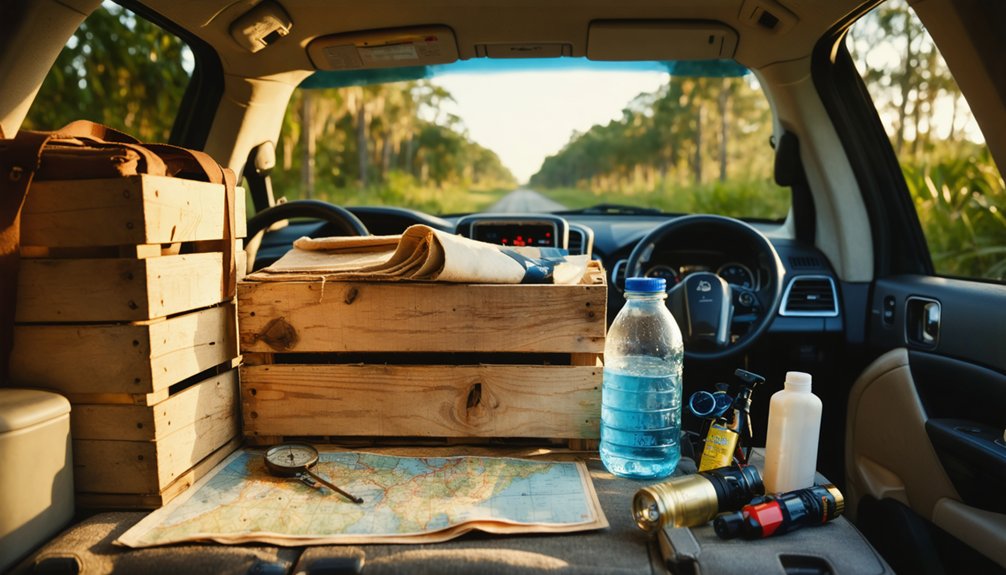
Packing for a Florida ghost town road trip means balancing rugged exploration gear with practical comfort essentials — you’re not just hiking, you’re traversing deteriorating brick roads at Fort Dade, overgrown foundations in Hardee County, and potentially boarding a ferry from Fort DeSoto.
Exploring Florida ghost towns isn’t casual hiking — it’s navigating crumbling roads, forgotten foundations, and ferry crossings into history.
These ghost town essentials keep you prepared: sturdy closed-toe shoes, insect repellent, and sunscreen are non-negotiable in Florida’s brutal heat. Carry plenty of water, a charged portable battery, and a physical map since remote coordinates like Torrey’s 27°36.6’N won’t always have cell service.
Your packing tips should include a camera for capturing ruins, a small first-aid kit, and waterproof bags protecting your gear during ferry crossings.
Travel light but smart — freedom means exploring confidently without being caught unprepared.
Frequently Asked Questions
Are There Any Guided Ghost Town Tours Available in Hardee County?
The knowledge doesn’t confirm guided tours in Hardee County, but you can explore Torrey’s ghost town history independently. Chase local legends on your own terms, using coordinates 27°36.6’N to freely discover this fascinating, off-the-beaten-path destination yourself.
Can Children Safely Explore Florida Ghost Town Ruins and Abandoned Sites?
With over 200 Florida ghost towns, child safety requires your attention. You’ll want to follow exploration guidelines carefully — unstable ruins, deteriorating brick roads, and crumbling structures demand adult supervision before letting curious kids roam freely.
Is Photography Permitted at Fort Dade and Torrey Ghost Town Locations?
You’re generally free to enjoy ghost town photography at both sites, but you’ll want to respect historic site etiquette by avoiding damage to ruins, staying on designated paths, and checking Fort Dade’s specific ferry-access regulations beforehand.
Are Any Florida Ghost Towns Privately Owned and Restricted From Public Access?
Yes, some ghost towns’ private ownership hilariously chains you to “no trespassing” signs. You’ll find ghost town history locked behind fences, so always research access rights before chasing Florida’s forgotten ruins — freedom-seekers must respect boundaries!
Do Any Florida Ghost Towns Offer Overnight Camping or Accommodation Options?
You won’t find official camping amenities at Florida’s ghost towns, but Egmont Key offers primitive exploration opportunities. Immerse yourself in Fort Dade’s ghost town history by arriving early, soaking up atmospheric ruins before catching the last ferry back.
References
- https://www.iheart.com/content/2023-10-13-historic-landmark-named-floridas-creepiest-ghost-town/
- https://www.youtube.com/watch?v=bNjqcQ5SMwg
- https://www.journaloffloridastudies.org/0102ghosttowns.html
- http://www.shrimpnfishflorida.com/forums/threads/lake-county-fl-ghost-towns.5641/